Like
Share
멍실장
고양이 양치 방법과 익숙하게 하기

How to Brush Your Cat’s Teeth and Get Them Used to It

Oral HealthQ&AMeongsiljang Veterinary Advisory Board

Brushing your cat’s teeth is the most effective way to prevent periodontal disease. We’ve put together a complete guide for first-time owners, covering everything from supplies and step-by-step desensitization techniques to practical brushing tips.

Is Brushing Your Cat’s Teeth Really Necessary?

A caregiver gently lifting a cat’s lips to check its teeth.
Brushing your cat’s teeth is the most effective way to prevent periodontal disease. Veterinary textbooks recognize toothbrushing as the gold standard for at-home oral care. Periodontal disease is extremely common, affecting most adult cats, and both its prevalence and severity increase with age. According to veterinary dentistry textbooks, proper at-home oral care can prevent gingivitis and, in some cases, even reverse it. The time it takes for a cat to become accustomed to brushing varies from individual to individual. By approaching the process gradually and step by step, most cats can be successfully trained to accept it. For pet owners starting out, we’ll walk you through everything in order, from selecting the right supplies and acclimation training to actual brushing techniques.

What Happens If You Don’t Brush Their Teeth?

Cats are prone to rapid plaque buildup when food particles accumulate on their teeth. When plaque hardens, it becomes tartar, and bacteria multiplying on the tartar can lead to gingivitis, an inflammation of the gums. If gingivitis is left untreated, it can progress to periodontitis. At this stage, the bone supporting the teeth begins to deteriorate, causing teeth to loosen and potentially requiring extraction. Research is also exploring how oral bacteria and their byproducts may impact overall health. In humans, links to heart disease and respiratory conditions are well-established, and similar associations are currently being actively studied in companion animals. Brushing is the most fundamental method for physically removing plaque before it hardens into tartar.

Checklist of Supplies for Brushing

Before you start brushing your cat’s teeth, gather the following supplies:
Cat-specific toothbrush: A pet toothbrush with a small head and soft bristles is ideal. Finger brushes are especially helpful for initial acclimation.
Cat-specific toothpaste: Available in flavors cats enjoy, such as chicken or tuna. These are formulated with enzyme ingredients that are safe if swallowed.
Gauze or oral wipes: Use these for massaging the gums during the initial phase before your cat adapts to a toothbrush.
Treats: Essential as a reward after brushing. Treats are key to associating tooth brushing with a positive experience.

Step-by-Step Desensitization Training

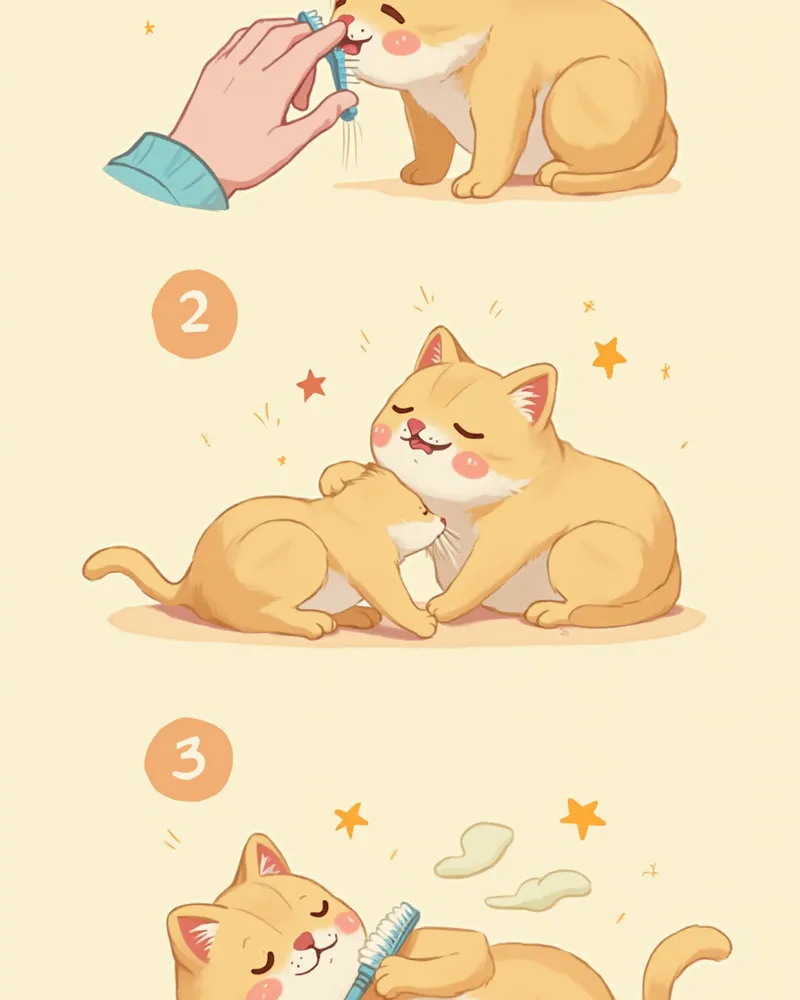
Rushing your cat’s transition to tooth brushing can backfire. Please repeat each step for at least 3–5 days to ensure a smooth adaptation.
Step 1 — Touching Around the Mouth: Gently touch the area around your cat’s mouth while they are relaxed. If they accept it well, immediately reward them with a treat.
Step 2 — Touching the Gums: Gently lift the upper lip and softly rub the gums with your finger. Wrapping gauze around your finger can help them get used to the texture.
Step 3 — Introducing Toothpaste Flavor: Apply a small amount of toothpaste to your finger and let your cat lick it. Once they are comfortable with the taste, try gently applying it to their gums.
Step 4 — Introducing the Toothbrush: Lightly touch the front teeth with a toothbrush dipped in toothpaste. Initially, 2–3 seconds is enough.
Illustration of the step-by-step process to help a cat get used to brushing its teeth

Never Use Human Toothpaste

Human toothpaste contains fluoride, surfactants, and foaming agents, which are toxic if ingested and should never be used on animals, according to veterinary textbooks. Cats are at even greater risk because they cannot spit out or rinse away toothpaste during brushing and inevitably swallow it. Fluoride can irritate the gastrointestinal tract when ingested and may affect the liver and kidneys over time. Xylitol, another common ingredient, causes severe toxicity in dogs, including hypoglycemia and liver damage, making human toothpaste especially dangerous for pets. Since the safety of these ingredients in cats has not been clearly established, it is safest to avoid human products altogether rather than assume they are harmless. Always use only enzyme-based toothpaste specifically formulated for cats.

Practical Brushing Tips: Try This

Now that your cat is comfortable with the training, you can begin actual tooth brushing.
Positioning: Place your cat on your lap or gently hold their head from behind with one hand while they’re on a table. Avoid forcing them down, as this can increase resistance.
Technique: Focus on brushing the outer surfaces of the teeth. Pay special attention to the upper molars, where plaque tends to accumulate most easily. The inner surfaces are naturally cleaned by the cat’s tongue, so brushing the outer sides is sufficient.
Duration: Aim for 30 seconds to one minute per session. At first, it’s fine to brush only one side and switch to the other side the next day.
Frequency: Daily brushing is ideal, but to effectively control plaque, brush at least three times a week.
An illustration of a cat getting its teeth brushed while sitting on its owner's lap.

If Your Cat Refuses to Brush Their Teeth
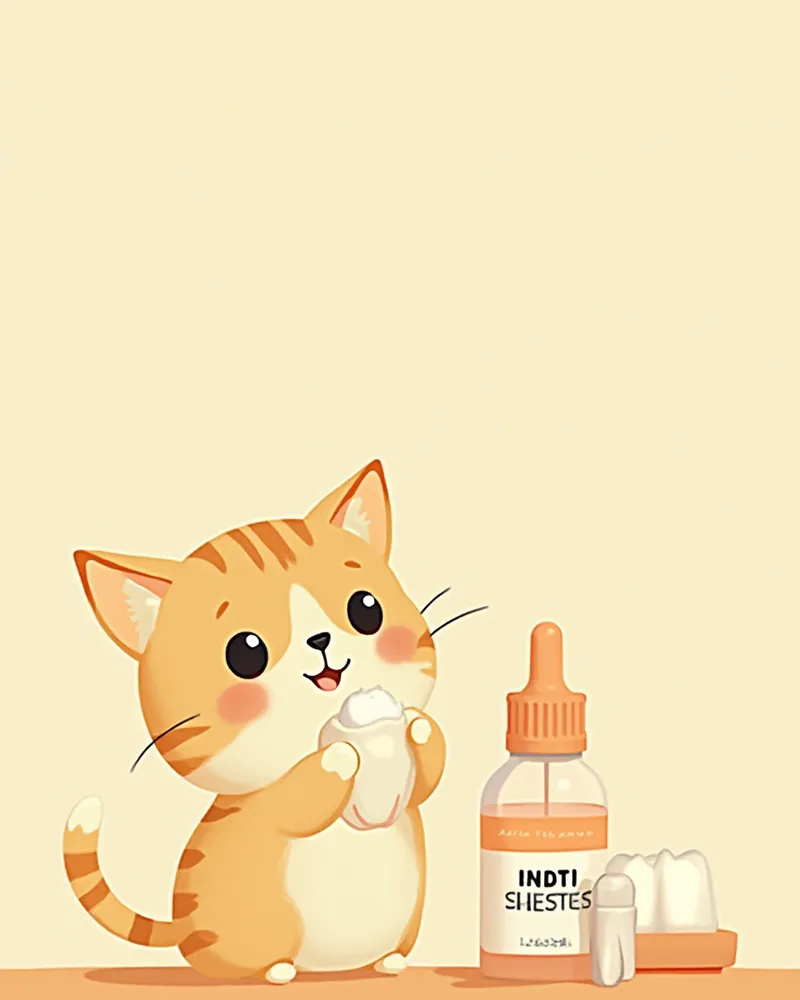
Not every cat will adapt to tooth brushing. If your cat strongly resists even after several weeks of trying, it’s best not to force it, as stress can actually harm their health.
Oral care gel: There are enzyme gels that can be applied directly to the gums without using a toothbrush. While not as effective as brushing, they help inhibit plaque buildup.
Oral care water additives: These are mixed into drinking water. The antibacterial ingredients help reduce bacterial growth.
Dental treats: Treats designed to physically reduce plaque on the teeth through chewing can also serve as a supplementary aid.
However, these alternative methods cannot fully replace tooth brushing, so it’s important to combine them with regular professional dental cleanings.
An illustration of a cat examining oral care gel and a water additive.

Don’t Forget Regular Dental Checkups

Even with consistent home brushing, tartar can’t be completely prevented. It’s best to have your pet’s mouth checked by a veterinarian at least once a year and to receive professional dental scaling if recommended. If you notice bad breath, food dropping while eating, or excessive drooling, periodontal disease may already be progressing, so please visit the clinic right away.

Reviewed by a veterinarian

Dr. Tony — Punnawat Phongkittirak

Dr. Tony — Punnawat Phongkittirak

Veterinarian

A veterinarian who majored in veterinary medicine at Khon Kaen University, Thailand, and completed the IVSA program at North Carolina State University in the United States. Drawing on clinical experience at animal hospitals, he works in the pet healthcare field and is dedicated to building a digital care environment that connects pet parents with veterinarians.

Frequently Asked Questions

At what age should you start brushing your cat’s teeth?
The younger the cat, the faster it adapts. Starting after teething is complete, around 6 to 7 months of age, is ideal, but adult cats can also successfully begin with gradual, step-by-step adaptation training.
My dog’s gums bleed when I brush his teeth. Is that normal?
Bleeding during tooth brushing can be an early sign of periodontal disease. In veterinary dentistry, bleeding during brushing or examination is considered one of the first symptoms of periodontal disease, and recurrent bleeding suggests that gingivitis may already be progressing. Even mild bleeding that persists warrants a prompt oral examination at a veterinary clinic. If the gums are severely swollen or the bleeding is heavy, please seek veterinary care immediately.
Which is better, a finger brush or a regular toothbrush?
When your cat is first getting used to brushing, a finger brush is a great choice. It’s easier for you to control the pressure, and your cat will feel less discomfort from the foreign object. Once your cat is comfortable, it’s a good idea to switch to a regular toothbrush for better cleaning power.
How many times a day should you brush your cat's teeth?
Once a day is sufficient. While daily use is ideal, you should aim for at least three times a week to effectively inhibit tartar buildup. Consistency matters more than frequency.
If I brush my pet’s teeth properly, can I skip professional dental cleanings?
Unfortunately, brushing alone isn’t enough to completely prevent tartar buildup. At-home brushing mainly helps slow down the process of plaque hardening into tartar. It’s important to have your pet’s mouth regularly examined by a veterinarian to determine if professional cleaning is needed.

Share

Related Guides

References

[1] Bellows J. Feline Dentistry – Oral Assessment, Treatment, and Preventative Care. 1st ed. Ames: Wiley-Blackwell; 2010.

[2] Little SE. The Cat: Clinical Medicine and Management. 2nd ed. St. Louis: Elsevier Saunders; 2012. Chapter 25: Preventive Health Care

[3] Atkinson T. A Professional's Guide to Feline Behaviour: Understanding, Improving and Resolving Problems. Shrewsbury: 5m Publishing; 2018.

[4] Niemiec BA. Veterinary Periodontology. Ames: Wiley-Blackwell; 2013.

This information is based on veterinary literature and does not replace diagnosis or treatment. Please consult a veterinarian for specific health concerns.

Metapet Co., Ltd. | CEO: Park Sung-yong | Business Reg. No. 417-88-02562 | Seoul, South Korea | Customer Center

How to Brush Your Cat's Teeth and Build the Habit | Meongsiljang