

If Your Cat Hates the Carrier — A Step-by-Step Training Method for Stress-Free Adaptation
Training your cat to use a carrier step by step can significantly reduce stress during vet visits and travel. Here’s a five-step method to create positive associations.
What Is Carrier Training for Cats?

Why Is Carrier Training Essential?
The 5 Steps of Carrier Training at a Glance
Step-by-Step Training Roadmap
| Item | Stage 1 | Stage 2 | Stage 3 | Stage 4 | Stage 5 |
|---|---|---|---|---|---|
| Goal | Carrier exposure | Voluntary entry | Closing the door | Lifting up | Adapting to transport |
| Activity | Place in the living room with the lid open | Lure with treats and a blanket | Gradual: 30 sec → 1 min → 3 min | Lift for 10 seconds | Short car ride |
| Duration | Varies by cat | Varies by cat | Varies by cat | Varies by cat | Varies by cat |
| Passing Criteria | Comfortable nearby | Enters on their own | Rests even with the door closed | Stable posture | Doesn't cry |
There is no set duration, and it varies greatly depending on the cat's personality and prior experiences. Don't fixate on the number of days; do not move to the next stage until the passing criteria for each stage are fully met. Never rush.
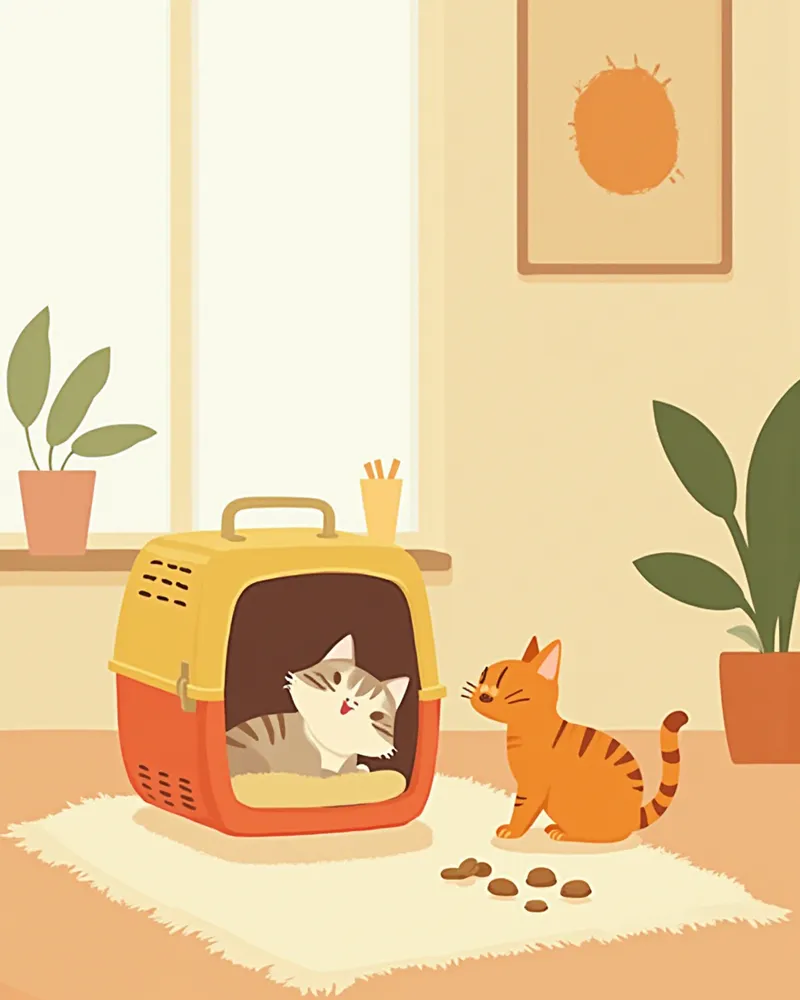
Steps 1–2: Making the Carrier Part of the Home
Mistakes That Ruin Training
Forcing your pet inside, grabbing them by the scruff to shove them in, or dumping them out by flipping the carrier upside down—these actions can instantly undo all the positive associations you’ve worked hard to build. Also, avoid only bringing out the carrier when it’s time for a vet visit. Even after training is complete, don’t put the carrier away; instead, leave it in the living room as a comfortable resting spot. If your pet cries or pants while inside the carrier during transport, resist the urge to take them out. Once you arrive, wait in a quiet environment for them to come out on their own.
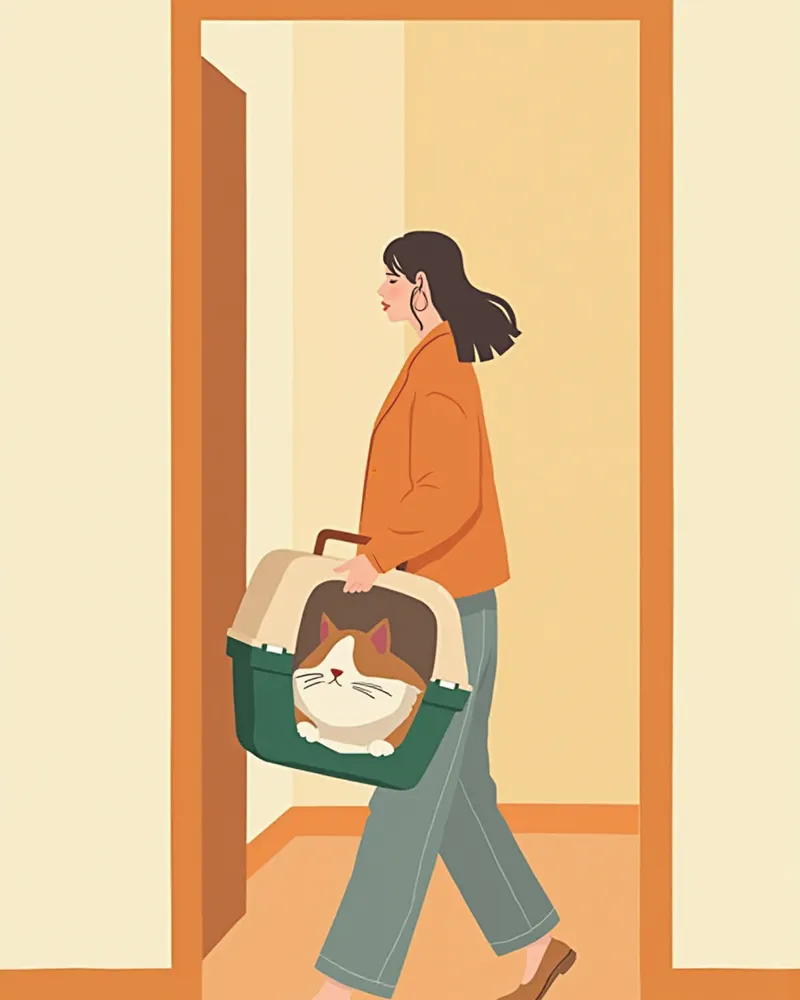
Steps 3–5: From Closing the Door to Car Rides
When to Seek Professional Help
If your cat has already developed severe trauma associated with the carrier—hiding or showing aggression at the mere sight of it—behavioral therapy approaches such as desensitization and counterconditioning (DS&CC) are more appropriate than standard habituation training. We recommend consulting a veterinary behavior specialist or a cat-specific veterinary clinic. During DS&CC, it is crucial not to use the carrier for actual travel until the fear has fully resolved. You can also help by partially covering the open carrier with a towel or blanket to create a less exposed, more secure environment. Carrier adaptation can be attempted with cats of any age using the same methods, so even with senior cats, please proceed more slowly and attentively without giving up.
Reviewed by a veterinarian

Dr. Tony — Punnawat Phongkittirak
VeterinarianA veterinarian who majored in veterinary medicine at Khon Kaen University, Thailand, and completed the IVSA program at North Carolina State University in the United States. Drawing on clinical experience at animal hospitals, he works in the pet healthcare field and is dedicated to building a digital care environment that connects pet parents with veterinarians.
Reviewed 2026-04-27
Frequently Asked Questions
Which is better, a hard carrier or a soft carrier?
How long does it take to train?
How do I train a cat that won’t eat treats?
My pet cries a lot when getting into the car. What should I do?
Can adult cats be trained too?
Share
Related Guides

7 Behavioral Enrichment Strategies for Mental Stimulation Recommended by Veterinarians

Top 5 Calming Supplements for Dogs and Cats in 2026

L-Theanine Effects and Calming Support

How to Reduce Pain in Cats with Cancer at Home — Key Q&A on Palliative Care

Cat Epistaxis and Nasal Obstruction: Could It Be a Nasal Tumor? — Key Symptoms and Treatment Overview

What Are Feline Mammary Tumors? — Key Q&A on Symptoms, Malignancy, and Treatment

How to Confirm Lymph Node Metastasis in Cats: From Testing to Interpreting Results

What are feline hormone-responsive tumors? — Causes and treatment

Cat Injection Site Lump: Is It a Sign of Fibrosarcoma? — Key Guide to Causes and Treatment
What is COP treatment for feline lymphoma? — How to manage efficacy and side effects
References
[1] Pratsch L. et al., Carrier training cats reduces stress on transport to a veterinary practice, Applied Animal Behaviour Science, 2018
[2] A Professional's Guide to Feline Behaviour: Understanding, Improving and Resolving Problems, Appendix 1.2 Cat Carrier Training
[3] The Cat: Clinical Medicine and Management, 2nd Edition, Chapter on Feline Learning and Carrier Training
[4] Veterinary Guide to Preventing Behavior Problems in Dogs and Cats, Carrier Training Section