Like
Share
멍실장
반려동물 치석 예방법과 양치 습관

Pet Tartar Prevention Methods and Brushing Habits

Oral HealthPreventionMeongsiljang Veterinary Advisory Board

If left untreated, pet tartar can lead to gum disease and long-term damage. We’ve compiled evidence-based veterinary methods for preventing tartar, from daily brushing routines to dental chews and professional cleanings.

Why Is Preventing Pet Tartar Essential?

Illustration of a dog and a cat showing healthy teeth
Preventing tartar isn’t just about managing bad breath—it’s about protecting your pet’s overall health. According to veterinary dentistry textbooks, periodontal disease becomes increasingly common with age, especially in small-breed and brachycephalic dogs. Bacteria adhere to the tooth surface, forming a biofilm known as dental plaque. If this plaque isn’t removed promptly, calcium and phosphate from saliva deposit and harden into tartar. Because tartar has a rough surface, plaque adheres to it even more easily, creating a vicious cycle. As tartar builds up, it causes gum inflammation and progresses to periodontal disease. Advanced periodontal disease can weaken the jawbone, potentially leading to fractures, and may even affect vital organs such as the heart, kidneys, and liver. Daily care can prevent all of these issues. Let’s go through some at-home tartar prevention methods step by step.

Check This Before Starting to Brush

Before starting to brush your pet’s teeth, be sure to have a veterinarian check their oral health first. If there is already significant tartar buildup or severe gum inflammation, brushing can cause pain and make your pet extremely averse to having their mouth touched. In cases of advanced tartar, the correct approach is to have professional scaling done first, then gradually establish a brushing routine.

The Most Effective Prevention Method: Daily Brushing
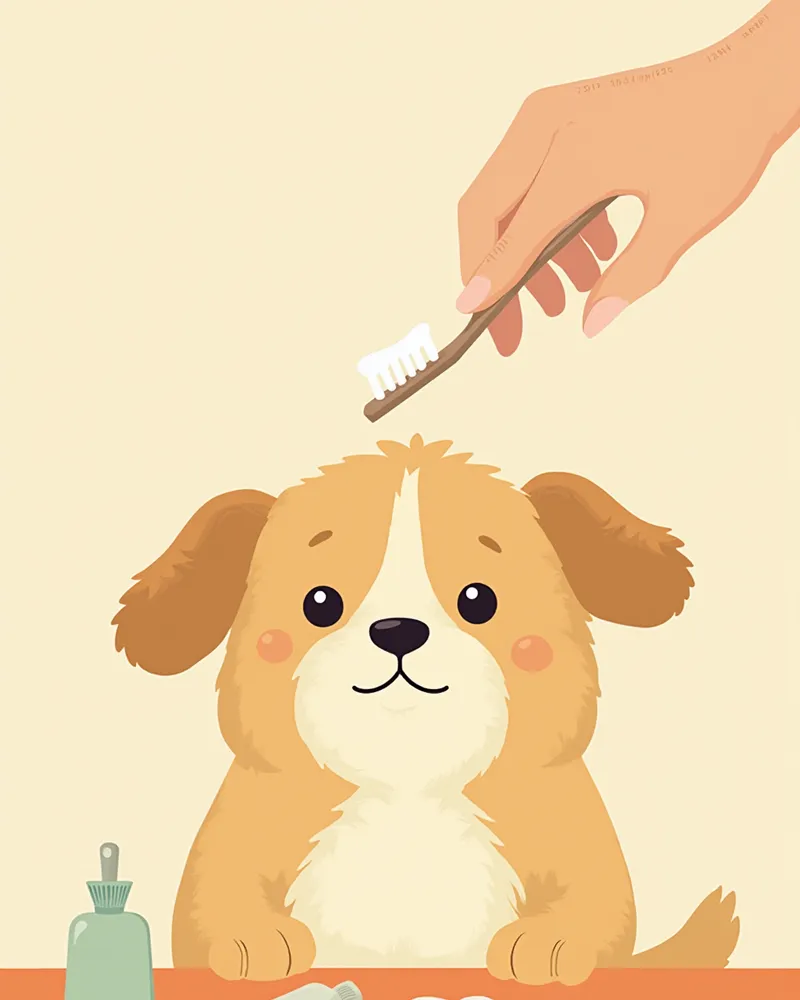
Veterinary dentistry textbooks identify daily tooth brushing as the most effective method for preventing tartar. Its plaque-removing efficacy is significantly superior to that of dental diets or dental chews.
Use a toothbrush designed for pets: Human toothbrush bristles are too stiff. Opt for a pet-specific finger brush or a small-headed toothbrush.
Pet-specific toothpaste is essential: Human toothpastes contain ingredients such as fluoride and surfactants (foaming agents) that can cause toxicity if ingested by pets. Always use toothpaste formulated specifically for pets.
If daily brushing is difficult, aim for at least three times a week: Plaque reforms quickly and, if left untreated, hardens into tartar that cannot be removed with a toothbrush. To effectively remove plaque and prevent tartar formation, brush at least every other day.
Illustration of a dog brushing its teeth with a finger toothbrush

Supplementary Prevention Methods for When Brushing Is Difficult

If your dog struggles with brushing, try incorporating supplementary preventive measures. While these methods don’t fully replace brushing, they can help slow down plaque buildup.
Dental chews: These physically remove plaque from tooth surfaces through chewing. For proven effectiveness, choose products certified by the Veterinary Oral Health Council (VOHC).
Dental water additives: These are oral hygiene aids mixed into your dog’s water bowl. Although many products are available, some lack sufficient scientific validation, so always check for VOHC certification before choosing.
Dental toys: Designed to create friction against teeth, these toys help reduce plaque naturally during play.
Dental diets: These kibble pieces are larger and tougher than regular food, providing a scrubbing effect on teeth as your dog chews.

Comparison of Effectiveness by Prevention Method

Compare the effectiveness and features of each preventive method at a glance.
Prevention MethodPlaque Removal EffectivenessConvenienceCostNotes
Daily Brushing★★★★★LowLowMost effective
Dental Chews★★★☆☆HighModerateVOHC-certified products recommended
Dental Water Additives★★☆☆☆HighModerateSupplement to brushing
Dental Toys★★☆☆☆HighLowDoubles as playtime
Dental Food★★★☆☆HighModerateCan be used as main diet
Scaling★★★★★HighRequires general anesthesia; regular intervals recommended based on veterinary assessment

Four Steps to Establish Proper Brushing Habits
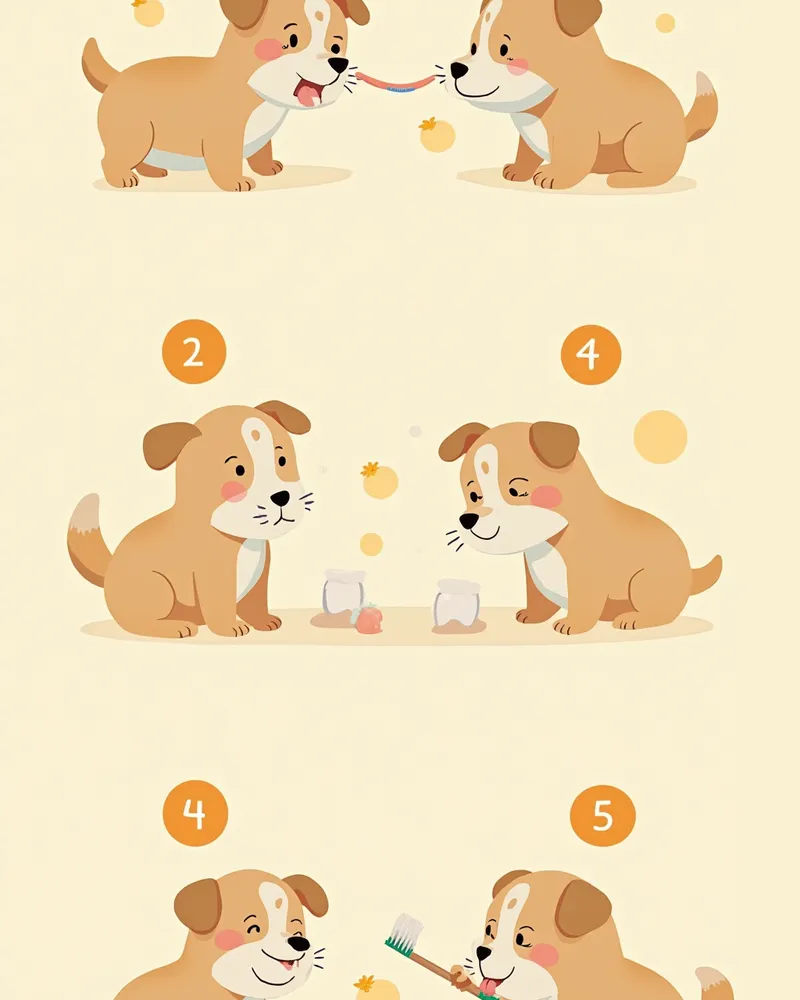
If you put a toothbrush in your pet's mouth right away, most will resist. It's important to take it step by step.
Step 1 — Touching Around the Mouth (1–2 weeks): Start by gently touching your pet's lips and gums while giving treats. Repeat this until they become comfortable with having their mouth touched.
Step 2 — Rubbing with Your Finger (1 week): Apply pet-specific toothpaste to your finger and gently rub their teeth and gums.
Step 3 — Using a Finger Toothbrush (1–2 weeks): Put toothpaste on a finger toothbrush and start with the front teeth, gradually expanding the area you clean.
Step 4 — Switching to a Toothbrush: Once your pet is fully accustomed to the process, switch to a small toothbrush. Brush the outer surfaces of the teeth in circular motions at a 45-degree angle.
An illustration showing the four steps of proper teeth brushing for pets.

Regular Scaling Is Also Important

Even with diligent daily brushing, tartar can still form. Veterinary dentistry textbooks recommend regular professional dental cleanings alongside home care. A dental cleaning involves removing tartar with an ultrasonic scaler and polishing the tooth surfaces smooth under general anesthesia. Tartar hidden below the gumline in the gingival sulcus is carefully removed using hand instruments called curettes. Non-anesthetized cleanings are not recommended by the veterinary community because they cannot effectively remove tartar from beneath the gums or on the inner surfaces of teeth, and they may cause fear and stress in your pet. There is no fixed schedule for dental cleanings, as the frequency depends on your pet’s individual oral health. The standard approach is to have cleanings performed regularly based on your veterinarian’s assessment following an oral examination. A pre-anesthetic blood test is conducted first to ensure safety.
An illustration of a dog receiving a dental check-up at a veterinary clinic.

Pay Special Attention to Small Breeds and Brachycephalic Breeds

Small breeds like Maltese, Yorkshire Terriers, and Chihuahuas have small jaws, which causes their teeth to grow closely together. This makes it easier for food particles and plaque to get trapped, leading to faster tartar buildup. Brachycephalic breeds such as Pugs, Shih Tzus, and Persians also have a higher risk of periodontal disease because their short muzzles often result in irregular tooth alignment. For these breeds, we recommend starting brushing habits at a younger age and scheduling dental cleanings more frequently.

Reviewed by a veterinarian

Dr. Tony — Punnawat Phongkittirak

Dr. Tony — Punnawat Phongkittirak

Veterinarian

A veterinarian who majored in veterinary medicine at Khon Kaen University, Thailand, and completed the IVSA program at North Carolina State University in the United States. Drawing on clinical experience at animal hospitals, he works in the pet healthcare field and is dedicated to building a digital care environment that connects pet parents with veterinarians.

Frequently Asked Questions

At what age can I start brushing my dog’s teeth?
It’s a good idea to start practicing gentle mouth handling as soon as your puppy’s baby teeth begin to come in. Establishing this habit early on helps your dog accept tooth brushing without resistance once they reach adulthood.
Do cats need to have their teeth brushed too?
Yes, periodontal disease is common in cats as well. In particular, cats are prone to a feline-specific dental condition called tooth resorption lesions, making oral care especially important. However, since cats may be more averse to having their mouths touched, please help them adjust gradually.
Can dental chews replace tooth brushing?
Dental chews can’t fully replace toothbrushing. Brushing is the most effective way to remove plaque, so it’s best to view dental chews as a supplementary tool. If brushing is truly difficult, consistently giving dental chews is still far better than doing nothing at all.
Is scaling without anesthesia a good option?
The veterinary community does not recommend scaling without anesthesia. It only removes visible tartar and cannot address tartar below the gumline. Additionally, if your pet moves during the procedure, it could damage their teeth or gums. For safety, professional scaling under general anesthesia is the best option.
Can I use human toothpaste?
Absolutely not. Human toothpaste contains ingredients like fluoride and surfactants (detergents and foaming agents). Since dogs and cats cannot spit out toothpaste or rinse their mouths after brushing, swallowing these ingredients can cause toxicity. Always use toothpaste specifically formulated for pets.

Share

Related Guides

References

[1] Small Animal Dentistry — Chapter 3: Periodontal Disease Prevention and Home Care

[2] Veterinary Dentistry: Principles and Practice, 2nd Ed — Chapter 8: Preventive Dentistry

[3] BSAVA Manual of Canine and Feline Dentistry and Oral Surgery, 4th Ed — Chapter 6: Periodontal Disease

[4] Clinical Veterinary Advisor: Dogs and Cats, 4th Ed — Section: Dental and Oral Disease

This information is based on veterinary literature and does not replace diagnosis or treatment. Please consult a veterinarian for specific health concerns.

Metapet Co., Ltd. | CEO: Park Sung-yong | Business Reg. No. 417-88-02562 | Seoul, South Korea | Customer Center

Pet Tartar Prevention: Brushing Habits & Dental Care | Meongsiljang