Like
Share
멍실장
고양이 타우린 필수성과 결핍 증상

Essentiality of Taurine in Cats and Deficiency Symptoms

HeartIngredientsMeongsiljang Veterinary Advisory Board

Taurine is an essential amino acid that cats cannot produce on their own. A deficiency can lead to dilated cardiomyopathy (DCM) and blindness, so it must be supplemented through their diet.

What Is Taurine for Cats?
A cat eating food that contains taurine
Taurine is an essential amino acid that cats cannot synthesize in sufficient amounts on their own, so they must obtain it through their diet. What’s truly important is that a deficiency can build up gradually, eventually causing severe damage to the heart and eyes. Unlike dogs, cats cannot produce taurine themselves, so consistently feeding them a high-quality cat-specific diet is usually enough to prevent deficiency.

The Role of Taurine in the Cat's Body

Unlike most amino acids that make up proteins, taurine exists in the body’s tissues as a “free amino acid” and plays a vital role in several organs.
Heart muscle contraction: It helps regulate calcium channels in heart cells, maintaining normal contractile strength.
Retinal function: It stabilizes the structure of retinal cells (photoreceptors) responsible for transmitting visual signals.
Bile acid conjugation: It is essential for forming bile acids, which aid in fat digestion.
Antioxidant function: It acts as an antioxidant, protecting tissues from oxidative stress.
Fetal and kitten development: Deficiency has been linked to reproductive abnormalities and developmental issues in kittens.

Key Taurine Information Card

Safe

타우린(Taurine)

심장 수축력 유지, 망막 보호, 담즙산 형성

Dosage: 건식 사료 기준 최소 0.1%, 습식 기준 0.2% 이상

미국사료관리협회(AAFCO) 고양이 필수 영양 기준

Why Is Taurine an 'Essential' Amino Acid Only for Cats?
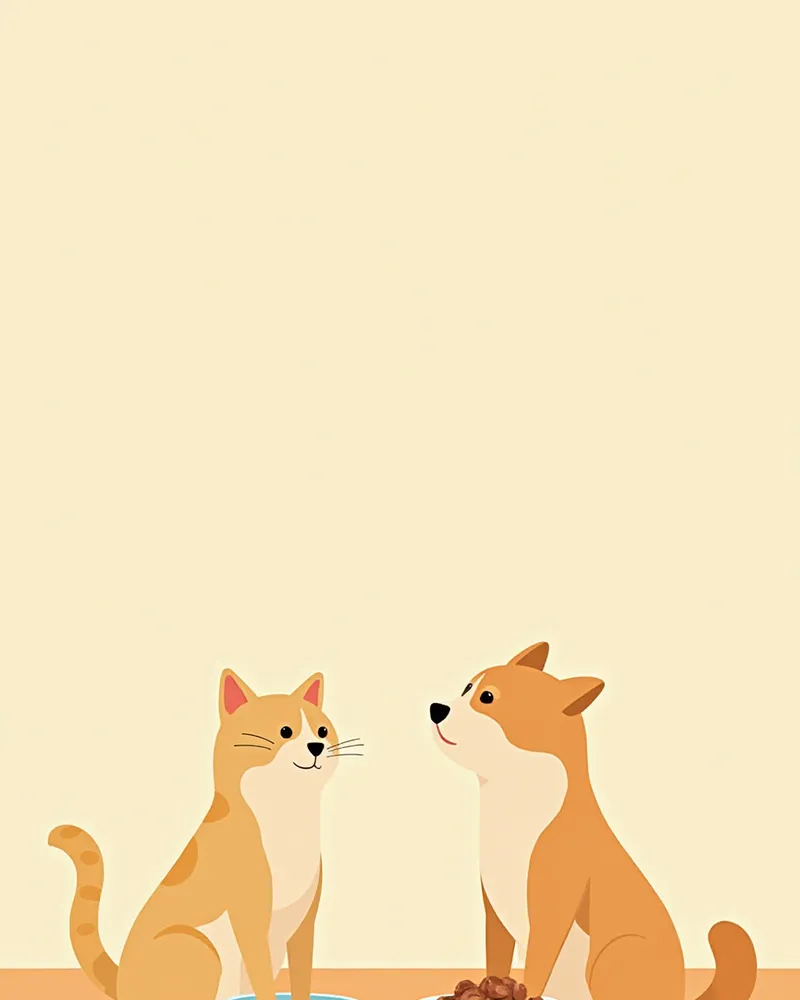
Dogs can synthesize a certain amount of taurine from precursors like cysteine. However, cats have very low activity of the enzymes responsible for taurine synthesis and exclusively use taurine (unlike dogs, which also use glycine) to conjugate bile acids, leading to much higher consumption. Therefore, veterinary internal medicine textbooks classify taurine as a "dietary essential" for cats. Because of this difference, you should never feed dog food to cats.
A comparative image illustrating the differences in taurine metabolism between cats and dogs.

Major Symptoms Caused by Taurine Deficiency
When a deficiency accumulates over months to years, it can cause irreversible damage to the eyes and heart.
Dilated Cardiomyopathy (DCM): The heart walls thin and stretch, reducing their contractile strength.
Feline Central Retinal Degeneration (FCRD): Blindness progresses starting from the center of the visual field.
Reproductive abnormalities: Miscarriage, stillbirth, and developmental disorders in kittens.
Growth abnormalities in kittens: Developmental issues, including skeletal abnormalities, have been reported in kittens born to taurine-deficient mothers.
According to veterinary cardiology textbooks, taurine-deficient DCM is a rare reversible cardiomyopathy in which heart function can be restored with appropriate supplementation.
A veterinarian listening to a cat's heart with a stethoscope.

Go to the Vet Immediately If You See These Symptoms

If your pet shows any of the following signs—rapid or labored breathing, pale or bluish gums, sudden hindlimb paralysis (thromboembolism), or bumping into objects in the dark or inability to jump—there may be a risk of taurine-deficient cardiomyopathy or retinal degeneration. The later the diagnosis, the lower the chance of recovery, so please seek veterinary care within 24 hours.

The Relationship Between Taurine and the Heart Revealed by Veterinary Research

In the late 1980s, Dr. Pion’s research team discovered that cats with idiopathic dilated cardiomyopathy (DCM) had low blood taurine levels. Following this finding, pet food manufacturers were required to add taurine to cat food, which led to a sharp decline in DCM cases. Veterinary cardiology textbooks still recommend taurine supplementation for cats suspected of having DCM, even if their blood taurine levels are within the normal range, due to the possibility of transiently elevated readings caused by measurement errors.

Comparison of Taurine Content in Foods

ItemTaurine content (per 100g)Suitability for cats
Raw chicken heartRelatively rich among animal tissuesVery high
Raw beefContainsHigh
Raw salmonContainsHigh
Dog foodVery little (does not meet a cat's requirement)Unsuitable
Vegetarian feedNoneAbsolutely prohibited

Specific values vary greatly depending on the cut, processing method, and product, so refer to separate nutritional analysis data for precise figures.

Recommended Feeding Amounts and Safety

International pet food standards, such as those set by the AAFCO (Association of American Feed Control Officials), require cat food to contain an appropriate amount of taurine. Commercial cat-specific foods meet these standards, so cats that primarily eat such foods do not need additional supplements. Taurine is a very safe nutrient; even when given in large amounts to cats, there are no reported cases of acute or chronic toxicity, indicating its high safety profile. However, if your cat is on a homemade diet or if a deficiency is suspected, supplementation may be necessary. In such cases, always follow your veterinarian's instructions for dosage.

Three Essential Management Points for Pet Owners

Feed cat-specific food only: Never give dogs’ food or vegetarian diets to cats.
Maintain a balanced staple diet: Homemade diets carry a high risk of taurine deficiency, so only try them after consulting a veterinary nutritionist.
Regular check-ups: Routine heart auscultation and blood tests can help detect taurine deficiency and cardiac abnormalities early.
If your cat has been on a homemade or low-quality diet for a long time, it’s a good idea to have their blood taurine levels checked at a veterinary clinic.

Reviewed by a veterinarian

Dr. Tony — Punnawat Phongkittirak

Dr. Tony — Punnawat Phongkittirak

Veterinarian

A veterinarian who majored in veterinary medicine at Khon Kaen University, Thailand, and completed the IVSA program at North Carolina State University in the United States. Drawing on clinical experience at animal hospitals, he works in the pet healthcare field and is dedicated to building a digital care environment that connects pet parents with veterinarians.

Frequently Asked Questions

Do I need to give my cat a separate taurine supplement?
If your cat’s main diet consists of a commercial cat food that meets AAFCO standards, no additional supplements are necessary. Only consider supplements under veterinary guidance if you’re feeding a homemade diet or suspect nutritional deficiencies.
Is it okay to feed my dog a different food for just a short time?
Feeding your dog only dog food for a day or two is generally fine, but if it continues for several days to weeks, it can lead to taurine deficiency. Cats must always be fed cat-specific food.
Can taurine-deficient cardiomyopathy be cured?
If detected early and supplemented with taurine, heart function can significantly improve within a few months. However, recovery may be limited if severe heart failure or retinal damage has already occurred.
Can a pet still be deficient in taurine even if blood levels are normal?
Yes, blood test values can sometimes be temporarily elevated during the sample collection process. That’s why veterinarians often recommend trying taurine supplementation in cats suspected of having DCM, regardless of their test results.
Is taurine important for kittens too?
Yes, it’s very important. During the early stages of life, the nervous system and vision are rapidly developing, so a deficiency can lead to permanent impairments. Be sure to feed your kitten a diet specifically formulated for kittens.

Share

Related Guides

References

[1] Textbook of Cardiovascular Medicine in Dogs and Cats — Feline Dilated Cardiomyopathy 챕터

[2] The Veterinary Workbook of Small Animal Clinical Cases — The New Kitten Wellness Examination 챕터

[3] Pion PD et al., Myocardial Failure in Cats Associated with Low Plasma Taurine, Science, 1987

This information is based on veterinary literature and does not replace diagnosis or treatment. Please consult a veterinarian for specific health concerns.

Metapet Co., Ltd. | CEO: Park Sung-yong | Business Reg. No. 417-88-02562 | Seoul, South Korea | Customer Center

Taurine for Cats: Why It's Essential & Deficiency Signs | Meongsiljang