Like
Share
멍실장
L-테아닌 효과와 진정 보조

L-Theanine Effects and Calming Support

Brain & CognitionIngredientsMeongsiljang Veterinary Advisory Board

L-theanine is an amino acid extracted from green tea that helps alleviate stress and anxiety in dogs and cats. Here’s a summary of its mechanism of action, recommended dosage, and precautions.

What is L-Theanine?
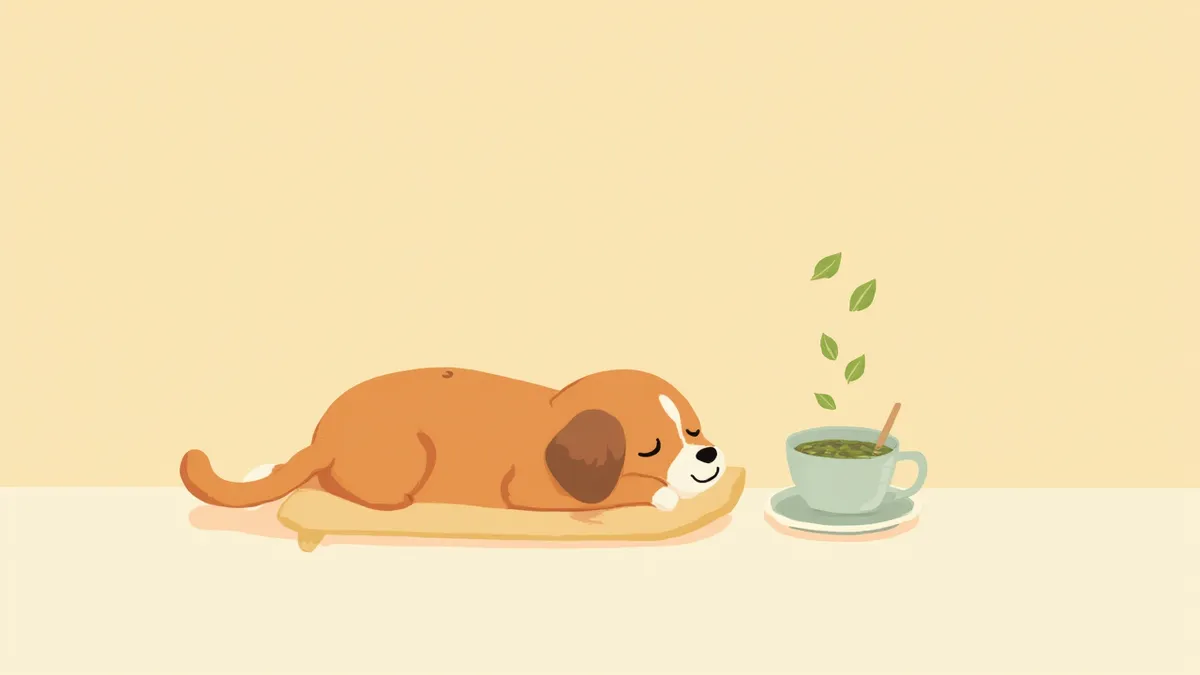
An illustration of a puppy resting comfortably beside green tea leaves.
L-theanine is a non-stimulatory amino acid found in green tea leaves. What’s truly important is that it helps ease tension without causing excitement like caffeine does. It can serve as a natural calming aid for pets experiencing stress from situations such as thunderstorms, separation anxiety, or vet visits. Unlike prescription medications, it’s classified as a dietary supplement, making it more accessible.

Mechanism of Action — How Does It Work in the Brain?

The exact mechanism of how L-theanine works in the brain is still under investigation. As a non-stimulant compound derived from green tea, animal studies have reported anti-stress and antidepressant-like effects, as well as improved cognitive function under stressful conditions. Human studies (Hidese 2019) have confirmed its benefits in reducing tension and improving sleep quality. Rather than inducing deep drowsiness like strong sedatives, L-theanine is known to lower anxiety and tension levels, which is why it is used as a supportive therapy for alleviating anxiety in pets.

Expected Effects for Pets

It can help provide calming support in the following situations:
Alleviating separation anxiety: Helps reduce anxiety-related behaviors when separated from the owner.
Reducing noise phobia: Helps lessen reactions to loud noises such as thunder, fireworks, or vacuum cleaners.
Veterinary visit stress: Helps ease pre-visit anxiety and motion sickness-related anxiety.
Multi-pet households: Helps reduce tension during the adjustment period when introducing new family members.
Moving or traveling: Helps decrease stress caused by changes in environment.
However, veterinary clinical evidence is still limited, and individual responses may vary. It may be more effective when used alongside behavioral modification and environmental management, rather than expecting immediate sedative-level effects.
An illustration of a cat sitting calmly by the window on a rainy day.

L-Theanine at a Glance

Safe

L-테아닌 (L-Theanine)

스트레스·불안 완화, 알파파 증가로 차분한 각성 유도

Dosage: 강아지·고양이 체중 1kg당 2.5~5mg/일 (수의사 상담)

Araujo 2010(강아지), Dramard 2018(고양이) 임상

What Does Veterinary Research Say?

The veterinary clinical evidence for L-theanine remains limited, according to Plumb’s Veterinary Drug Handbook. There are reports suggesting it may help reduce signs of fear and anxiety in cats, and it is introduced as an adjunctive therapy component alongside alpha-casozepine and L-tryptophan for animals experiencing fear-related stress (FAS) during veterinary visits. However, individual responses can vary, and moderate to severe anxiety may require additional prescription medication. Human studies (Hidese 2019) have confirmed its effectiveness in reducing stress-related symptoms and improving cognitive function. Currently, it is appropriate to view L-theanine as an adjunctive therapy to be used in conjunction with behavioral modification and environmental management.
An illustration of a dog and a cat standing side by side with calm expressions at a veterinary clinic.

Recommended Feeding Dosage Guidelines

L-theanine concentrations and formulations vary significantly from product to product, making it difficult to provide a standardized dosage. In veterinary literature, L-theanine is considered a nutraceutical with limited evidence of efficacy, so there is no clearly established recommended dosage based on body weight. In fact, some supplements provide dosages per individual animal rather than per kilogram of body weight. Therefore, rather than arbitrarily determining a dose, it is safest to follow the recommended amount on the product label and consult your veterinarian to determine the appropriate amount for your pet’s size and health status. Currently, there is also limited veterinary data on how long it takes for effects to appear or the minimum duration of supplementation. Thus, it is advisable to administer the supplement for a set period, monitor your pet’s response, and evaluate the results together with your veterinarian.

When to Feed It?

Here’s a guide on when to administer the supplement based on different situations. For acute stress: If there’s a planned event that may cause stress, such as a vet visit or fireworks, give it beforehand (note that the onset of effect varies from pet to pet). For chronic anxiety: For ongoing anxiety like separation anxiety or noise phobia, administer it consistently at the same time every day. For adaptation support: If your pet is facing environmental changes such as moving or welcoming a new family member, start giving it before the change and continue throughout the adjustment period. Mixing it into food or treats can help reduce reluctance. However, since veterinary data on differences between giving it on an empty stomach versus after meals, as well as precise timing of effects, is still limited, you may consider giving it after meals if your pet has a sensitive digestive system. For specific timing and duration, consult with your veterinarian for personalized guidance.

Side Effects and Precautions

L-theanine is generally recognized as a safe and well-tolerated supplement, but there are a few important points to keep in mind.
Side Effects: While it is typically well tolerated, specific veterinary data on side effects is limited due to its status as a supplement, so it is best to avoid excessive dosing.
Drug Interactions: If your pet is currently taking behavioral medications such as anti-anxiety drugs or sedatives, consulting your veterinarian is essential.
Pregnancy and Lactation: Due to insufficient safety data, it is advisable to avoid use during pregnancy and nursing.
Severe Phobias: This ingredient alone may not be sufficient; it should be combined with behavior modification, environmental management, and prescription medication.
Underlying Causes: For issues like separation anxiety or aggression, improving the environment and training should be the priority.
An illustration of a pet owner carefully administering supplements to their dog at home.

Consult a Veterinarian First in These Cases

In the following situations, it’s better to consult a veterinarian before giving L-theanine alone: if your pet is showing severe separation anxiety with self-harm or escape attempts, if their aggression poses a threat to people or other animals, if there’s been a sudden change in personality or behavior, or if they’ve already been diagnosed with a neurological condition. This is because underlying medical issues such as pain, thyroid abnormalities, or cognitive dysfunction could be contributing to the behavioral problems.

Reviewed by a veterinarian

Dr. Tony — Punnawat Phongkittirak

Dr. Tony — Punnawat Phongkittirak

Veterinarian

A veterinarian who majored in veterinary medicine at Khon Kaen University, Thailand, and completed the IVSA program at North Carolina State University in the United States. Drawing on clinical experience at animal hospitals, he works in the pet healthcare field and is dedicated to building a digital care environment that connects pet parents with veterinarians.

Frequently Asked Questions

What’s the difference between L-theanine and melatonin?
L-theanine is a supportive ingredient used to help ease anxiety and tension, but it is not intended to produce a strong sedative effect. Melatonin, on the other hand, is used to promote sleep. For daytime anxiety relief, L-theanine is often more suitable, while melatonin is typically better for nighttime sleep issues. There are also products available that combine both ingredients.
How quickly will the effects be noticeable?
The time it takes for effects to appear after administration varies from pet to pet, and veterinary data on the specific onset time is still limited. If you are looking for sustained improvement in anxiety, we recommend continuing to administer the product consistently while also implementing behavioral modification therapy, and consulting with your veterinarian to assess its effectiveness.
Can I split a human L-theanine supplement for my pet?
Although the active ingredients may be the same, human products can contain additives that are dangerous to pets, such as xylitol or chocolate flavoring. Always choose products specifically formulated for pets.
Can I give this to puppies and kittens too?
We do not recommend using this product in animals under six months of age due to insufficient safety data. For young animals experiencing anxiety, the priority should be socialization training and environmental enrichment.
Can I give this alongside a prescribed anti-anxiety medication?
Specific data on drug interactions between prescription anti-anxiety medications (such as fluoxetine and trazodone) and this product are still limited in veterinary literature. Because there is a potential for overlapping sedative effects, it is essential to inform your veterinarian about all medications your pet is currently taking. Please consult with them to determine whether concurrent use is appropriate and to establish the correct dosage.

Share

Related Guides

References

[1] Hidese S et al., Effects of L-Theanine Administration on Stress-Related Symptoms and Cognitive Functions in Healthy Adults, 2019

[2] Kimura K et al., L-Theanine reduces psychological and physiological stress responses, Biological Psychology, 2007

[3] Araujo JA et al., Anxitane tablets reduce fear of human beings in dogs, Journal of Veterinary Behavior, 2010

[4] Dramard V et al., Clinical efficacy of L-theanine tablets to reduce anxiety-related emotional disorders in cats, Journal of Feline Medicine and Surgery, 2018

This information is based on veterinary literature and does not replace diagnosis or treatment. Please consult a veterinarian for specific health concerns.

Metapet Co., Ltd. | CEO: Park Sung-yong | Business Reg. No. 417-88-02562 | Seoul, South Korea | Customer Center

L-Theanine for Dogs and Cats: The Ultimate Guide to Calming Benefits | Meongsiljang