Like
Share
멍실장
차전자피(사일륨) 효과와 변비·식이섬유

Psyllium Husk Benefits for Constipation and Dietary Fiber

DigestiveIngredientsMeongsiljang Veterinary Advisory Board

Psyllium husk is a water-soluble dietary fiber that absorbs water to soften stools. We've compiled information on this ingredient, which is commonly used to manage constipation and megacolon in dogs and cats.

What Is Psyllium Husk?
Chia seeds and powder in a glass jar
Psyllium is a soluble dietary fiber extracted from the husks of the seeds of Plantago ovata, a plant in the Plantaginaceae family. Inside the gastrointestinal tract, it exerts a strong water-absorbing capacity, transforming into a gel that simultaneously increases both the moisture content and bulk of the stool. Most importantly, it is recognized as a representative bulk-forming dietary fiber in veterinary textbooks for the conservative management of chronic constipation in dogs and cats. In cats, it is particularly utilized in managing constipation that could potentially lead to megacolon, with textbooks noting its greater efficacy in mild cases. Beyond simply assisting with defecation, it helps maintain consistent stool consistency and condition, thereby supporting overall gastrointestinal health.

Benefits of Psyllium Husk

Psyllium husk supports gut health through several mechanisms. Be sure to understand the following benefits:
Softens stool: It absorbs water in the intestines to gently soften and ease the passage of hard stools.
Increases stool bulk: By increasing both the moisture and volume of stool in the colon, it promotes natural bowel movements.
Improves diarrhea: It absorbs excess water and forms a gel to help firm up loose stools (bidirectional regulation).
Improves the gut environment: It ferments to serve as food for beneficial bacteria and produces short-chain fatty acids, helping to maintain a balanced gut microbiome.
Maintains consistent stool consistency: It helps keep stool firmness and volume at appropriate levels, supporting regular and manageable bowel movements.

Evidence from Veterinary Research

The textbook *Clinical Medicine of the Dog and Cat* highlights psyllium as a beneficial bulk-forming dietary fiber for the conservative management of constipation in cats. *Applied Veterinary Clinical Nutrition* also notes that psyllium husk, as a mixed-type fiber, can aid in the long-term treatment of feline idiopathic colonic disease, citing a 2006 study by Byers et al. on feline idiopathic megacolon as a reference. The textbooks further explain that psyllium is used as a supplementary dietary fiber in the treatment of chronic idiopathic colitis in dogs, and it is consistently employed in clinical practice to support gastrointestinal health.
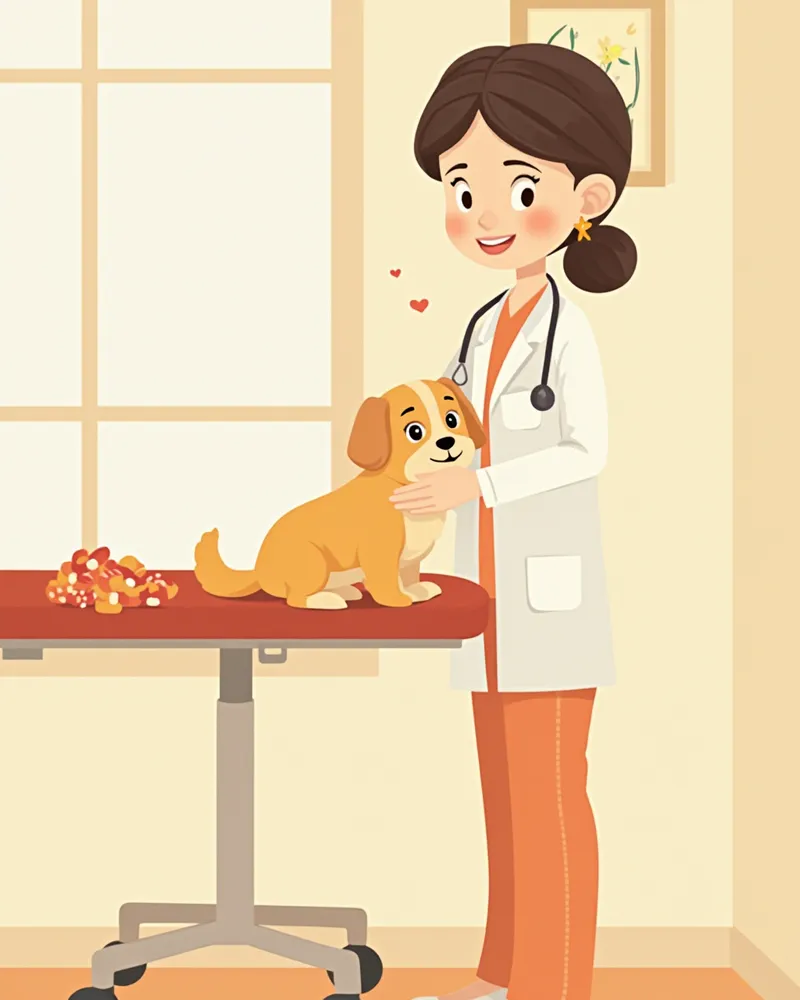
A veterinarian examining a puppy in the clinic.

Key Ingredient Information for Psyllium Husk

Safe

차전자피(Psyllium)

변 부피 증가·수분 보유로 장운동 회복

Dosage: 소형견·고양이 1/4~1/2 티스푼/일

수의내과학 교과서 권장

Caution

락툴로스(Lactulose)

삼투압성 완하 작용(차전자피와 병용)

Dosage: 수의사 처방에 따름

고양이 거대결장증 1차 치료

Caution

PEG 3350

삼투압성 완하제(중증 변비)

Dosage: 수의사 처방에 따름

고양이에서 안전성·기호성 확인

Recommended Feeding Guide

These are general starting dosages based on body weight. Mix the product into wet food and always provide plenty of fresh water alongside meals. Dogs (based on initial daily dosage; recommended to divide into two servings with meals) • Toy/Extra-small breeds (up to 5 kg): Approximately 1/2 tablespoon (≈ 1.5 teaspoons) per day • Small breeds (5–10 kg): Approximately 1 tablespoon (≈ 3 teaspoons) per day • Medium breeds (10–25 kg): Approximately 2 tablespoons per day • Large breeds (25 kg and above): Approximately 3 tablespoons per day Cats (only when fully hydrated): Mix into a can of wet food, 1–4 teaspoons per meal Start with the lowest dose and gradually increase over 3–5 days. If symptoms do not improve within three days, please consult your veterinarian.

Psyllium Husk vs. Other Dietary Fibers

ItemPsyllium huskPumpkinOat bran
Fiber typeMainly soluble (+insoluble)Mostly solubleMixed (soluble+insoluble)
Constipation effectVery goodGoodModerate
Diarrhea controlGood (bidirectional)ModerateModerate
PalatabilityLow (powder taste)Very goodModerate
Adequate water intake essentialTrueFalseTrue

Effects vary by individual condition, so selection after consulting a veterinarian is recommended

How to Feed Psyllium Husk Properly
How you feed psyllium husk determines its effectiveness, so please follow these guidelines carefully.
1. Soak thoroughly in water: Never give the dry powder as-is, as it can clump in the esophagus or intestines and cause blockages. Mix it with water or wet food and let it sit for at least 5–10 minutes before feeding.
2. Always provide fresh water: Without adequate water intake, constipation can actually worsen.
3. Start small and go slow: If you notice gas or abdominal bloating, reduce the dosage.
4. Maintain a 2-hour gap from other medications: Psyllium husk can interfere with the absorption of other drugs.
Wet food mixed with psyllium husk

Precautions and When to Avoid Use

Psyllium husk is generally safe, but it should be avoided or used only under veterinary guidance in the following situations: • Suspected intestinal obstruction or stricture: It may worsen the blockage. • Severe dehydration: Without adequate fluid, psyllium can harden into a mass in the intestines. • Immediately after surgery: Avoid use without veterinary instruction until normal intestinal motility has returned. • Concurrent medication use: Psyllium’s gel-forming properties may interfere with the absorption of certain drugs, so always consult your veterinarian. If constipation persists for more than a week, or is accompanied by vomiting or abdominal distension, seek veterinary care immediately.

When Will You See Results?

Psyllium husk adds moisture and bulk to stool, which helps facilitate bowel movements, so you’ll typically notice softer stools within a few days of starting supplementation. However, the exact timing of response varies from pet to pet. In cases of chronic constipation, where intestinal motility is inherently reduced, consistent administration over a period of time, along with gradual dosage adjustments based on observed effects, is necessary to stabilize stool consistency. During this period, daily records of water intake, defecation frequency, and stool diameter can be extremely helpful during consultations with your veterinarian. If there is no improvement at all, the issue may not be simple constipation, and imaging diagnostics may be required.

Reviewed by a veterinarian

Dr. Tony — Punnawat Phongkittirak

Dr. Tony — Punnawat Phongkittirak

Veterinarian

A veterinarian who majored in veterinary medicine at Khon Kaen University, Thailand, and completed the IVSA program at North Carolina State University in the United States. Drawing on clinical experience at animal hospitals, he works in the pet healthcare field and is dedicated to building a digital care environment that connects pet parents with veterinarians.

Frequently Asked Questions

Can I give my pet human psyllium husk products as they are?
If you use pure, additive-free psyllium husk powder, a small amount adjusted to your pet's weight is acceptable. However, products containing flavorings, sweeteners, or xylitol are strictly prohibited. Whenever possible, opt for products specifically formulated for pets.
Can I give this to my cat too?
Yes, this is a bulk-forming dietary fiber recommended by veterinary textbooks for the conservative management of feline constipation. It is particularly useful in mild cases and must be thoroughly hydrated before being mixed into wet canned food at a dose of 1 to 4 teaspoons. However, since cats may have low palatability for it, start with a small amount to test acceptance.
Can I give it to my pet every day?
For long-term bowel management, such as in cases of chronic constipation, it is essential to administer the product consistently under veterinary guidance. It can also be used long-term to manage constipation that may progress to megacolon. When used preventatively in healthy pets, adjust the dosage and frequency based on stool consistency, and always ensure your pet has access to plenty of water.
Can it help with diarrhea too?
Yes, psyllium husk absorbs moisture, which can help firm up loose stools. However, if the diarrhea is caused by bacteria or viruses, treating the underlying cause is the priority.
Are there any possible side effects?
Gas, bloating, and vomiting are the most common side effects. In most cases, simply reducing the dose or providing more water resolves the issue. However, if your pet experiences difficulty breathing or severe abdominal pain, seek veterinary care immediately.

Share

Related Guides

References

[1] Ettinger SJ, Feldman EC, Côté E. Textbook of Veterinary Internal Medicine: Diseases of the Dog and the Cat, 8th Edition, Elsevier, 2017

[2] Little SE. The Cat, Clinical Medicine and Management, 2nd Edition, Elsevier Saunders, 2020

[3] Schaer M, Gaschen F. Clinical Medicine of the Dog and Cat, 4th Edition, CRC Press, 2017

[4] Byers C, Leasure C, Sanders NA. Feline idiopathic megacolon. Comp Contin Edu Pract Vet, 2006;28:658

This information is based on veterinary literature and does not replace diagnosis or treatment. Please consult a veterinarian for specific health concerns.

Metapet Co., Ltd. | CEO: Park Sung-yong | Business Reg. No. 417-88-02562 | Seoul, South Korea | Customer Center

Psyllium Husk for Dog & Cat Constipation: Fiber Benefits | Meongsiljang