
Magnesium Benefits and Feeding
Magnesium is an essential mineral involved in the function of over 300 enzymes in dogs and cats. Here’s a quick overview of its benefits, recommended dosage, and important precautions.
What Is Magnesium?

The Role of Magnesium — Key Benefits
Magnesium Key Information Card
마그네슘 (Magnesium)
효소 작용·신경 전달·근육 수축·뼈 형성
Dosage: 강아지 0.06%, 고양이 0.04% (건사료 기준)
미국국립연구위원회(NRC) 권장
Recommended Feeding Guidelines

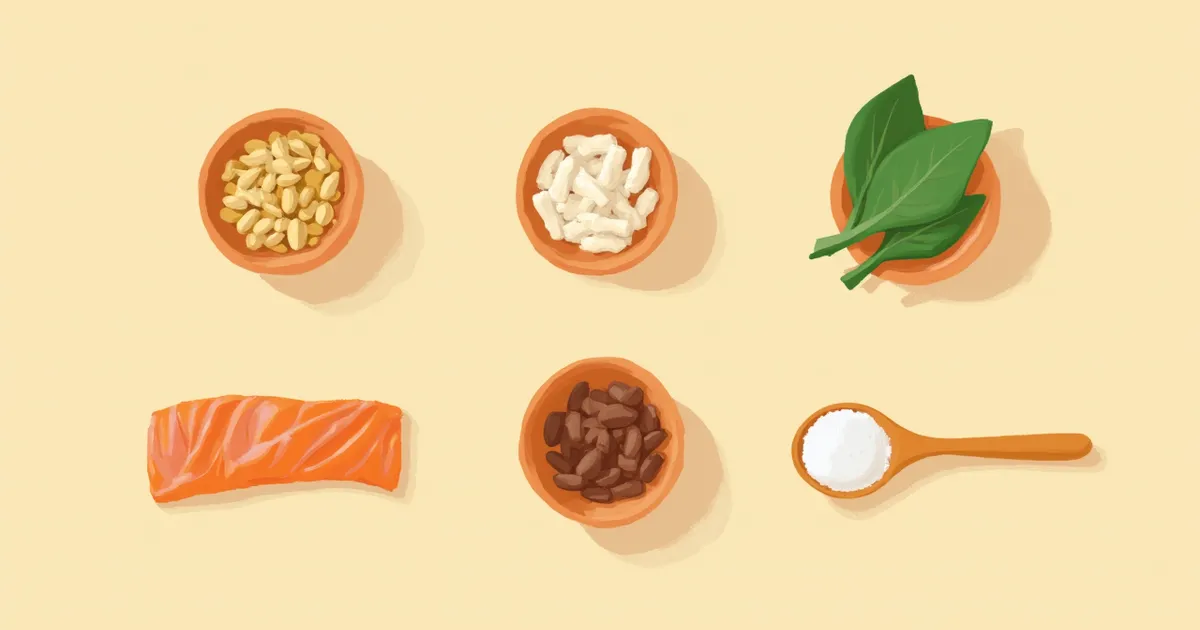
Food Comparison by Magnesium Content
| Item | Content per 100g | Feeding suitability |
|---|---|---|
| Pumpkin seeds | 592mg | Small amount as a treat is fine |
| Spinach (blanched) | 87mg | Small amount is fine |
| Salmon | 30mg | Recommended |
| Chicken breast | 29mg | Recommended |
| Brown rice | 44mg | When there is no grain allergy |
These are contents based on human foods; when feeding pets, only small amounts without seasoning are recommended.
Magnesium Excess — Caution for Feline Urinary Stones
Excessive magnesium can increase the risk of urinary stones, particularly struvite stones, in cats. According to NRC data, reports indicate that when the magnesium content in pet food exceeds 1 g/kg on a dry matter basis, the incidence of struvite uroliths in cats rises. However, subsequent research has shown that maintaining a lower urine pH between 6.1 and 6.6 is more critical for preventing struvite stones than simply restricting magnesium intake. When urine pH is well-managed, slightly higher magnesium intake alone does not pose a significant risk of stone formation; however, if magnesium levels are high without proper pH regulation, the risk increases. For cats with a history of stones, it is recommended to consult your veterinarian about prescription diets that control both magnesium content and urine acidity, and it is safest to never administer self-supplements arbitrarily.
Symptoms of Magnesium Deficiency
Do Not Administer Supplements Arbitrarily
Human magnesium supplements and nutritional products contain levels that are too high for pets relative to their body weight, posing a risk of overdose. According to veterinary emergency and critical care textbooks, excessive magnesium administration can lead to cardiovascular side effects such as hypotension, atrioventricular (AV) block, and bundle branch block. These adverse effects are reported to be more common with rapid intravenous injection (bolus) than with continuous intravenous infusion. Therefore, if supplementation is deemed necessary, do not administer human products arbitrarily; instead, obtain a prescription from a veterinarian to carefully determine the dosage and administration schedule based on your pet’s body weight.
Reviewed by a veterinarian

Dr. Tony — Punnawat Phongkittirak
VeterinarianA veterinarian who majored in veterinary medicine at Khon Kaen University, Thailand, and completed the IVSA program at North Carolina State University in the United States. Drawing on clinical experience at animal hospitals, he works in the pet healthcare field and is dedicated to building a digital care environment that connects pet parents with veterinarians.
Reviewed 2026-04-19
Frequently Asked Questions
Can I give my dog human magnesium supplements?
Does feeding a cat a diet high in magnesium cause bladder stones?
How can I tell if my pet is deficient in magnesium?
Should the magnesium content be listed on pet food labels?
Can I give pumpkin seeds or spinach as treats?
Share
Related Guides

My Senior Cat Won’t Eat — A Complete Guide to Choosing Food for Cats with Weak Digestion

Top 5 Prescription Diets for Feline Pancreatitis Recommended by Veterinarians — Low-Fat, Highly Digestible Food Guide

Royal Canin vs Hill’s vs Purina vs Orijen — Which Brand Is Right for Your Pet, According to Veterinarians?

Benefits of Omega-3 for Dogs and a Guide to Proper Feeding

What is MSM for Dogs? Effects on Relieving Joint Pain

L-Theanine Effects and Calming Support

Psyllium Husk Benefits for Constipation and Dietary Fiber

Melatonin: A Complete Guide to Its Effects on Sleep, Anxiety, and Hair Loss

NAC (N-acetylcysteine) Effects and Guide for Liver and Respiratory Use

Effects of Vitamin B12 (Cobalamin) and Deficiency Symptoms
References
[1] National Research Council, Nutrient Requirements of Dogs and Cats, 2006
[2] Plumb's Veterinary Drug Handbook, 10th Ed - Magnesium
[3] Small Animal Critical Care Medicine, 3rd Ed - Magnesium Disorders
[4] Pastoor et al., Effect of dietary magnesium on urinary and faecal excretion in cats, Br. J. Nutr., 1995