
Like
Share
멍실장
강아지 골육종 (대형견 호발)

Canine Osteosarcoma (Common in Large-Breed Dogs)

ImmunityDiseasesMeongsiljang Veterinary Advisory Board

Canine osteosarcoma is a malignant tumor that originates in the bone and is commonly seen in large-breed dogs. Early detection and prompt treatment significantly influence the prognosis.

What Is Canine Osteosarcoma?
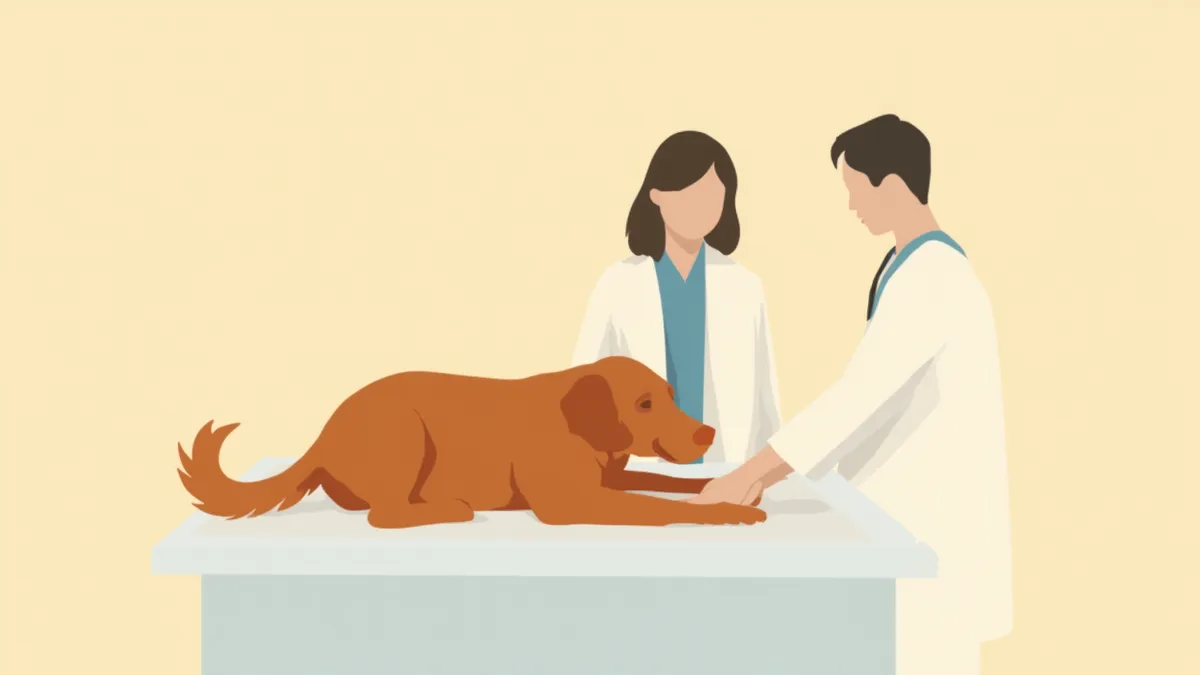
A veterinarian gently palpating a large dog’s front leg.
Canine osteosarcoma is a primary bone tumor that develops when bone-forming cells become malignant. It is the most common type of bone cancer in dogs, accounting for over 85% of all primary bone tumors. Early detection is key. If your dog shows signs of lameness lasting more than two weeks or if a specific area becomes swollen, do not dismiss it as a simple joint issue—have an X-ray taken immediately. The later the diagnosis, the higher the risk of rapid metastasis to the lungs.

Why Does It Occur Frequently in Large-Breed Dogs?

Osteosarcoma is a bone cancer that occurs much more frequently in large and giant-breed dogs. Veterinary textbooks note that it primarily affects the limb bones of large dogs, accounting for approximately 75–85% of cases. Representative high-risk breeds include Great Danes, Saint Bernards, and Rottweilers. Osteosarcoma typically originates near the growth plates of long bones, specifically in the metaphysis, where abnormal bone growth and differentiation are believed to contribute to tumor development. Cases have been reported in areas of previous fractures, and some dogs may have genetic predispositions, such as mutations in the p53 tumor suppressor gene. While the age of onset varies, osteosarcoma is most commonly diagnosed in middle-aged to senior large-breed dogs.

Key Symptoms Not to Miss

Osteosarcoma is easy to overlook because its early symptoms closely resemble simple arthritis or muscle soreness. If any of the following signs persist for more than two weeks, a veterinary visit is essential. - Persistent lameness: Limping that worsens over time and does not respond well to pain relievers - Localized swelling: Swelling near the shoulder or wrist in the front legs, or near the knee or ankle in the hind legs - Painful vocalization: Crying out or avoiding touch when the affected area is handled - Decreased appetite and energy: Prolonged pain leads to a decline in overall vitality - Pathologic fracture: Bone breakage from minor trauma, indicating that the bone has already become weakened
The veterinarian’s hands gently examining the front shoulder area of a large dog

When to Seek Immediate Veterinary Care

The following signs may indicate progression of osteosarcoma or a pathological fracture. Immediate veterinary care within 24 hours is essential. - A leg bone breaks suddenly after minor trauma - The pet completely refuses to bear weight on one leg and trembles severely - The swollen area becomes suddenly red and warm to the touch - Rapid breathing and coughing develop (suggesting possible lung metastasis)

How Is Osteosarcoma Diagnosed?

Diagnosing osteosarcoma involves a stepwise approach using imaging and histopathology. First, X-rays are used to identify both lytic (bone-destroying) and proliferative (bone-forming) lesions. Osteosarcoma often presents with this mixed pattern of bone destruction and new bone formation. However, distinguishing osteosarcoma from other sarcomas based on X-ray findings alone can be challenging. Next, a CT scan is performed to precisely define the extent of the lesion. CT has the advantage of detecting pulmonary metastases more sensitively than chest X-rays. A definitive diagnosis is made through a bone biopsy (histopathology). Alkaline phosphatase (ALP) staining in cytology can aid in differentiating osteosarcoma cells from other tumors, serving as a diagnostic adjunct. However, while ALP staining has high sensitivity, its specificity is low; therefore, histopathological examination is required for a final confirmation.

Treatment Options — Surgery, Chemotherapy, and Radiation

Treatment for osteosarcoma aims to simultaneously remove the local tumor and prevent metastasis. Combined therapy significantly extends survival time compared to single-modality treatment. - Amputation: This is the standard surgical procedure. It provides immediate pain relief, and large-breed dogs often adapt to walking on three legs faster than expected. - Limb-sparing surgery: This procedure involves removing only the affected bone and replacing it with a metal implant. It may be considered for senior dogs or those with severe arthritis. - Chemotherapy: Drugs such as carboplatin and doxorubicin are used after surgery to delay lung metastasis. The veterinarian determines the dosage and schedule based on the dog’s weight and blood test results. - Palliative radiation: This can be used for pain management when surgery is not feasible.
A large three-legged dog walking energetically outdoors after leg amputation

Comparison of Treatment Methods

ItemLimb amputationLimb-sparing surgeryPalliative care
Pain relief effectVery highHighModerate
Expected survival time (with chemotherapy)About 10–12 monthsAbout 9–11 monthsAbout 3–5 months
Physical recovery burdenModerateHighLow
Cost burdenModerateVery highLow
Suitable casesMost patientsSenior dogs with severe arthritisAdvanced metastasis, old age, underlying disease

Actual prognosis varies greatly depending on metastasis, tumor location, age, and health status. The decision must be made in consultation with your veterinarian.

Home Care Management Points

After surgery or chemotherapy, pain management and adjustments to your pet’s living environment are the most important priorities. - Prevent slipping: Place non-slip mats in living rooms and hallways to reduce strain on the remaining limbs. - Weight management: Since your pet must support their body weight on one leg, obesity is strictly prohibited. - Light walks: Maintain muscle strength with short, frequent walks on flat ground. Avoid stairs and jumping. - Monitor for pain signals: Panting, trembling, and decreased appetite may indicate worsening pain. - Regular X-rays: Schedule X-rays every three months post-surgery to check for lung metastasis. If your pet experiences vomiting or diarrhea during chemotherapy, do not stop medication on your own; contact your veterinarian first.
A large dog resting comfortably in a cozy living room with a non-slip mat laid out.

Breed-Specific Risks and Recurrence Prevention

Large and giant breeds such as Great Danes, Saint Bernards, Rottweilers, Irish Wolfhounds, and Scottish Deerhounds are known to be at higher risk for osteosarcoma. Because this cancer commonly develops in the limb bones of these dogs, including a limb X-ray in regular health checkups as they enter their senior years can greatly aid in early detection. It is also well established that microscopic metastasis to the lungs is often present at the time of diagnosis, so lifelong monitoring for recurrence and metastasis is essential even after treatment. Since genetic predispositions, such as p53 mutations, may play a role in some cases, it is advisable to consider excluding dogs with a family history of osteosarcoma from breeding programs.

Reviewed by a veterinarian

Dr. Tony — Punnawat Phongkittirak

Dr. Tony — Punnawat Phongkittirak

Veterinarian

A veterinarian who majored in veterinary medicine at Khon Kaen University, Thailand, and completed the IVSA program at North Carolina State University in the United States. Drawing on clinical experience at animal hospitals, he works in the pet healthcare field and is dedicated to building a digital care environment that connects pet parents with veterinarians.

Frequently Asked Questions

How much longer can my pet live after osteosarcoma surgery?
With amputation alone, the average survival time is typically less than six months. However, when amputation is combined with cancer treatment, survival time can roughly double, with some pets living close to a year or even longer. That said, outcomes can vary significantly depending on the individual’s overall condition and the extent of metastasis.
Will my dog be able to adapt well even if a leg is amputated?
Yes, they tend to adapt faster than expected. Even large-breed dogs usually become accustomed to walking on three legs within a few weeks. Managing their weight and protecting the remaining joints are key.
Aren’t the side effects of cancer treatment severe?
Chemotherapy drugs used for osteosarcoma, such as carboplatin, doxorubicin, and cisplatin, are administered at regular intervals and may cause side effects like loss of appetite and vomiting. If you notice any unusual symptoms, do not make your own judgment—contact your veterinarian immediately.
Is neutering associated with the development of osteosarcoma?
Based on the veterinary textbook references provided, it’s difficult to confirm a direct causal link between neutering and osteosarcoma. However, since osteosarcoma occurs more frequently in large and giant breed dogs, it’s best to discuss your pet’s care plan, including the timing of neutering, with your veterinarian to make an informed decision.
Is osteosarcoma hereditary?
While not a purely genetic disease, it occurs more frequently in certain large and giant breeds, and mutations in tumor suppressor genes such as p53 have been reported, indicating a genetic predisposition. It is advisable to exclude individuals with a family history of the condition from breeding programs.

Share

Related Guides

References

[1] Aithal H.P. et al., Textbook of Veterinary Orthopaedic Surgery, Chapter 14 Bone Tumors, Springer, 2023

[2] Kudnig S.T., Séguin B., Veterinary Surgical Oncology, 2nd Ed, Wiley-Blackwell

[3] Schaer M., Clinical Medicine of the Dog and Cat, 4th Ed, CRC Press

This information is based on veterinary literature and does not replace diagnosis or treatment. Please consult a veterinarian for specific health concerns.

Metapet Co., Ltd. | CEO: Park Sung-yong | Business Reg. No. 417-88-02562 | Seoul, South Korea | Customer Center

Canine Osteosarcoma: Bone Cancer Signs in Large Breeds | Meongsiljang