Like
Share
멍실장
강아지 정상피종 초기 증상과 진단·치료, 예후와 관리 가이드

If Your Dog’s Testicle Is Enlarged — Signs of a Seminoma and When to Diagnose and Treat

Oncology/CancerDiseasesMeongsiljang Veterinary Advisory Board

Testicular tumors are common in male dogs. When detected early, a single surgery can lead to a near-cure prognosis. Here’s a comprehensive overview covering early symptoms, diagnosis, treatment, and post-surgical care.

What Is a Canine Seminoma?
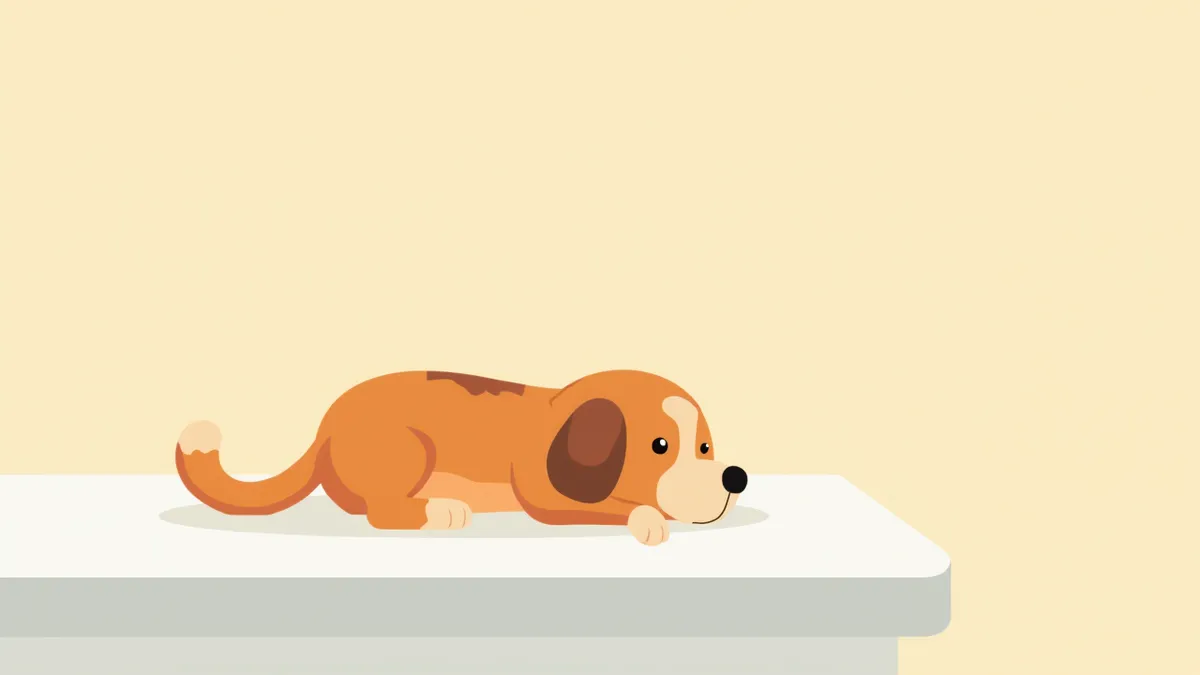
A male puppy receiving a check-up from a veterinarian on the examination table at an animal hospital.
Seminomas are tumors that develop in the seminiferous tubules of the testes in male dogs. They are most commonly found in intact males over the age of seven and represent a relatively common type of testicular tumor. Early detection is truly key. In most cases, surgery (castration) offers a prognosis that is nearly curative. If you notice any changes in testicular size or asymmetry, do not delay—schedule an ultrasound examination at your veterinary clinic.

Causes and Risk Factors for Seminomas

The exact cause has not yet been fully identified. However, the following factors are known to increase the risk of developing the condition.
Age: In intact male dogs, the frequency of testicular tumors tends to increase with age.
Cryptorchidism: If one or both testicles fail to descend into the scrotum and remain in the abdominal cavity or inguinal region, the risk of tumor development is higher than in normally positioned testicles. Cryptorchidism itself is also known to have a hereditary tendency.
Hormonal changes: Some testicular tumors secrete estrogen, which can cause feminizing symptoms. These hormonal changes are considered a characteristic of the tumor rather than a cause.
Breed predisposition: The condition is more frequently reported in small-breed dogs and breeds prone to cryptorchidism, such as Boxers, German Shepherds, Pekingese, Dachshunds, and Yorkshire Terriers.

Early Symptom Checklist — Check for These Changes
Seminomas often show no obvious symptoms in the early stages. If you notice any of the following changes, please have your pet checked at a veterinary clinic.
Testicular enlargement or asymmetry: One testicle may become enlarged or feel firm to the touch.
Scrotal skin changes: Redness, swelling, or skin irritation may occur.
Feminization syndrome: Enlarged nipples, symmetrical hair loss on both sides of the body, and skin hyperpigmentation may indicate excessive estrogen production.
Abdominal discomfort: In cases of cryptorchid testicular tumors, the abdomen may become distended or show signs of pain.
Asymptomatic: Many cases are discovered incidentally during routine health check-ups.
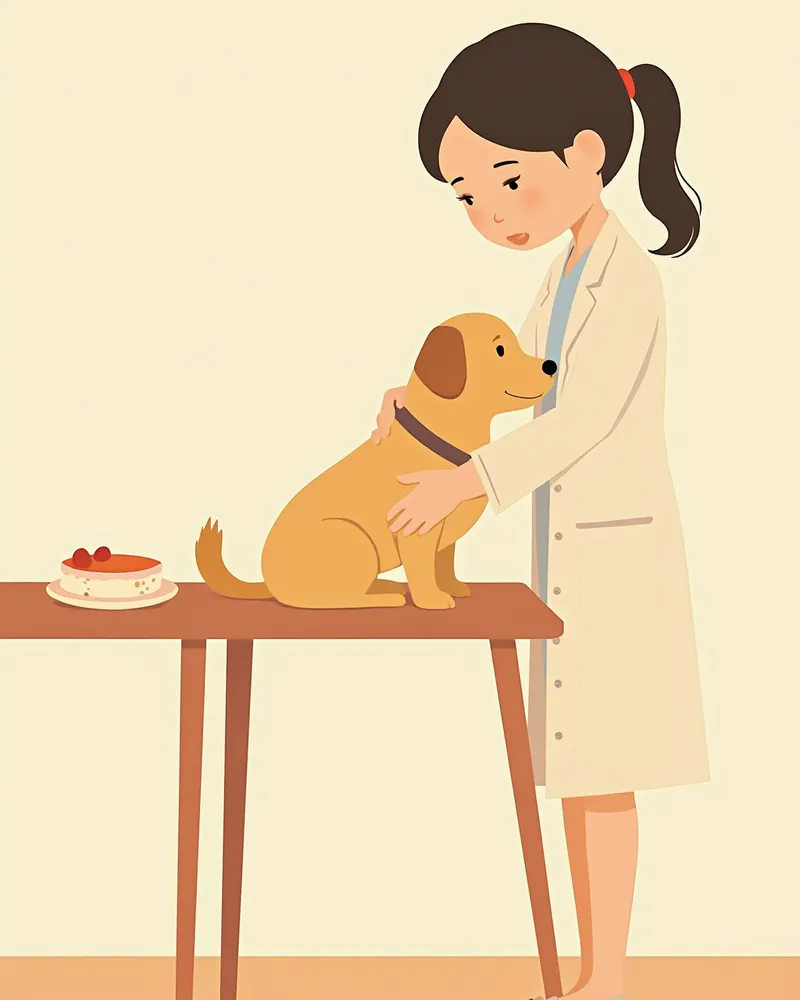
The veterinarian palpates the puppy’s groin and abdomen to check for any abnormalities in the testicles.

When to Go Straight to the Vet

Seek prompt veterinary care if you notice any of the following symptoms: • Sudden, significant swelling of the testicle or severe pain upon touch • A hard, distended abdomen accompanied by vomiting and loss of appetite (possible torsion or rupture of a tumor in a retained testicle) • Rapidly spreading hair loss and skin discoloration • Hind limb swelling or signs of difficulty breathing (possible metastasis)

Diagnostic Methods — How Is It Confirmed?

The veterinarian will proceed with the following steps to determine whether the mass is a seminoma.
Physical examination: The veterinarian will first palpate the testicles to check for asymmetry or induration.
Ultrasound examination: This will assess the internal structure of the testicles and the extent of any tumors.
Blood and hormone tests: These will indirectly check for excessive estrogen secretion.
Chest X-rays and abdominal ultrasound: These will evaluate for metastasis to the lymph nodes and lungs.
Histopathological examination: The testicular tissue removed during surgery will be examined to confirm the final diagnosis.
If the undescended testicle is located within the abdominal cavity, a CT scan may be additionally required.

Treatment Options — Surgery Is Key

The standard treatment for a normal seminoma is bilateral orchiectomy (neutering).
Bilateral neutering: Even if the tumor is present in only one testicle, the other testicle is also removed. This is done to prevent recurrence and stabilize hormone levels.
Surgery for intra-abdominal cryptorchidism: This procedure requires an abdominal incision, so the recovery period is slightly longer than that of a standard scrotal surgery.
In cases of metastasis: Although rare, if metastasis to the lymph nodes or lungs is confirmed, additional chemotherapy may be considered.
The prognosis is generally very good with a single surgery. Feminizing symptoms caused by the estrogen-secreting tumor usually resolve after surgery, typically improving gradually over 1 to 3 months. Older skin changes may take longer to recover.
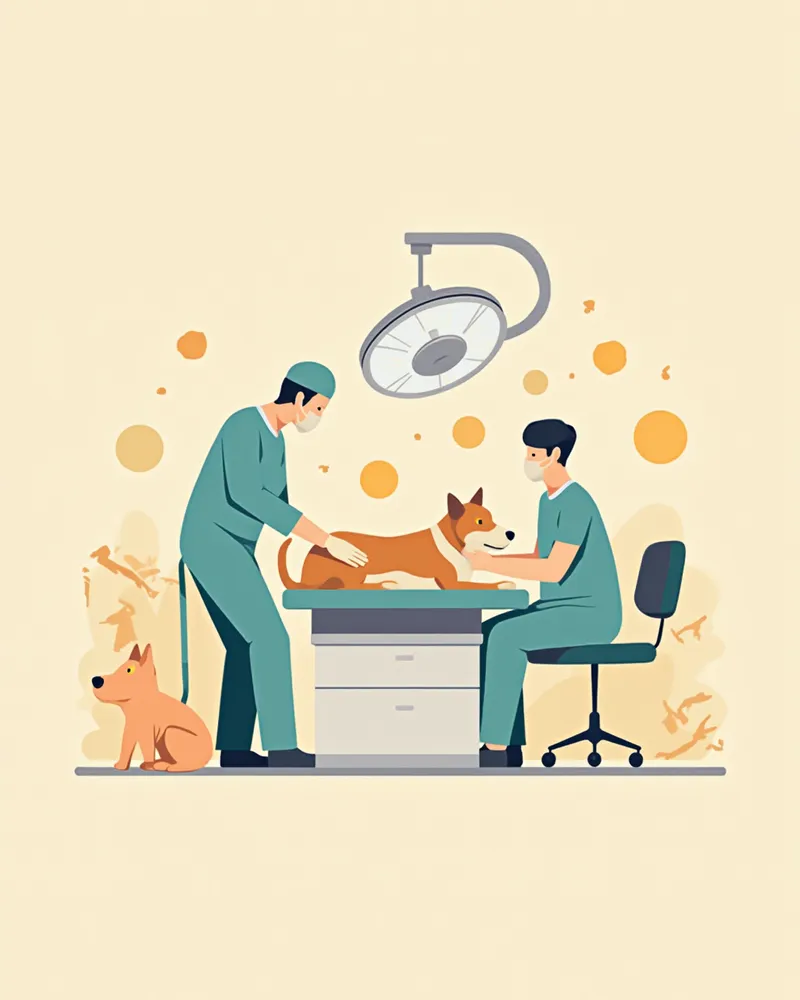
A veterinarian performing a castration surgery on a dog in the operating room

Post-Surgical Home Care Tips

Proper care at home after surgery is crucial for recovery.
Wear an e-collar: Keep the Elizabethan collar on for about two weeks to prevent your pet from licking or scratching the surgical site.
Limit activity: Avoid running, jumping, and rough play for 1–2 weeks after surgery.
Dietary management: Caloric needs decrease after neutering. Slightly reduce food portions or switch to a diet formulated for neutered pets.
Monitor the wound: Contact your veterinarian immediately if you notice swelling, discharge, or fever.
Follow-up checkups: If there is a risk of metastasis, schedule ultrasound and chest X-ray examinations every 3–6 months.
A dog resting comfortably at home while wearing a neck collar after surgery.

Essential Info for Owners of Breeds Prone to Cryptorchidism

Breeds prone to cryptorchidism, such as Boxers, German Shepherds, Pekingese, Dachshunds, and Yorkshire Terriers, as well as small-breed dogs, are at higher risk for normal testicular tumors. Cryptorchidism has a genetic predisposition, and most affected dogs are reported to be purebred. If cryptorchidism is diagnosed, consult your veterinarian about preventive castration before tumors develop. Even after surgery, it is recommended to maintain regular check-ups every 6 to 12 months.

Reviewed by a veterinarian

Dr. Tony — Punnawat Phongkittirak

Dr. Tony — Punnawat Phongkittirak

Veterinarian

A veterinarian who majored in veterinary medicine at Khon Kaen University, Thailand, and completed the IVSA program at North Carolina State University in the United States. Drawing on clinical experience at animal hospitals, he works in the pet healthcare field and is dedicated to building a digital care environment that connects pet parents with veterinarians.

Frequently Asked Questions

Is a dog's normal lipoma cancerous?
Sertoli cell tumors are a type of tumor that develops in the testicles. While they are generally considered to have a low tendency to metastasize, the actual risk of spread varies depending on the individual dog and the specific characteristics of the tumor. Early detection and surgical removal typically lead to an excellent prognosis, often resulting in a cure.
Can neutering surgery prevent normal sebaceous cysts?
Yes, neutering is the most effective way to prevent testicular cancer. If your dog has undescended testicles, consult your veterinarian early about the best timing for surgery.
My dog has a retained testicle, but he’s showing no symptoms. Is it okay to just leave it as is?
Cryptorchidism is known to increase the risk of testicular tumors. Even in the absence of symptoms, preventive surgery is recommended, and the timing should be determined in consultation with your veterinarian.
Will feminizing symptoms (such as hair loss and enlarged nipples) resolve after surgery?
If the tumor was secreting estrogen, most dogs recover within 1 to 3 months after castration. Older skin changes may take longer to heal.
How long after a routine lipoma surgery can my pet return to normal activities?
For a standard scrotal castration, your pet can gradually return to normal activities after 1–2 weeks of rest. However, since surgery for an inguinal or abdominal cryptorchid testicle requires opening the abdominal cavity, it’s best to allow an additional 2–3 weeks for recovery.

Share

Related Guides

References

[1] Withrow SJ, Vail DM, Page RL. Withrow & MacEwen's Small Animal Clinical Oncology, 5th Ed., Elsevier, 2013. Chapter 30: Tumors of the Male Reproductive System.

[2] Fossum TW et al. Small Animal Surgery, 4th Ed., Mosby Elsevier, 2013. Chapter: Surgery of the Reproductive Tract.

[3] Morrison WB. Cancer in Dogs and Cats: Medical and Surgical Management, 2nd Ed., Teton NewMedia, 2002.

[4] Ettinger SJ, Feldman EC, Côté E. Textbook of Veterinary Internal Medicine, 8th Ed., Elsevier, 2017. Section: Testicular Neoplasia.

This information is based on veterinary literature and does not replace diagnosis or treatment. Please consult a veterinarian for specific health concerns.

Metapet Co., Ltd. | CEO: Park Sung-yong | Business Reg. No. 417-88-02562 | Seoul, South Korea | Customer Center

Enlarged Testicle in Dogs: Seminoma Signs & Treatment | Meongsiljang