Like
Share
멍실장
강아지 반복 행동 장애 증상과 원인, 진단·치료와 관리 포인트 총정리

Canine Compulsive Disorder: Symptoms, Causes, Diagnosis, Treatment, and Management Summary

Brain & CognitionDiseasesMeongsiljang Veterinary Advisory Board

Canine compulsive disorder is a neuropsychiatric condition in which specific behaviors, such as tail chasing or excessive paw licking, occur repetitively and cannot be stopped. We’ve summarized the key points, from causes to veterinary treatment and home care.

What is Canine Compulsive Disorder?

Chasing its tail — a hallmark sign of compulsive disorder in dogs
Canine compulsive disorder is a neuropsychiatric condition in which specific behaviors, such as tail chasing, excessive licking, or spinning in circles, are repeated and fixed without any apparent context. The key point is that these are not mere habits. When the repetition becomes severe, the dog finds it difficult to stop on its own, which can lead to self-injury and skin infections. According to veterinary behavior textbooks, these behaviors originate from normal grooming and walking but have become excessively repetitive and ritualized. Although they may appear cute, there is a high likelihood that your dog is experiencing significant stress.

Causes and Background of Onset

Compulsive disorders are not caused by a single factor, but rather by a combination of multiple factors.
Anxiety and Stress: Separation anxiety, environmental changes, and unfamiliar stimuli can trigger and reinforce compulsive behaviors. In fact, it is well known that a significant number of animals exhibiting compulsive behaviors are in a state of anxiety or stress.
Genetic Factors: Compulsive behaviors such as tail chasing have been reported in Bull Terriers, and genetic predispositions may be involved in certain breeds. However, having a genetic predisposition does not mean all individuals will exhibit symptoms to the same degree, as environmental factors also play a role.
Neurological or Organic Abnormalities: Physical issues such as pain or neurological diseases can produce symptoms that resemble compulsive behaviors.
Environmental Deprivation: A monotonous environment lacking appropriate stimulation and opportunities for activity can also be associated with compulsive behaviors.

Key Symptoms Checklist

If the following behaviors repeat out of context and persist frequently or for extended periods to the point where your pet struggles to stop on their own, please consult a veterinarian.
Tail chasing: Rapidly chasing one’s own tail in a manner that is difficult to self-regulate
Licking paws or legs: Repeatedly licking specific areas, leading to thickened skin or hair loss
Spinning in circles: Continuously circling the same spot without any apparent reason
Air snapping: Repeatedly snapping at empty air (also known as “fly-snapping” behavior)
Compulsive chewing of specific objects: Obsessively chewing or licking the same toy or object
Red, irritated dog paws from excessive licking — an example of compulsive behavior disorder symptoms

When to Seek Immediate Veterinary Care

If repetitive behavior has started suddenly, appears seizure-like, or involves self-injury (bleeding or deep wounds), immediate emergency veterinary care is necessary. This could indicate a neurological issue affecting the brain or spinal cord. Prompt treatment is also required if a skin infection is present.

How is it Diagnosed?

The key to diagnosing compulsive disorders is first ruling out underlying neurological, dermatological, or orthopedic causes. Veterinarians typically proceed in this order: 1) a behavioral history (when it occurs, how often, and what triggers it), 2) a neurological examination, 3) blood and urine tests, and 4) MRI or CT imaging if necessary. Since skin conditions or joint pain can sometimes mimic compulsive behaviors, comprehensive testing may be required. Seeking a clinic with a veterinary behavior specialist can help ensure an accurate diagnosis.

Treatment: Combining Behavioral Modification and Medication
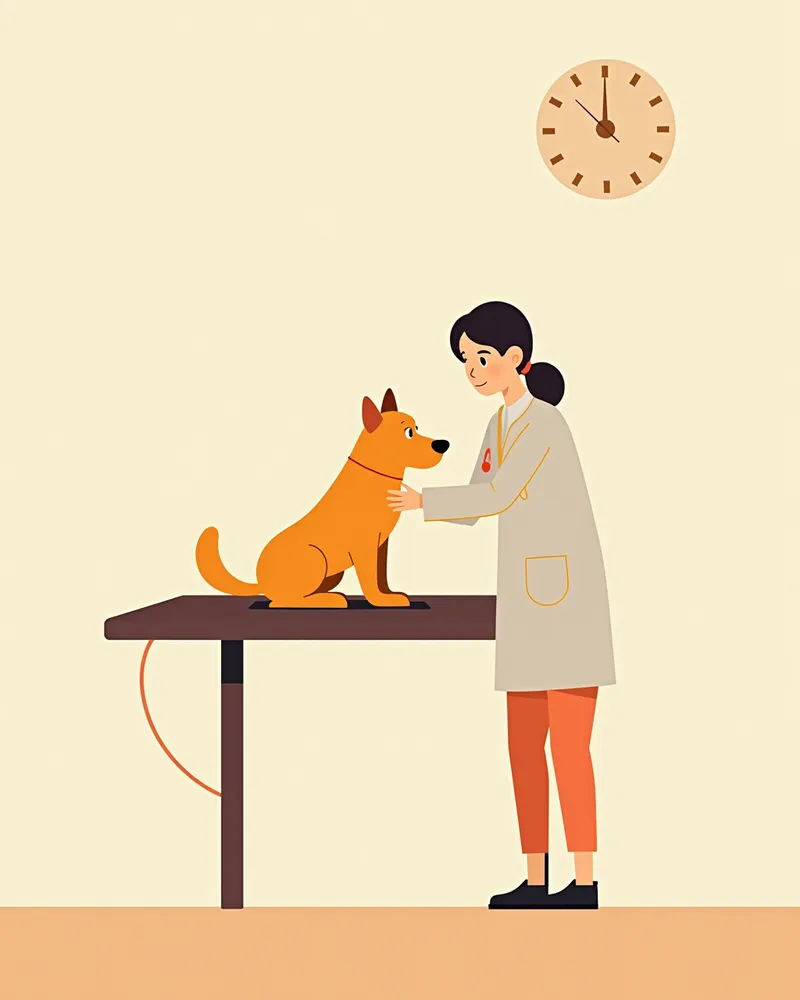
Treatment for compulsive disorders is most effective when behavioral modification training is combined with medication.
Behavioral modification: Interrupt the reinforcement cycle by ignoring the behavior, redirecting to alternative actions, or blocking the behavior as soon as it begins.
Medication: Serotonin-based medications prescribed by a veterinarian can help reduce the frequency of compulsive behaviors. The veterinarian will determine the dosage and duration of treatment based on your pet’s individual condition.
Environmental adjustments: Removing stressors, increasing exercise, and maintaining a consistent routine are also essential components of treatment.
A dog receiving veterinary care — the treatment process for compulsive disorder

Home Management Strategies

Alongside veterinary treatment, these are management strategies you can consistently practice at home.
Ensure adequate exercise: Walk or play with your pet for at least 30 minutes a day to help them burn off energy and reduce anxiety levels.
Enrich the environment: Stimulate their brain using snuffle mats, puzzle toys, and hide-and-seek games.
Keep a behavior log: Jotting down when and in what situations repetitive behaviors occur will be greatly helpful during veterinary visits.
Use an ignore strategy: Scolding or excessively comforting your pet during the behavior may inadvertently reinforce it.
Playing with puzzle toys for dogs — Managing repetitive behaviors through environmental enrichment

Breed-Specific Considerations and Relapse Prevention

Certain breeds, such as Bull Terriers, have been reported to exhibit repetitive behaviors like tail chasing, and genetic predisposition is known to play a role in some breeds. However, having a genetic predisposition does not guarantee that symptoms will develop, as environmental factors also contribute. Therefore, if you own a breed suspected of having a genetic predisposition, it is advisable to monitor for abnormal behaviors more closely and at an earlier stage. Additionally, since compulsive disorders often require long-term treatment and can relapse when stress triggers occur even after treatment, consistent environmental management and regular behavioral check-ups are essential.

Reviewed by a veterinarian

Dr. Tony — Punnawat Phongkittirak

Dr. Tony — Punnawat Phongkittirak

Veterinarian

A veterinarian who majored in veterinary medicine at Khon Kaen University, Thailand, and completed the IVSA program at North Carolina State University in the United States. Drawing on clinical experience at animal hospitals, he works in the pet healthcare field and is dedicated to building a digital care environment that connects pet parents with veterinarians.

Frequently Asked Questions

Is your dog chasing its tail a sign of a compulsive behavior disorder?
If it occasionally flares up and then stops, it may just be playful behavior. However, if your pet can’t stop or if it happens multiple times a day for extended periods, a veterinary consultation is recommended.
Can compulsive disorders be completely cured?
Rather than aiming for complete elimination, a more realistic goal is to reduce the frequency and intensity of the behavior. With consistent behavior modification, medication, and environmental management, it can be controlled to a level that doesn’t interfere with daily life.
How long should my pet take the medication?
In most cases, the medication needs to be administered for at least several months. The veterinarian will determine when to discontinue treatment based on your pet’s condition, so it is important that you do not reduce the dosage or stop the medication on your own.
Can young puppies develop compulsive behavior disorders?
Yes, it can occur. It may also appear in puppies with genetic predispositions or those who experienced severe stress during their socialization period. Early detection and intervention can improve the prognosis.
Is it effective to scold a dog during the behavior?
In fact, increased stress can worsen the symptoms. For repetitive behaviors, it’s often more effective to ignore them or gently redirect your pet toward a different, calmer activity.

Share

Related Guides

References

[1] Bain, M.J. (2019). Repetitive Behaviors in Companion Animals. In: Introduction to Animal Behavior and Veterinary Behavioral Medicine. Wiley-Blackwell.

[2] Denerolle, P., White, S.D., Taylor, T.S., and Vandenabeele, S.I.J. (2007). Organic diseases mimicking acral lick dermatitis in six dogs. J. Am. Anim. Hosp. Assoc. 43(4): 215-220.

[3] Hewson, C.J., Luescher, U.A., and Ball, R.O. (1999). The use of chance-corrected agreement to diagnose canine compulsive disorder. Can. J. Vet. Res. 63(3): 201-206.

This information is based on veterinary literature and does not replace diagnosis or treatment. Please consult a veterinarian for specific health concerns.

Metapet Co., Ltd. | CEO: Park Sung-yong | Business Reg. No. 417-88-02562 | Seoul, South Korea | Customer Center

Canine Compulsive Disorder: Symptoms, Causes & Treatment | Meongsiljang