Like
Share
멍실장
강아지 유기인제중독 증상과 응급 대처법, 위험 섭취량과 예방까지 총정리

If Your Dog Ingested Pesticide — Symptoms of Organophosphate Poisoning and Emergency Response Timing

Emergency/ToxicityDiseasesMeongsiljang Veterinary Advisory Board

Based on veterinary expertise, we’ve compiled information on the symptoms, emergency response steps, hospital treatment procedures, and home prevention measures for dogs exposed to organophosphate components in pesticides and insecticides.

What Is Organophosphate Poisoning in Dogs?

A lethargic, droopy puppy and a concerned owner’s hand resting gently beside it.
Organophosphate poisoning in dogs is an acute condition caused by exposure to organophosphate chemicals found in pesticides and insecticides, which disrupt the nervous system. These compounds inhibit acetylcholinesterase, the enzyme responsible for regulating nerve transmission, leading to overstimulation of the nerves. The most critical factor is the speed of response. Symptoms can appear relatively quickly after exposure and worsen rapidly, so contact your veterinarian immediately if you suspect poisoning. If your dog exhibits vomiting, excessive drooling, and muscle tremors simultaneously, treat it as a medical emergency and seek immediate care.

How Does Poisoning Occur? — Causes and Exposure Routes

Organophosphates are commonly found in pesticides (insecticides), flea and tick preventatives for pets, and household pest control products. In the past, ingredients like chlorpyrifos, used in dog flea collars, were particularly notable. Dogs can be exposed by licking contaminated grass or soil, through direct skin contact with the chemicals, or by accidentally ingesting pest control products. Once organophosphate compounds enter the body, they inhibit acetylcholinesterase, an enzyme that regulates nerve transmission. This leads to overstimulation of the nervous system, causing simultaneous abnormalities in the digestive, cardiac, respiratory, and muscular systems.

Key Symptom Checklist — Suspect Poisoning If You See These Signs

Excessive drooling: Your pet may suddenly drool profusely, often with frothy saliva.
Increased tearing: There is a sudden increase in tear production.
Vomiting and diarrhea: Overactivity of the digestive tract can lead to repeated vomiting and diarrhea.
Muscle tremors: Tremors may start in the head and spread to the body and tail, potentially affecting the entire body.
Pupil changes: Pupils may constrict to a pinpoint size, but they can also dilate. Because of this variability, pupil size alone is not a reliable indicator.
Difficulty breathing: Bronchoconstriction can cause rapid or labored breathing.
Abnormal heart rate: The heart rate may slow down (bradycardia) or speed up (tachycardia), and arrhythmias may occur.
Seizures and convulsions: In severe cases, your pet may collapse and experience convulsions.
A puppy lying on the examination table with unfocused eyes and drooling saliva.

Go to the Emergency Room Immediately — Do Not Wait If These Symptoms Appear

If your pet is already having a seizure or convulsion, breathing rapidly, has bluish gums or lips, or has lost consciousness and collapsed, you need to go to an emergency veterinary clinic immediately. Do not attempt to induce vomiting or give food or water at home, as this can lead to aspiration pneumonia.

How Is It Diagnosed at the Hospital?

The veterinarian will first assess the symptoms and review the exposure history. If you know which product was involved, be sure to bring the container or ingredient label to the clinic. A blood test measuring acetylcholinesterase activity (a nerve-regulating enzyme) can confirm poisoning: levels below 50% of normal are suspicious, while levels below 25% serve as diagnostic evidence. Administering a small test dose of atropine to observe the response can also aid in diagnosis. In clinics without specialized equipment, treatment is often started immediately based on symptoms and exposure history alone, and if further confirmation is needed, samples of stomach contents or serum may be sent to an external laboratory.

How Is Treatment Conducted?

Decontamination: If the substance has contacted the skin, wash it off with soap and lukewarm water. If there are no symptoms after oral ingestion, consider inducing vomiting or administering activated charcoal.
Atropine administration: This is the key medication for controlling excessive secretions, slow heart rate, and bronchoconstriction. It is crucial to use an adequate dose to prevent drowning in secretions and subsequent asphyxiation.
Pralidoxime (2-PAM) administration: This antidote reactivates inhibited enzymes and must always be used in combination with atropine (monotherapy is not recommended). It is generally most effective when administered within 24 hours of exposure.
Fluid and oxygen therapy: These are administered concurrently to correct dehydration and support breathing.
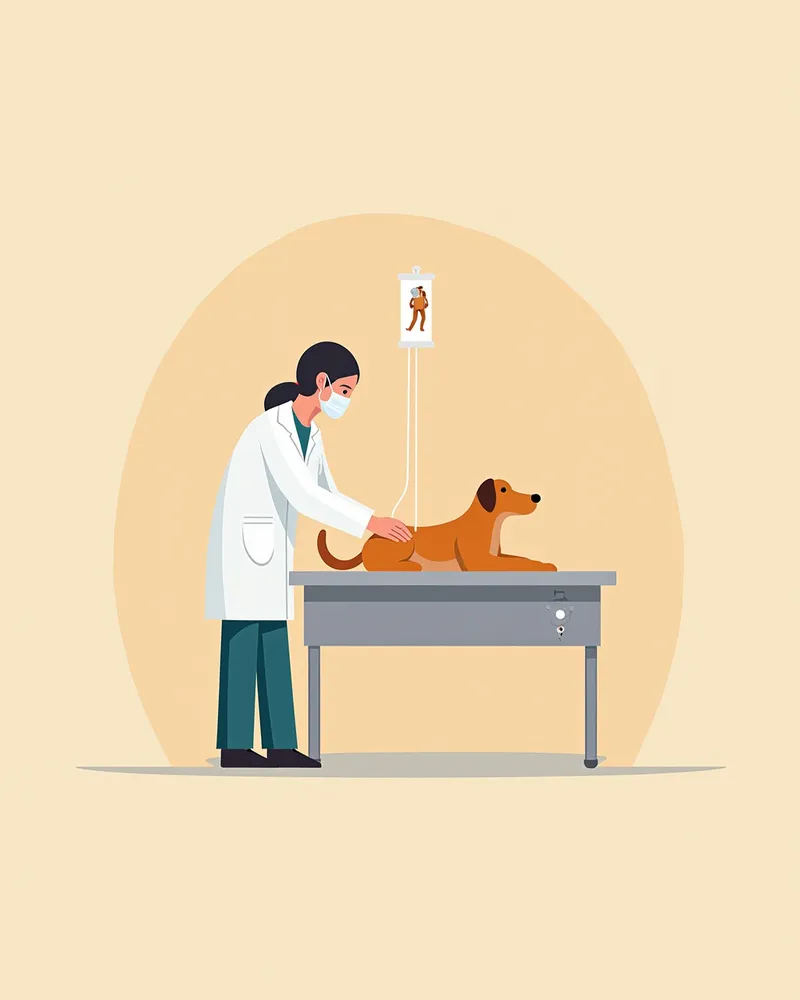
A puppy receiving intravenous fluid therapy on the examination table, with a veterinarian nearby.

Post-Discharge Home Care — What You Can Do at Home

Even after treatment, keep a close eye on your pet for 24 to 48 hours.
Hydration: Offer small amounts of water frequently to prevent dehydration after vomiting or diarrhea.
Rest and calm: Let your pet rest in a quiet, warm place with minimal stimulation.
Recheck symptoms: If you notice trembling, vomiting, or abnormal breathing after returning home, come back to the clinic right away.
If your pet’s skin was exposed to anything, it’s a good idea to give them another bath once you’re home.
A puppy recovering on a cozy blanket

Prevention at Home — Just Follow These Steps

Store pesticides and insecticides in a locked area completely out of your dog’s reach, and always follow the product label’s instructions for use, storage, and disposal. Keep your dog out of treated gardens or fields for the duration specified in the product manual, and consider blocking access to vegetable patches and flower beds. Since some pet dewormers contain organophosphates, check the ingredients before selecting a product or consult your veterinarian first.

Reviewed by a veterinarian

Dr. Tony — Punnawat Phongkittirak

Dr. Tony — Punnawat Phongkittirak

Veterinarian

A veterinarian who majored in veterinary medicine at Khon Kaen University, Thailand, and completed the IVSA program at North Carolina State University in the United States. Drawing on clinical experience at animal hospitals, he works in the pet healthcare field and is dedicated to building a digital care environment that connects pet parents with veterinarians.

Frequently Asked Questions

If I suspect my pet has ingested an organophosphate, is it safe to induce vomiting at home?
If symptoms have already appeared, inducing vomiting at home can be dangerous. If vomiting occurs during seizures or when consciousness is impaired, it can lead to aspiration pneumonia. Treatment must always be carried out under the guidance of a veterinarian.
Which insecticide products contain organophosphates?
Malathion, chlorpyrifos, and diazinon are representative examples. You can check the product ingredient label for the term "organophosphate." Some pet flea and tick products may also contain these ingredients, so be sure to verify before purchasing.
Can my pet make a full recovery after treatment?
If the condition was mild and treated promptly, most pets make a full recovery. However, if seizures lasted a long time or respiratory paralysis was severe, neurological aftereffects may remain. Post-discharge, veterinary follow-up for 1–2 weeks is necessary.
Even if it seems like only a small amount was exposed, should I still go to the vet?
Yes, it’s essential to go. Even a small amount can be fatal depending on your dog’s weight, and organophosphates can be absorbed through the skin. Even if no symptoms are visible, it’s safest to have your vet check your dog right away if exposure is suspected.
Which is more dangerous: skin contact or ingestion?
Both are dangerous, but oral ingestion is absorbed more quickly and can cause symptoms to worsen rapidly. Skin exposure can be mitigated by washing the area immediately to reduce absorption. In either case, contact your veterinarian right away.

Share

Related Guides

References

[1] Osweiler, G.D. et al., Blackwell's Five-Minute Veterinary Consult Clinical Companion: Small Animal Toxicology, 3rd Edition, Wiley-Blackwell, 2016

[2] Schaer, M., Clinical Medicine of the Dog and Cat, 4th Edition, CRC Press, 2022

[3] Plumb, D.C., Plumb's Veterinary Drug Handbook, 10th Edition, Wiley-Blackwell, 2023

[4] Brutlag, A., Gupta, S. (Eds.), Feline Emergency and Critical Care Medicine, 2nd Edition, Wiley-Blackwell, 2020

This information is based on veterinary literature and does not replace diagnosis or treatment. Please consult a veterinarian for specific health concerns.

Metapet Co., Ltd. | CEO: Park Sung-yong | Business Reg. No. 417-88-02562 | Seoul, South Korea | Customer Center

Dog Ate Pesticide? Organophosphate Poisoning Signs & First Aid | Meongsiljang