Like
Share
멍실장
강아지 각막궤양 증상과 원인, 진단·치료와 관리 포인트 총정리

If Your Dog Keeps Rubbing Its Eyes — Causes of Corneal Ulcers and the Golden Window for Treatment

Eye HealthDiseasesMeongsiljang Veterinary Advisory Board

Corneal ulcers in dogs are an ophthalmic condition that can lead to corneal perforation and blindness if treatment is delayed. Our veterinary advisory team has compiled a comprehensive overview of symptoms, causes, fluorescein diagnosis, treatment, and key home care points.

What Is a Canine Corneal Ulcer?
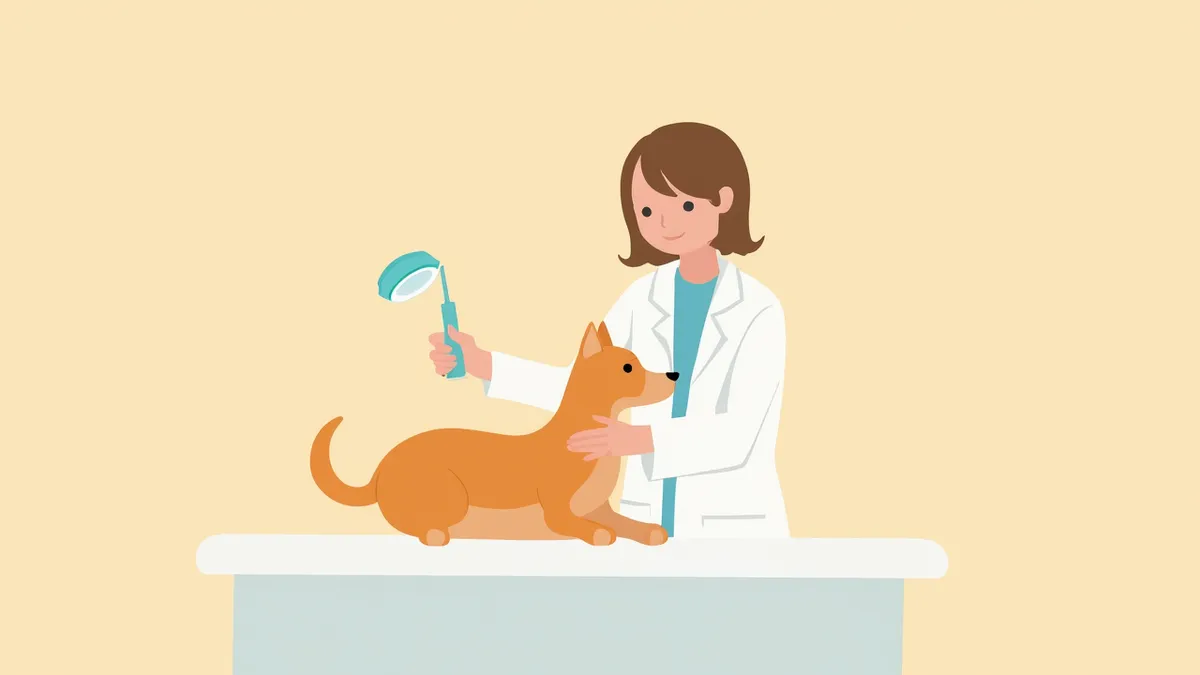
A veterinarian examining a puppy's eyes.
Canine corneal ulcers are an eye condition in which the surface of the cornea—the outermost layer of the eye—becomes damaged and indented due to trauma, infection, or dry eye disease. The cornea is a thin, transparent membrane that protects the eye, and when it is injured, it can cause severe pain and affect vision. Most importantly, if treatment is delayed, the cornea can melt or develop a hole, leading to corneal perforation. If you notice your dog frequently rubbing or squinting its eyes, it is safest to visit an animal hospital on the same day.

Causes of Corneal Ulcers

Corneal ulcers can stem from a wider variety of causes than many pet owners realize.
Trauma and scratches: The most common cause is scratches from grass, sand, or another animal’s claws during walks.
Keratoconjunctivitis sicca (KCS): Reduced tear production weakens the cornea’s protective layer, making it prone to injury.
Entropion: When the eyelid rolls inward, eyelashes repeatedly irritate the cornea.
Eyelash abnormalities: Abnormally growing eyelashes, such as distichiasis or ectopic cilia, can touch and damage the cornea.
Foreign bodies: Dust, sand, or grass seeds entering the eye can scratch the cornea.
Neurological issues: Inability to fully close the eyelids leads to corneal drying and damage.
Bacterial infection: Secondary bacterial infections following trauma can cause ulcers to deepen rapidly.

Checklist of Key Symptoms of Corneal Ulcers

If you notice any of the following symptoms, please have your pet checked promptly.
Rubbing or scratching at the eyes: Repeatedly rubbing the eyes with the front paws or rubbing them against the floor.
Squinting: Keeping the eyes tightly closed or squinting in bright light.
Tearing or discharge: Clear tears or yellowish discharge flowing from the eyes.
Corneal clouding: The cornea appears hazy or develops white or gray spots.
Redness: The white part of the eye becomes red and inflamed.
Asymmetrical eye size: One eye appears half-closed and smaller than the other.
Close-up photo of a dog’s eye with a cloudy cornea

These Symptoms Are an Emergency — Visit a Veterinary Clinic the Same Day

If you notice any of the following symptoms, it is an emergency. The cornea can deteriorate rapidly within 24 hours. ① The cornea is severely cloudy or has turned white. ② The eyelids are swollen, and the eye cannot be opened at all. ③ Green or yellow pus is discharging from the eye. ④ Black spots or depressions are visible on the surface of the eye. ⑤ The eyeball itself appears sunken.

Diagnostic Methods at the Veterinary Clinic

Fluorescein staining is the most commonly used test for diagnosing corneal ulcers. A fluorescent dye is gently applied to the eye, and when illuminated with ultraviolet (blue) light, damaged areas of the cornea stain a vivid green, making them easy to spot. The procedure is virtually painless and provides immediate results. If a deep ulcer is suspected, additional tests such as slit-lamp examination or corneal ultrasound may be performed. A Schirmer tear test (STT) to check for dry eye is also frequently conducted alongside these diagnostics.

Treatment Methods — Superficial Ulcer vs. Deep Ulcer
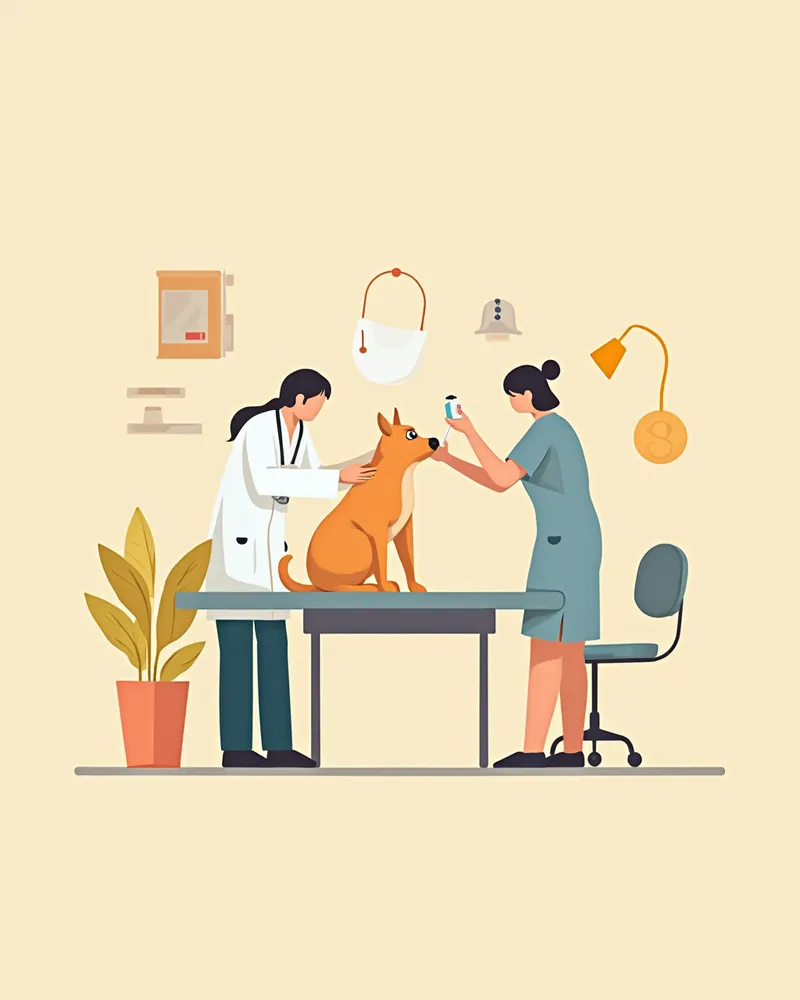
Superficial ulcer: This affects only the surface of the cornea. Treatment involves antibiotic eye drops to prevent secondary infection, along with corneal protective and regenerative eye drops. Improvement is typically seen within 1–2 weeks.
Deep (stromal) ulcer: This occurs when the ulcer extends into the corneal stroma. It may require surgical intervention, such as a conjunctival graft or suturing.
Treating the underlying cause: To prevent recurrence, the root cause must be addressed. For example, if dry eye is the cause, medications to increase tear production are used; if entropion is the cause, surgical correction is necessary.
Steroid-based eye drops must never be used for corneal ulcers, as they can cause the ulcer to deepen or lead to corneal melting.
A veterinarian administering eye drops to a puppy.

Key Home Care Points

In addition to veterinary treatment, proper care at home is equally important.
Keep the e-collar on: To prevent your pet from scratching their eyes, keep the e-collar on throughout the entire treatment period. Even brief removal can cause the condition to worsen within a day.
Adhere to medication schedule: Administer the prescribed eye drops exactly as directed, without missing any doses.
Keep the eye area clean: Gently wipe away discharge with gauze moistened with warm water.
Minimize outdoor irritants: Avoid sandy areas and grass, and keep walks short.
Monitor progress: Check the color and amount of discharge, as well as the corneal condition, daily. Contact your veterinarian immediately if you notice any deterioration.
A dog resting while wearing a neck collar

Brachycephalic Breed Owners Should Pay Special Attention

Brachycephalic breeds with flat faces, such as French Bulldogs, Pugs, Shih Tzus, and Pekingese, are at a higher risk of corneal ulcers. Their eyes protrude significantly, and their eyelids may not close completely, making the cornea susceptible to dryness and injury. It is important to check the eyes of these breeds daily and visit the vet immediately if you notice increased discharge or frequent eye rubbing.

Reviewed by a veterinarian

Dr. Tony — Punnawat Phongkittirak

Dr. Tony — Punnawat Phongkittirak

Veterinarian

A veterinarian who majored in veterinary medicine at Khon Kaen University, Thailand, and completed the IVSA program at North Carolina State University in the United States. Drawing on clinical experience at animal hospitals, he works in the pet healthcare field and is dedicated to building a digital care environment that connects pet parents with veterinarians.

Frequently Asked Questions

I suspect a corneal ulcer. Is it okay to wait and see for a day or two?
No, that’s not advisable. Corneal ulcers can worsen rapidly within 24 to 48 hours. If they progress to corneal melting (keratomalacia), it can lead to blindness or even require removal of the eye. If you suspect your pet has this condition, it’s best to visit the vet on the same day.
Even after applying eye drops, my pet keeps rubbing its eyes. What should I do?
First, check whether the e-collar is fitted properly. If it’s too small or too loose, it can rub against the eye. If your pet continues to rub despite a proper fit, it may be a sign of significant pain, so it’s best to have your veterinarian prescribe additional pain relief.
Can the condition recur even after treatment is complete?
If the underlying cause isn’t addressed, the condition can recur. Structural issues like dry eye, entropion, or abnormal eyelashes may require ongoing treatment or surgery. Even after recovery, it’s a good idea to regularly check your pet’s eye health.
Can I use human eye drops as a temporary solution for my pet?
Absolutely not. Human eye drops may contain ingredients that are harmful to dogs, and steroid-containing eye drops can significantly worsen corneal ulcers. You should only use eye drops prescribed by a veterinarian.
Will the cornea become completely clear after treatment?
Superficial ulcers usually heal without scarring. Deep ulcers may leave a thin scar (corneal opacity) on the cornea after treatment, and depending on the location, they can affect vision. It’s important to monitor the condition closely even after treatment.

Share

Related Guides

References

[1] Carter J. Corneal Ulcers (Ch. 61). In: Forsythe P (ed), 100 Top Consultations in Small Animal General Practice. Wiley-Blackwell, 2010.

[2] Maggs DJ, Miller PE, Ofri R. Stromal Ulcerative Keratitis (Ch. 90). In: Clinical Atlas of Canine and Feline Ophthalmic Disease, 2nd Ed. Wiley-Blackwell, 2020.

[3] Englar RE. The New Kitten Wellness Examination. In: The Veterinary Workbook of Small Animal Clinical Cases. 5m Publishing, 2021.

This information is based on veterinary literature and does not replace diagnosis or treatment. Please consult a veterinarian for specific health concerns.

Metapet Co., Ltd. | CEO: Park Sung-yong | Business Reg. No. 417-88-02562 | Seoul, South Korea | Customer Center

Dog Keeps Rubbing Its Eyes? Corneal Ulcer Causes & Treatment | Meongsiljang