
Like
Share
멍실장
강아지 대동맥 협착 증상과 원인, 진단·치료와 관리 포인트 총정리

If Your Dog Suddenly Collapses — Symptoms of Aortic Stenosis and Treatment Timing

HeartDiseasesMeongsiljang Veterinary Advisory Board

Canine aortic stenosis is a congenital heart condition in which the aorta—the main artery carrying blood from the heart—is narrowed, restricting normal blood flow. Early detection and proper management are key to improving survival rates.

What Is Canine Aortic Stenosis?

Heart anatomy diagram of a puppy with aortic stenosis
Canine aortic stenosis, particularly subvalvular stenosis where the area beneath the aortic valve narrows, is a congenital heart disease that restricts blood flow from the left ventricle to the aorta. In this condition, the heart must pump more forcefully to push blood through the narrowed section, causing the left ventricular wall to thicken. Over time, this strain can lead to impaired heart function or arrhythmias. This condition is commonly seen in breeds such as Newfoundlands, Boxers, German Shepherds, Golden Retrievers, and Rottweilers, with genetic factors playing a significant role. Since the disease can progress gradually from an asymptomatic early stage, early diagnosis and consistent management are crucial for determining survival and quality of life.

What Are the Main Causes of Aortic Stenosis?
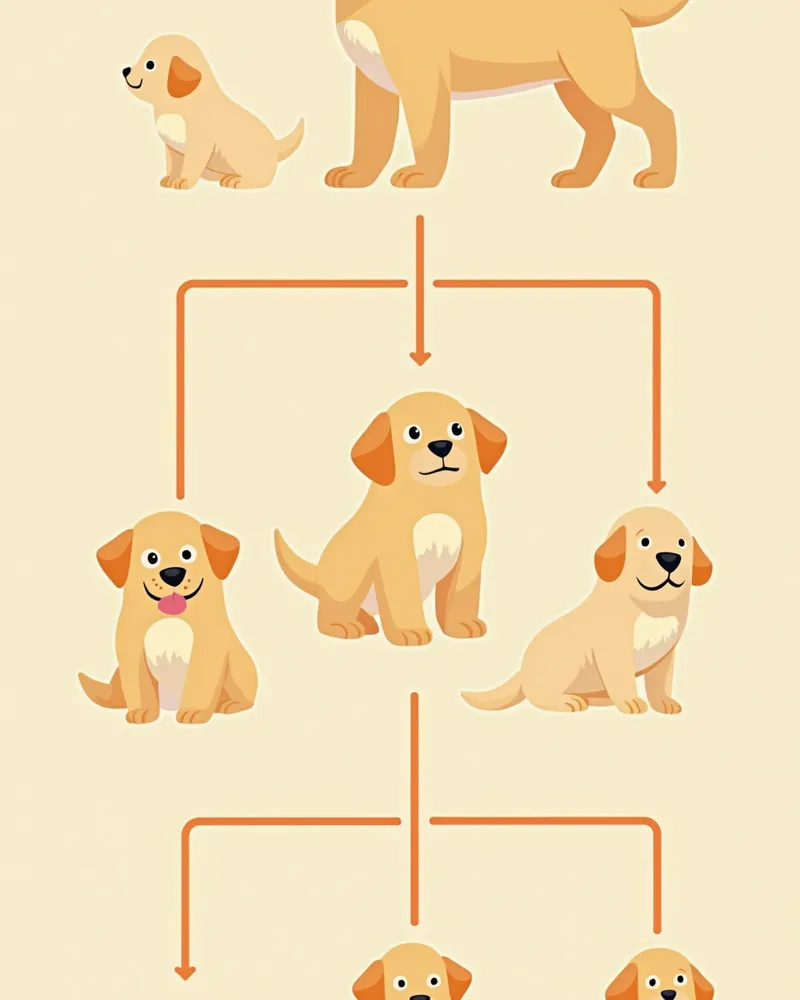
The primary cause of aortic stenosis in dogs is genetic predisposition. Certain breeds, such as Newfoundlands, Boxers, German Shepherds, Golden Retrievers, and Rottweilers, show a strong hereditary tendency, which is why cardiac screening is recommended before breeding in these breeds. - Genetic predisposition: Abnormal fibrous tissue forms below the aortic valve during heart development, narrowing the left ventricular outflow tract. This condition can progress from an early age. - Structural abnormalities: Malformations in the subvalvular region or the aortic valve itself narrow the blood flow passage, restricting circulation. - Valve formation defects: Abnormal development of the aortic valve (valvular dysplasia) can also cause stenosis. Genetic factors play a much larger role than environmental factors.
A pedigree chart illustrating the genetic predisposition to aortic stenosis

What Are the Main Symptoms of Aortic Stenosis?

In the early stages, dogs with aortic stenosis often show few or no symptoms, but as the condition worsens, clear warning signs emerge. Common indicators include shortness of breath and fatigue after exercise, as well as irregular heartbeats. Sudden collapse or fainting may also occur, and in severe cases, the condition can lead to sudden cardiac death. If these episodes recur, immediate veterinary attention is essential. Symptoms often worsen during periods of high activity.
Arrhythmia: The heartbeat may feel rapid or irregular, as if skipping beats.
Post-exercise fatigue: The dog becomes short of breath and unable to move even after a short walk.
Sudden fainting: The dog may suddenly collapse or lose consciousness.
Heart murmur: A distinct murmur is audible during auscultation, caused by rapid blood flow passing through the narrowed outflow tract.
Difficulty breathing: The dog breathes rapidly or struggles to breathe.
A tired dog after exercise

Symptoms Requiring Immediate Veterinary Visit

If your dog suddenly collapses or loses consciousness, experiences a persistently rapid or irregular heartbeat, or shows signs of severe breathing difficulty such as flared nostrils or bluish gums, seek immediate veterinary care. These symptoms may indicate impending cardiac arrest or heart failure, so it is crucial to consult a veterinarian without delay.

How Is Aortic Stenosis Diagnosed?

Aortic stenosis can be accurately diagnosed using an echocardiogram (heart ultrasound). This test allows real-time visualization of the heart’s structure and blood flow velocity, enabling precise assessment of the severity of the narrowing. Electrocardiography and chest X-rays are also performed to evaluate the heart’s electrical activity and any changes in size. Since early stages may be asymptomatic, regular check-ups are especially important for dogs of breeds predisposed to this condition.
Echocardiography for diagnosing aortic stenosis in dogs

Treatment Methods and Step-by-Step Management Strategies

Treatment for aortic stenosis depends on the severity of symptoms. In mild cases, medication is used to reduce the heart’s workload, and exercise is restricted to avoid placing undue stress on the heart. For moderate to severe cases, medications may be prescribed to manage cardiac burden and symptoms, or interventional procedures such as balloon valvuloplasty may be considered in select patients to widen the narrowed area and improve blood flow. Regular veterinary check-ups and consistent medication are essential to maintain heart function. Additionally, because dogs with aortic stenosis are at risk for complications like aortic valve endocarditis regardless of disease severity, ongoing monitoring by a veterinarian is crucial.
A puppy recovering from aortic stenosis surgery

Home Care and Daily Tips

Puppies with aortic stenosis should have their stress minimized and avoid excessive exercise. Walks should be short and scheduled during quiet times of day, avoiding brisk pacing. Weight management is also important to reduce cardiac strain, so high-fat and high-sodium diets should be avoided. Regular veterinary check-ups and strict adherence to prescribed medications are essential; notify your veterinarian immediately if you notice any changes in symptoms. A quiet, stable home environment is also beneficial.
A puppy with aortic stenosis resting in a calm environment.

Breed-Specific Precautions and Prevention of Recurrence

For breeds prone to aortic stenosis, such as Newfoundlands, Boxers, German Shepherds, Golden Retrievers, and Rottweilers, we recommend screening with an echocardiogram (heart ultrasound) before breeding. Auscultation alone has low diagnostic accuracy, so an echocardiogram, which offers the highest sensitivity and specificity, is essential. Additionally, since offspring of affected dogs carry a high genetic risk, breeding should be avoided. Because aortic stenosis is not curable, regular cardiac check-ups and prescribed medication are crucial to slow disease progression and prevent complications. Creating a stable environment that minimizes stressors is also important.

Reviewed by a veterinarian

Dr. Tony — Punnawat Phongkittirak

Dr. Tony — Punnawat Phongkittirak

Veterinarian

A veterinarian who majored in veterinary medicine at Khon Kaen University, Thailand, and completed the IVSA program at North Carolina State University in the United States. Drawing on clinical experience at animal hospitals, he works in the pet healthcare field and is dedicated to building a digital care environment that connects pet parents with veterinarians.

Frequently Asked Questions

Can aortic stenosis in dogs be treated?
Depending on the severity, it can be managed with medication or interventional procedures such as balloon valvuloplasty. The prognosis varies from favorable to requiring careful monitoring, depending on the degree of stenosis. Early detection and consistent management can help maintain a normal daily life.
Is aortic stenosis a genetic disease?
Yes, certain breeds—such as Newfoundlands, Boxers, German Shepherds, Golden Retrievers, and Rottweilers—show a clear genetic predisposition. We recommend screening with an echocardiogram before breeding.
How should I exercise my pet?
Limit walks to short, quiet outings once or twice a day, and avoid running, jogging, or other play activities. Creating a low-stress environment is essential.
How should the medication be administered?
It’s important to give your pet the medication prescribed by your veterinarian based on their weight and symptoms, on a regular schedule. Consistent, uninterrupted dosing is crucial for effective symptom management.
Do puppies with aortic stenosis need to visit the vet for the rest of their lives?
Since stenosis is a condition that cannot be cured, regular heart check-ups and medication management are necessary. If you notice any changes in symptoms, please visit the clinic immediately.

Share

Related Guides

References

[1] Belanger MC, Côté E, Beauchamp G. Association between aortoseptal angle in Golden Retriever puppies and subaortic stenosis in adulthood. J Vet Intern Med, 2014, 28(5):1498–1503.

[2] Textbook of Cardiovascular Medicine in Dogs and Cats. 2020. Chapter 7: Congenital Heart Diseases.

[3] Plumb's Veterinary Drug Handbook, 9th Edition. 2022. Section on Cardiac Medications and Monitoring.

This information is based on veterinary literature and does not replace diagnosis or treatment. Please consult a veterinarian for specific health concerns.

Metapet Co., Ltd. | CEO: Park Sung-yong | Business Reg. No. 417-88-02562 | Seoul, South Korea | Customer Center

Dog Suddenly Collapses? Aortic Stenosis Symptoms & Treatment | Meongsiljang