Like
Share
멍실장
고양이 신우신염 증상과 원인, 진단·치료와 관리 포인트 총정리

If Your Cat Keeps Struggling — Warning Signs of Pyelonephritis and Antibiotic Treatment

KidneyDiseasesMeongsiljang Veterinary Advisory Board

Feline pyelonephritis is a condition in which bacteria invade the kidneys and cause inflammation. If treatment is delayed, it can progress to chronic kidney disease, making early detection and consistent management essential.

What Is Feline Pyelonephritis?

A lethargic cat resting — symptoms of pyelonephritis
Feline pyelonephritis is a urinary tract disease in which bacteria invade the kidney interior (the renal pelvis and renal parenchyma), causing inflammation. Unlike simple cystitis, the kidney tissue itself is damaged, so delayed treatment can lead to chronic kidney disease (CKD). The key challenge is that early symptoms resemble those of cystitis, making it difficult for pet owners to distinguish between the two. If you notice signs such as fever, decreased appetite, or lethargy, it is essential to seek veterinary care promptly.

Causes and Pathogenesis of Pyelonephritis

The most commonly reported causative bacterium is Escherichia coli (E. coli). Bacteria travel up the urinary tract to the kidneys, causing inflammation in the renal pelvis and renal parenchyma; regardless of the route of infection, kidney tissue can be damaged. The following conditions may increase the risk of infection or kidney damage:
Urinary stones: Stones can create an environment conducive to bacterial proliferation.
Systemic health decline: A weakened immune system or poor overall condition can increase susceptibility to infection.
Lower urinary tract disease: Pre-existing urinary inflammation or stones may contribute to the problem.
Pre-existing kidney disease: Cats with reduced kidney function require particular attention.
For pets in these high-risk groups, it is important to seek early evaluation even if symptoms are vague.

Key Symptoms Checklist

Pyelonephritis is classified as either acute or chronic. Acute cases tend to present with relatively clear symptoms, while chronic cases often progress slowly and are therefore detected later. However, because the clinical signs are nonspecific, it can be difficult for pet owners to distinguish between the two.
Fever: A high fever may develop, with body temperature rising above normal levels.
Loss of appetite: The pet may eat poorly or refuse food altogether.
Lethargy: Activity levels may drop noticeably compared to usual.
Vomiting and nausea: Accumulation of waste products (uremia) can lead to nausea and vomiting.
Polydipsia (excessive thirst): This may be a sign related to kidney function, such as the production of dilute urine.
Changes in urine output: The volume of urine may increase or, conversely, decrease.
Back or flank pain: The pet may flinch or try to avoid being touched in these areas.
Cats drinking excessive amounts of water — a sign of pyelonephritis

Emergency Signs Requiring Immediate Veterinary Visit

Please visit a veterinary clinic within 24 hours if you notice any of the following symptoms. Acute pyelonephritis can progress rapidly and lead to systemic infection (sepsis). • Persistent high fever and complete loss of appetite for more than 12 hours • Vomiting occurring three or more times in a day • No urine output at all or presence of blood in the urine • Severe lethargy — no response when called by name • Extreme pain when touching the back or sides

How Is It Diagnosed?

Diagnosis is made by combining urine tests, blood tests, and imaging studies. Because pyelonephritis is difficult to confirm with a single test, multiple tests are evaluated together.
Urinalysis: Checks for pyuria (pus cells), bacteria, and hematuria; the presence of white blood cell casts suggests inflammation within the kidneys.
Urine culture: Identifies the causative bacteria and determines the appropriate antibiotic. Whenever possible, it is important to collect the sample via cystocentesis before starting antibiotics.
Blood tests: Elevated BUN and creatinine levels may signal kidney function impairment.
Ultrasound: Assesses for conditions such as pyelectasia (dilation of the renal pelvis) and fluid accumulation, but ultrasound alone cannot confirm a diagnosis of pyelonephritis.
Because it takes time for culture results to become available, empiric antibiotic therapy is often started before the results are known.

Treatment Methods — Step-by-Step Overview
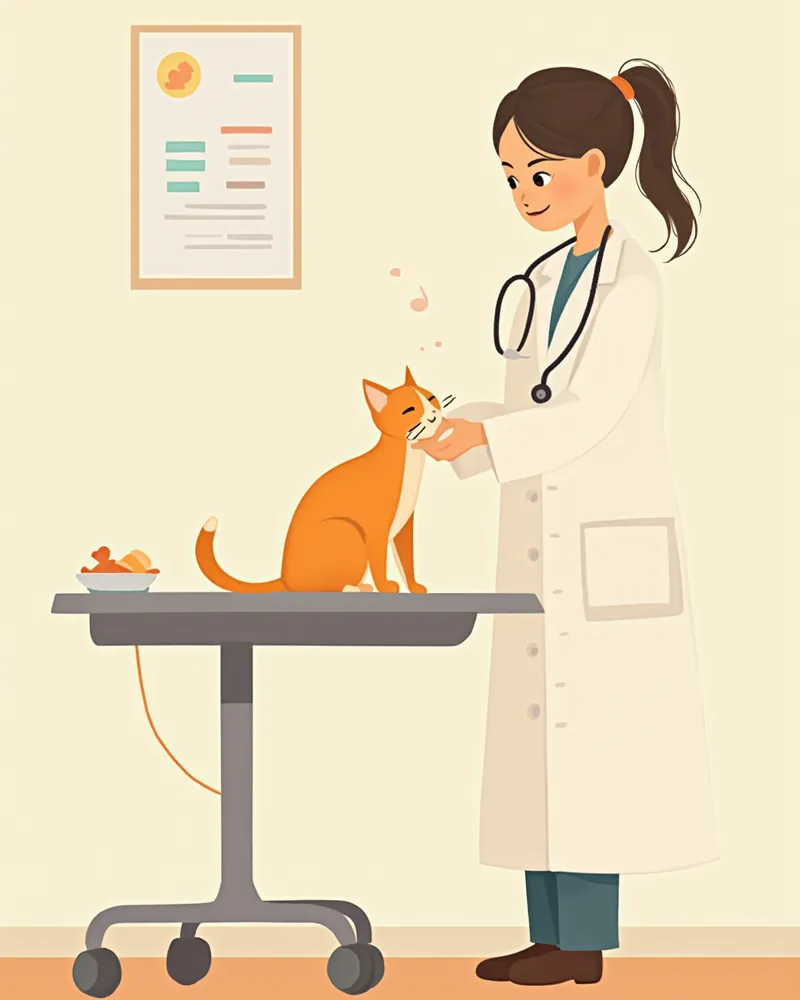
The cornerstone of treatment is administering antibiotics tailored to the causative bacteria, along with supportive care such as fluid therapy.
Step 1 — Antibiotics: Antibiotics are prescribed for an adequate duration based on urine culture and sensitivity results. Stopping the medication prematurely simply because symptoms improve can significantly increase the risk of recurrence or antibiotic resistance.
Step 2 — Fluid Therapy: Intravenous fluids are used to correct dehydration and support kidney function.
Step 3 — Addressing Underlying Causes: If urinary or kidney stones, or other underlying kidney diseases are present, they are treated concurrently.
Step 4 — Follow-up Testing: It is important to perform a repeat urine culture 1–2 weeks after completing the antibiotic course to check for any remaining bacteria or reinfection.
A cat being examined by a veterinarian at an animal hospital

Home Care and Recurrence Prevention Tips

Even after finishing antibiotic treatment, ongoing care is essential. Pyelonephritis can recur, and repeated episodes may lead to cumulative kidney damage.
Increase water intake: Adequate hydration promotes frequent urination, which helps maintain urinary tract health. Incorporating wet food or using a water fountain can be helpful.
Regular urinalysis and culture tests: Periodic urine tests after treatment enable early detection of reinfection.
Reduce stress: Maintain a stable environment to support your pet’s overall health.
Stick to the prescribed diet: Do not change the veterinarian-recommended food without consulting your vet.
Cats drinking water from a fountain — Preventive care for pyelonephritis

Monitor for Progression to Chronic Kidney Disease (CKD)

If pyelonephritis recurs or treatment is delayed, it can damage the kidneys and lead to chronic kidney disease (CKD). The earlier CKD is detected and managed, the better its progression can be slowed. Therefore, it’s especially important for cats with already elevated kidney values or those who are older to regularly monitor their kidney function through routine blood and urine tests.

Reviewed by a veterinarian

Dr. Tony — Punnawat Phongkittirak

Dr. Tony — Punnawat Phongkittirak

Veterinarian

A veterinarian who majored in veterinary medicine at Khon Kaen University, Thailand, and completed the IVSA program at North Carolina State University in the United States. Drawing on clinical experience at animal hospitals, he works in the pet healthcare field and is dedicated to building a digital care environment that connects pet parents with veterinarians.

Frequently Asked Questions

Can feline pyelonephritis be completely cured?
Acute pyelonephritis can improve if detected early and treated with antibiotics for an adequate duration. However, stopping treatment too soon or failing to address the underlying causes can increase the risk of the condition becoming chronic or recurring.
How long should I administer antibiotics?
Treatment often needs to continue longer than for simple cystitis. Your veterinarian will determine the exact duration based on culture and sensitivity results, as well as your pet's response to therapy. Even if symptoms improve, stopping medication prematurely can lead to antibiotic resistance or recurrence, so please work with your vet to establish a clear end date for treatment.
Can you tell the difference between cystitis and pyelonephritis at home?
It’s difficult to make a clear distinction. If fever, back pain, severe lethargy, or vomiting are present, pyelonephritis (kidney involvement) should be suspected. Even if symptoms overlap slightly, it’s best to confirm the diagnosis with a urinalysis and urine culture.
Are there cases where surgery is necessary?
Most cases are managed with antibiotics and intravenous fluid therapy. If urinary stones are the cause of the infection, procedures to remove the stones or surgery may also be necessary. Your veterinarian will make the final determination after reviewing imaging results.
Can changing my pet’s diet help prevent pyelonephritis?
While it’s difficult to prevent pyelonephritis through diet alone, wet food with a high moisture content can help increase your pet’s water intake. If kidney disease is also present, a prescription diet can support kidney function management. Always consult your veterinarian before making any dietary changes.

Share

Related Guides

References

[1] Little SE. The Cat: Clinical Medicine and Management, 2nd Ed. Elsevier; 2012. Chapter: Diseases of the Lower Urinary Tract and Pyelonephritis.

[2] Ettinger SJ, Feldman EC, Côté E. Textbook of Veterinary Internal Medicine, 8th Ed. Elsevier; 2017. Chapter: Bacterial Urinary Tract Infections.

[3] Nelson RW, Couto CG. Small Animal Internal Medicine, 6th Ed. Elsevier; 2020. Chapter: Diseases of the Urinary Tract.

[4] Pressler BM. Pyelonephritis. In: Bonagura JD, Twedt DC (eds). Kirk's Current Veterinary Therapy XV. Elsevier; 2014.

This information is based on veterinary literature and does not replace diagnosis or treatment. Please consult a veterinarian for specific health concerns.

Metapet Co., Ltd. | CEO: Park Sung-yong | Business Reg. No. 417-88-02562 | Seoul, South Korea | Customer Center

Cat Pyelonephritis: Warning Signs & Antibiotic Treatment | Meongsiljang