Like
Share
멍실장
고양이 말라세지아피부염 증상과 원인, 진단·치료와 관리 포인트 총정리

Why Is My Cat Constantly Licking and Smelly? — Causes and Treatment of Malassezia Dermatitis

Skin & CoatDiseasesMeongsiljang Veterinary Advisory Board

Feline Malassezia dermatitis is a fungal skin disease caused by an overgrowth of yeast. Our veterinary advisory team has compiled information on the symptoms, causes, diagnosis, treatment, and management strategies to prevent recurrence.

What Is Feline Malassezia Dermatitis?

Cats with skin issues around the ears and jaw
Feline Malassezia dermatitis is a fungal skin condition caused by the overgrowth of Malassezia yeast on the skin, leading to inflammation, itching, and flaking. Although it occurs less frequently and often causes less severe itching in cats than in dogs, it can manifest in various forms around the ears, chin, face, and claws. A key aspect of management is identifying any underlying conditions, such as immune suppression, atopy, or thymoma. Treating only the Malassezia infection often leads to frequent recurrences; addressing the root cause is essential for long-term resolution of skin issues.

Causes of Feline Malassezia Dermatitis

Malassezia is a yeast that naturally resides on a cat’s skin. It’s harmless when your cat is healthy, but it can start to overgrow under the following conditions:
Immunosuppression: If your cat has FeLV or FIV, is on long-term steroids, or has an immune-related condition like pemphigus, their skin’s defenses weaken, allowing yeast to multiply easily.
Compromised skin barrier: Allergies or atopic dermatitis can damage the skin barrier, making it easier for yeast to thrive.
Moist environments: When moisture gets trapped in the ears or skin folds, it creates a warm, oily environment that speeds up yeast growth.
Associated with tumors or systemic diseases: In some cases, Malassezia overgrowth appears as a skin reaction linked to internal conditions like thymoma or lymphocytic folliculitis.

Key Symptom Checklist

Itching (pruritus): Your pet may repeatedly scratch or lick their face, ears, and paws. Symptoms are often less severe than in dogs. Dandruff and scaling: White or yellowish flakes may accumulate on the back, face, and tail area. Hair loss: Hair may thin out or fall out in patches around the areas that have been scratched. Ear discharge: Brown to black discharge may build up inside the ear canal, often accompanied by an odor. Nail discoloration: Perionychitis, which causes the skin around the nails to turn brown, may occur. This is especially common in Devon Rex cats. Oily skin: The skin may appear shiny or have an unpleasant odor.
Cat skin showing dandruff and flakiness

Symptoms That Require Prompt Veterinary Attention

If itching or a rash persists for more than two weeks, if redness and flaking spread across the entire face, if multiple nails change color simultaneously, or if skin symptoms are accompanied by weight loss or lethargy, an underlying medical condition should be suspected. In these cases, simple skin care alone may not be sufficient to resolve the issue.

Diagnostic Methods for Feline Malassezia Dermatitis

Veterinarians confirm Malassezia infections using the following methods:
Cytology: A sample is collected from the affected area using tape or a cotton swab and examined under a microscope for the presence of yeast. This is the fastest and simplest method.
Ear cleaning examination: Yeast can also be identified from ear discharge.
Underlying disease screening: Blood tests and chest X-rays are used to identify causes of immune suppression, such as thymoma or lymphoma.
According to veterinary dermatology textbooks, it is important to systematically evaluate whether Malassezia is contributing to skin symptoms in cases of atopic dermatitis.

Treatment for Feline Malassezia Dermatitis
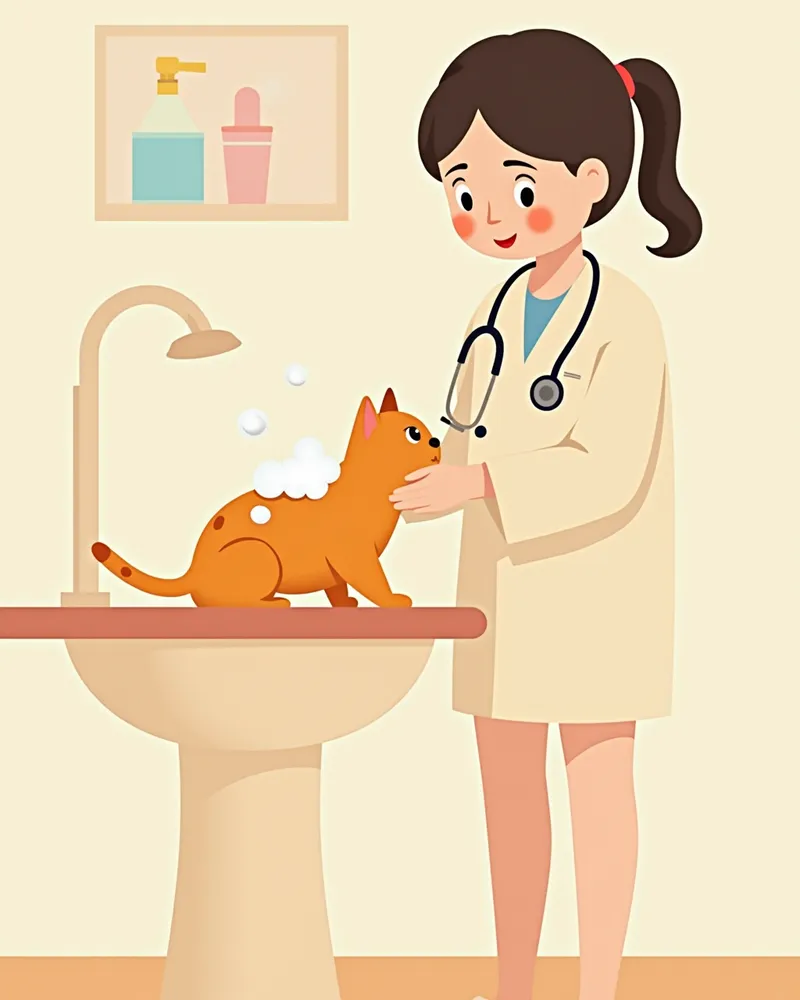
Antifungal shampoos and wipes: Apply shampoos or wipes containing chlorhexidine or miconazole to the affected areas. Evidence-based guidelines recommend a combination of 2% miconazole and 2% chlorhexidine, typically applied consistently about twice a week under veterinary guidance.
Oral antifungal medications: Oral antifungal drugs such as itraconazole and ketoconazole are prescribed. These are used when symptoms are widespread or when topical treatments alone are insufficient.
Treatment of underlying conditions: If atopic dermatitis or immune disorders are the underlying cause, treating these conditions concurrently is essential to prevent recurrence.
Ear cleaning: Since the ears are prone to Malassezia buildup, consistently clean them with a dedicated ear cleanser if an ear infection is present.
A cat being treated with antifungal shampoo

Home Care Tips

Keep the area dry: After cleaning the ears, make sure to remove all moisture. A warm, damp environment encourages Malassezia overgrowth. Regular ear checks: Inspect the color and odor of the ears once a week. If you notice brown discharge, visit your veterinarian. Clean bedding and accessories: Keep items that frequently come into contact with your pet’s skin clean to reduce the risk of skin irritation and secondary infections. Manage underlying conditions: Malassezia overgrowth is often associated with underlying issues such as atopy, so consistently managing the root cause is key to preventing recurrence. Review the diet: If a food allergy is suspected, consult your veterinarian about dietary management, including the use of elimination diets.

Special Attention for Devon Rex and Persian Cats

Devon Rex cats are particularly prone to Malassezia infections around the claws (periungual dermatitis). If you notice the skin around the claws turning brown or see any discharge, have it checked promptly. For breeds with abundant skin folds, such as Persians, yeast can easily proliferate in the folds, so regular cleaning is recommended.

Reviewed by a veterinarian

Dr. Tony — Punnawat Phongkittirak

Dr. Tony — Punnawat Phongkittirak

Veterinarian

A veterinarian who majored in veterinary medicine at Khon Kaen University, Thailand, and completed the IVSA program at North Carolina State University in the United States. Drawing on clinical experience at animal hospitals, he works in the pet healthcare field and is dedicated to building a digital care environment that connects pet parents with veterinarians.

Frequently Asked Questions

Can Malassezia dermatitis in cats be transmitted to humans?
Malassezia pachydermatis does not thrive on human skin. The risk of transmission to healthy adults is very low, but for newborns or immunocompromised individuals, it’s advisable to practice basic hygiene measures, such as washing hands after contact.
Can it be completely cured with treatment?
If it’s a localized infection with no underlying conditions, it usually responds well to antifungal treatment. However, if there’s an underlying cause like atopy or thymoma, recurrence is common. It’s important to manage the condition consistently while also treating any underlying diseases.
Which antifungal shampoo should I use?
It’s safest to choose products prescribed by a veterinary clinic or recommended by a veterinarian. While there are products available on the market, their ingredients and concentrations vary widely, so it’s best to have your vet recommend a product that suits your pet’s specific symptoms.
How is Malassezia dermatitis in dogs different from other skin conditions?
Although the causative organism is the same Malassezia, cats are less frequently affected than dogs and often experience milder itching. In cats, the condition tends to appear locally around the ears, chin, and claws, or it may be associated with systemic immune-related diseases.
How can we prevent it from coming back?
Keeping the ears dry and catching underlying conditions early through regular check-ups can help. For cats with atopic dermatitis, managing the skin barrier and adjusting their diet are also important to reduce the risk of recurrence.

Share

Related Guides

References

[1] Nuttall T, Harvey RG, McKeever PJ. BSAVA Manual of Canine and Feline Dermatology, 4th Ed. Chapter: Malassezia dermatitis. British Small Animal Veterinary Association, 2019.

[2] Cavana P, Peano A, Petit JY et al. A pilot study of the efficacy of wipes containing chlorhexidine 0.3%, climbazole 0.5% and Tris-EDTA to reduce Malassezia pachydermatis populations on canine skin. Veterinary Dermatology 26, 2015.

This information is based on veterinary literature and does not replace diagnosis or treatment. Please consult a veterinarian for specific health concerns.

Metapet Co., Ltd. | CEO: Park Sung-yong | Business Reg. No. 417-88-02562 | Seoul, South Korea | Customer Center

Cat Malassezia Dermatitis: Causes & Treatment Guide | Meongsiljang