
Like
Share
멍실장
고양이 천식 증상과 원인, 진단·치료와 관리 포인트 총정리

Our Cat’s Paroxysmal Coughing and Wheezing — Asthma Symptoms, Causes, and Emergency Response

RespiratoryDiseasesMeongsiljang Veterinary Advisory Board

Feline asthma is a lower airway disease in which allergic reactions cause chronic inflammation of the airways. We’ve summarized the essentials, from a symptom checklist to inhaler treatments and home environment management.

What Is Feline Asthma?

Feline asthma — cats with airway disease
Feline asthma is a lower airway disease in which an allergic response causes chronic inflammation and narrowing of the airways. The most critical aspects are early detection and consistent inhaler therapy. If symptoms are left untreated, "airway remodeling" can occur, leading to structural changes in the airways that are difficult to reverse. The condition affects approximately 1–5% of all cats, with certain breeds such as Siamese known to have a higher incidence.

Causes of Feline Asthma

Allergic reactions are the primary cause. Repeated exposure to specific airborne irritants triggers an overactive immune response, leading to persistent airway inflammation. Veterinary textbooks commonly cite the following triggers: cigarette smoke, dusty litter, air fresheners, hairspray, and scented candles. New carpets and increased airborne allergens during seasonal changes are also contributing factors.
House dust mites: These mites live in carpets and bedding and can trigger airway irritation.
Cigarette smoke: Even secondhand smoke can worsen asthma symptoms.
Litter dust: Dusty litter can irritate the airways.
Pollen and mold spores: Increased indoor allergens during seasonal changes can exacerbate symptoms.
Air fresheners and sprays: Scented candles, deodorizing sprays, and hairspray can irritate the airway lining.

Key Symptom Checklist

If you notice one or more of the following symptoms, suspect asthma and consult a veterinarian.
Paroxysmal coughing: Short, repetitive coughing that may resemble dry heaving or attempts to expel a hairball.
Wheezing: Whistling or wheezing sounds during breathing, which may be audible even without a stethoscope in severe cases.
Increased respiratory rate: An elevated breathing rate or increased effort to breathe while at rest is an abnormal sign.
Crouched posture with neck extended: A posture adopted to maximize airway opening.
Open-mouth breathing: A rare symptom in cats that constitutes an emergency.
Exercise intolerance: Rapid onset of shortness of breath with minimal activity.
Symptoms of feline asthma — a crouched posture with the neck stretched forward

When to Go to an Emergency Animal Hospital Immediately

If your pet is breathing with its mouth open, if the gums or tongue turn blue or white, or if a breathing episode lasts more than 10 minutes, take them to a 24-hour emergency animal hospital immediately. This indicates severe oxygen deprivation that cannot be treated at home.

Diagnostic Methods — Confirming with a Combination of Tests
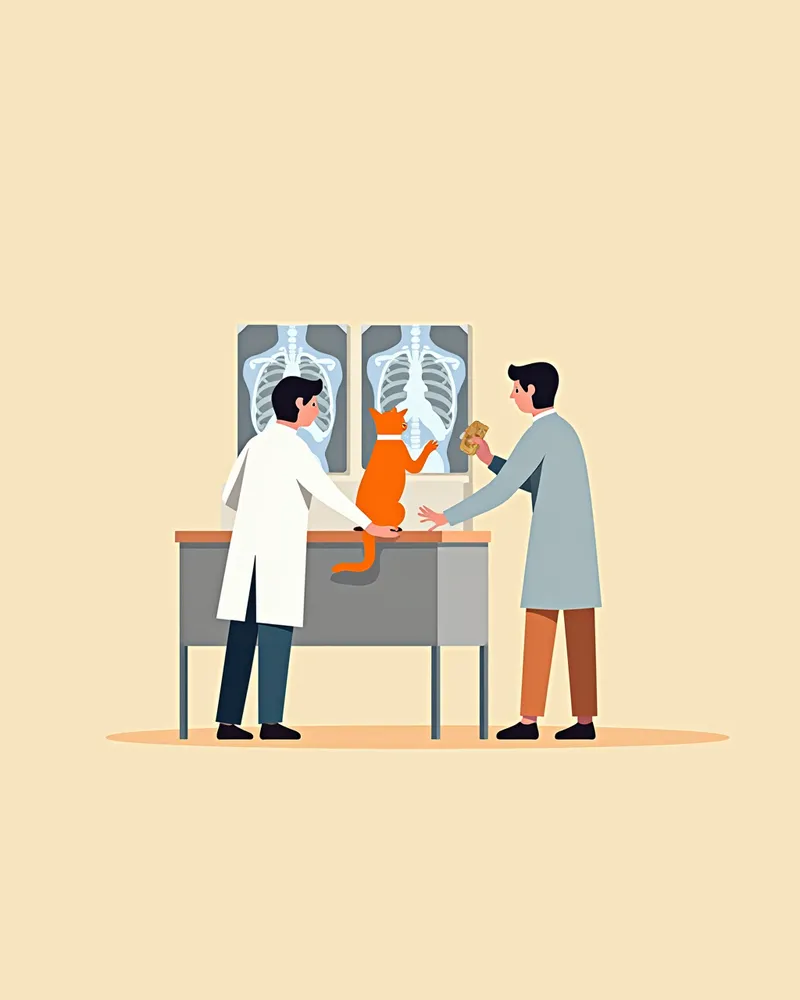
Feline asthma cannot be diagnosed with a single test. Instead, veterinarians typically combine several diagnostic approaches.
Thoracic Radiographs (X-rays): These reveal lung overinflation and a bronchial pattern characterized by thickened airway walls, often appearing as a classic "donut" shape.
Bronchoalveolar Lavage (BAL): This procedure collects cells from the airways to assess the proportion of eosinophils. While eosinophilic inflammation is common in asthma, neutrophilic inflammation can also occur.
Blood Tests: An elevated eosinophil count may be present, but blood test findings for asthma are generally nonspecific. Therefore, these results are used primarily to help rule out other conditions rather than to confirm a diagnosis on their own.
Differential Diagnosis is Essential: Because conditions such as chronic bronchitis, pneumonia, and heart disease can present with similar symptoms, it is crucial to perform tests to rule out these other possibilities.
Diagnosing Feline Asthma — Thoracic Radiography

Treatment — Inhaled Corticosteroids Are the Standard
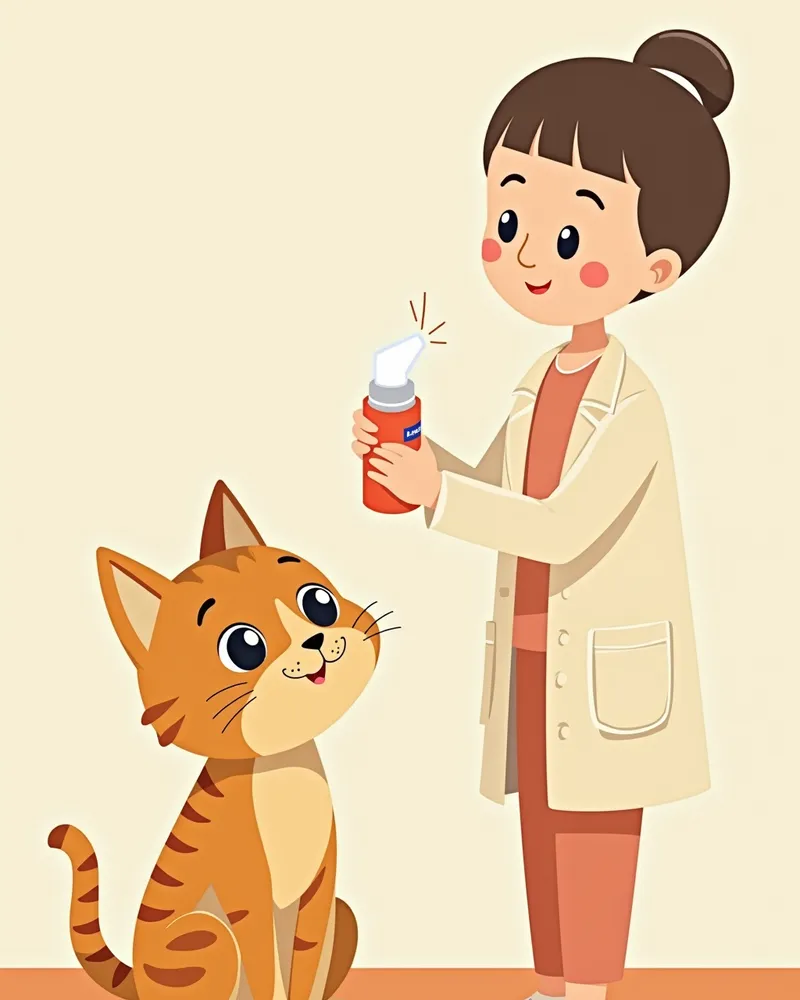
According to veterinary textbooks, the current standard treatment for feline asthma is inhaled corticosteroids (fluticasone). The medication is administered by having the cat breathe it in naturally through a spacer and a feline-specific mask placed over the nose and mouth. During acute exacerbations, an inhaled bronchodilator (albuterol) may be added up to three times daily. Oral prednisolone is used as an alternative when inhalers are not feasible. Because corticosteroids carry the risk of inducing diabetes mellitus and heart failure, a veterinarian determines the appropriate dosage and duration of treatment.
Treating Feline Asthma: How to Administer Inhaler Medication Using a Spacer and Mask

Home Management and Environmental Care Points

Environmental management is just as important as medication. Reducing triggers can significantly decrease the frequency of attacks.
Switch to low-dust litter: Tofu or paper-based litters with minimal dust are recommended.
Use a HEPA air purifier: This effectively reduces house dust mites, pollen, and mold.
Strictly prohibit indoor smoking: Secondhand smoke is an immediate irritant to the airways.
Discontinue use of air fresheners and scented candles: These directly irritate the airway mucosa.
Minimize carpeting: Carpets harbor dust mites and should be removed if possible.
Keep a symptom diary: Recording the number of coughing episodes and attack duration aids in veterinary diagnosis.

Siamese Breed and Relapse Warning — Do Not Arbitrarily Discontinue

Siamese cats are known to have a higher incidence of asthma compared to other breeds, so it's advisable to have them undergo regular check-ups more frequently. Even if symptoms appear to have subsided, arbitrarily discontinuing inhaler therapy can allow poorly controlled inflammation to accelerate airway remodeling. Any reduction or discontinuation of treatment should always be discussed with your veterinarian, and we recommend monitoring your cat's condition through follow-up examinations, such as chest radiographs, according to the schedule set by your vet.

Reviewed by a veterinarian

Dr. Tony — Punnawat Phongkittirak

Dr. Tony — Punnawat Phongkittirak

Veterinarian

A veterinarian who majored in veterinary medicine at Khon Kaen University, Thailand, and completed the IVSA program at North Carolina State University in the United States. Drawing on clinical experience at animal hospitals, he works in the pet healthcare field and is dedicated to building a digital care environment that connects pet parents with veterinarians.

Frequently Asked Questions

Can feline asthma be cured?
This condition is more about management than a complete cure. With consistent inhaler therapy and environmental control, your pet can live a normal life without episodes. If treatment is stopped arbitrarily, relapses may become more frequent, and airway changes may progress.
What should I do if my cat refuses to use the inhaler?
At first, your pet will need time to get used to the smell and feel of the mask. For 2–3 weeks, place the mask near their food to help them become familiar with it, then gradually encourage them to approach it. Most pets will adapt this way. If they still don’t take to it, talk to your veterinarian about switching to oral medication.
Do all cats that cough have asthma?
Not necessarily. Hairballs, throat irritation, pneumonia, heart disease, and heartworm infection can all cause similar coughing. If the coughing is recurrent, it’s essential to differentiate the underlying cause through chest X-rays and blood tests.
Can I use a bronchodilator (albuterol) every day?
This medication is intended for short-term use during acute flare-ups. According to veterinary textbooks, prolonged use can actually worsen airway inflammation. If the frequency of flare-ups has increased, consult your veterinarian about adjusting the steroid dosage.
Can indoor-only cats develop asthma?
Yes, there are plenty of triggers indoors, such as house dust mites, mold, and air fresheners. Regardless of whether your pet goes outside, they can develop asthma if they have a predisposition to allergies.

Share

Related Guides

References

[1] King LG (ed.), Textbook of Respiratory Disease in Dogs and Cats, Saunders, 2004

[2] Rand J et al., The Veterinary Workbook of Small Animal Clinical Cases, 2nd ed., 5m Publishing, 2023, Case 40

[3] Norsworthy GD et al. (eds.), Feline Emergency and Critical Care Medicine, 2nd Ed, Wiley-Blackwell, 2018

[4] Raskin RE, Meyer DJ, Small Animal Cytologic Diagnosis: Canine and Feline Disease, 2nd Edition, Elsevier, 2022

This information is based on veterinary literature and does not replace diagnosis or treatment. Please consult a veterinarian for specific health concerns.

Metapet Co., Ltd. | CEO: Park Sung-yong | Business Reg. No. 417-88-02562 | Seoul, South Korea | Customer Center

Cat Coughing & Wheezing: Asthma Signs, Causes & Attack Response | Meongsiljang