Like
Share
멍실장
고양이 아이 출생 후 반려동물 행동 변화 증상과 원인, 진단·치료와 관리 포인트 총정리

Changes in Your Cat After the Baby’s Birth — Causes of Postpartum Behavioral Changes and Adaptation Management Points

Brain & CognitionDiseasesMeongsiljang Veterinary Advisory Board

After a baby is born, changes in a cat’s behavior are typically stress responses to environmental changes, reduced attention, and unfamiliar stimuli. Our veterinary advisory team has outlined the causes and symptoms, along with step-by-step treatment and home care strategies.

Why Your Cat’s Behavior Changes After the Baby Is Born
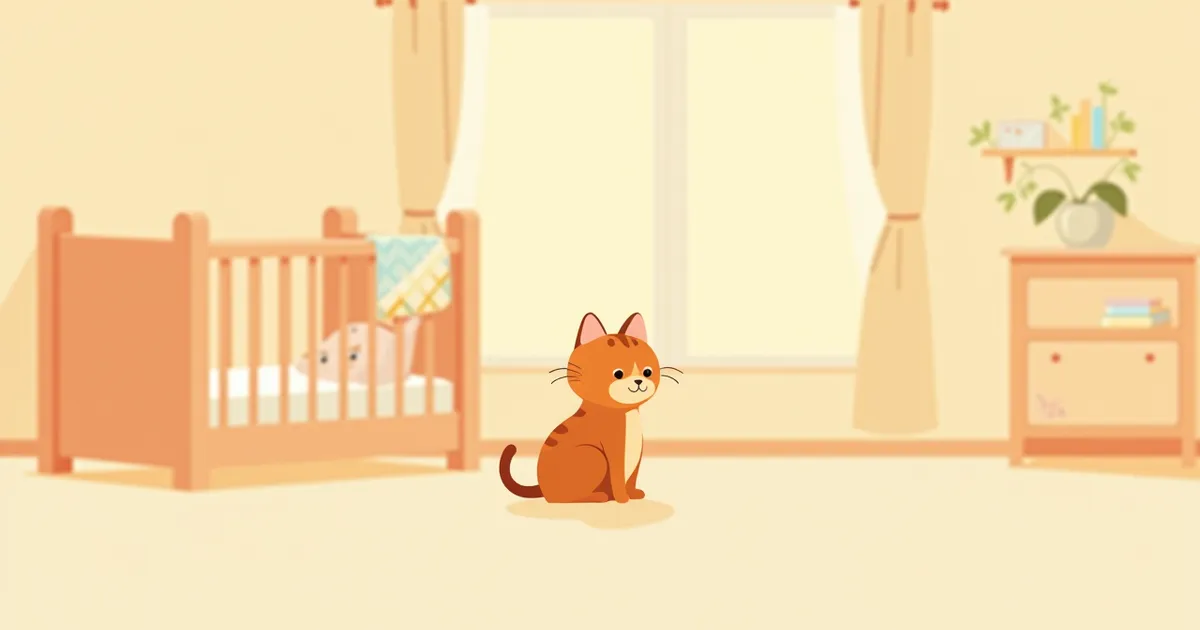
A cat sitting cautiously while gazing into the baby’s room
When a human baby is born into the household, cats may exhibit behavioral and emotional changes in response to environmental shifts, reduced attention, and unfamiliar sounds and smells. These reactions are commonly referred to as adjustment stress. Changes in the home environment and daily routine, along with unexpected noises, are very common stressors for cats. What’s truly important to understand is that many of these behaviors, which owners may perceive as problematic, are not actually “abnormal” but rather natural stress responses within the normal range. Cats with strong emotional resilience tend to cope with these stressors relatively well and regain their composure quickly. However, cats that are less resilient may experience repeated triggers of stress responses. If symptoms such as increased aggression or food refusal become pronounced and persistent, it’s essential to consult a veterinarian, as these signs could indicate underlying pain or internal medical conditions.

Why Does Your Cat’s Behavior Change? — 3 Main Causes

There are three main reasons why a cat’s behavior may change after the birth of a baby.
Environmental changes: The sudden appearance of a baby’s crib, supplies, and unfamiliar scents can disrupt the cat’s perception of its territory.
Reduced attention: As the owner’s focus shifts to the baby, time spent playing with and grooming the cat often decreases.
Auditory and olfactory stimulation: A baby’s cries can be an unfamiliar high-frequency sound to a cat, while the scents of formula and lotion may confuse its sense of territory.

If You See These Symptoms, It’s a Sign of Stress

If any of the following behaviors appear for the first time or suddenly worsen, they may be signs of a stress response.
Hiding or seeking shelter: Your pet may stay confined in tight spaces they wouldn’t normally hide in.
Excessive grooming: Repeatedly licking the same area can lead to compulsive over-grooming, resulting in hair loss and skin damage.
Changes in appetite: Appetite may decrease, causing your pet to leave food uneaten or refuse meals entirely, or it may increase.
Inappropriate elimination or territorial marking (spraying): Even neutered cats may urinate or defecate outside the litter box or engage in urine marking due to stress.
Increased aggression: Your pet may become less tolerant of stimuli, directing aggression toward their owner, familiar family members, or other cats.
Hyperarousal or sleep disturbances: Your pet may startle easily at minor stimuli, remain constantly on guard, become overly attached to their owner, or experience disrupted sleep patterns.
A stressed cat hiding under the bed

Signs That Require an Immediate Vet Visit

If your cat stops eating and drinking entirely, repeatedly lunges at or scratches your baby, completely refuses to use the litter box and urinates elsewhere, or develops skin wounds from self-harm due to excessive grooming, you should see a veterinarian immediately. Inappropriate urination and compulsive over-grooming are closely linked to stress and anxiety, but they can also indicate underlying medical conditions such as pain or lower urinary tract diseases (FLUTD/FIC). Therefore, it is crucial to rule out medical causes before attributing these symptoms solely to stress.

How Do Veterinarians Diagnose?

Veterinarians assess the causes of behavioral changes in the following order. First, they take a medical history to identify any lifestyle changes around the time of the baby’s birth, and perform a physical examination to rule out hidden pain or internal medical conditions as triggers for the behavior. Next, they systematically record the level of aggression and anxiety, frequency of spraying, and changes in appetite and sleep patterns. If necessary, blood tests and thyroid function checks are conducted to exclude underlying medical causes.

Treatment Stages Based on the Severity of Behavioral Changes
The approach varies depending on the severity of the behavioral changes, but regardless of the stage, the first priority is always to rule out medical causes such as pain or internal diseases.
Mild (hiding, decreased appetite): In many cases, symptoms gradually improve by implementing Multi-Element Modification (MEMO) to provide a safe space and sufficient resources, along with restoring a consistent play routine.
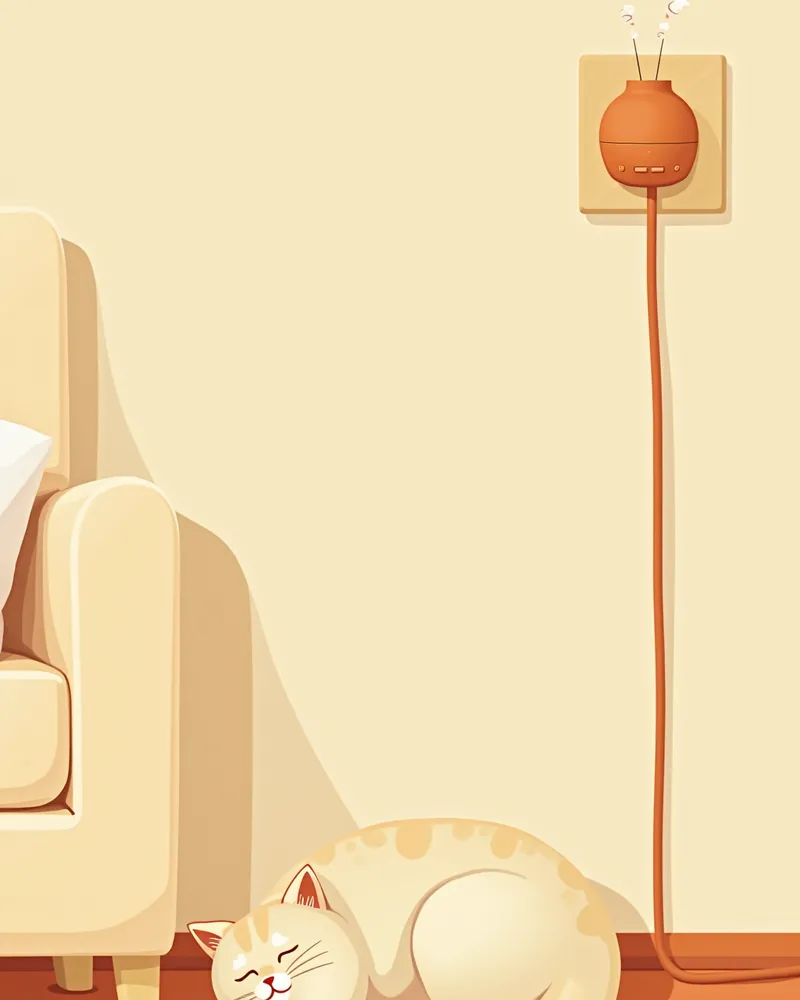
Moderate (excessive grooming, spraying): Combine environmental enrichment with pheromone diffusers and behavior modification. If inappropriate elimination is occurring, it is also important to evaluate the litter box environment, including the number of boxes, their placement, and cleanliness.
Severe (repeated aggression, compulsive grooming): Anti-anxiety medication may be prescribed at the veterinarian’s discretion. Even when medication is used, environmental enrichment and behavior modification must be implemented concurrently, and all treatment plans should be tailored to the individual cat.
A cat resting comfortably next to a pheromone diffuser.

Management Points to Implement at Home Right Away
Here are some management strategies you can implement at home.
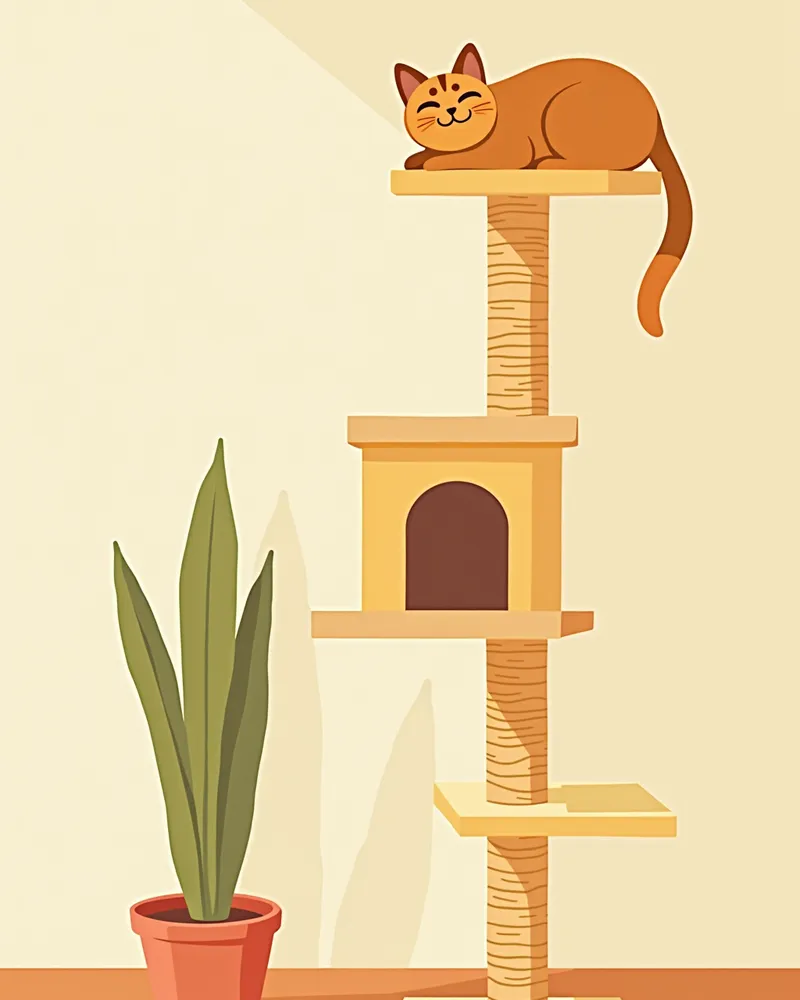
Secure a dedicated safe space: Provide a cat-only area, such as a room inaccessible to the baby or the top of a cat tree.
Dedicate 15 minutes of daily play: Maintain consistent interaction time with your cat, even if it occurs after the baby has fallen asleep.
Gradual introduction: First introduce clothing scented with the baby’s odor, then gradually increase direct face-to-face encounters.
Utilize pheromone products: Installing a pheromone diffuser in areas where your cat frequently stays can help promote calmness.
A cat resting comfortably on its dedicated cat tower.

Sensitive Breeds and Senior Cats Require More Careful Attention

Cats that form strong bonds with their owners, have sensitive temperaments, or lacked adequate socialization and positive early-life experiences may react more sensitively to environmental changes due to repeated stress triggers. While emotionally resilient cats tend to cope with stress relatively well, others require a longer adjustment period and careful monitoring. For these cats, it’s helpful to begin preparations before the baby arrives by providing a safe space and sufficient resources, which can enhance their sense of choice and control, promoting stability.

Reviewed by a veterinarian

Dr. Tony — Punnawat Phongkittirak

Dr. Tony — Punnawat Phongkittirak

Veterinarian

A veterinarian who majored in veterinary medicine at Khon Kaen University, Thailand, and completed the IVSA program at North Carolina State University in the United States. Drawing on clinical experience at animal hospitals, he works in the pet healthcare field and is dedicated to building a digital care environment that connects pet parents with veterinarians.

Frequently Asked Questions

Is it normal for a cat to react aggressively toward a baby?
It’s natural for cats to be wary or even hiss at first. However, if they repeatedly try to scratch or bite, it’s important to consult a veterinary behavior specialist. Always ensure a guardian is present when babies and cats share the same space.
Is there anything I can prepare in advance before my baby is born?
To help your dog adjust more smoothly before giving birth, gradually introduce them to baby items and recorded baby cries, and establish clear rules for entering and exiting the nursery in advance. The key is to expose them to new stimuli gradually rather than all at once.
How can I address spraying (urine marking)?
If your cat is neutered, the spraying is likely stress-related. Check the litter box environment, use a pheromone diffuser, and thoroughly eliminate odors from marked areas with an enzymatic cleaner to prevent recurrence. However, inappropriate urination can sometimes indicate underlying medical issues such as lower urinary tract disease, so if there’s no improvement, consult your veterinarian.
How long do the behavioral changes typically last?
Most cats gradually adjust to new environments, but the time it takes can vary widely depending on their personality, age, and past experiences. Cats with strong emotional resilience tend to settle in relatively quickly, while others may require more attentive care over a longer period. If you notice slow progress, consult your veterinarian.
How can I help my cat and baby get along well?
The key is to introduce them slowly and gradually. Let the cat get used to the baby’s scent while the baby is asleep, and start with short, positive face-to-face meetings. Reward the cat with treats when it approaches the baby on its own.

Share

Related Guides

References

[1] Ahola, M.K., Vapalahti, K., and Lohi, H. (2017). Early weaning increases aggression and stereotypic behaviour in cats. Scientific Reports 7: 10412.

[2] Levine, E., Perry, P., Scarlett, J., and Houpt, K.A. (2005). Intercat aggression in households following the introduction of a new cat. Applied Animal Behaviour Science 90(3-4): 325–336.

[3] Overall, K.L., Rodan, I., Beaver, B.V. et al. (2005). Feline behavior guidelines from the American Association of Feline Practitioners. Journal of the American Veterinary Medical Association 227(1): 70–84.

[4] Horwitz, D.F. and Mills, D.S. (eds.) (2009). BSAVA Manual of Canine and Feline Behavioural Medicine. 2nd edn. British Small Animal Veterinary Association.

[5] Seitz, P.F.D. (1959). Infantile experience and adult behavior in animal subjects: II. Age of separation from the mother and adult behavior in the cat. Psychosomatic Medicine 21(5): 353–378.

This information is based on veterinary literature and does not replace diagnosis or treatment. Please consult a veterinarian for specific health concerns.

Metapet Co., Ltd. | CEO: Park Sung-yong | Business Reg. No. 417-88-02562 | Seoul, South Korea | Customer Center

Cat Changes After Baby's Birth: Causes & Adaptation Tips | Meongsiljang