
Like
Share
멍실장
고양이 치아 예방 간식·껌 증상과 원인, 진단·치료와 관리 포인트 총정리

Are Dental Treats for Cats Really Effective? How to Choose and Use Them Correctly

Oral HealthDiseasesMeongsiljang Veterinary Advisory Board

Dental treats and chews play a vital role in maintaining your cat’s oral health. Knowing how to choose the right products and use them correctly can help prevent dental diseases.

Dental Treats and Chews for Cats Are Effective Supportive Tools for Dental Health

A cat happily chewing on a dental preventive treat
Dental treats and chews are essential supportive tools that help inhibit plaque formation on the tooth surface and reduce tartar buildup. - Plaque reduction: The chewing action creates friction on the teeth, helping to remove plaque. - Tartar prevention: Consistent use can slow down the formation of tartar. - Bad breath relief: By suppressing bacterial growth in the mouth, these products help reduce odor. - Oral health maintenance: Choosing veterinarian-recommended products ensures safer and more effective care. - Ingredient verification is essential: Carefully review the main ingredients and additives to prevent allergies or digestive discomfort. In this way, appropriate treats and chews can greatly assist with daily dental care.

The Main Causes of Dental Problems Are Plaque and Tartar Accumulation

Feline dental disease typically begins when plaque, a bacterial biofilm, adheres to the tooth surface. Plaque is a biofilm composed of oral bacteria. - Plaque Formation: A thin film called a pellicle first coats the tooth surface. Bacteria then attach and multiply on this layer, allowing the plaque to mature and eventually harden into tartar over time. - Gingivitis and Periodontitis: Plaque and tartar irritate the gums, causing inflammation (gingivitis) that can progress to periodontitis. - Increased Risk with Rough Surfaces: Plaque adheres more readily when tooth surfaces become rough due to conditions such as tooth resorption, enamel defects, crowding, or malocclusion. - Importance of Early Intervention: If plaque is not removed in the early stages, it can lead to tooth loss. - Prevention-Focused Approach: Prevention is far more effective and less burdensome than treatment. Therefore, establishing consistent daily care habits is essential.
A magnified image of plaque buildup on a cat's teeth

Checklist of Main Symptoms of Dental Problems

Keep a close eye on signs of dental problems in your cat. If you notice any of the following symptoms, consult your veterinarian immediately.
Bad breath: Persistent, strong odor may indicate dental disease.
Reluctance to eat: Pain in the mouth can cause your cat to avoid food or eat slowly.
Mouth gaping or jaw shaking: These are signs of pain.
Blood-stained fur around the mouth: This may indicate bleeding.
Strong reaction when the mouth is touched: This is a common response when pain is present.
Examples of behaviors in cats showing signs of tooth pain

Cases Requiring Immediate Veterinary Visit

If your cat opens its mouth and shakes its jaw, completely refuses to eat, or has no appetite for more than 24 hours, consult a veterinarian immediately. These could be signs of severe periodontal disease or a fractured tooth.

A Professional Veterinary Examination Is Necessary for an Accurate Diagnosis
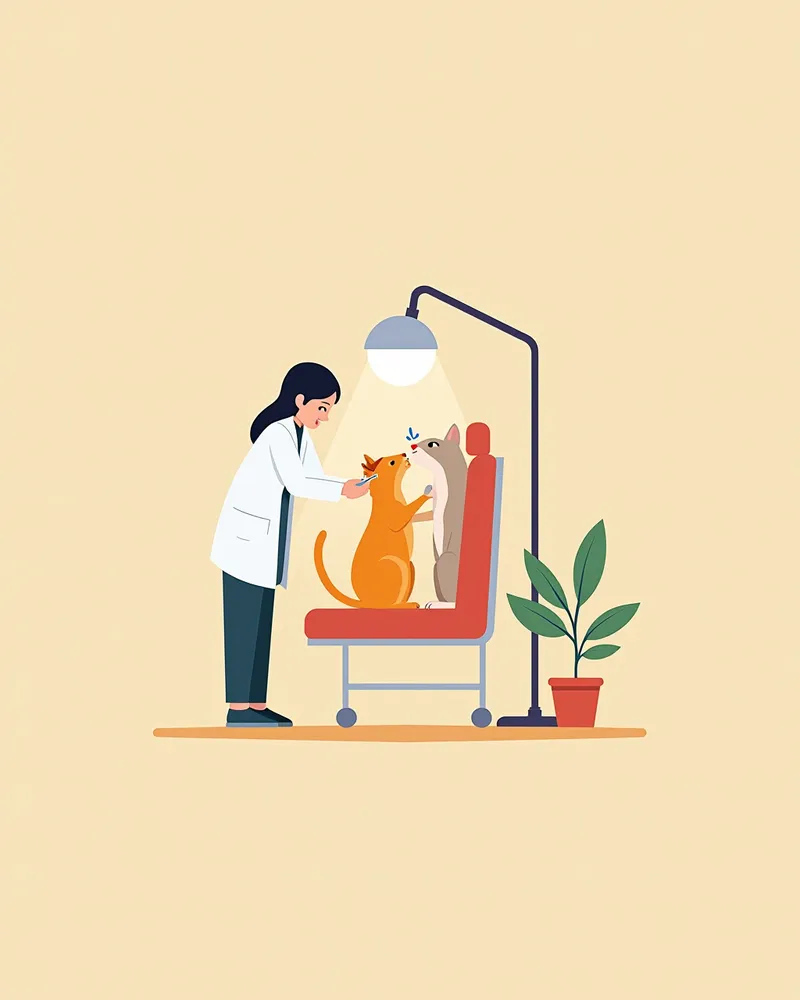
Because feline dental issues can involve internal conditions that aren’t visible to the naked eye, a professional veterinary examination is essential for an accurate diagnosis. - Oral examination: The veterinarian visually inspects and palpates the gums and checks for tooth mobility. - X-ray imaging: X-rays are necessary because damage to the tooth roots or jawbone cannot be detected through visual inspection alone. - Examination under anesthesia: To ensure a thorough and accurate assessment, the examination is performed under anesthesia. - Importance of early detection: Early diagnosis improves treatment success rates and reduces the need for surgery. - Individualized care: Based on the examination results, a customized treatment plan can be developed. Therefore, if you suspect any symptoms, please visit the clinic promptly.
A veterinarian examining a cat's mouth.

Treatment Is Carried Out in Stages Depending on the Severity of Symptoms

Treatment for dental issues is carried out in stages, depending on the severity of the symptoms. - Initial treatment: Professional scaling and polishing are performed using tools such as ultrasonic scalers to remove plaque and tartar. - Periodontitis management: The key to treatment is thorough plaque control. This involves daily home care, such as brushing, along with regular scaling and polishing under anesthesia as needed. - In cases of tooth damage: If tooth fractures, resorption, or root damage are detected, extraction (tooth removal) may be considered. - Performed under anesthesia: All treatments are conducted under safe anesthesia to ensure accurate assessment and proper care. - Post-treatment care: Ongoing maintenance is necessary after treatment, including brushing and the use of supportive treats and chews. - Regular check-ups recommended: It is advisable to have regular veterinary examinations after treatment to monitor for recurrence. In severe cases, professional treatment under anesthesia may be recommended every 3–4 months.
A cat recovering after dental treatment

Points for Dental Care at Home

Effective at-home care hinges on the proper use of dental treats and chews. Offer them once or twice daily in a size that allows your cat to eat comfortably. Encourage slow chewing to maximize benefit, and always check the ingredient list to ensure there are no allergic reactions.
Offer treats after meals: This helps reduce food residue on the teeth.
Choose the right size: For cats with weaker jaws, we recommend softer products.
Check the ingredients: Select products free from artificial flavors and preservatives.
Regular monitoring: Check your cat’s mouth weekly for any changes.
A cat enjoying dental preventive treats at home

Breed-Specific Precautions and Prevention of Recurrence

When teeth overlap or are crowded due to malocclusion, the tooth surfaces can become rough, allowing plaque to accumulate more easily and increasing the risk of dental disease. Additionally, the frequency and severity of periodontal disease and tooth resorption tend to increase with age, making regular check-ups and individualized care essential. Addressing dental issues requires consistent home care and routine professional treatments to thoroughly control plaque. If care is neglected, conditions can progress again, so ongoing management is crucial.

Reviewed by a veterinarian

Dr. Tony — Punnawat Phongkittirak

Dr. Tony — Punnawat Phongkittirak

Veterinarian

A veterinarian who majored in veterinary medicine at Khon Kaen University, Thailand, and completed the IVSA program at North Carolina State University in the United States. Drawing on clinical experience at animal hospitals, he works in the pet healthcare field and is dedicated to building a digital care environment that connects pet parents with veterinarians.

Frequently Asked Questions

Can I give my cat dental prevention treats every day?
Yes, giving it once or twice a day is safe. However, overfeeding can lead to obesity, so it’s important to stick to the recommended amount.
Can dental problems be completely prevented with treats alone?
No, treats are just a supplementary tool. Regular veterinary check-ups and daily tooth brushing are also essential.
My cat doesn’t like treats. What should I do?
Try offering tasty products or mixing treats into their food. It’s also a good idea to start with products recommended by your veterinarian.
My pet gets diarrhea after eating treats. Is this normal?
If diarrhea persists, it may indicate an allergy or indigestion. Stop use immediately and consult your veterinarian.
What ingredients are good in dental prevention treats?
It’s important to choose products with clinically proven plaque and tartar control benefits rather than focusing solely on specific ingredients. Look for treats or diets bearing the seal of approval from the Veterinary Oral Health Council (VOHC, vohc.org). Diets formulated for dental health are also designed to meet consistent nutritional standards, including adequate levels of nutrients such as vitamin E, vitamin C, and selenium.

Share

Related Guides

References

[1] The Cat, Clinical Medicine and Management, 2nd Edition. Elsevier, 2023.

[2] Applied Veterinary Clinical Nutrition, 2nd Ed. Wiley-Blackwell, 2021.

[3] Corbee, R.J. (2014). Obesity in show cats. Anim. Physiol. Anim. Nutr. (Berl). 98(6), 1075–1080.

This information is based on veterinary literature and does not replace diagnosis or treatment. Please consult a veterinarian for specific health concerns.

Metapet Co., Ltd. | CEO: Park Sung-yong | Business Reg. No. 417-88-02562 | Seoul, South Korea | Customer Center

Are Dental Treats for Cats Effective? How to Choose Them | Meongsiljang