Like
Share
멍실장
고양이 복강 내 종양 감별 증상과 원인, 진단·치료와 관리 포인트 총정리

If Your Cat’s Abdomen Is Distended — Differentiating Intra-Abdominal Tumors and Signs to Visit the Vet

Oncology/CancerDiseasesMeongsiljang Veterinary Advisory Board

Differentiating tumors within a cat’s abdominal cavity often begins with nonspecific symptoms such as abdominal distension, weight loss, and decreased appetite. Ultrasound and biopsy are necessary for an accurate diagnosis. Early detection and appropriate treatment significantly impact the prognosis.

What Is Differentiating Intra-Abdominal Tumors in Cats?
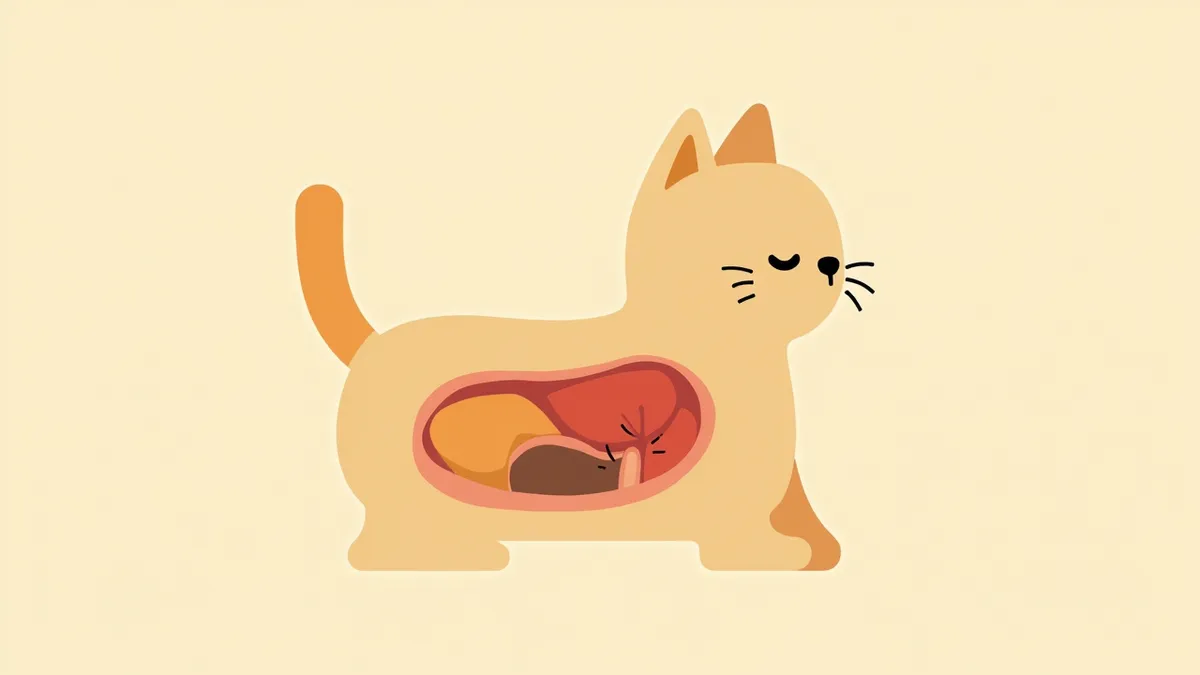
An anatomical illustration showing the internal organs of a cat and the possible locations of tumors within the abdominal cavity.
Differentiating tumors within a cat’s abdominal cavity involves accurately determining whether an abnormal growth is malignant, benign, inflammatory, or a cyst. Because symptoms are often nonspecific, these conditions are easily overlooked in the early stages, and appropriate treatment is impossible without a precise diagnosis. - Ultrasound examination: This noninvasive method allows us to assess the tumor’s location, size, shape, and blood flow. - Biopsy: Tissue samples are collected for cytological and pathological analysis to clearly determine the nature of the tumor. - Abdominocentesis: This procedure involves collecting abdominal fluid to check for malignant cells or signs of inflammation. Accurate differential diagnosis is key to establishing the right treatment plan.

Main Causes and Pathogenesis

The risk of intra-abdominal tumors in cats increases with age, and breed-specific or genetic predispositions can also serve as risk factors. Siamese cats, in particular, are known to be predisposed to small intestinal tumors, such as alimentary lymphoma (approximately 74%) and adenocarcinoma (approximately 17%). Meanwhile, feline infectious peritonitis (FIP), caused by the feline coronavirus, is an inflammatory abdominal disease rather than a tumor, and must always be considered when differentiating intra-abdominal lesions. - Increased intra-abdominal pressure: As tumors grow or ascites accumulates, pressure within the abdominal cavity rises, which can lead to rapid breathing and a decreased appetite. - Vascular and organ compression: Enlarged lesions may compress nearby blood vessels or organs, potentially affecting blood circulation as well as digestive and urinary functions. - Chronic inflammatory response: Prolonged inflammation can contribute to the background of abdominal diseases. These complex factors play a role in the progression of the lesions.
Microscopic image of feline abdominal tumor tissue

Main Symptoms and Signs

The main symptoms to watch for when differentiating intra-abdominal tumors in cats are as follows:
Abdominal distension: The abdomen enlarges rapidly due to fluid accumulation or tumor growth within the abdominal cavity.
Weight loss: Body weight drops sharply due to decreased appetite or impaired digestion and nutrient absorption.
Loss of appetite: The cat suddenly stops eating or vomits shortly after eating.
Fatigue and lethargy: The cat remains inactive, rarely leaving its resting spot throughout the day.
Recurrent vomiting: Pressure on the stomach leads to frequent episodes of vomiting.
Difficulty breathing: Compression of the abdominal cavity puts pressure on the lungs, causing labored breathing.
A cat with a distended abdomen

Symptoms Requiring Immediate Veterinary Visit

If your cat suddenly shows severe difficulty breathing, rapid abdominal swelling, or repeated vomiting and bloody stools, immediate veterinary care is necessary. These symptoms could indicate an emergency such as internal bleeding or intestinal obstruction.

Accurate Diagnostic Methods

To accurately differentiate tumors within a cat’s abdominal cavity, multiple diagnostic tests are typically performed in combination. - Ultrasound: This allows real-time visualization of the tumor’s size, location, shape, boundaries, and blood flow. - Abdominal Paracentesis: Abdominal fluid is collected to analyze for the presence of malignant cells, inflammatory cells, or bacteria. - Biopsy: Tumor tissue is directly sampled for histopathological examination to definitively determine whether the tumor is benign or malignant. - CT/MRI Imaging: When ultrasound findings are inconclusive, these advanced imaging techniques provide detailed anatomical information to assess potential metastasis. An accurate diagnosis is essential for developing an effective treatment plan and requires comprehensive evaluation by a veterinarian.
A veterinarian performing an abdominal ultrasound on a cat

Treatment Methods and Step-by-Step Approach

Treatment is tailored individually based on the tumor type, size, location, and whether it has metastasized. - Surgical treatment: If the tumor is localized and has not metastasized, complete surgical removal may be attempted. - Chemotherapy: For malignant tumors, especially gastrointestinal lymphoma, which is common in cats, chemotherapy is the primary treatment. In cases such as colon adenocarcinoma, drugs like doxorubicin or carboplatin may help extend survival time after surgery. - Radiation therapy: This can be used as an adjunctive treatment for tumors in areas where surgery is difficult or for certain localized tumors. - Pain management: Alleviates pain caused by the lesion to improve quality of life. - Nutritional support: Easily digestible diets are appropriately provided to compensate for digestive and absorptive issues. The treatment plan is implemented step by step in consultation with your veterinarian.
A cat receiving treatment at the hospital

Home Care and Management Points

In managing tumors within a cat’s abdominal cavity, daily care tailored to the patient’s condition is crucial. - Dietary management: Provide easily digestible, high-protein, low-fat food in appropriate portions, and feed in frequent, small meals. - Weight monitoring: Check for weight loss by measuring your cat’s weight once a week. - Medication management: Administer pain relievers and other prescribed medications at the correct times and dosages. - Minimizing stress: Maintain a quiet environment and reduce external stimuli. - Regular check-ups: Even after treatment, monitor your cat’s condition with abdominal ultrasounds or blood tests every 3 to 6 months. All these factors contribute to recovery and improved quality of life.
A comfortable resting environment for cats

Preventing Recurrence and Breed-Specific Precautions

Certain breeds, particularly Siamese cats, have a reported predisposition to gastrointestinal and abdominal tumors, including gastrointestinal lymphoma. We recommend regular health check-ups and abdominal ultrasound examinations. Even after treatment, follow-up exams every 3 to 6 months are essential to monitor for recurrence.

Reviewed by a veterinarian

Dr. Tony — Punnawat Phongkittirak

Dr. Tony — Punnawat Phongkittirak

Veterinarian

A veterinarian who majored in veterinary medicine at Khon Kaen University, Thailand, and completed the IVSA program at North Carolina State University in the United States. Drawing on clinical experience at animal hospitals, he works in the pet healthcare field and is dedicated to building a digital care environment that connects pet parents with veterinarians.

Frequently Asked Questions

Can tumors inside a cat’s abdomen be cured?
The outcome depends on the type of tumor and whether it is detected early. Some benign tumors can be cured with surgery, and even malignant tumors can lead to a longer survival time if treated early.
What should you do first if you suspect a tumor inside the abdominal cavity?
It’s important to start with an abdominal ultrasound at the clinic. This can quickly check for the presence of fluid or tumors.
Is it okay if my cat’s abdomen is swollen?
No. Abdominal distension can be one of several possible causes, but it may also indicate a serious issue such as a tumor, internal bleeding, or a cyst. Your pet needs to be examined right away.
What should I do if my cat loses its appetite during treatment?
Consult your veterinarian about nutritional supplements or oral nutrition products. Avoid force-feeding; instead, offer small amounts frequently.
If a tumor develops in a cat's abdominal cavity, how long can the cat be expected to live?
The treatment approach and prognosis depend on the type of tumor. With early detection and appropriate treatment, pets can survive for several months to several years.

Comparison of Characteristics and Treatment Directions by Tumor Type

ItemTumor TypeMetastatic PotentialOperabilityMain Treatment
Benign Tumor (cyst, hemangioma)LowHighOperableSurgical removal
Malignant Tumor (cancer, lymphoma)HighLowLimitedChemotherapy, radiation therapy
Inflammatory Lesion (nodular peritonitis)NoneLowSurgery not requiredMedication

Histological examination is essential for an accurate diagnosis.

Share

Related Guides

References

[1] Terragni, R. et al. (2012). Stomach wall evaluation using helical hydro-computed tomography. Veterinary Radiology & Ultrasound, 53(4), 402–405.

[2] Gottfried, S.D. et al. (2000). Metastatic digital carcinoma in the cat: A retrospective study of 36 cats (1992–1998). Journal of the American Animal Hospital Association, 36(6), 501–509.

[3] Clinical Medicine of the Dog and Cat, 4th Ed. (2018). Abdominal ultrasound findings in feline gastric tumors. Elsevier.

This information is based on veterinary literature and does not replace diagnosis or treatment. Please consult a veterinarian for specific health concerns.

Metapet Co., Ltd. | CEO: Park Sung-yong | Business Reg. No. 417-88-02562 | Seoul, South Korea | Customer Center

Cat Abdominal Distension: Intra-Abdominal Tumors & Vet Signs | Meongsiljang