
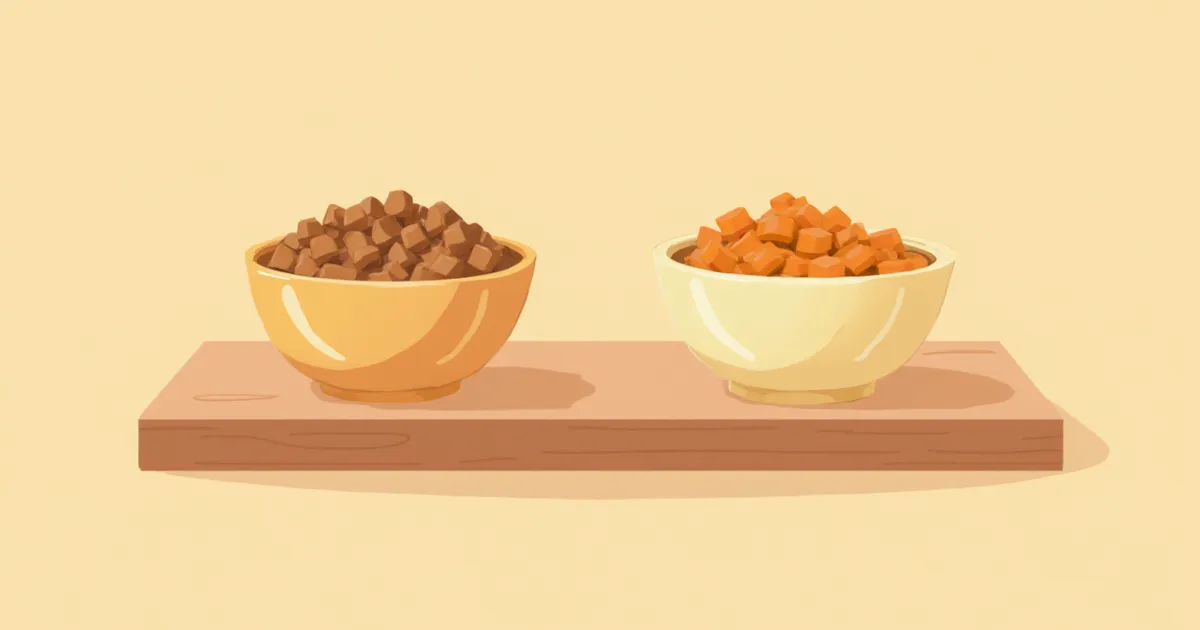
Dry Food vs. Wet Food Comparison — Which Should You Feed?
We compare the differences in moisture content, caloric value, and shelf stability between dry and wet pet food, along with feeding guidelines for different pets, based on veterinary textbooks. We also cover mixed feeding methods.
What Are Dry Food and Wet Food?

Characteristics and Pros/Cons of Dry Food
Characteristics and Pros/Cons of Wet Food

Key Comparison Table: Dry Food vs. Wet Food
| Item | Dry food | Wet food |
|---|---|---|
| Moisture content | About 6–10% | About 70–80% |
| Caloric density | High (about 2,800–4,050 kcal/kg, as-fed basis) | Low (about 700–1,200 kcal/kg) |
| Palatability | Moderate | Very high |
| Dental health support | Effective only for certain products | Almost no effect |
| Aids water intake | Little | Greatly helps |
| Price per calorie | Inexpensive | Expensive |
| Storage after opening | Several weeks to several months | 2–3 days refrigerated |
| Recommended situations | General maintenance / tartar control | Senior, urinary, or reduced appetite |
There is variation between products. Be sure to check the guaranteed analysis on each food's packaging.
Key Points to Check When Feeding Only Wet Food
Because wet food lacks the physical abrasion that occurs when chewing kibble, it offers little benefit for cleaning teeth. Therefore, if your pet’s diet consists mainly of wet food, you’ll need to pay extra attention to plaque and tartar control by incorporating daily tooth brushing or dental treats. Additionally, opened cans or pouches spoil quickly at room temperature, so serve them within two hours of opening. Store any leftovers in the refrigerator with the lid tightly sealed and use them within two to three days. Since food straight from the fridge may be less appealing, gently warming it to body temperature can help improve its palatability.
What’s Right for Your Pet? — Selection Criteria by Situation

Mixed Feeding — The Most Balanced Approach
Precautions by Breed and Health Condition
Breed-specific genetic sensitivities to medications, such as those seen in Collies and Shetland Sheepdogs, require closer attention to the ingredients in medications and treats than to changes in food. For brachycephalic cats like Persians and Himalayans, who may struggle with chewing kibble, wet food is often a better choice. For pets managing diabetes, high-protein, low-carbohydrate wet food is recommended; always consult your veterinarian before making any dietary changes.
Transition Food Gradually — The 7-Day Rule
Reviewed by a veterinarian

Dr. Tony — Punnawat Phongkittirak
VeterinarianA veterinarian who majored in veterinary medicine at Khon Kaen University, Thailand, and completed the IVSA program at North Carolina State University in the United States. Drawing on clinical experience at animal hospitals, he works in the pet healthcare field and is dedicated to building a digital care environment that connects pet parents with veterinarians.
Reviewed 2026-04-27
Frequently Asked Questions
Can I add water to dry kibble before feeding it to my pet?
Won’t my pet be nutritionally deficient if they only eat wet food?
Is wet food really necessary for cats?
I know wet food is better, but it’s expensive and I’m struggling with the cost. Are there any alternatives?
My pet started having soft stools after switching to a new food. Is this normal?
Share
Related Guides

My Senior Cat Won’t Eat — A Complete Guide to Choosing Food for Cats with Weak Digestion

Top 5 Prescription Diets for Feline Pancreatitis Recommended by Veterinarians — Low-Fat, Highly Digestible Food Guide

Royal Canin vs Hill’s vs Purina vs Orijen — Which Brand Is Right for Your Pet, According to Veterinarians?

Recovery Nutrition Comparison — Hill's a/d vs Royal Canin Recovery vs RC Liquid
Comparing Feline Urinary Prescription Diets — Hill’s c/d vs Royal Canin Urinary SO

Comparing Cat Renal Prescription Diets — Hill’s k/d vs Royal Canin Renal vs Purina NF
Comparison of Prescription Kidney Diets for Dogs — Hill's k/d vs Royal Canin Renal vs Purina NF

Comparison of External Parasite Medications (Bravecto, NexGard, Simparica)

Liver Supplements: SAMe vs. Silymarin vs. UDCA — Which Is Right for Your Pet?

Comparison of Dog Joint Supplement Ingredients
References
[1] Fascetti A.J., Delaney S.J., Applied Veterinary Clinical Nutrition, 2nd Ed, Chapter 8 Commercial and Home-Prepared Diets
[2] Ettinger S.J., Feldman E.C., Textbook of Veterinary Internal Medicine, Nutritional Management Section
[3] Hand M.S. et al., Small Animal Clinical Nutrition, 5th Ed, Chapter Pet Food Types and Ingredients