
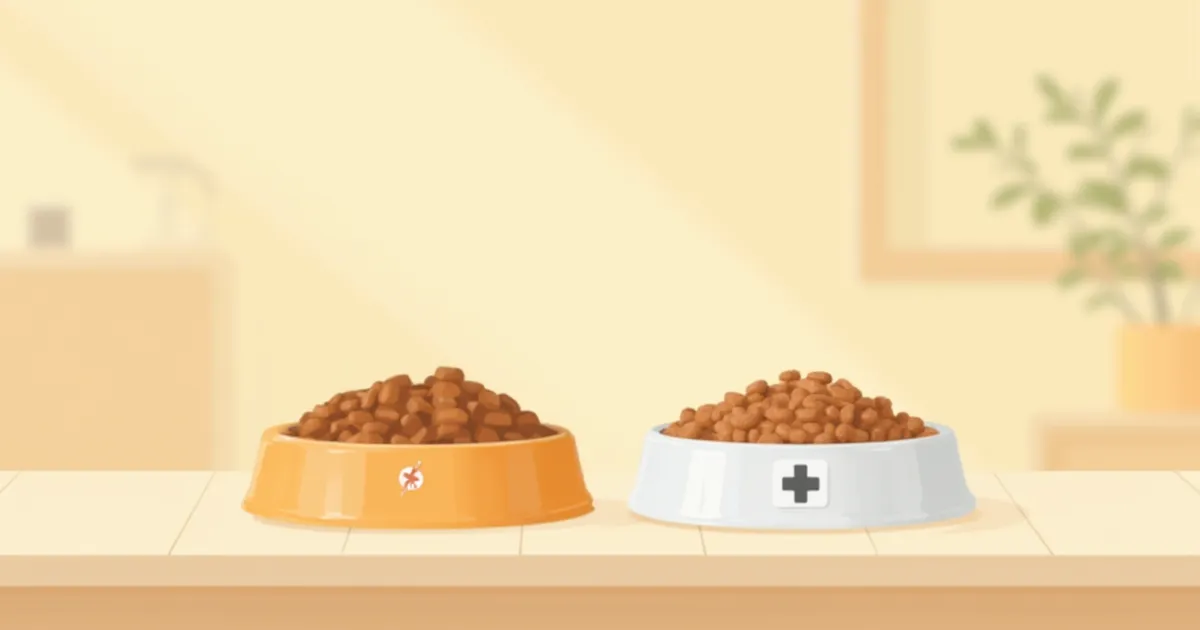
Comparison of Prescription Diets vs. Regular Pet Food
We’ve put together a clear comparison of the ingredients, purposes, and prices of prescription diets versus regular pet food, along with guidelines to help you determine when your pet may need a prescription diet.
What Are Prescription Diets? How Do They Differ from Regular Pet Food?

Basic Conceptual Differences Between the Two Types of Food
Key Comparison Table: Prescription Diets vs. Regular Pet Food
| Item | Regular food | Prescription diet |
|---|---|---|
| Purpose | Maintaining health | Disease management and treatment support |
| Purchase conditions | Freely purchasable | Requires veterinary diagnosis and recommendation |
| Protein adjustment | Standard range | Adjusted by condition (low-protein/hydrolyzed, etc.) |
| Feeding period | Lifelong use possible | Limited depending on disease status |
| Average monthly cost | Relatively inexpensive | 1.5–3 times higher |
| Self-switching feasibility | Possible | Not possible (veterinary consultation required) |
Prices vary by body weight and brand. Individual consultation after veterinary diagnosis is most accurate.
Feeding Prescription Diets Based on Self-Diagnosis Is Dangerous
Prescription diets are formulated to intentionally restrict or enhance specific nutrients, so feeding them long-term to pets without the corresponding condition can lead to nutritional imbalances. Renal and hepatic formulas, in particular, are low in protein and therefore unsuitable for growing puppies and kittens, as well as pregnant or nursing dogs and cats. Always begin these diets only after a veterinary diagnosis, tailored to blood and urine test results, and monitor their effectiveness through regular follow-up testing.
Which Prescription Diets Are Used for Which Conditions?

Why Is There Such a Big Price Difference?
Three Must-Follow Rules When Switching to a Prescription Diet

Regular Checkups Are Essential While Feeding a Prescription Diet
Prescription diets aren’t just about feeding and forgetting; they require ongoing monitoring to ensure they’re working. Dietary therapy only delivers results when properly managed, which is especially true for conditions like kidney disease that can fluctuate over time. For kidney-specific diets, regular blood and urine tests are essential to track kidney function markers, while urinary tract diets benefit from periodic checks of urine parameters, such as pH and the presence of crystals. The frequency of follow-up tests and the specific items checked vary depending on the disease and its progression, so please follow your veterinarian’s guidance. Even if symptoms improve, switching back to regular food on your own increases the risk of relapse, so always consult your vet before making any dietary changes.
Reviewed by a veterinarian

Dr. Tony — Punnawat Phongkittirak
VeterinarianA veterinarian who majored in veterinary medicine at Khon Kaen University, Thailand, and completed the IVSA program at North Carolina State University in the United States. Drawing on clinical experience at animal hospitals, he works in the pet healthcare field and is dedicated to building a digital care environment that connects pet parents with veterinarians.
Reviewed 2026-04-27
Frequently Asked Questions
Do I need to give my pet this prescription medication for life?
Can I give prescription diet food along with regular snacks?
Can I purchase prescription diets online without a veterinarian’s prescription?
If two pets live in the same household but only one needs to be on a prescription diet, what should I do?
Even though I’m giving the prescribed food, the symptoms haven’t changed. Why might that be?
Share
Related Guides

My Senior Cat Won’t Eat — A Complete Guide to Choosing Food for Cats with Weak Digestion

Top 5 Prescription Diets for Feline Pancreatitis Recommended by Veterinarians — Low-Fat, Highly Digestible Food Guide

Royal Canin vs Hill’s vs Purina vs Orijen — Which Brand Is Right for Your Pet, According to Veterinarians?

Comparison of External Parasite Medications (Bravecto, NexGard, Simparica)

Liver Supplements: SAMe vs. Silymarin vs. UDCA — Which Is Right for Your Pet?

Comparison of Dog Joint Supplement Ingredients

Comparison of Low-Fat Prescription Diets for Canine Pancreatitis — Royal Canin GI Low Fat vs Hill’s Prescription Diet i/d Low Fat

Comparison of Prescription Weight-Loss Diets for Dogs — Hill's r/d vs Royal Canin Satiety

Comparison of Hydrolyzed Allergy Prescription Diets for Dogs — Hill’s z/d vs Royal Canin HP vs Purina HA

Dog Gastrointestinal Prescription Diets — Hill’s i/d vs Royal Canin GI: Which Is Right for Your Dog Based on Symptoms?
References
[1] Fascetti AJ, Delaney SJ. Applied Veterinary Clinical Nutrition, 2nd Ed — Chapter 8: Commercial and Home-Prepared Diets
[2] Clinical Medicine of the Dog and Cat, 4th Ed — Section V: Elements of Therapy, Chapter 25
[3] Hand MS et al., Small Animal Clinical Nutrition, 5th Ed — Therapeutic Foods