Like
Share
멍실장
퍼그 체온 조절과 열사병 예방

Pug Body Temperature Regulation and Heatstroke Prevention

WeightBreed HealthMeongsiljang Veterinary Advisory Board

Pugs are at a very high risk of heatstroke due to their short-nosed anatomy. We’ve compiled essential body temperature management tips that owners should know, including summer walk safety, car safety, and emergency warning signs.

Why Are Pugs Vulnerable to Heat?

A pug sticking out its tongue and panting
Pugs are a brachycephalic breed, characterized by their short snouts and narrow airways, and are among the primary breeds affected by Brachycephalic Airway Syndrome, alongside English Bulldogs and Boston Terriers. Due to their anatomical features, such as narrowed nostrils and an elongated soft palate, brachycephalic dogs have a reduced ability to dissipate heat through respiration. Dogs typically cool their bodies by panting, which evaporates moisture from the respiratory tract to lower body temperature. However, in pugs with narrowed nasal passages and airways, this cooling mechanism is less efficient, making them more prone to overheating and heatstroke in warm weather. Additionally, when pugs become anxious or excited, they tend to pant more heavily, which can further strain their already compromised airways and lead to increased heat retention. Therefore, extra care should be taken during the summer months to prevent overheating.

Dangerous Environments for Pugs – Must Avoid

Heatstroke in pugs can develop rapidly under certain conditions. It’s helpful to be aware of environments that owners might easily overlook. - Enclosed vehicles: Even at an outside temperature of 25°C, the interior of a car can exceed 40°C within 10 minutes. - Midday walks on asphalt: Ground temperatures can rise above 60°C. - Humid weather: When humidity exceeds 70%, panting alone is insufficient to cool the body. - Overweight condition: Excess fat acts as insulation, preventing heat from dissipating. - Excessive excitement or exercise: Body temperature can spike dramatically even in short periods.

Understanding the Pug’s Body Temperature Regulation Mechanism
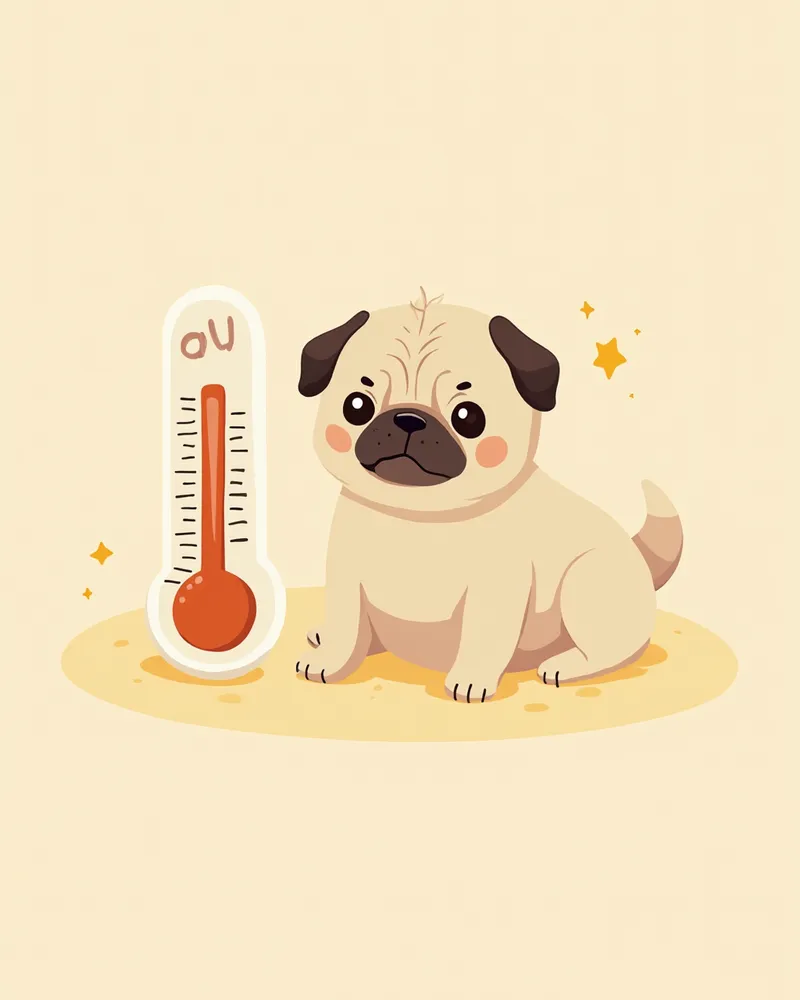
A dog’s normal body temperature is typically around 38–39°C. Unlike humans, dogs and cats cannot cool down by sweating over their entire bodies; instead, about 70% of their heat loss occurs through radiation and convection via the skin, with the remainder supplemented by evaporative cooling through panting and heat dissipation from the paw pads. Consequently, this thermal balance can easily be disrupted in extreme heat or if there are underlying airway issues. Pugs, in particular, have narrowed nostrils and elongated soft palates, making respiratory cooling inherently inefficient. As a brachycephalic breed, pugs experience a faster rise in body temperature in the same environment and struggle to cool down effectively through breathing. If heat continues to accumulate, it can lead to heatstroke, causing damage to multiple organs. Notably, central nervous system abnormalities such as confusion and seizures are hallmark signs of heatstroke.
Illustration of the stages of body temperature changes in pugs

Emergency Signs to Watch For

If you notice any of the following signs, take immediate action. The golden window for treatment is within 30 minutes. - Tongue and gums turn deep red or purple - Excessive drooling and persistent panting - Inability to stand or staggering - Vomiting or diarrhea (especially bloody stools) - Disorientation or seizures - Body temperature exceeding 40°C (104°F) as measured with a thermometer Move your pet to a cool area, wet their body with cool (not cold) water, and head to a veterinary clinic immediately.

Proper Emergency Cooling Methods
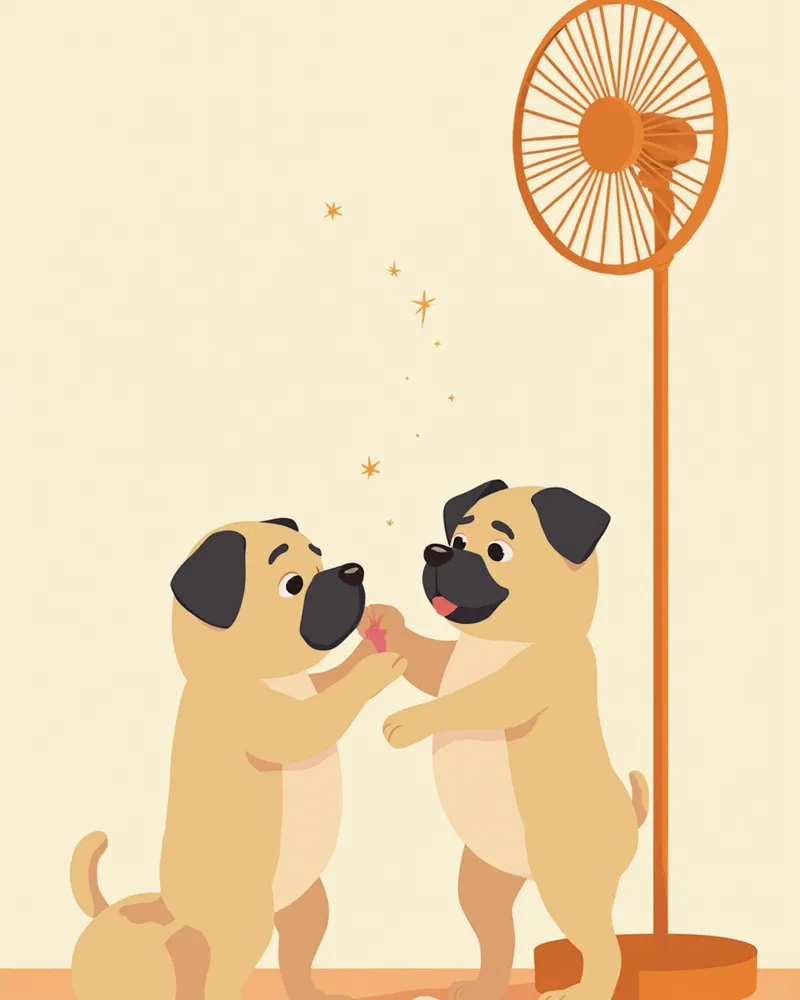
According to veterinary emergency medicine textbooks, the cornerstone of heatstroke treatment is cooling the body’s surface. However, for brachycephalic breeds like Pugs, whose breathing can be unstable, it’s important to cool them steadily without overexertion. Neither human nor canine studies have conclusively proven that any single cooling method is superior to others. - ✅ Soak the entire body with lukewarm water (not cold water) - ✅ Place wet towels on the paw pads, armpits, and groin - ✅ Use a fan to circulate air (evaporative cooling) - ✅ Apply ice packs to areas with major blood vessels, such as the neck, armpits, and groin (a cooling option recommended by textbooks) - ❌ Avoid prolonged immersion in ice water or excessive cooling - ❌ Do not wrap in blankets (traps heat) - ❌ Do not force water if consciousness is impaired (risk of aspiration pneumonia) - Once the body temperature drops to around 39.5°C, stop cooling and immediately transport the pet to a veterinary clinic.
A pet owner cooling down a Pug with a wet towel

Safe Walking Time Guide for Pugs

ItemSpring/AutumnSummer (Jun–Aug)Winter
Recommended time of day8–10 AM / 5–7 PM5–7 AM / after 8 PM12–3 PM
Outdoor temperature guideline15–22°C safeAbove 22°C caution / Above 26°C avoid5°C or above OK
Walk length20–30 min10–15 min (short and frequent)20–30 min
Ground checkNot neededBack-of-hand 5-second test requiredNot needed

Back-of-hand test: if the asphalt feels hot when you press the back of your hand on it for 5 seconds, there's a burn risk for your dog's paw pads too

Daily Body Temperature Management for Pugs

Establishing a 24-hour temperature management routine during the summer can significantly reduce the risk of accidents. - Indoor temperature: Maintain 22–25°C with 50–60% humidity. - Water bowl: Always keep it filled with plenty of cool water. - Cooling mat: Use a mat that allows your dog to rest comfortably in the cool. - Car travel: Ensure the air conditioning is running sufficiently before getting in, and never leave your dog alone in the vehicle. - Weight management: Maintain a healthy weight (typically 6–8 kg). Obesity worsens upper airway obstruction in brachycephalic breeds and impairs heat dissipation through respiration, increasing the risk of heatstroke. - Cafes and outings: Check in advance if the indoor space is cool, and avoid waiting outdoors during the hottest part of the day.

When Pugs Are at Higher Risk

Pugs with any of the following conditions can become dangerously overheated much faster, even in the same hot weather. Please keep a close eye on them. - Senior pugs aged 7 and older - Pugs that snore loudly even under normal conditions (possible elongated soft palate) - Overweight or obese pugs (exacerbates upper airway obstruction) - Pugs with a history of diagnosed heart disease or tracheal collapse - Pugs in highly anxious or excited states (anxiety increases panting, placing greater strain on the respiratory system) In these cases, it is best to avoid long-distance outings during the summer and to have your pug screened for Brachycephalic Airway Syndrome.

Reviewed by a veterinarian

Dr. Tony — Punnawat Phongkittirak

Dr. Tony — Punnawat Phongkittirak

Veterinarian

A veterinarian who majored in veterinary medicine at Khon Kaen University, Thailand, and completed the IVSA program at North Carolina State University in the United States. Drawing on clinical experience at animal hospitals, he works in the pet healthcare field and is dedicated to building a digital care environment that connects pet parents with veterinarians.

Frequently Asked Questions

Is every instance of a pug panting a sign of heatstroke?
Not necessarily. Pugs tend to breathe heavily even when they’re fine. However, if the panting continues for more than 30 minutes in a cool environment, or if their tongue turns a deep red or purple, it’s a warning sign.
Is it okay to leave the air conditioner on when I go out?
That’s fine. However, power outages or air conditioner breakdowns during the summer are the most dangerous. I recommend keeping a backup fan, cooling mat, and a bowl of cool water nearby, and if possible, keeping your outings short.
Is it dangerous to leave my pet in the car for just a short time (5 minutes)?
Yes, it’s dangerous. Even when the outside temperature is 25°C, the interior of a car can exceed 35°C within just five minutes. As a rule, never leave a Pug alone in a car, not even for a single minute.
Can I give my pet ice to eat?
Small amounts are fine, but offering large quantities all at once to quickly quench thirst can irritate the gastrointestinal tract or pose a risk of aspiration. Never put water or ice in the mouth of a pet with altered consciousness.
Does surgery for brachycephalic airway syndrome also reduce the risk of heatstroke?
Yes, improved respiratory efficiency also enhances their ability to regulate body temperature. However, since the inherent anatomical limitations of brachycephalic breeds remain even after surgery, it’s still important to take the same precautions during the summer months.

Share

Related Guides

References

[1] Drobatz KJ, Heat Stroke, Small Animal Critical Care Medicine, 3rd Edition, Chapter 142

[2] Bruchim Y, Kelmer E, Cohen A, et al., Hemostatic abnormalities in dogs with naturally occurring heatstroke, Journal of Veterinary Emergency and Critical Care 27(3):315-324, 2017

[3] The Dog Care Handbook: Things I Wish My Vet Had Told Me, Heat Stroke in Brachycephalic Breeds Chapter

This information is based on veterinary literature and does not replace diagnosis or treatment. Please consult a veterinarian for specific health concerns.

Metapet Co., Ltd. | CEO: Park Sung-yong | Business Reg. No. 417-88-02562 | Seoul, South Korea | Customer Center

Pug Heatstroke Prevention: Brachycephalic Temperature Care | Meongsiljang