Like
Share
멍실장
프렌치불독 단두종 호흡기 주의점과 연령별 평생 건강관리 가이드

French Bulldog Brachycephalic Respiratory Precautions and Age-Specific Lifelong Health Management Guide

RespiratoryBreed HealthMeongsiljang Veterinary Advisory Board

I’ve compiled a veterinary evidence-based summary on how the brachycephalic anatomy of French Bulldogs affects their respiratory system, the criteria for BOAS surgery, and age-specific lifelong health management strategies.

Respiratory Health Characteristics of French Bulldogs
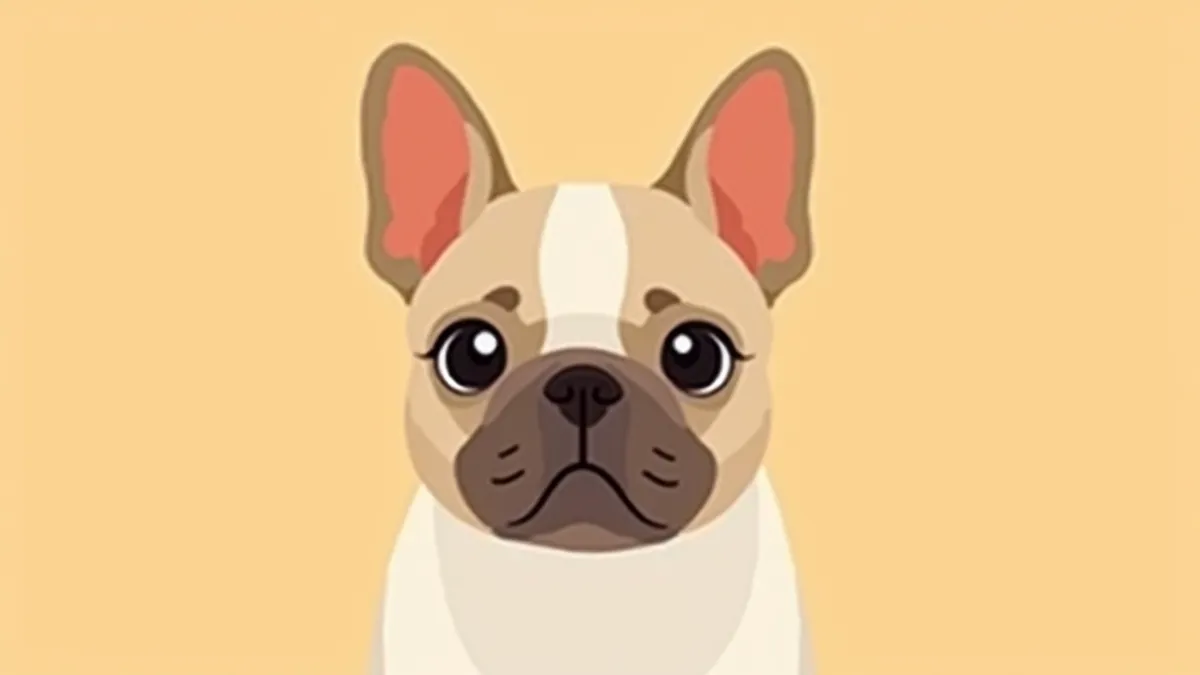
Close-up of the brachycephalic facial structure of a French Bulldog
French Bulldogs are a small breed that requires lifelong respiratory care due to their flat-faced (brachycephalic) structure, which results in narrowed airways. The most critical condition to watch for is Brachycephalic Obstructive Airway Syndrome (BOAS). This syndrome often involves a combination of structural traits, including narrow nostrils, an elongated soft palate, and a narrow trachea. Carefully monitoring your dog’s breathing sounds and patterns from a young age and seeking prompt veterinary attention if any abnormalities arise are essential for ensuring a high quality of life.

Top 4 Conditions French Bulldogs Must Be Especially Cautious About

Brachycephalic Obstructive Airway Syndrome (BOAS): This is a primary condition in which narrowed nostrils, an elongated soft palate, and a constricted trachea combine to make breathing difficult.
Intervertebral Disc Disease: Dogs with chondrodysplastic body types have vulnerable spinal discs, which can lead to hind limb paralysis.
Heatstroke: Their narrowed airways impair panting, making it hard to regulate body temperature. Heatstroke can develop rapidly in hot summer conditions.
Corneal Ulcers: Their flat facial structure causes the eyes to protrude, making the corneas prone to injury.
Early detection and consistent monitoring are key for all four conditions.

BOAS — Which Structures Are the Problem and Why?
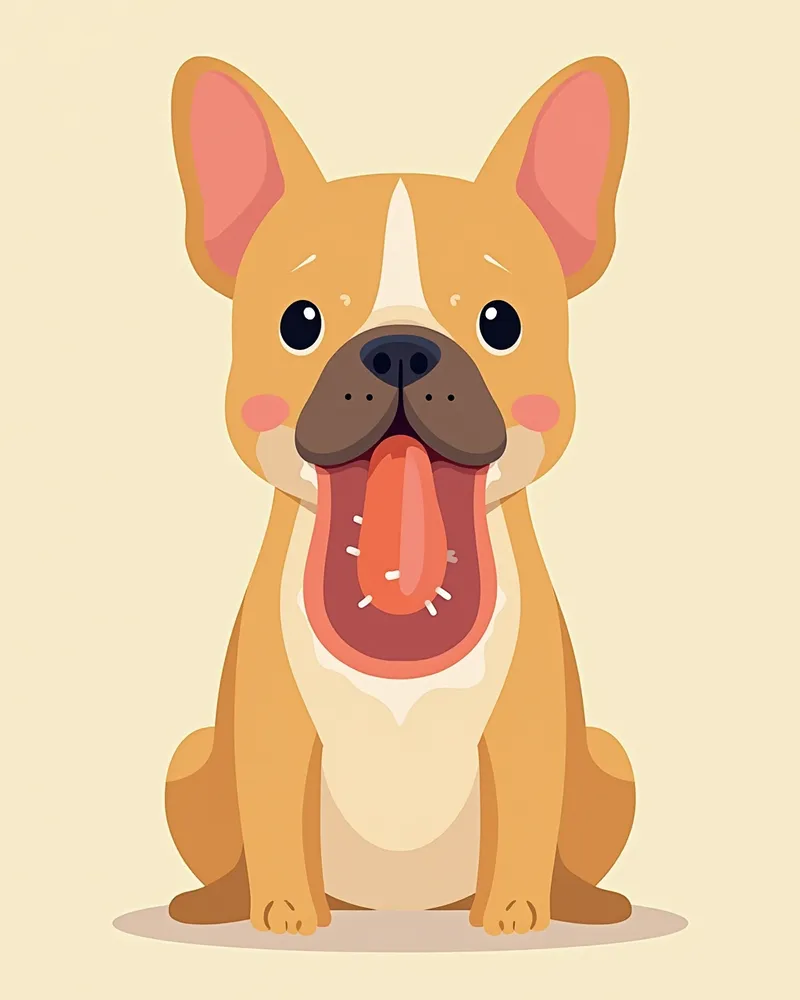
Brachycephalic airway obstruction syndrome involves a combination of several structural abnormalities. The skull is shortened, but the surrounding soft tissues do not shrink proportionally, causing excess tissue to protrude into the airway. According to veterinary clinical textbooks, this protrusion of redundant tissue into the airway lumen increases resistance to airflow, requiring significantly more effort to breathe. Abnormal respiratory sounds often stem from these structural defects in the upper airway. Even if symptoms appear mild in puppyhood, respiratory distress can worsen considerably as the dog grows, due to tissue expansion or the added burden of obesity.
Diagram explaining the airway structure in brachycephalic airway obstruction syndrome

Emergency Symptoms Requiring Immediate Veterinary Care

If your pet’s gums or tongue turn blue or gray, seek emergency care immediately. Other emergency signs include open-mouth breathing that doesn’t improve, or repeated coughing and gagging accompanied by stumbling. If these symptoms occur in a hot environment—such as inside a car or during outdoor activity in peak summer heat—heatstroke is highly likely. Do not wait at home; take your pet to an emergency animal hospital right away.

BOAS Surgical Treatment — When and How?
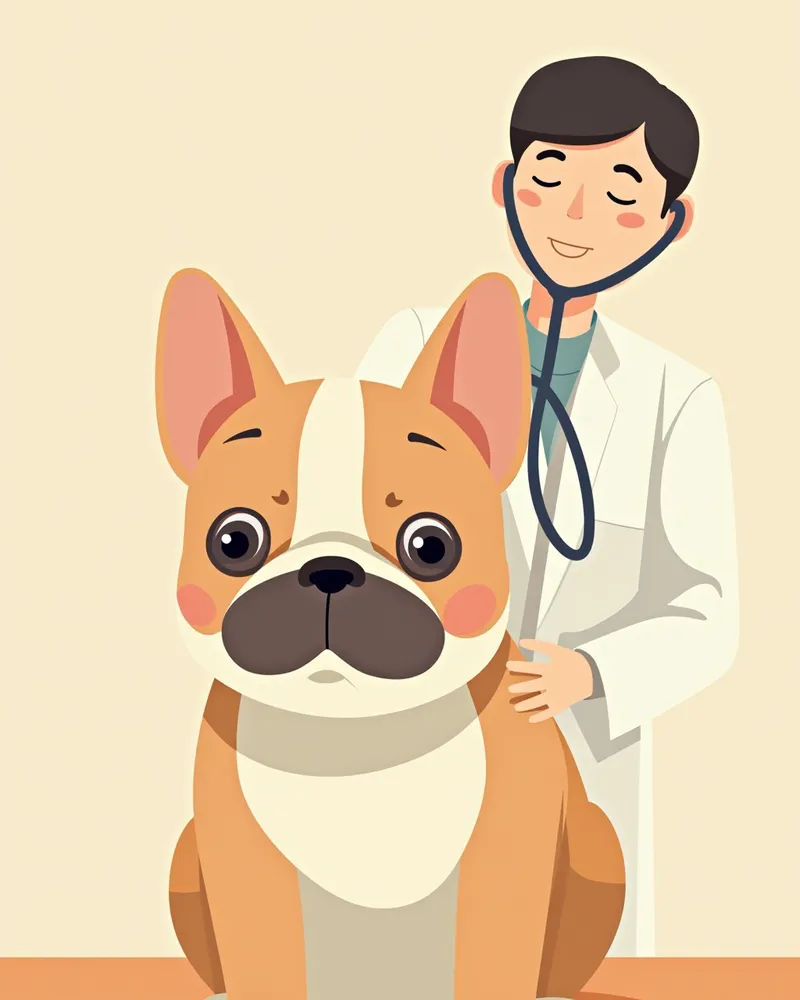
In cases where the nostrils are severely narrowed or the soft palate significantly obstructs the airway, a veterinarian may perform surgery to widen the airway. Alar rim resection slightly widens the nostrils to improve airflow, while soft palate resection involves partially removing the soft tissue that is blocking the airway. Veterinary clinical textbooks emphasize the importance of early detection of primary anatomical abnormalities. If primary and secondary changes accumulate, the condition can progress to life-threatening stages, such as laryngeal collapse. Therefore, earlier evaluation allows for timely management decisions before the condition worsens. However, the decision regarding whether to proceed with surgery and the timing of the procedure must be determined by a veterinarian based on the results of a thorough examination.
A veterinarian examining a French Bulldog's respiratory system

Intervertebral Disc Disease: A Condition to Watch Alongside BOAS

French Bulldogs are prone to intervertebral disc disease in addition to brachycephalic airway syndrome. Due to their chondrodysplastic body type, the material inside the discs often becomes fibrotic and herniates into the spinal canal. According to veterinary neurology textbooks, this type of disc disease is frequently accompanied by impaired local blood flow due to chronic spinal compression. If your dog suddenly develops hind limb weakness or an abnormal gait, an MRI (magnetic resonance imaging) scan is necessary.

Age-Specific Health Management Points

Puppies (0–1 year): Schedule their first respiratory health check between 6 months and 1 year of age. If nasal stenosis is severe, surgery may be considered at this stage.
Young and Adult Dogs (1–7 years): Obesity can significantly worsen respiratory symptoms, so weight management is essential. We recommend an annual chest X-ray.
Senior Dogs (7+ years): Heart and spinal conditions may develop concurrently. Cardiac auscultation and spinal monitoring are needed every six months.
Walking care for French Bulldog owners by age

Summer Heatwaves Are Especially Dangerous for French Bulldogs

French Bulldogs are less efficient at dissipating heat than most other dogs because their narrowed airways make it difficult to regulate body temperature through panting. Keep outdoor time to a minimum when temperatures exceed 28°C, and never leave your dog unattended in a car. Maintain indoor air conditioning and ensure fresh water is always available. Heatstroke can lead to brain damage in just a few minutes.

Reviewed by a veterinarian

Dr. Tony — Punnawat Phongkittirak

Dr. Tony — Punnawat Phongkittirak

Veterinarian

A veterinarian who majored in veterinary medicine at Khon Kaen University, Thailand, and completed the IVSA program at North Carolina State University in the United States. Drawing on clinical experience at animal hospitals, he works in the pet healthcare field and is dedicated to building a digital care environment that connects pet parents with veterinarians.

Frequently Asked Questions

Is a French Bulldog's snoring just a breed trait?
While mild breathing noises are common in brachycephalic breeds, you should consult your veterinarian if your pet frequently wakes up during sleep or breathes heavily after exercise. It’s best to have them checked before symptoms worsen.
Is BOAS surgery absolutely necessary?
If symptoms are mild, they can often be managed through weight control and environmental adjustments. However, if there is severe stenosis or a reduced quality of daily life, surgery may be beneficial. Consult with your veterinarian to assess your pet’s condition.
How much exercise does a French Bulldog need per day?
Short, leisurely walks of 20 to 30 minutes a day are ideal. Running or exercising in hot weather can quickly lead to breathing difficulties, so it's best to walk slowly during the cooler morning and evening hours.
I heard that brachycephalic breeds have difficulty enrolling in pet health insurance.
Some insurance companies classify brachycephalic breeds as high-risk. It's important to check whether coverage for brachycephalic airway syndrome and any exclusions are included before signing up.
How can I prevent intervertebral disc disease?
The most effective approach is to minimize the use of low sofas and stairs and to prevent obesity. If your pet suddenly experiences weakness in the hind legs or shows signs of pain, seek veterinary care immediately.

Share

Related Guides

References

[1] Byers C.G. et al., The Veterinary Workbook of Small Animal Clinical Cases, Case 41: Brachycephalic Airway Syndrome in a French Bulldog, CRC Press, 2022

[2] Schaer M. (ed.), Clinical Medicine of the Dog and Cat, 4th Ed, Chapter 14: Neurological Disorders — Hansen Type 2 Intervertebral Disc Disease, CRC Press, 2022

This information is based on veterinary literature and does not replace diagnosis or treatment. Please consult a veterinarian for specific health concerns.

Metapet Co., Ltd. | CEO: Park Sung-yong | Business Reg. No. 417-88-02562 | Seoul, South Korea | Customer Center

French Bulldog BOAS: Brachycephalic Breathing Care Guide | Meongsiljang