
Maine Coon Long-Hair Grooming — A Complete Guide from Brushing to Tangle Prevention
Maine Coons are large, long-haired cats with a double coat, so brushing them two to three times a week and bathing them once a month is essential. Here’s a grooming routine to help prevent tangles, hairballs, and skin issues.
Why Does Maine Coon Grooming Require Special Attention?

Top 3 Reasons Maine Coons Are Prone to Grooming Issues
Brushing Frequency and Tools by Body Area
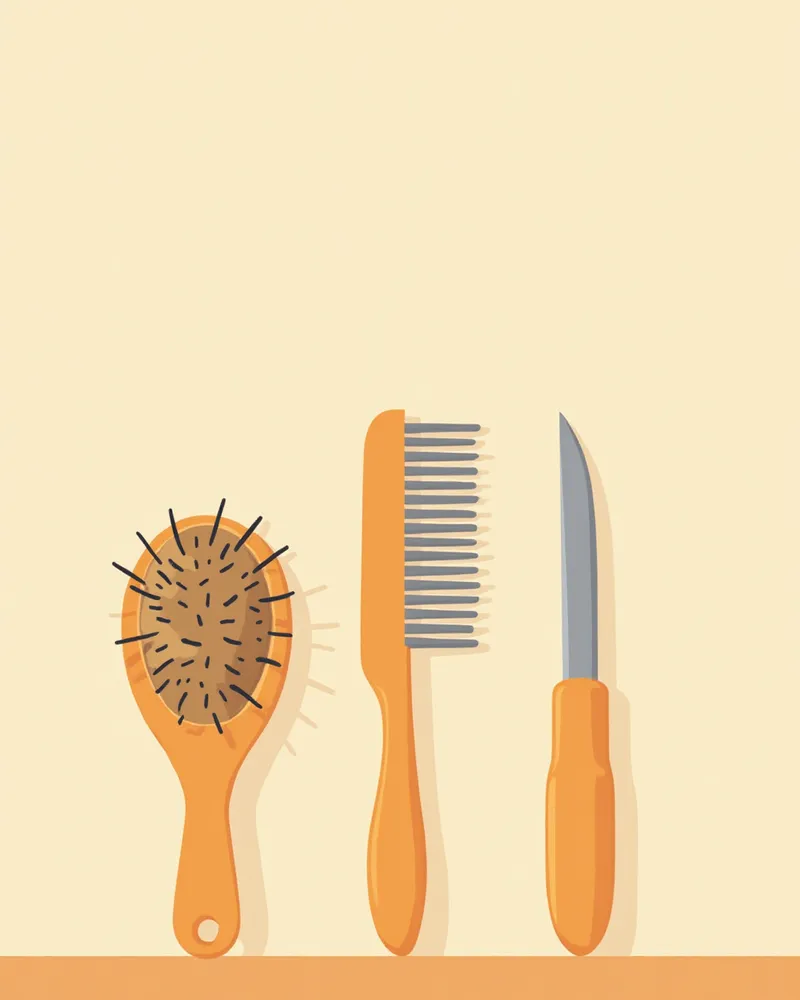
Grooming Frequency and Recommended Tools by Body Area
| Item | Brushing frequency | Recommended tools |
|---|---|---|
| Back & flanks | 2–3 times a week | Slicker brush + metal comb |
| Chest & belly | 3+ times a week | Metal comb (fine-toothed) |
| Inner hind legs | 3+ times a week | Metal comb + dematting tool |
| Tail | Twice a week | Slicker brush |
| Sanitary hair around the rear | Check regularly | Scissor trimming (vet-recommended) |
During seasonal transitions (March–May, September–November), it's good to increase the frequency for all areas by 1.5×
Never Cut These Mats (Tangles) at Home
If a mat is stuck tightly to the skin and difficult to lift, or if you cannot clearly distinguish the skin from the mat while trying to cut it with scissors, never attempt to cut it yourself. Misidentifying the boundary between the mat and the skin can easily result in deep lacerations. In such cases, it is best to have the mats safely removed using electric clippers at a veterinary clinic or a professional grooming salon. If the skin beneath the mat appears red or has exudate, there may be a bacterial skin infection such as pyoderma; in these situations, seeking veterinary care is safer than attempting home treatment. Conversely, if circular hair loss is accompanied by scales and crusts, it could indicate dermatophytosis (fungal dermatitis), which also requires prompt veterinary diagnosis and treatment.
Correct Brushing Sequence — 5 Steps
How Often and How to Bathe a Maine Coon?
Long-Hair Breed-Specific Precautions — Hairballs and Ringworm
Ringworm (also known as fungal dermatitis) is a condition that can affect not only Maine Coons but all cats. Textbooks do not indicate a clear predisposition for any specific breed; rather, it is more commonly seen in young cats (especially kittens), those with weakened immune systems, or cats with chronic illnesses. The primary route of infection is direct contact with an infected animal, but it can also spread through contaminated items such as bedding, brushes, and clippers, making tool hygiene essential. Additionally, due to their long coats, Maine Coons may ingest hair during grooming, which can accumulate in the gastrointestinal tract and cause discomfort such as vomiting or loss of appetite. Regular brushing to remove loose hair can help prevent this. If you notice circular hair loss, scaling, or itching, these could be signs of a skin condition, so please consult your veterinarian.
Reviewed by a veterinarian

Dr. Tony — Punnawat Phongkittirak
VeterinarianA veterinarian who majored in veterinary medicine at Khon Kaen University, Thailand, and completed the IVSA program at North Carolina State University in the United States. Drawing on clinical experience at animal hospitals, he works in the pet healthcare field and is dedicated to building a digital care environment that connects pet parents with veterinarians.
Reviewed 2026-04-30
Frequently Asked Questions
When should you start brushing a Maine Coon kitten?
Can I trim my Maine Coon’s fur short for grooming purposes?
Is it normal for my pet to shed so much during the seasonal transition?
My Maine Coon hates being brushed. What should I do?
Should I also trim the fur between my Maine Coon’s paw pads?
Share
Related Guides

Top 5 Medicated Dog Shampoos — For Pyoderma and Bacterial Infections

Veterinarian-Recommended Top 5 Medicated Shampoos for Canine Yeast Dermatitis — Relieves Itching and Greasiness

Top 5 Medicated Cat Shampoos Recommended by Veterinarians — Fungal Dermatitis and Fungal Care

Papillon Health Management: A Complete Guide to the Top 3 Concerns — Patellar Luxation, Heart Disease, and Dental Tartar

Miniature Pinscher Health Care: From Symptoms of Patellar Luxation and Heart Disease to Prevention

Samoyed Health Care (Skin & Heart)

Shiba Inu Health Care: Complete Guide to Allergies, Skin Diseases, and Patellar Luxation

Complete Guide to Beagle Health — From Ear Infection, Obesity, and Epilepsy Symptoms to Owner Care Points

Pug Health Care Guide: Key Points on Brachycephalic Respiratory Issues and Obesity

Chihuahua Health Management – Precautions and Prevention for Hydrocephalus and Patellar Luxation
References
[1] Little SE, The Cat: Clinical Medicine and Management, 2nd Edition, Elsevier, 2020
[2] Jackson HA, Marsella R, BSAVA Manual of Canine and Feline Dermatology, 4th Edition, BSAVA, 2021
[3] National Research Council, Nutrient Requirements of Dogs and Cats, National Academies Press, 2006