Like
Share
멍실장
뱅갈 비대성 심근병증 주의점과 연령별 평생 건강관리 가이드

Key Points on Bengal Hypertrophic Cardiomyopathy and an Age-Specific Lifelong Health Management Guide

HeartBreed HealthMeongsiljang Veterinary Advisory Board

Bengals are a breed at high risk for hypertrophic cardiomyopathy (HCM). This guide covers everything pet owners need to know, from a checklist of early symptoms to age-specific routine checkup schedules.

What is Bengal Hypertrophic Cardiomyopathy?
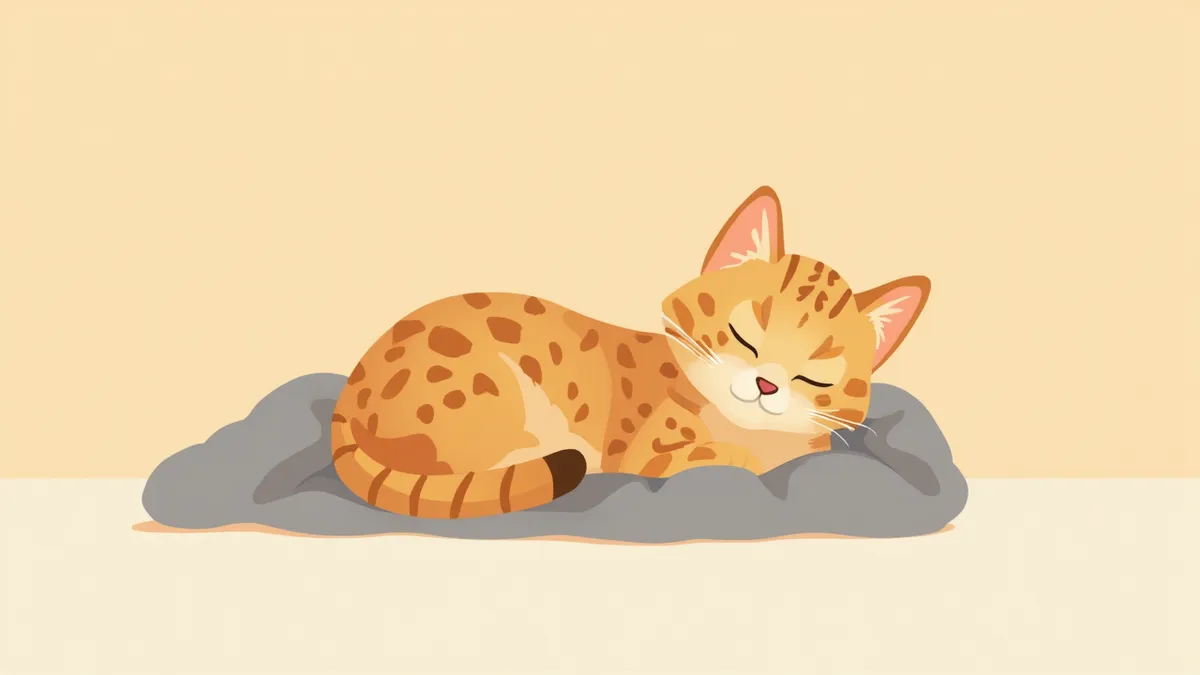
Health Guide to Hypertrophic Cardiomyopathy in Bengal Cats
Hypertrophic cardiomyopathy (HCM) is a condition in which the wall of the left ventricle abnormally thickens, and it is the most common myocardial disease in cats. Crucially, HCM has a hereditary form, so regular cardiac screenings from an early age are beneficial. The Maine Coon and Ragdoll are representative breeds with documented breed predispositions in textbooks, and Bengal owners should also consistently monitor their cats' heart health. In the early stages, there are few outward symptoms, making it difficult for owners to notice; if diagnosis is delayed, it can progress to congestive heart failure or arterial thromboembolism. Because this condition can occur even in relatively young cats, owners should not assume their pet is safe just because they appear healthy.

Why Bengals Are Susceptible to HCM

Hypertrophic cardiomyopathy (HCM) is a disease linked to mutations in the genes encoding sarcomere proteins, which make up heart muscle tissue. To date, over 1,400 mutations have been identified across more than 14 genes. According to veterinary cardiology textbooks, HCM is the most common myocardial disease in cats, and specific causative genetic mutations have been confirmed in certain breeds such as Maine Coons and Ragdolls, leading to frequent reports of familial HCM. While no specific mutation has been definitively proven in Bengal cats, the familial form is common; therefore, the risk increases if either parent has a history of HCM diagnosis. For this reason, we recommend checking with the breeder for the heart screening history of the kitten’s parents before adoption.

HCM Symptoms Owners Can Detect

Early-stage HCM often presents with no obvious symptoms. Keep a close eye on the following changes:
Rapid breathing: A resting respiratory rate of more than 30 breaths per minute may signal cardiac strain.
Decreased activity: Your pet may tire more quickly during play or sleep more than usual.
Loss of appetite and weight: Declining heart function can lead to a general decline in condition.
Heart murmurs: These may only be detectable with a stethoscope, which is why regular check-ups are essential.
Abdominal distension: Fluid accumulation in the chest or abdomen (pleural or ascitic effusion) can cause the belly to appear swollen.
Observing abnormal breathing symptoms in Bengal cats with HCM

Signs Requiring Immediate Visit to a 24-Hour Emergency Animal Hospital

Panting, pale or blue gums, or sudden inability to use the hind legs are all signs of an emergency. Hind leg paralysis is often caused by a blood clot. If you notice any of these symptoms, seek veterinary care immediately—minutes can mean the difference between life and death.

Diagnostic Methods — Echocardiography Is Key
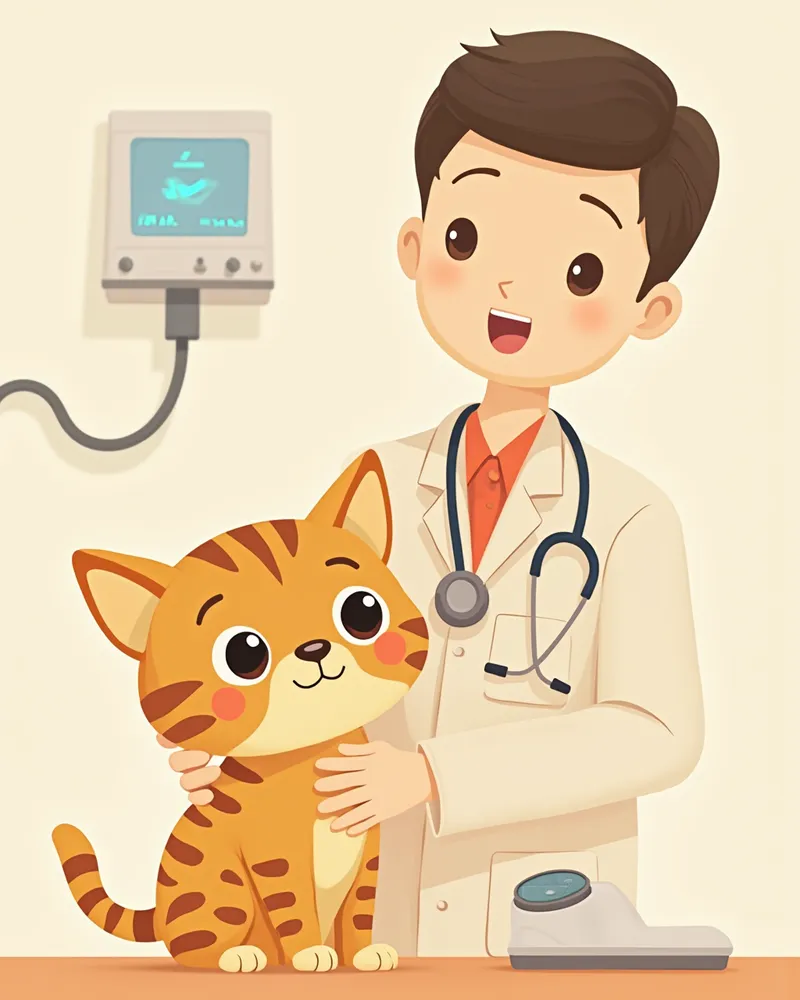
To confirm a diagnosis of HCM, an echocardiogram (heart ultrasound) is essential. According to veterinary cardiology textbooks, it is the most reliable method for precisely assessing left ventricular wall thickness and cardiac function. While a standard chest X-ray can only detect changes in heart size, an echocardiogram is necessary to confirm the diagnosis and determine the stage of disease progression. Performing a chest X-ray, electrocardiogram (ECG), and blood pressure measurement alongside the echocardiogram helps guide treatment decisions.
Echocardiogram for Bengal cats

Characteristics of Feline HCM by Disease Stage

ItemAsymptomatic earlyAsymptomatic middleSymptomatic stageEmergency/end-stage
Cardiac changesThickening of the left ventricular wallAtrial enlargement beginsPleural effusion/heart failure presentWorsening heart failure
Main symptomsNoneHeart murmurDifficulty breathing/lethargyThromboembolism/respiratory failure
Recommended exam interval1–2 years6–12 months3–6 monthsImmediate treatment

Based on veterinary cardiology textbooks (individual variation exists — be sure to consult your veterinarian about exam intervals)

HCM Treatment and Medication Management

The goal of managing hypertrophic cardiomyopathy (HCM) is not a cure, but rather slowing disease progression and maintaining quality of life. If pleural or abdominal effusion is present, diuretics are used to reduce fluid accumulation, and medications to support heart function may be added. Antiplatelet agents may also be prescribed to prevent blood clots. The specific medications and dosages are determined by your veterinarian based on your pet’s weight and disease stage, so never adjust or stop treatment without veterinary guidance. Regular follow-up examinations are essential.

Age-Specific Health Management Routine
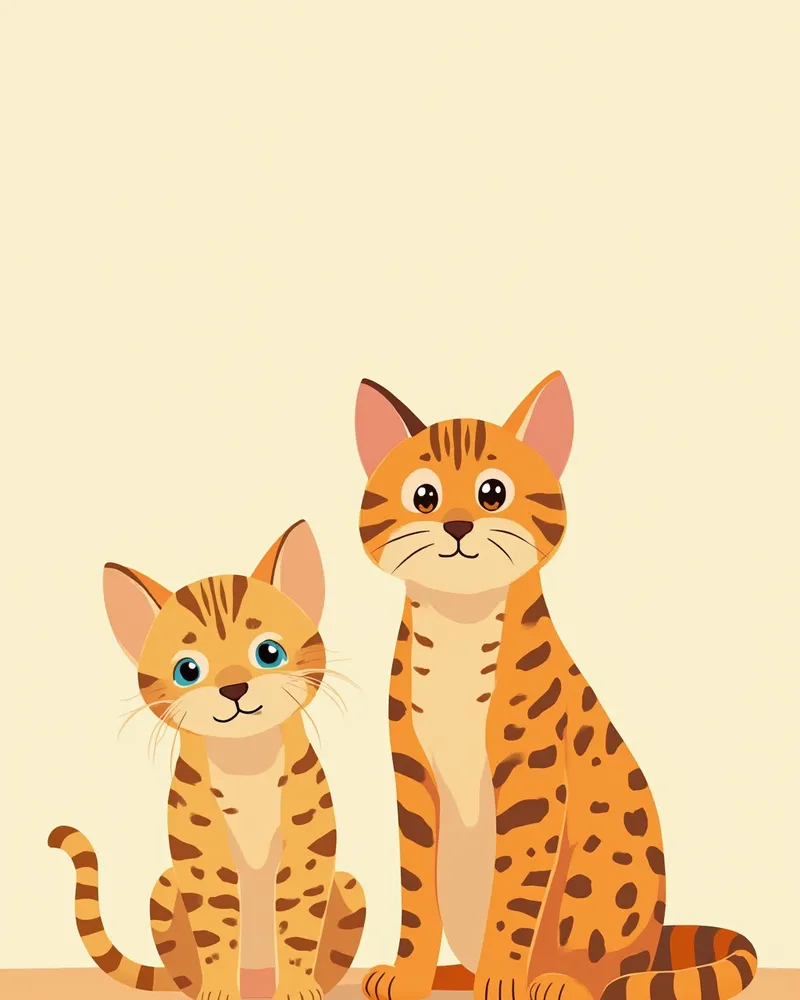
For Bengal cats, the key to managing HCM is adhering to age-appropriate screening intervals.
Under 1 year: Initial cardiac auscultation and basic health checkup
1–3 years: First comprehensive cardiac ultrasound recommended (even if asymptomatic)
3–6 years: Regular follow-up cardiac ultrasounds every 1–2 years
7 years and older: Enhanced monitoring of cardiac function every 6–12 months
Even in the confirmed, asymptomatic stage of HCM, sticking to these screening intervals is essential for detecting acute deterioration early.
Age-specific health care routines for Bengal cats

Essential Daily Care Tips for Bengal Owners

Stress increases the workload on the heart in cats with hypertrophic cardiomyopathy (HCM). Minimize stressors such as moving, unfamiliar visitors, and loud noises. Monitor your cat’s resting respiratory rate daily to detect early signs of deterioration. If the rate exceeds 30 breaths per minute while your cat is resting comfortably, contact your veterinarian.

Reviewed by a veterinarian

Dr. Tony — Punnawat Phongkittirak

Dr. Tony — Punnawat Phongkittirak

Veterinarian

A veterinarian who majored in veterinary medicine at Khon Kaen University, Thailand, and completed the IVSA program at North Carolina State University in the United States. Drawing on clinical experience at animal hospitals, he works in the pet healthcare field and is dedicated to building a digital care environment that connects pet parents with veterinarians.

Frequently Asked Questions

Do all Bengal cats need to be tested for HCM?
We recommend this for all Bengal cat owners. In particular, if you adopted your cat from a breeder or if either parent has a history of HCM, it's a good idea to have your cat undergo an echocardiogram at least once between the ages of 1 and 3.
How long can a cat live after being diagnosed with HCM?
The progression of the disease and individual responses can vary significantly. However, with early detection and consistent medication management and check-ups, many pets can maintain a good quality of life for several years. Be sure to work with your veterinarian to develop a long-term care plan.
Does a heart murmur always mean hypertrophic cardiomyopathy (HCM)?
Not necessarily. In addition to HCM, heart murmurs in cats can be caused by physiological (functional) murmurs. If a murmur is detected, an echocardiogram is necessary to accurately determine the cause.
Why is it dangerous when a dog suddenly can’t use its hind legs?
In cats with hypertrophic cardiomyopathy (HCM), a blood clot can lodge at the end of the aorta, causing paralysis of the hind legs (a condition known as aortic thromboembolism). This is a very serious emergency, and the cat must be taken to a 24-hour emergency animal hospital immediately upon the onset of symptoms.
How do I measure my pet’s respiratory rate at home?
Count how many times your cat’s chest rises and falls in one minute while they are resting or sleeping comfortably. A normal respiratory rate is 20–30 breaths per minute. If the rate exceeds 30 breaths per minute repeatedly, contact your veterinarian.

Share

Related Guides

References

[1] Fox PR, Sisson DD, Moise NS. Textbook of Canine and Feline Cardiology: Principles and Clinical Practice, 2nd Edition. W.B. Saunders.

[2] Little S. The Cat: Clinical Medicine and Management, 2nd Edition. Elsevier Saunders, 2012.

[3] Schaer M, Gaschen F. Clinical Medicine of the Dog and Cat, 4th Edition. CRC Press, 2022.

[4] Meurs KM et al. A cardiac myosin binding protein C mutation in the Maine Coon cat with familial hypertrophic cardiomyopathy. Hum Mol Genet, 2005, 14(23):3587-3593.

[5] Payne JR et al. Prognostic indicators in cats with hypertrophic cardiomyopathy. J Vet Intern Med, 2013, 27(6):1427-1436.

This information is based on veterinary literature and does not replace diagnosis or treatment. Please consult a veterinarian for specific health concerns.

Metapet Co., Ltd. | CEO: Park Sung-yong | Business Reg. No. 417-88-02562 | Seoul, South Korea | Customer Center

Bengal Cat HCM: Symptoms, Diagnosis & Lifelong Age-Based Care | Meongsiljang