
Like
Share
멍실장
강아지 원발성 부갑상선기능항진증 관리 추천 BEST와 고르는 기준 총정리

7 Key Management Points for Canine Primary Hyperparathyroidism Highlighted by Veterinarians

EndocrineTop PicksMeongsiljang Veterinary Advisory Board

Primary hyperparathyroidism in dogs can lead to bone damage and impaired kidney function due to abnormal calcium regulation. It’s important to choose appropriate management products and methods.

Canine Primary Hyperparathyroidism Is an Endocrine Disorder Caused by Abnormal Calcium Regulation

Anatomical diagram of a dog’s parathyroid glands and calcium regulation
Primary hyperparathyroidism in dogs is an endocrine disorder caused by excessive secretion of parathyroid hormone (PTH) from the parathyroid glands, leading to abnormally high blood calcium levels (hypercalcemia). It is most commonly caused by an adenoma or hyperplasia in one or more parathyroid glands. Elevated calcium levels can lead to renal calcification, chronic kidney disease, urinary tract stones, bone demineralization, and decreased appetite. The condition is more frequently reported in older dogs and in the Keeshond breed. Definitive treatment involves surgical removal of the affected parathyroid gland, with the primary goal being to lower and stabilize elevated calcium levels. Early detection is key, and it is essential to work closely with your veterinarian to establish a proper diagnosis and management plan.

5 Key Criteria for Choosing Management Products
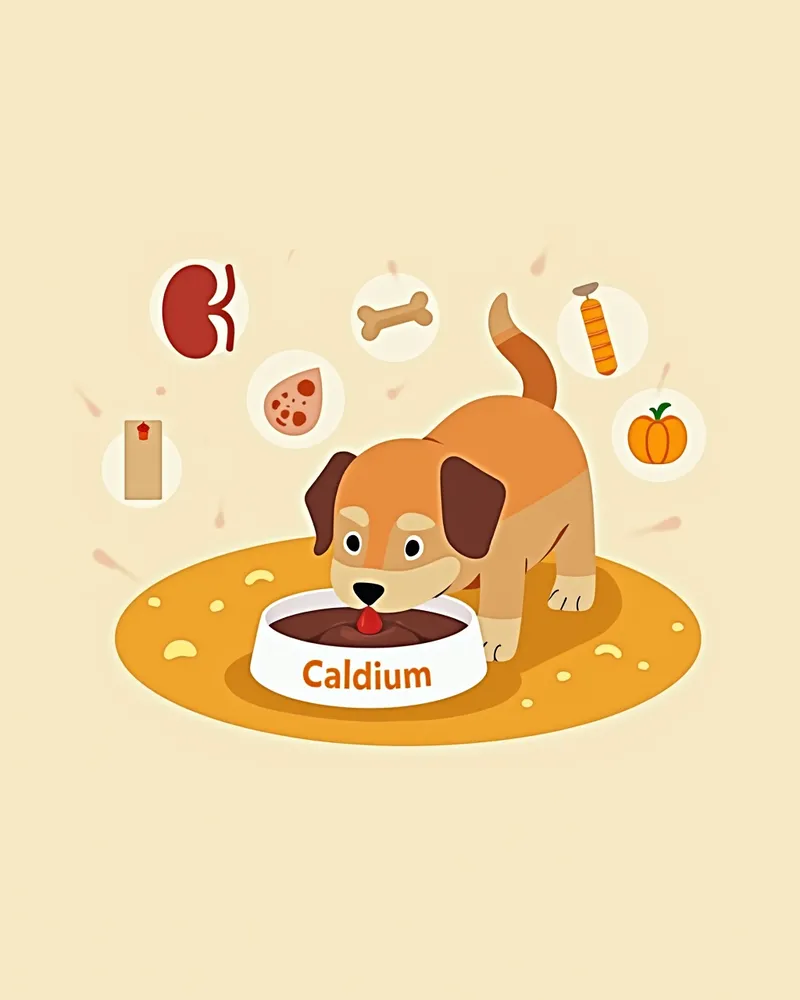
When managing primary hyperparathyroidism in dogs, it is essential to focus on five key areas: calcium level management, kidney protection, bone health, nutritional balance, and safety. Since this condition involves elevated blood calcium levels, the most important step is to avoid any further increases in calcium.
Calcium Level Management: Because hypercalcemia is the core issue, management should focus on lowering blood calcium levels by avoiding unnecessary supplementation of calcium or vitamin D.
Kidney Protection: High calcium levels can lead to kidney calcification and chronic kidney disease, so protecting kidney function is crucial.
Bone Health: Excessive parathyroid hormone (PTH) can draw calcium from the bones, weakening them, so bone health should be monitored closely.
Nutritional Balance: A balanced diet that avoids both deficiencies and excesses of minerals is beneficial.
Safety Verification: Always ensure that the treatment methods are diagnosed and prescribed by a veterinarian.
Key nutritional components in supplements for managing canine hyperparathyroidism

BEST 1: Calcium Balance Pro 365

Calcium Balance Pro 365 is a product introduced for the purpose of managing calcium levels. However, in primary hyperparathyroidism, blood calcium levels are already elevated, so no product should be used without a veterinarian’s diagnosis and confirmation of calcium levels. Please remember that definitive treatment involves surgery to remove the parathyroid adenoma.
Calcium level management: The goal is to manage levels without further increasing calcium, and consultation with a veterinarian is essential before use.
Kidney protection: Kidney health should be monitored to reduce the risk of damage caused by high calcium levels.
Bone health monitoring: Since calcium may leach from bones, weakening them, bone condition should be checked.
Safety: Use only under veterinary prescription and monitoring.
Ease of use: The powder form can be mixed into food.
Product image of Calcium Balance Pro 365

BEST 2: Kidney Care Powder

Kidney Care Powder is introduced as a product focused on reducing kidney stress caused by excessive calcium. Hypercalcemia can lead to kidney calcification, chronic kidney disease, and urinary tract stones, making kidney protection important. However, this product should also be used only after a veterinarian’s diagnosis and confirmation of blood calcium levels. Kidney support is supplementary care only; consult your veterinarian for fundamental treatment. - Kidney Protection: Manage the risk of kidney damage associated with high calcium levels. - Antioxidant Support: Supplementary care can help support kidney health. - Mineral Balance: Check the mineral composition to ensure no additional calcium is added. - Ease of Use: Can be mixed into food or water. - Veterinary Consultation: Always consult your veterinarian before use.
Product image of the kidney care powder

BEST 3: Bone-Strengthening Premium Capsules

Bone-strengthening premium capsules are marketed as supplements containing ingredients such as calcium, vitamin D, and magnesium that support bone health. However, there is a critical precaution to keep in mind. In primary hyperparathyroidism, blood calcium levels are already elevated; administering calcium and vitamin D can further raise these levels, worsening hypercalcemia and exacerbating kidney damage. Therefore, it is dangerous and should be avoided to arbitrarily give calcium or vitamin D supplements to dogs with this condition.
Caution with Calcium and Vitamin D: Arbitrary use is strictly prohibited as it can worsen hypercalcemia.
Monitoring Bone Health: Instead of relying on supplements, bone condition should be assessed through regular veterinary check-ups.
Veterinary Guidance is Essential: Supplements should only be used under a veterinarian’s direction in specific situations, such as post-surgical hypocalcemia.
Monitoring: Blood calcium levels must be closely monitored if supplements are used.
Safety: Never use these supplements without a proper diagnosis.
Product image of Bone-Strengthening Premium Capsules

Comparison Table of Products BEST 1–3

ItemCalcium Balance Pro 365Kidney Care PowderBone Strengthening Premium Capsule
Calcium regulation abilityMediumMediumCaution
Kidney protection effectMediumHighMedium
Bone health strengtheningMediumMediumCaution
Ingredient stabilityTrueTrueTrue
Ease of usePowderPowderCapsule

This comparison is based on product introductions and does not guarantee medical efficacy. In primary hyperparathyroidism, blood calcium is already high, so calcium and vitamin D supplementation can actually be dangerous. In particular, do not use products containing calcium or vitamin D on your own, and use any product only after your veterinarian's diagnosis and confirmation of calcium levels. The definitive treatment is parathyroidectomy surgery.

Caution: Risk of Calcium Excess with Overconsumption

This condition is already characterized by elevated blood calcium levels. Therefore, administering products containing calcium or vitamin D without veterinary guidance can exacerbate hypercalcemia, potentially leading to kidney damage or worsening bone diseases. Use any product only when specifically directed by a veterinarian based on your pet’s weight and calcium levels, and strictly adhere to the recommended dosage.

Usage Tip: Successful Management Starts with Consistency and Monitoring
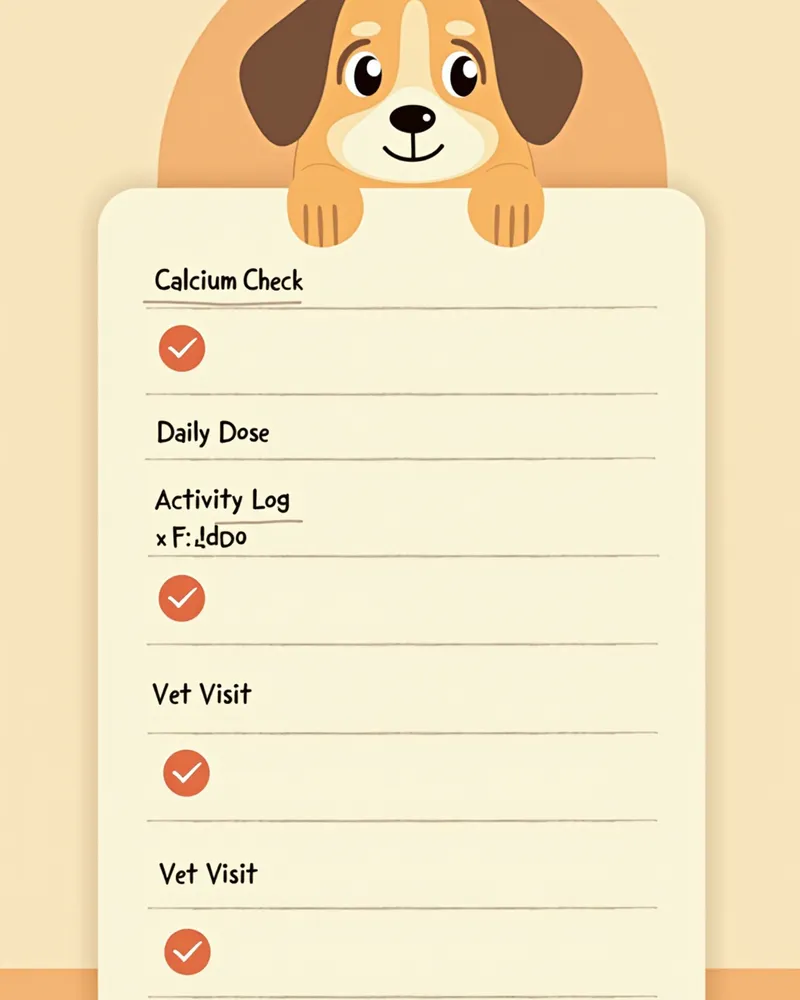
Primary hyperparathyroidism in dogs is not resolved with a single intervention; it requires consistent, ongoing monitoring. Regular blood tests are necessary to check calcium levels and evaluate the effectiveness of treatment and management. The definitive treatment is parathyroid surgery, and the safest approach is to develop a management plan in collaboration with your veterinarian.
Regular Check-ups: Have blood tests performed to monitor calcium levels according to the schedule set by your veterinarian.
Consistent Management: Follow the prescribed treatment regimen consistently and at the designated times.
Monitor Response: Closely observe any changes in appetite, activity level, water intake, and elimination habits.
Veterinary Consultation: Always consult your veterinarian before making any changes to medications or adjusting dosages.
Record Keeping: Keep a detailed log of medication administration and test results for ongoing tracking.
Example of a management log for canine hyperparathyroidism

Reviewed by a veterinarian

Dr. Tony — Punnawat Phongkittirak

Dr. Tony — Punnawat Phongkittirak

Veterinarian

A veterinarian who majored in veterinary medicine at Khon Kaen University, Thailand, and completed the IVSA program at North Carolina State University in the United States. Drawing on clinical experience at animal hospitals, he works in the pet healthcare field and is dedicated to building a digital care environment that connects pet parents with veterinarians.

Frequently Asked Questions

Is primary hyperparathyroidism in dogs treatable?
This condition is most commonly caused by a single parathyroid adenoma, so it can usually be corrected by surgically removing the affected parathyroid gland. It’s important to work with your veterinarian to determine the best treatment approach and timing.
When should I start giving my pet nutritional supplements?
Supplements are not a treatment for this condition. First, you need to have your pet diagnosed by a veterinarian and have their blood calcium levels checked. Whether to use any supportive products should also be decided in consultation with your veterinarian.
Can I use the same product for all dogs?
No. The management approach and dosage vary depending on your pet’s weight, age, and overall condition. A veterinarian needs to make a tailored assessment.
Can this supplement be taken together with other medications?
This medication may interact with other drugs. Always inform your veterinarian and confirm whether it’s safe to take them together.
Can I use the product without a blood test?
No. Using the product without checking blood calcium levels can lead to the risk of overconsumption. Please use it only after testing.

Share

Related Guides

References

[1] Peterson ME, Kintzer PP, Hurvitz AI. Methimazole treatment of 262 cats with hyperthyroidism. J Vet Intern Med. 1988;2:150.

[2] Fox P, Peterson M, Broussard J. Electrocardiographic and radiographic changes in cats with hyperthyroidism. J Am Anim Hosp Assoc. 1998;35:27.

[3] Hill P, Warman S, Shawcross G. 100 Top Consultations in Small Animal General Practice. Blackwell Publishing Ltd, 2011.

This information is based on veterinary literature and does not replace diagnosis or treatment. Please consult a veterinarian for specific health concerns.

Metapet Co., Ltd. | CEO: Park Sung-yong | Business Reg. No. 417-88-02562 | Seoul, South Korea | Customer Center

7 Key Tips for Managing Canine Primary Hyperparathyroidism | Meongsiljang