
Like
Share
멍실장
고양이 편평세포암 종양학 관리 추천 BEST와 고르는 기준 총정리

7 Best Symptoms and Management Tips for Feline Squamous Cell Carcinoma According to Veterinarians

Oncology/CancerTop PicksMeongsiljang Veterinary Advisory Board

Feline squamous cell carcinoma is a malignant tumor that develops on the skin and mucous membranes, making early detection and appropriate treatment essential. The key is to work with your veterinarian to create a personalized management plan.

What Is Feline Squamous Cell Carcinoma?

Diagram showing the common locations of squamous cell carcinoma in a cat's ear
Feline squamous cell carcinoma is a malignant tumor arising from the skin’s keratinocytes, most commonly occurring in areas with sparse hair and light pigmentation, such as the ear tips (pinnae), nose, eyelids, and around the mouth. Sunlight (UV) exposure is a significant risk factor; prolonged exposure can cause skin cells to gradually change and progress to cancer. In the early stages, symptoms may appear as mere crusting or flaking, which can easily be mistaken for minor wounds, so careful observation is essential. Veterinarians confirm the diagnosis and assess the malignancy through a tissue biopsy (pathological examination). The prognosis is generally favorable if small, superficial lesions are detected early and completely surgically removed, so it is important to seek immediate veterinary examination even for mild symptoms.

Key Points: Managing Feline Squamous Cell Carcinoma

Managing feline squamous cell carcinoma requires considering multiple factors, and close collaboration with your veterinarian is essential. Please refer to the following guidelines:
Surgical suitability: Determine whether complete removal with adequate surgical margins is feasible based on the tumor’s size and location. Surgical excision is the cornerstone of treatment.
Radiation therapy potential: If surgery is not feasible or residual disease remains, radiation therapy (external beam radiation or strontium-90) can be considered as an alternative or adjunctive treatment, leveraging the tumor’s moderate radiosensitivity.
Pharmacological intervention: Chemotherapy has limited efficacy against localized squamous cell carcinoma and is generally not recommended; its role in metastatic disease is also not yet well-established. The decision to use systemic therapy should be made in consultation with a veterinary oncologist.
Recurrence prevention strategy: Daily care and regular veterinary check-ups are essential.
Owner burden: Treatment duration, cost, and ease of management should also be taken into account.
A veterinarian examining a cat's ear lesion.

Key Point 1: Symptoms and Urgency of Feline Squamous Cell Carcinoma
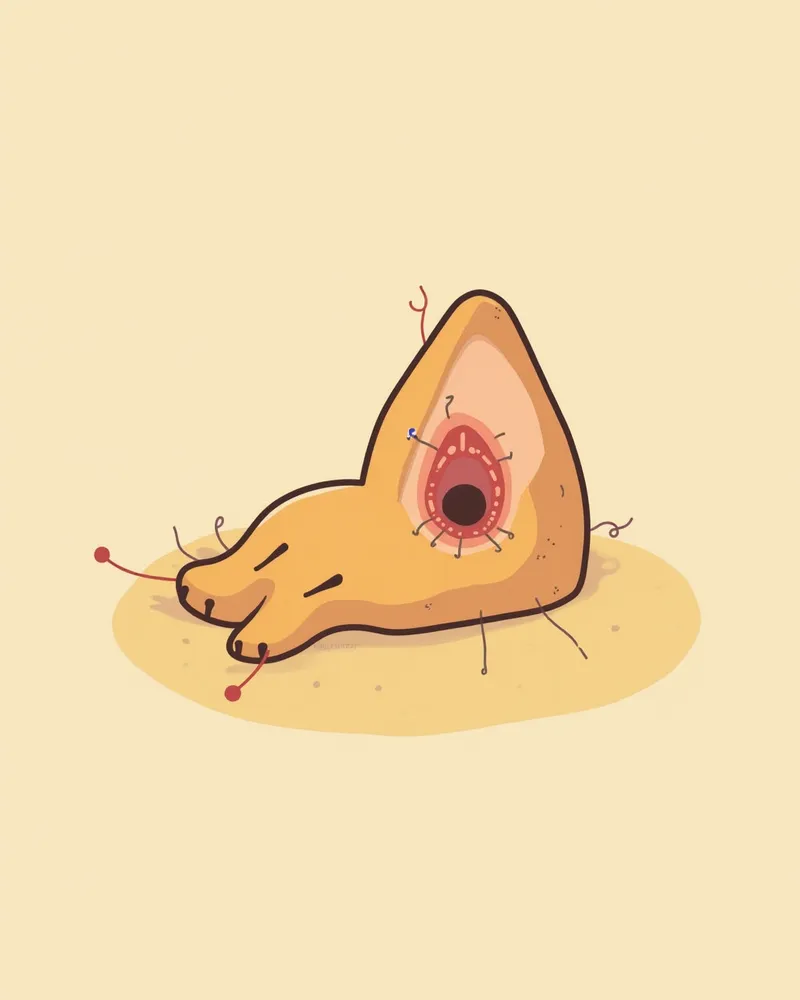
Feline squamous cell carcinoma (SCC) is a malignant tumor that commonly develops on the skin, in the mouth, on the nose, and at the tips of the ears. In its early stages, it may resemble a scab or a non-healing ulcer, making it easy to mistake for a simple wound. Oral SCC often presents with symptoms such as drooling, decreased appetite, bad breath, and swelling of the jaw, while the cutaneous form frequently involves hair loss, redness, and bleeding. If symptoms persist for more than two weeks or if the lesion grows rapidly, prompt veterinary examination is essential. It is well established that cats with lightly pigmented skin, such as white cats, are at a higher risk of developing SCC due to ultraviolet radiation exposure.
An informative image on the symptoms and urgency of feline squamous cell carcinoma

Key Point 2: Diagnostic Process and Treatment Options

Definitive diagnosis is made through incisional biopsy (histopathology) of the characteristic lesions, with fine-needle aspiration (FNA) used as an adjunct. CT and radiographic imaging are employed to determine tumor extent and check for metastasis, while staging is assessed via fine-needle aspiration of regional lymph nodes and thoracic radiographs. Treatment varies depending on the lesion’s location, size, and stage of metastasis. Surgical excision with adequate margins is the most common primary treatment, as achieving clear margins is key to preventing recurrence. For lesions in locations where complete excision is difficult or for residual local disease, radiation therapy may be combined with surgery, as squamous cell carcinoma (SCC) exhibits moderate radiosensitivity. Photodynamic therapy (PDT) may be used for early, superficial lesions on the nasal planum, but systemic chemotherapy is generally not recommended for localized squamous cell carcinoma. Treatment plans must always be determined in consultation with a veterinary oncologist.
An informative image outlining the diagnostic process and treatment options.

Key Point 3: Management, Precautions, and What Owners Should Watch For
After treatment, regular follow-up exams are essential to monitor for recurrence and metastasis. When outdoors, minimize sun exposure and consult your veterinarian about appropriate UV protection measures. Supportive care to manage pain and maintain appetite also significantly impacts quality of life. Be cautious of unverified supplements, products claiming to inhibit metastasis or cure the disease, and folk remedies commonly found online; these lack proven efficacy and may delay proper treatment. All treatment decisions should always be based on your veterinarian’s diagnosis and prescription.
An image providing guidance on care and precautions, as well as signs that pet owners should be vigilant about.

What Owners Should Know About Feline Squamous Cell Carcinoma

ItemKey Points
SymptomsNon-healing ulcers/scabs, oral swelling, bleeding
CauseUV exposure; skin lacking pigment is high-risk
DiagnosisConfirm with biopsy/FNA, then assess extent with CT
TreatmentSurgical resection is the mainstay, with radiation as an adjunct (chemotherapy not recommended for localized lesions)
CautionBe sure to be wary of unverified supplements and products claiming a complete cure

This is not a table recommending specific products or hospitals, but a reference for when you consult your veterinarian. Always make treatment and testing decisions together with your veterinarian through an examination.

Caution: Early Detection Determines Survival Rates

Feline squamous cell carcinoma may initially appear as nothing more than a scab, thickened skin, or a non-healing ulcer. Regularly check your cat’s ear tips, nose, eyelids, and the area around the mouth, and visit the vet immediately if you notice any abnormalities. The prognosis is generally favorable if small, superficial lesions are detected early and completely surgically removed.

Usage Tips: Daily Care and Prevention

Consistent daily care remains essential even after treatment. We recommend keeping your pet indoors to minimize sun exposure, and during the day, cover windows with UV-blocking film or draw the curtains. Check the areas around the ears and nose at least once a week for any abnormalities such as flaking, bleeding, or swelling, and consult your veterinarian immediately if you notice any of these signs. Use only nutritional supplements recommended by your veterinarian. A healthy diet and stress management also help boost immunity. Since prevention is far more important than treatment, start by incorporating small, positive habits into your daily routine.
A cat living indoors, avoiding sunlight

Reviewed by a veterinarian

Dr. Tony — Punnawat Phongkittirak

Dr. Tony — Punnawat Phongkittirak

Veterinarian

A veterinarian who majored in veterinary medicine at Khon Kaen University, Thailand, and completed the IVSA program at North Carolina State University in the United States. Drawing on clinical experience at animal hospitals, he works in the pet healthcare field and is dedicated to building a digital care environment that connects pet parents with veterinarians.

Frequently Asked Questions

Can feline squamous cell carcinoma metastasize?
Yes, it can metastasize to the lymph nodes or lungs. Some reports indicate metastasis rates as high as 50%, making early detection and staging through lymph node and thoracic radiographs crucial.
What is the likelihood of recurrence after surgery?
If the tumor is completely removed, the recurrence rate is generally low. However, if the excision is incomplete, local recurrence can occur, so regular check-ups are essential for early detection.
Is radiation therapy painful?
The level of pain varies depending on the individual and the affected area. Squamous cell carcinoma is moderately responsive to radiation therapy, making it a useful alternative or adjunctive treatment when surgery is difficult or when residual lesions remain. It’s best to discuss the specific procedure and potential side effects with your veterinarian.
How long should the medication treatment continue?
Chemotherapy is generally not recommended for localized squamous cell carcinoma, as its effectiveness is limited. Whether to use medication and for how long depends on the stage and condition of the cancer, so it’s best to discuss this with a veterinary oncologist.
Can avoiding sunlight help prevent it?
Reducing sun exposure is important. Cats with white or lightly pigmented fur are at higher risk of UV-related damage, so limiting their time in the sun can help. However, even if one area heals well, new lesions may develop elsewhere, so ongoing monitoring is essential.

Share

Related Guides

References

[1] Veterinary Surgical Oncology, 2nd Ed. London, C.A., R.R. Dubilzeig, D.M. Vail, et al. 1996.

[2] The Cat, Clinical Medicine and Management, 2nd Edition. De Campos CB, Nunes FC, Lavalle GE, et al. 2014.

[3] Small Animal Cytologic Diagnosis Canine and Feline Disease, 2nd Edition. Konopka J.B., Witte O.N. 1985.

This information is based on veterinary literature and does not replace diagnosis or treatment. Please consult a veterinarian for specific health concerns.

Metapet Co., Ltd. | CEO: Park Sung-yong | Business Reg. No. 417-88-02562 | Seoul, South Korea | Customer Center

7 Signs & Management Tips for Feline Squamous Cell Carcinoma | Meongsiljang