
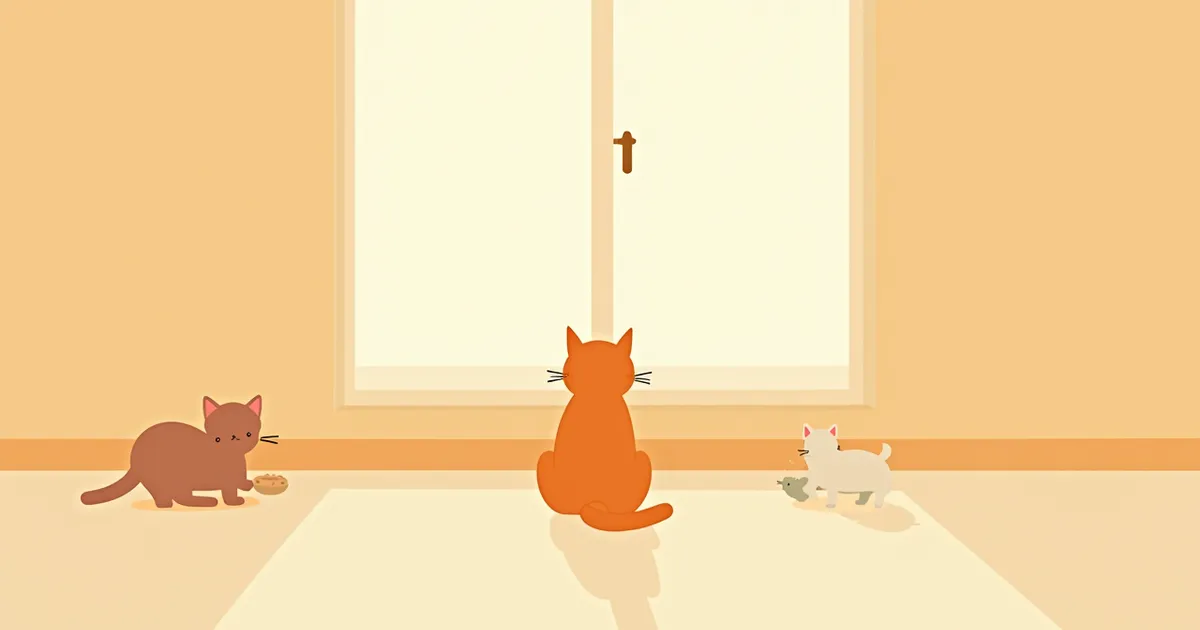
Cats That Cry When Left Alone — 7 Key Strategies to Reduce Separation Anxiety
Feline separation anxiety is a behavioral disorder in which a cat exhibits severe psychological stress responses whenever the owner is away. What’s truly important to recognize is that many cats suffer from this condition for far too long because of the common misconception that cats are naturally independent.
What Is Feline Separation Anxiety?
Separation Anxiety Symptom Checklist

When to Visit the Vet Immediately
If your pet’s skin is raw or bleeding from excessive grooming, if they’ve barely eaten or drunk anything for more than 48 hours, or if they suddenly display aggression or self-harming behavior, please visit a veterinary clinic immediately. These signs may indicate an underlying medical condition or pain rather than separation anxiety.
BEST 1 — Desensitization and Counterconditioning Training

BEST 2 — Environmental Enrichment

BEST 3 — Using Pheromone Products and Supportive Supplements
BEST 4 & 5 — Medication and Referral to a Specialist
Actions to Absolutely Avoid
Punishing or scolding your pet simply for being alone can actually worsen their anxiety. Similarly, overly enthusiastic greetings upon your return or prolonged goodbyes before leaving can inadvertently teach them that departures and arrivals are major events, which may exacerbate the problem. Confining them in a cage as a default solution can also increase stress.
How to Choose Based on Your Situation

Reviewed by a veterinarian

Dr. Tony — Punnawat Phongkittirak
VeterinarianA veterinarian who majored in veterinary medicine at Khon Kaen University, Thailand, and completed the IVSA program at North Carolina State University in the United States. Drawing on clinical experience at animal hospitals, he works in the pet healthcare field and is dedicated to building a digital care environment that connects pet parents with veterinarians.
Reviewed 2026-06-01
Frequently Asked Questions
Cats are naturally independent, so don’t they lack separation anxiety?
Will adopting another cat help ease my cat’s separation anxiety?
How long does desensitization training take?
How can you tell the difference between separation anxiety and simple boredom?
Is it okay to talk to my cat remotely through a CCTV camera when they’re alone?
Share
Related Guides

7 Behavioral Enrichment Strategies for Mental Stimulation Recommended by Veterinarians

Top 5 Calming Supplements for Dogs and Cats in 2026

L-Theanine Effects and Calming Support

7 Key Management Tips for Canine Patent Ductus Arteriosus (PDA) Recommended by Veterinarians
7 Dog Heart Markers Explained by a Veterinarian — How to Read NT-proBNP and Troponin Levels

Veterinarian-Explained: 4 Stages of Canine Heart Failure (ACVIM) and Management Guidelines
7 Key Points for Emergency Management of Canine Congestive Heart Failure Recommended by Veterinarians
7 Key Management Strategies and Selection Criteria for Canine Bradycardia and Atrioventricular Block According to Veterinarians

6 Key Management Strategies for Feline Ventricular Septal Defect (VSD) Recommended by Veterinarians
Cat Heart Disease Red Flags: Top 5 Sleep Respiratory Rate Monitors and Measurement Methods
References
[1] Veterinary Guide to Preventing Behavior Problems in Dogs and Cats, Wiley-Blackwell (counterconditioning, desensitization chapters)
[2] Introduction to Animal Behavior and Veterinary Behavioral Medicine, Wiley-Blackwell (Ch.5 Counterconditioning; Ch.15 Practice Departures; Ch.17 Systematic Desensitization)