Like
Share
멍실장
고양이 행동 풍부화 전략 관리 추천 BEST와 고르는 기준 총정리

7 Best Environmental Enrichment Strategies to Combat Boredom and Stress in Cats — Expert Selection Criteria

Brain & CognitionTop PicksMeongsiljang Veterinary Advisory Board

Here are four environmental enrichment strategies to satisfy the hunting, exploring, and scratching instincts of indoor cats. We’ve also summarized the key criteria for selecting the right options across environmental, food-based, sensory, and social stimulation.

What Is Cat Environmental Enrichment?
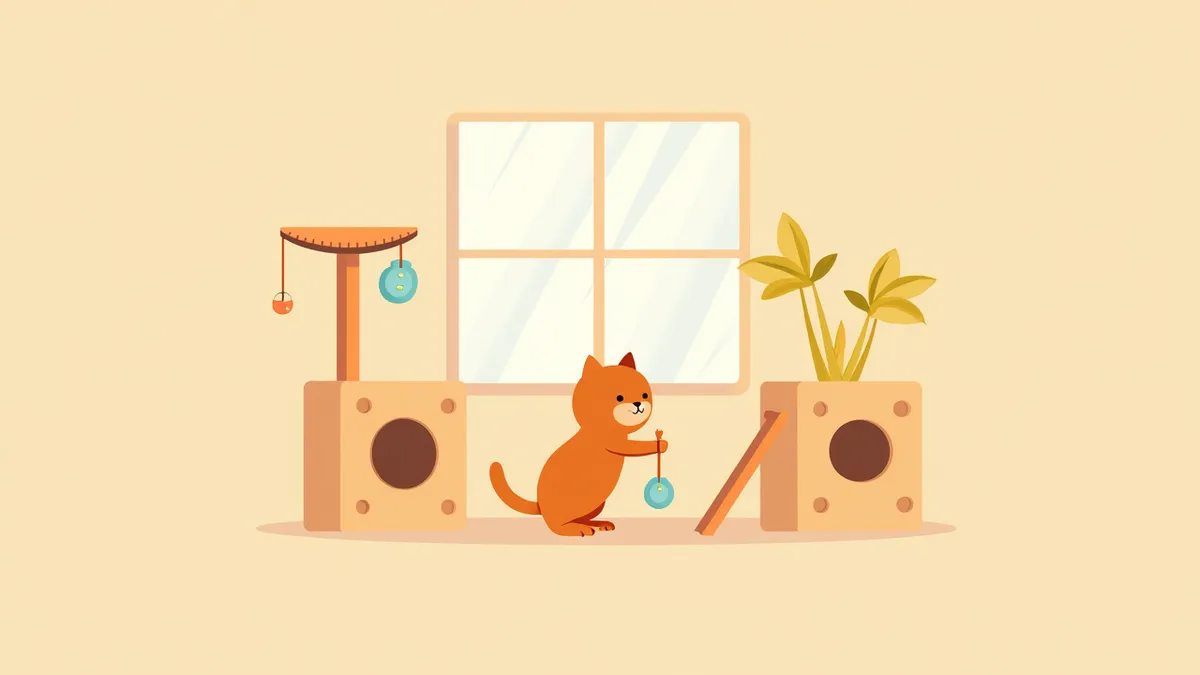
Indoor cats exploring a cat tower
Cat enrichment is a management strategy that diversely stimulates the environment, food, and senses so that indoor cats can fully express natural behaviors such as hunting, exploring, scratching, and hiding. The key point is not simply to eliminate boredom, but to provide a safe outlet for your cat’s instincts. Without sufficient enrichment, cats may develop problematic behaviors that are particularly challenging for owners, such as overgrooming, aggression, and inappropriate elimination.

Signs of Insufficient Enrichment

According to veterinary behavior textbooks, environmental enrichment lowers stress and reduces the risk of disease, whereas an indoor environment lacking stimulation can lead to chronic stress. Cats in uncomfortable environments are prone to anxiety and defensive or destructive behaviors. If you notice any of the following changes, it’s time to review your enrichment strategies:
Excessive grooming: Repeatedly and excessively licking one area due to stress
Increased aggression: Suddenly attacking caregivers or other cats in the household
Inappropriate elimination: Defecating or urinating outside the litter box
Lethargy and decreased appetite: Remaining almost motionless in the same spot all day
These signs may indicate stress or illness rather than mere boredom, so we recommend combining enrichment efforts with a consultation with your veterinarian.

4 Criteria for Choosing the Right Enrichment for Your Cat
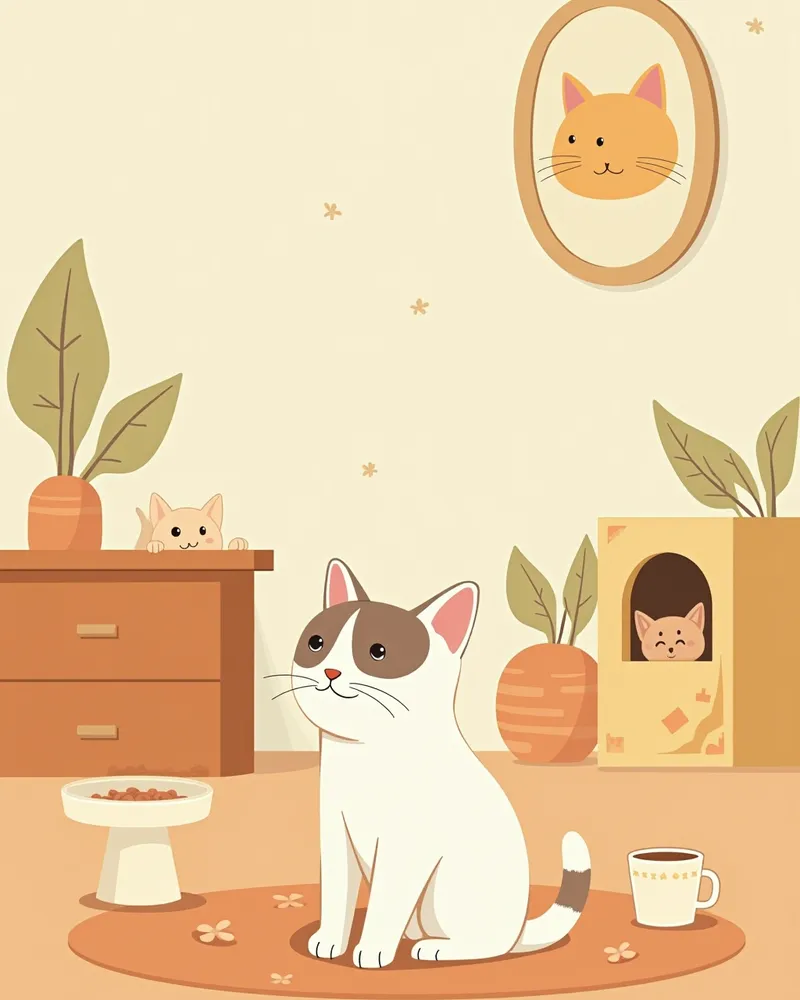
There’s no one-size-fits-all approach for every cat. Since each cat has its own preferences, the key is to choose a combination based on the following criteria.
Age: For young cats, focus on hunting and play stimulation; for senior cats, prioritize low-intensity cognitive activities that gently move their joints and stimulate their brains.
Personality: Curious cats benefit most from exploration and play tools, while timid cats need safe hiding spaces first.
Health Status: If your cat has joint issues, provide low horizontal spaces or easy-to-navigate ramps instead of tall cat trees.
Multi-Cat Household: Reduce competition and stress by providing ample resources like food bowls, litter boxes, and resting spots, and place them so cats can’t see each other.
Two cats sharing an indoor space equipped with enrichment tools

Important Checks Before Starting Enrichment

First, have your veterinarian check whether the problem behavior stems from a medical cause such as pain, hormonal imbalance, or parasitic infection. It may be a sign of illness rather than simple boredom. Enrichment strategies are most effective once medical causes have been ruled out.

BEST 1 — Environmental Enrichment: Vertical Spaces and Hiding Spots
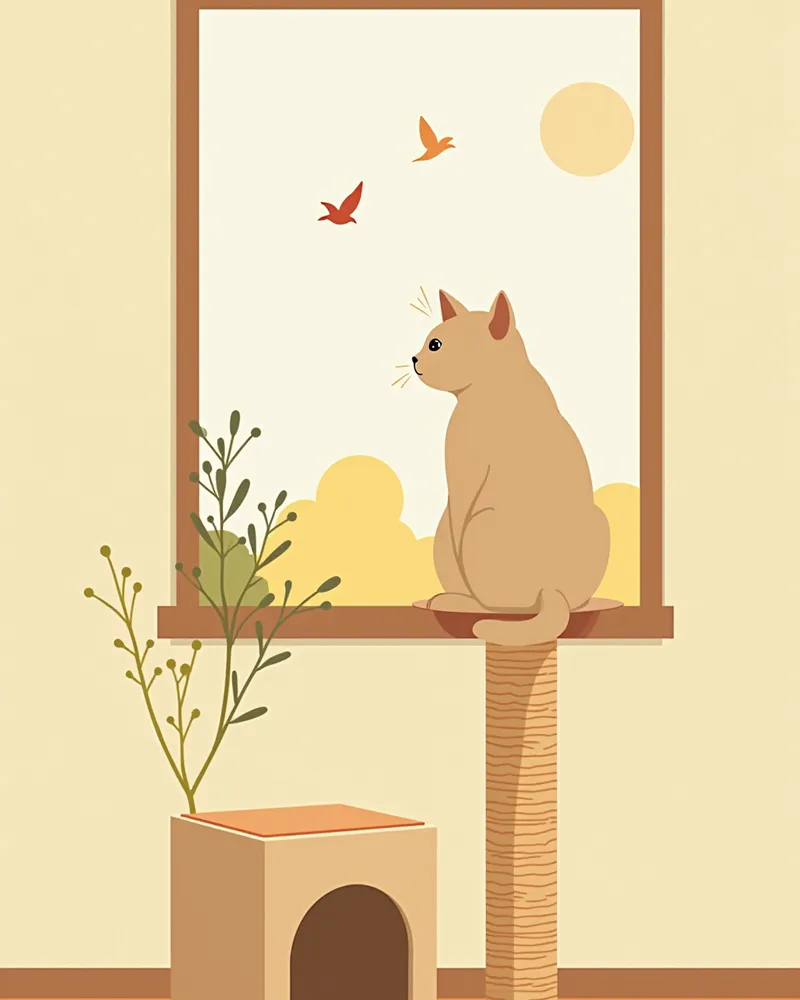
According to veterinary textbooks, cats have an instinct to observe their surroundings from high vantage points. The key to environmental enrichment is providing both vertical spaces where they can safely look around and areas where they can hide on their own.
Cat trees and shelves: Choose structures with multiple levels for climbing, and place them near windows so your cat can watch the outdoors.
Hiding spots: Provide several options—such as cardboard boxes, tunnels, or hideaway tents—in different locations so your cat can choose where to retreat.
Scratching posts: Offer both vertical and horizontal scratching surfaces to encourage your cat to scratch these instead of your sofa or carpet.
Spaces where cats feel safe help reduce environmental stress, so please provide multiple observation and hiding spots at varying heights throughout your home.
A cat gazing outside from the top of a cat tower near the window.

BEST 2 — Food Enrichment: Puzzle Feeders and Food Hiding

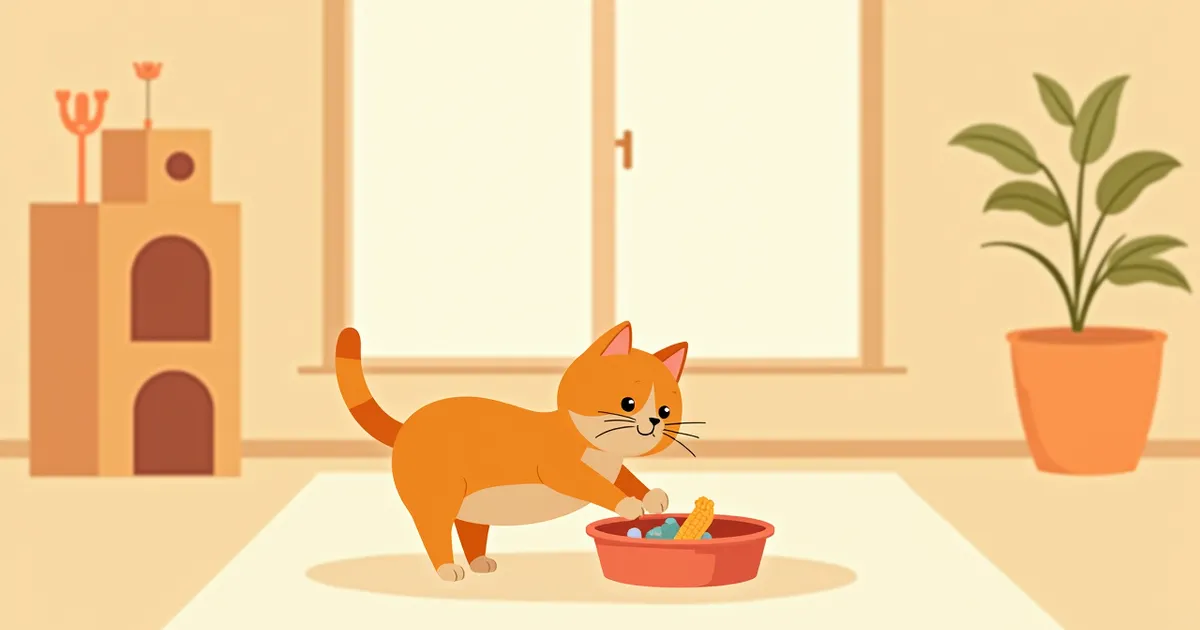
The easiest way to stimulate your pet’s hunting instinct is to have them search for their food instead of eating from a bowl. Veterinary behavior studies have confirmed that food enrichment reduces stress and decreases problematic behaviors.
Puzzle Feeder: Start with Level 1 (beginner) and increase the difficulty as your pet becomes accustomed to it.
Hide Treats: Hide dry kibble or treats in various places around the house so your pet can explore and find them.
Food Ball: A ball with food inside that your pet rolls around to extract the treats.
It’s important to start with an easy difficulty level so your pet can build confidence through success. If it’s too difficult, they’ll give up quickly.

BEST 3 — Sensory Enrichment: Play, Auditory, and Olfactory Stimulation
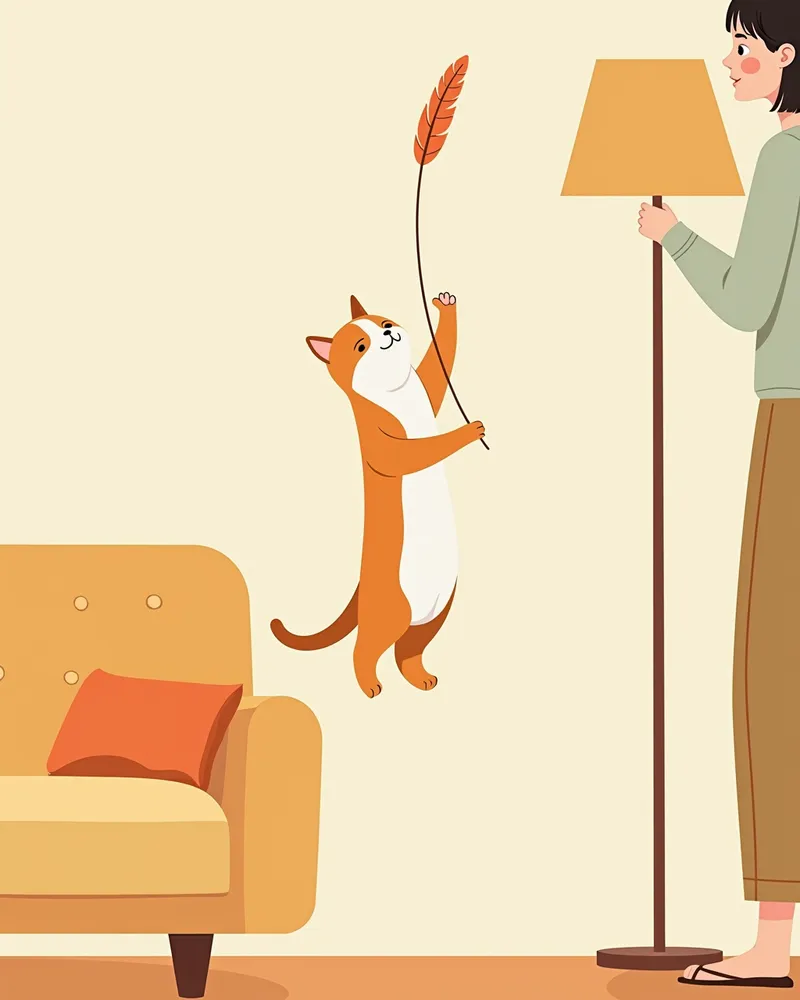
Sensory enrichment that stimulates sight, hearing, and smell is especially effective for indoor cats. Engaging multiple senses creates novelty, encouraging cats to explore their environment.
Wand toys: Ideal for simulating hunting behaviors (chasing, pouncing, and catching) through short, focused play sessions.
Auditory stimulation: Playing soft sounds or noises your cat finds calming for brief periods is another way to provide sensory enrichment.
Catnip, cat grass, and valerian: Used for olfactory stimulation, offer these for short durations to boost activity levels, but limit use if your cat becomes overexcited.
Views of the outdoors and bird watching: A visual stimulus you can utilize at no additional cost.
After playing with a wand toy, offering a treat to complete the "successful hunt" experience can increase your cat's satisfaction.
A cat jumping toward a fishing rod toy

BEST 4 — Social Enrichment: Interaction and Multi-Cat Resource Management

Cats are selectively social animals, so positive interactions with their caregivers and fellow feline housemates can benefit their well-being—provided the cat is willing. Forcing interaction can backfire, so it’s important to respect each cat’s preferences.
Playtime: Respond when your cat initiates play, ensuring interactions are consistent and positive.
Clicker training: Use treat-based basic training to stimulate cognition and strengthen the bond.
Resource separation in multi-cat homes: Provide ample food bowls, litter boxes, and water dishes, placing them in separate locations where cats cannot see each other.
Introducing a new cat: Proceed slowly and gradually through stages of isolation, scent swapping, and supervised meetings through a barrier, allowing plenty of time at each step.

Precautions for Senior Cats and Cats with Chronic Conditions

For senior cats with arthritis, prioritize low, horizontal spaces, gently sloped ramps that are easy to climb, and warm, plush hiding spots over tall cat trees. For cats with chronic conditions, focus on gentle environmental enrichment centered on cognitive and olfactory stimulation rather than excessive physical activity. Pain is often overlooked in older cats, so carefully monitor their behavior for several days after introducing any new item, and consult your veterinarian if you notice any concerns.

Reviewed by a veterinarian

Dr. Tony — Punnawat Phongkittirak

Dr. Tony — Punnawat Phongkittirak

Veterinarian

A veterinarian who majored in veterinary medicine at Khon Kaen University, Thailand, and completed the IVSA program at North Carolina State University in the United States. Drawing on clinical experience at animal hospitals, he works in the pet healthcare field and is dedicated to building a digital care environment that connects pet parents with veterinarians.

Frequently Asked Questions

How much enrichment time should I provide each day?
There’s no set “right” amount of time. Aim for several short, focused play sessions each day, and fill the rest of the time with passive enrichment that your cat can use on their own, such as puzzle feeders and vertical spaces. Adjust the routine based on your cat’s level of interest.
Can I provide environmental enrichment for my pet without spending any money?
Absolutely! You can start with zero cost by creating hiding spots out of cardboard boxes, hiding treats in various places around the house, and making toys from towels or paper bags.
My cat isn’t interested in the puzzle feeder. Why is that?
If the task is too difficult or your pet’s motivation for the treat is low, they may not respond. Start with the easiest step and use their favorite treat to help them experience success right away.
I started environmental enrichment, but my pet has become more aggressive instead. What should I do?
Your pet may be overwhelmed by new stimuli. Introduce changes slowly, one at a time, and if aggression persists or worsens, consult your veterinarian to rule out any underlying medical causes.
Will adopting a second cat help a cat that lives alone?
Not always. Cats often prefer solitary living. Before rushing into adoption, try enriching their environment and increasing interaction with their caregiver.

Share

Related Guides

References

[1] Ellis, S.L. (2009). Environmental enrichment: Practical strategies for improving feline welfare. Journal of Feline Medicine and Surgery, 11(11), 901–912.

[2] Hampton, A. et al. (2019). Effects of music on behavior and physiological stress response of domestic cats in a veterinary clinic. Journal of Feline Medicine and Surgery, 22(2), 122–128.

[3] Scherk, M. (2013). The cat-friendly practice. In: Harvey A, Tasker S (eds). BSAVA Manual of Feline Practice: A Foundation Manual. British Small Animal Veterinary Association.

[4] Overall, K.L. (2013). Manual of Clinical Behavioral Medicine for Dogs and Cats. Elsevier Mosby.

This information is based on veterinary literature and does not replace diagnosis or treatment. Please consult a veterinarian for specific health concerns.

Metapet Co., Ltd. | CEO: Park Sung-yong | Business Reg. No. 417-88-02562 | Seoul, South Korea | Customer Center

7 Best Enrichment Strategies to Beat Cat Boredom & Stress | Meongsiljang