Like
Share
멍실장
노묘 시각 보호, 이렇게 해주세요

How to Protect Your Senior Cat’s Vision

Eye HealthQ&AMeongsiljang Veterinary Advisory Board

We’ve compiled the signs of vision loss in senior cats and practical ways to protect their eyesight at home. We also cover key causes, such as lenticular sclerosis and hypertensive retinal detachment, along with how to manage them.

What Is Protecting Senior Cat Vision?
A close-up view of an elderly cat's eyes being carefully examined.
Protecting the vision of senior cats involves slowing down age-related eye degeneration and vision loss caused by underlying conditions, while preserving as much remaining sight as possible. Early detection is key. Cats can often walk around normally even if one eye is nearly blind, making it difficult for owners to notice any issues. After the age of seven, it's important to have your cat undergo an eye exam once or twice a year, and to regularly monitor for changes in eye color or behavior.

Why Are Senior Cats Prone to Eye Problems?

As cats age past 10 years, their eye structures naturally change. Lenticular sclerosis, or hardening of the lens, is a normal part of aging and typically doesn’t significantly affect vision. However, there’s another concern: chronic kidney disease, hyperthyroidism, and hypertension—common in older cats—can damage the retina and even lead to sudden blindness. In particular, hypertensive retinal detachment requires prompt treatment, as delays make vision recovery increasingly difficult.

Comparison of Major Causes of Vision Loss in Senior Cats

Even though the symptom is “cloudy eyes,” the prognosis can vary dramatically depending on the underlying cause. Use the table below to help distinguish among them.

Overview of Characteristics by Cause

ItemNuclear sclerosisCataractsHypertensive retinal detachment
Effect on visionAlmost noneGradual declineSudden blindness
Eye colorBluish grayCloudy white opacityDilated pupil & hemorrhage
Progression speedVery slowMonths to yearsHours to days
UrgencyLowModerateVery high

An accurate differential diagnosis must be confirmed through an ophthalmic exam at an animal hospital.

Signs of Vision Loss You Can Check at Home
Cats rely on their whiskers and hearing to compensate for poor vision, so signs of visual impairment can be subtle. If you notice two or more of the following symptoms, please consult your veterinarian.
Bumping into furniture: They collide with corners or obstacles in familiar areas.
Unequal pupil size: There is a noticeable difference in the size of the pupils between the two eyes.
Avoiding dark spaces: They refuse to enter rooms with the lights off.
Reduced response to toys: They react more slowly to moving toys.
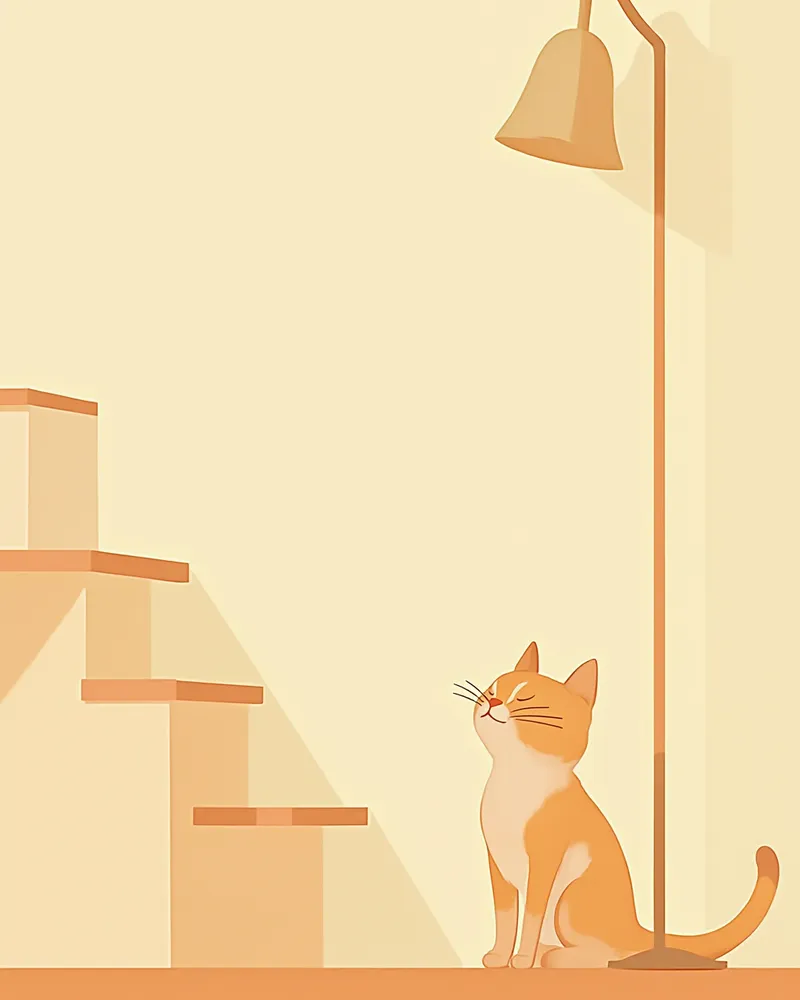
Hesitation on stairs: They pause or freeze before descending stairs.
An elderly cat hesitating at the bottom of the stairs

Emergency Signs Requiring Immediate Veterinary Care

The following symptoms indicate an emergency such as retinal detachment or glaucoma. Because the risk of permanent blindness increases with time, please take your pet to a 24-hour emergency veterinary clinic immediately upon noticing any of these signs: - Sudden, persistent dilation of both pupils - Repeatedly bumping into furniture within a single day - Red, bloodshot eyes accompanied by squinting - Appearance of blood pooling inside the eye - Tilting the head to one side or spinning in circles

At-Home Management to Maintain Senior Cat Eye Health
For senior cats whose vision is declining, maintaining a consistent environment is the most helpful thing you can do.
Keep furniture arrangements fixed: Please avoid moving their food bowls, litter box, and bed.
Night lighting: Leaving a soft night light on in the hallway can help them maintain their sense of direction.
Corner protection: Attach soft pads to corners they frequently bump into.
Voice cues: Speak to them before approaching so they don’t get startled.
Blood pressure management: Don’t miss any doses of the blood pressure or kidney medications prescribed by your veterinarian.
Setting up your home environment for senior cats

How Nutrition and Supplements Can Help

While certain ingredients are known to support eye health, they cannot reverse existing cataracts or retinal damage. They should be viewed solely as preventive measures or aids to slow progression. Taurine is essential for maintaining retinal function in cats. It is so critical that prolonged deficiency can lead to retinal degeneration and permanent vision loss; however, cat-specific diets are already sufficiently fortified with taurine, so additional supplementation is generally unnecessary. Omega-3 fatty acids are commonly found in senior cat foods, but the evidence supporting their specific benefits for feline eye health remains limited. The same applies to antioxidants like lutein and zeaxanthin, which should be regarded as having only a supportive role. Furthermore, senior cats with underlying health conditions must be evaluated by a veterinarian before starting any supplements.

Recommended Frequency of Ophthalmic Exams for Senior Cats

Even without symptoms, regular check-ups can catch issues early. In senior cats, systemic conditions like high blood pressure often first show signs in the eyes, making routine blood pressure monitoring and fundus (retinal) exams essential. - After age 7: Measure blood pressure at least once a year as part of a comprehensive wellness exam. - As cats age further: Shorten the interval between check-ups to monitor blood pressure, kidney values, and eye health more frequently. - For cats with chronic kidney disease or hyperthyroidism: Consult your veterinarian about scheduling more frequent fundus exams. Because high blood pressure is a common cause of retinal damage in cats, senior cats with elevated blood pressure readings should always have their ocular blood vessels and retina examined, even if they show no symptoms.

Reviewed by a veterinarian

Dr. Tony — Punnawat Phongkittirak

Dr. Tony — Punnawat Phongkittirak

Veterinarian

A veterinarian who majored in veterinary medicine at Khon Kaen University, Thailand, and completed the IVSA program at North Carolina State University in the United States. Drawing on clinical experience at animal hospitals, he works in the pet healthcare field and is dedicated to building a digital care environment that connects pet parents with veterinarians.

Frequently Asked Questions

My senior cat’s eyes look cloudy. Does that definitely mean they have cataracts?
Not at all. In cats over 10 years old, the most common cause is lens sclerosis, a natural aging change that doesn’t significantly affect vision. Since it can be hard to distinguish from other conditions by eye alone, please have your cat examined by a veterinary ophthalmologist for an accurate diagnosis.
Is cataract surgery possible for senior cats?
While cataract surgery is technically feasible, cataracts are less common in cats than in dogs and are often associated with underlying conditions such as uveitis or systemic diseases, which limits surgical candidacy. Managing these underlying conditions takes priority.
Can a blind senior cat still live a normal life?
Yes, as long as the environment remains consistent, most cats adapt well. Cats have highly developed senses of smell, hearing, and whisker sensitivity, so they can move freely around the house as long as the furniture arrangement stays the same.
Will taking blood pressure medication restore vision?
In the early stages of retinal detachment, vision may partially recover as the retina reattaches through blood pressure control. However, the likelihood of recovery decreases over time, so it is crucial to visit a veterinary clinic immediately upon noticing symptoms.
Can I prevent my pet’s vision from deteriorating just by giving them the right nutritional supplements?
Supplements play a supportive role. The primary cause of vision loss in senior cats is systemic diseases such as hypertension and kidney disease, so if these conditions aren’t properly managed, it’s difficult to halt progression regardless of which supplements are given.

Share

Related Guides

References

[1] The Cat, Clinical Medicine and Management, 2nd Edition — Chapter: Ophthalmology of the Senior Cat

[2] Veterinary Ophthalmology, 6th Edition (Gelatt et al.) — Feline Ocular Disease

[3] Maggs DJ, Miller PE, Ofri R. Slatter's Fundamentals of Veterinary Ophthalmology, 6th Edition

This information is based on veterinary literature and does not replace diagnosis or treatment. Please consult a veterinarian for specific health concerns.

Metapet Co., Ltd. | CEO: Park Sung-yong | Business Reg. No. 417-88-02562 | Seoul, South Korea | Customer Center

How to Protect Your Senior Cat's Vision | Meongsiljang