Like
Share
멍실장
펫 미용사 자격 가이드

How to Get a Pet Groomer Certification: Types, Costs, and Employment at a Glance

Skin & CoatQ&AMeongsiljang Veterinary Advisory Board

Pet grooming certifications are divided into government-recognized and private qualifications, with each level having its own curriculum and practical skill requirements. We’ve outlined the certification system and selection criteria that pet owners and aspiring groomers should know.

What Is a Pet Groomer Certification?

A neatly organized pet grooming tool set
Pet groomer certification is a credential that proves your ability to professionally handle pet coat care, bathing, styling, and hygiene grooming. The most important thing is to first understand the difference between government-recognized certifications and private certifications. In Korea, both the government-recognized "Pet Groomer" certification and private certifications like "Pet Stylist" are available, each with different exam scopes and applications. If your goal is employment or starting a business, the typical path is to start with at least Level 3 and advance to higher levels as you gain practical experience.

Why Is a Certification Necessary?

Pet grooming is more than just trimming fur; it’s a hygiene service that also checks the skin, ears, nails, and anal glands. Improper handling or irritating the skin can increase the risk of injury or infection, so understanding basic anatomy and animal behavior is helpful. Certifications serve as one way to verify foundational knowledge and hands-on experience, and most dog grooming salons and clinic-affiliated grooming facilities prioritize candidates with certifications during hiring. From the pet owner’s perspective, entrusting their pet to a certified groomer offers more consistent care and greater peace of mind.

Comparison of Major Certification Types

ItemState-Certified Pet GroomerKKC Dog StylistPrivate Certification
Issuing BodyKorea Canine Federation (KCF)Korea Kennel Club (KKC)Private academies/associations
Grading SystemLevel 1, 2, 3Master, Level 1, 2, 3Varies by organization
EligibilityHolding a lower gradeHolding a lower gradeOften no restrictions
Practical DifficultyHighHighMedium
Employment ValueVery highVery highVaries by organization

Based on publicly available information as of April 2026. Be sure to check the latest criteria on each organization's official website before applying.

Exam Scope and Difficulty by Level
Unlike dogs, cats have distinct behavioral patterns and differences in their skin and coat, making it difficult for groomers with only general pet grooming certifications to provide thorough, cat-specific grooming services. It is advisable to complete specialized advanced training or obtain dedicated qualifications to ensure a more meticulous approach and prevent injuries. Prioritizing the reduction of stress on the animal is safer than attempting forceful corrections.
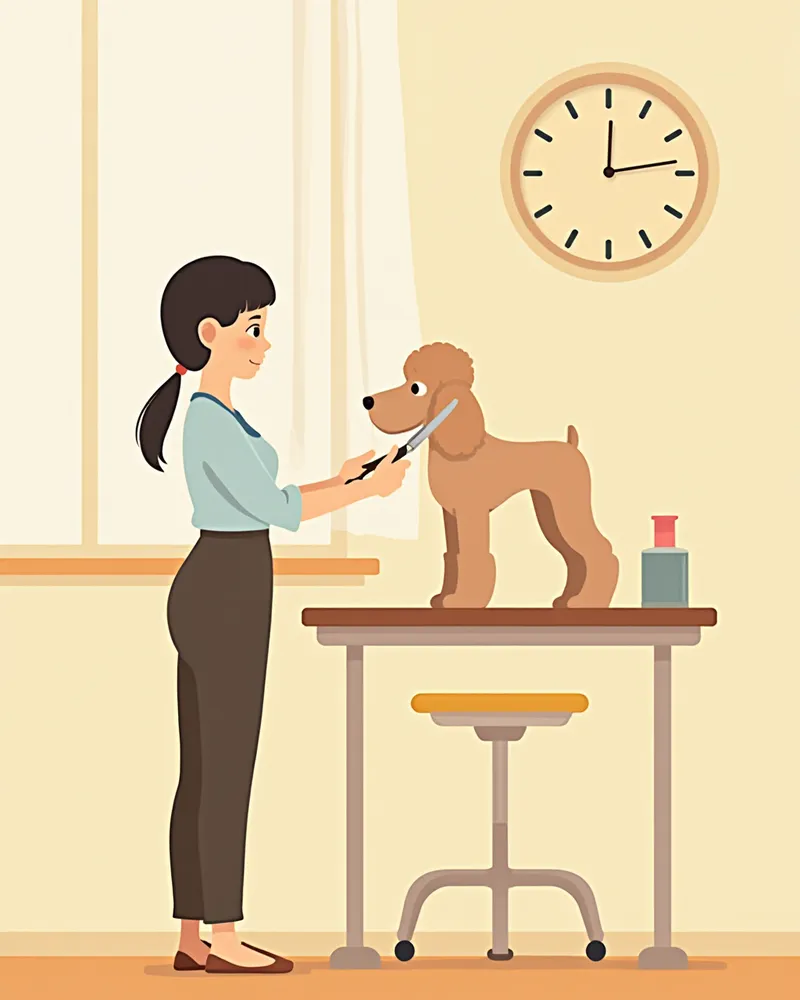
A grooming student practicing scissor cuts in the training room.

Key Points to Check When Choosing an Exam or Course

You can study the theoretical aspects on your own. However, hands-on practice is essential to develop the skills needed for model dog handling and scissor techniques. Since inexperienced techniques can lead to safety accidents, a practice-centered learning process is absolutely necessary.

Steps to Prepare for Certification

Check four things in advance: the groomer’s certification level and issuing authority, their experience and continuing education, any accident history and insurance coverage, and the salon’s disinfection and ventilation standards. For dogs with sensitive skin, senior dogs, or brachycephalic breeds that may be more prone to stress or discomfort, it’s safer to entrust grooming to an experienced professional to avoid unnecessary strain. If you’re concerned about your dog’s skin health, also check out our Dog Skin Care Guide.
The workflow of pet grooming, from bathing to cutting

The Reality of Costs and Study Duration

At private academies, Level 3 courses typically take two to four months, while Levels 2 and 1 often require four to six months or more each. Tuition varies significantly depending on the number of instructional hours and whether hands-on practice with model dogs is included, so comparing the cost per hour is the most practical approach. Calculating the total investment upfront—including exam fees, equipment costs (such as scissors and clipper sets, which alone can run into hundreds of dollars), and insurance for model dogs—can help reduce the risk of dropping out midway.

Checkpoints for Pet Owners Choosing a Groomer

Check four key factors in advance: the groomer’s certification level and issuing authority, years of experience, accident history and insurance coverage, and the shop’s disinfection and ventilation standards. For dogs with sensitive skin, senior dogs, or brachycephalic breeds that may be prone to stress or discomfort during grooming, it’s safer to entrust them to an experienced groomer to avoid unnecessary strain. If you’re concerned about your dog’s skin health, also check out our Dog Skin Care Guide.

Reviewed by a veterinarian

Dr. Tony — Punnawat Phongkittirak

Dr. Tony — Punnawat Phongkittirak

Veterinarian

A veterinarian who majored in veterinary medicine at Khon Kaen University, Thailand, and completed the IVSA program at North Carolina State University in the United States. Drawing on clinical experience at animal hospitals, he works in the pet healthcare field and is dedicated to building a digital care environment that connects pet parents with veterinarians.

Frequently Asked Questions

Is a pet grooming certification required to work in this field?
While it’s not legally required to hold a certification to work in this field, most employers do require one. Additionally, having a certification affects pet owners’ trust and can influence insurance eligibility, making it practically essential.
Which should I pursue first: a government-recognized certification or a private one?
If your goal is to secure employment, it’s advantageous to start with a well-known, nationally recognized certification or a KKC credential. Both systems are widely respected in the field, and transitioning to higher-level certifications later on is relatively straightforward.
Can I earn a certification through self-study?
While you can study the theoretical aspects on your own, mastering practical skills—such as positioning model dogs and developing a feel for using scissors—is difficult to learn alone and carries safety risks. Therefore, we recommend enrolling in at least a short-term, hands-on training course.
Can I also get certified as a cat groomer with the same certification?
Standard pet grooming certifications often exclude cat grooming or give it minimal emphasis. For your cat’s safety, it’s best to choose a groomer who has completed specialized advanced training or holds a dedicated cat grooming certification.
I’ve earned my certification—do you think I’ll have good luck finding a job?
Practical experience and a strong portfolio matter more than the certificate itself. To boost your employability, maximize your hands-on training with model dogs while still enrolled, and after graduation, gain real-world experience at grooming salons affiliated with pet shops or veterinary clinics.

Share

Related Guides

References

[1] Miller WH, Griffin CE, Campbell KL, Muller and Kirk's Small Animal Dermatology, 7th edn, 2013

[2] BSAVA Manual of Canine and Feline Dermatology, 4th Ed

[3] 한국애견협회(KKC) 반려견스타일리스트 자격검정 안내

This information is based on veterinary literature and does not replace diagnosis or treatment. Please consult a veterinarian for specific health concerns.

Metapet Co., Ltd. | CEO: Park Sung-yong | Business Reg. No. 417-88-02562 | Seoul, South Korea | Customer Center

Pet Groomer Certification: Types, Costs & Employment | Meongsiljang