

Why Does My Cat Meow Every Dawn? Key Causes and Coping Strategies Q&A
We break down the causes of early-morning meowing in cats by age group, and provide situation-specific coping strategies in a Q&A format, covering everything from kittens to senior cats.
The Core Reasons Why Cats Meow in the Early Morning

Four Main Causes of Early-Morning Meowing
Early-Morning Meowing Causes by Age Group at a Glance
| Item | Young Cat (1–5 years) | Middle-aged Cat (6–9 years) | Senior Cat (10+ years) |
|---|---|---|---|
| Main Cause | Instinct, hunger, learned behavior | Mix of health issues and learned behavior | Cognitive dysfunction, sleep disruption |
| Crying Characteristics | Crying while running around actively | Crying irregularly | Crying blankly as if disoriented |
| Need for Vet Visit | Low (behavioral correction first) | Medium (health checkup recommended) | High (senior cat checkup essential) |
If a cat over 10 years old suddenly starts crying at dawn, consult a veterinarian first
The Primary Cause of Early-Morning Meowing in Senior Cats — What Is Feline Cognitive Dysfunction?

When to Visit the Vet Immediately
If your cat starts crying out in the early hours of the morning along with any of the following symptoms, it may not be a simple behavioral issue. Sudden early-morning vocalization combined with disorientation, sudden excessive thirst or loss of appetite, stumbling while walking or circling, and if these symptoms have recently appeared in a cat over 10 years old. In such cases, we recommend visiting an animal hospital on the same day or the following morning.
How to Handle Early-Morning Meowing in Kittens

Management Points for Early-Morning Meowing in Senior Cats
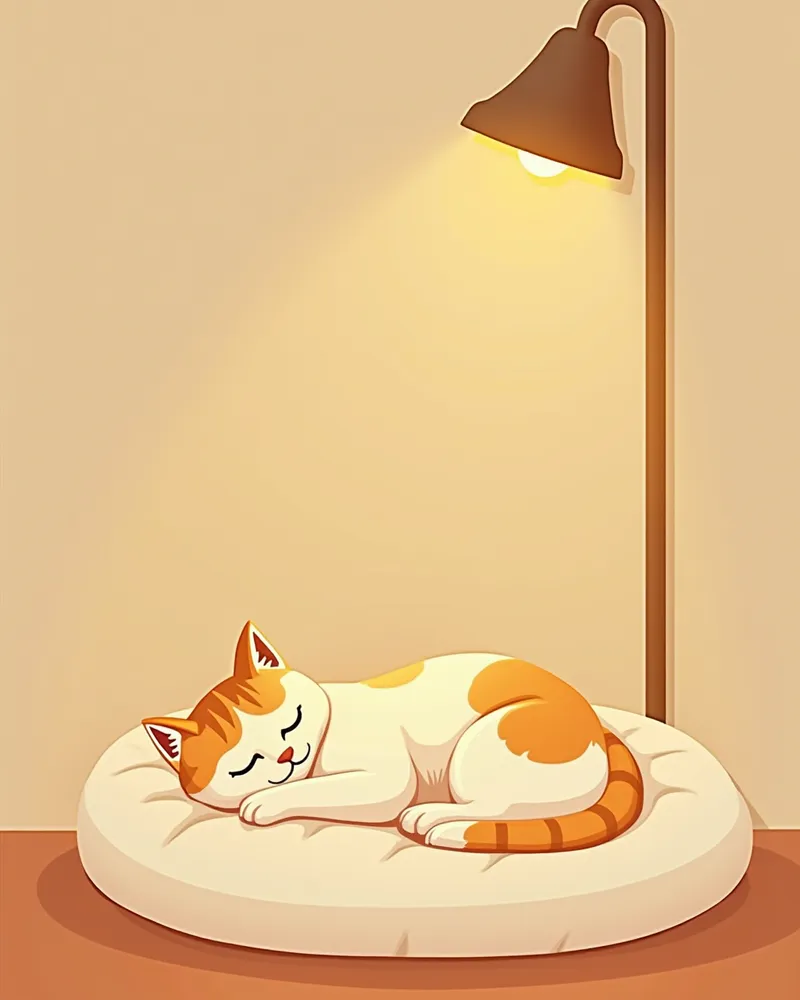
If Your Cat Is Unspayed, Check This Too
In unspayed female cats, early-morning vocalizations may be linked to estrus. Estrus typically lasts about five to six days and recurs roughly once a month, during which the cat often meows loudly and persistently. Spaying eliminates estrus and usually resolves this vocalizing. However, meowing can also stem from pain, gastrointestinal disorders, or hypertension, so if behavioral modifications don’t help, a veterinary health checkup is essential.
Reviewed by a veterinarian

Dr. Tony — Punnawat Phongkittirak
VeterinarianA veterinarian who majored in veterinary medicine at Khon Kaen University, Thailand, and completed the IVSA program at North Carolina State University in the United States. Drawing on clinical experience at animal hospitals, he works in the pet healthcare field and is dedicated to building a digital care environment that connects pet parents with veterinarians.
Reviewed 2026-06-01
Frequently Asked Questions
My pet only cries in the early morning and seems fine during the day. Should I take them to the vet?
My dog’s crying got worse after I started giving him food every time he cried. Why is that?
Should I close the door to my room because my pet has been crying all night?
What should I tell the vet?
My kitten is still very young. When will the early morning crying stop?
Share
Related Guides

7 Behavioral Enrichment Strategies for Mental Stimulation Recommended by Veterinarians

Top 5 Calming Supplements for Dogs and Cats in 2026

L-Theanine Effects and Calming Support
Feline Herpes Keratitis FAQ — Key Information Every Pet Owner Should Know

What Is Feline Glaucoma? — From Symptoms to Preventing Blindness: A Must-Read for Pet Owners

What Is Fluorescein Staining for Cats? — A Complete Guide to the Procedure and Result Interpretation

Why Do Tear Stains Form on My Cat? — Causes and When to Visit the Vet Q&A

Feline Entropion (Eyelid Rolling) FAQ — Key Information Pet Owners Must Know

What is corneal perforation in cats? — How to recognize emergency warning signs
If Your Cat’s Eyes Look Cloudy — Causes of Corneal Edema and When to Visit the Vet
References
[1] Atkinson T. A Professional's Guide to Feline Behaviour Understanding, Improving and Resolving Problems. CABI; 2018.
[2] Little SE (ed.). The Cat: Clinical Medicine and Management. 2nd ed. Elsevier Saunders; 2012.
[3] Moelk M. Vocalizing in the house-cat: a phonetic and functional study. Am J Psychol. 1944;57:184–205.