
Like
Share
멍실장
내장형 칩 vs 외장형 인식표 비교

Comparing Implantable Microchips and External ID Tags

ImmunityQ&AMeongsiljang Veterinary Advisory Board

I’ve compared implantable microchips and external ID tags, including their differences, pros and cons, and recovery rates in case of loss, to help you determine the safest combination.

Implantable Microchips vs. External ID Tags: What’s the Difference?

Dogs and cats wearing ID tags on their collars and equipped with implanted microchips
Implantable microchips and external ID tags are two primary methods for identifying your pet and reuniting them with you if they get lost. The key isn't choosing one over the other, but using both together. Microchips serve as a permanent, lifelong ID, while ID tags provide immediate identification that anyone can read at a glance. Because they serve different purposes, veterinary internal medicine textbooks recommend using both to maximize the chances of recovering a lost pet.

How Do They Work?

An internal microchip is a grain-of-rice-sized RFID (radio-frequency identification) chip implanted under the skin using a sterile, single-use needle. When scanned with a dedicated reader, the chip’s unique ID is retrieved and linked to a registration database, allowing the owner’s contact information to be looked up. The chip is made of passive, non-toxic materials that do not require a power source, so it won’t wear out or degrade and will remain in place for the pet’s lifetime. An external identification tag, on the other hand, is a metal or silicone tag attached to a collar with the owner’s name and phone number engraved directly on it. Its greatest advantage is that anyone who finds the pet can call the owner immediately without needing a scanner.

Key Comparison: Implantable Microchips vs. External ID Tags

ItemInternal MicrochipExternal ID Tag
FormRice-grain-sized RFID chip (implanted under skin)Metal/silicone tag attached to collar
Verification MethodRequires dedicated scannerImmediately visible to the naked eye
Risk of Loss/DamageAlmost none (lasts a lifetime)Can fall off along with the collar
Information UpdateUpdated in the registration systemMake a new tag
Cost (initial)Approx. $30 to $60Approx. $10 to $10
Legal RegistrationRecognized under the pet registration systemNot recognized on its own (supplementary means)

Based on the average price at general domestic veterinary clinics and ID tag makers as of 2026.

Why Implantable Microchips Are Strong
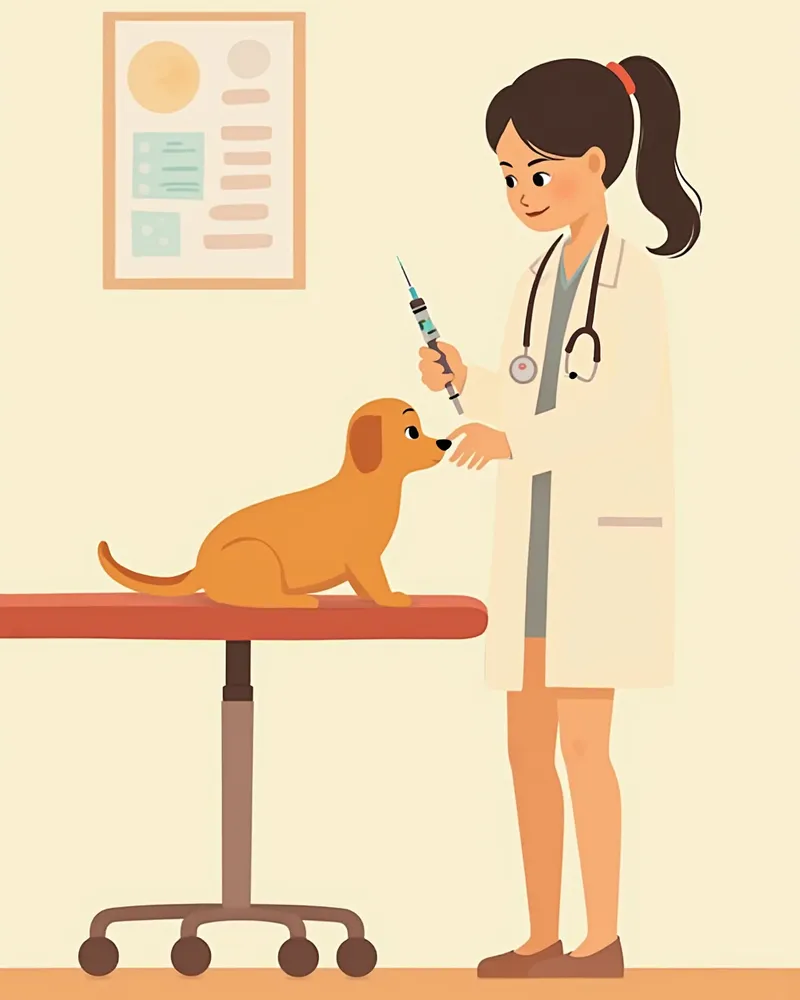
The biggest advantage of an implantable microchip is that it never falls out. Even if a collar comes loose or an ID tag is lost, the chip remains in place, allowing shelters and veterinary clinics to locate the owner with a single scan after the pet goes missing. It requires almost no reimplantation throughout the pet’s life, and when you move or change your phone number, you only need to update the information in the registration system. In Korea, it is legally required to register an implantable microchip for dogs over two months of age.
A veterinarian implanting a microchip in a puppy

Why You Can’t Rely Solely on an Implantable Microchip

Microchips can only be read with a scanner, so if a member of the public finds your pet on the street, they won’t have one and will need to take the animal to a vet clinic or shelter to check its identity. In contrast, an external ID tag allows the finder to call you immediately, which significantly speeds up the process of getting your pet home. That’s why microchips serve as a “last resort,” while external ID tags act as a “fast-track” way to bring your pet back home—each playing a different role.

How to Choose an External ID Tag

When choosing an external ID tag, please keep these three points in mind:
Material: Stainless steel and titanium are durable, while silicone helps reduce the noise from the tag bumping against things.
Engraving details: Your phone number and the pet’s name are sufficient; we do not recommend engraving your home address for security reasons.
Attachment method: Tags that connect directly to a D-ring are less likely to be lost than those attached with loose rings.
For cats, it is safer to use a collar equipped with a breakaway safety buckle. This design allows the collar to release automatically if it gets caught on something, preventing suffocation accidents.
A variety of materials for external ID tags and cat-safe buckle collars

So, Which Combination Is the Safest?

Veterinarians recommend using both an implanted microchip and an external ID tag together. Textbooks explain that visible identification methods, such as collars and tags, increase the likelihood of a lost pet being reunited with its owner. By also registering a permanent identification method like a microchip, you have a reliable backup if the tag is lost or damaged, further boosting the chances of reunion. Even indoor cats can escape through door gaps, and surveys show that many owners who search for lost cats had them as indoor pets. Thinking, "My cat never goes outside, so it's fine," is the most dangerous mindset.

Check Registration Information at Least Once a Year!

Even an implanted microchip is useless if the registered phone number is outdated. If you’ve moved, changed your phone number, or had a change in ownership, be sure to update the information in the Animal Protection and Management System. If your pet’s external ID tag has an outdated phone number, you’ll need to get a new one made. We recommend checking both the microchip and ID tag once a year, ideally during your pet’s annual health checkup.

Reviewed by a veterinarian

Dr. Tony — Punnawat Phongkittirak

Dr. Tony — Punnawat Phongkittirak

Veterinarian

A veterinarian who majored in veterinary medicine at Khon Kaen University, Thailand, and completed the IVSA program at North Carolina State University in the United States. Drawing on clinical experience at animal hospitals, he works in the pet healthcare field and is dedicated to building a digital care environment that connects pet parents with veterinarians.

Frequently Asked Questions

Will the microchip implantation hurt my pet?
Although the needle is slightly thicker than those used for routine vaccinations, the discomfort is brief and comparable to a standard shot. The procedure is performed without anesthesia and is considered safe, with a very low risk of complications.
Can an implanted microchip migrate within the body or cause side effects?
In rare cases, the microchip may shift slightly from the insertion site, so we recommend checking its position and functionality with a scan during annual check-ups. However, since the chip is made of biocompatible, inert, and non-toxic materials encased in glass, it has virtually no impact on health, and inflammatory or allergic reactions are extremely rare.
Do cats really need to be microchipped?
Yes, we strongly recommend it even for indoor cats. According to shelter data, only about 1.8% (less than 2%) of lost cats are reunited with their owners—a very low rate—primarily because they lack a means of identification. Having a permanent identification method, such as an implanted microchip, significantly increases the chances of being reunited.
Is registering just an external identification tag considered legally registered?
No. Under the current pet registration system, external tags are not recognized, and implantable microchip registration is mandatory. We recommend using an external identification tag as a supplementary measure alongside the microchip.
Can a microchip be replaced or removed?
We don’t remove the chip unless it’s medically necessary. Since chip information can be updated in the registration system, most cases are resolved simply by updating the data.

Share

Related Guides

References

[1] Little S. (ed.), The Cat: Clinical Medicine and Management, 2nd Edition, Elsevier, 2020 — Microchipping & Identification Chapter

[2] Lord LK et al., Search and identification methods that owners use to find a lost dog, JAVMA, 2007

[3] 농림축산식품부, 동물보호법 시행령·시행규칙 — 반려동물 등록제 안내

This information is based on veterinary literature and does not replace diagnosis or treatment. Please consult a veterinarian for specific health concerns.

Metapet Co., Ltd. | CEO: Park Sung-yong | Business Reg. No. 417-88-02562 | Seoul, South Korea | Customer Center

Implantable Microchips vs. External ID Tags Compared | Meongsiljang