

Low-Level Laser Rehabilitation Therapy
Low-level laser therapy is a non-invasive treatment that uses light energy to boost cellular activity, reduce pain, and promote tissue healing. It’s widely used for arthritis, post-surgical recovery, and wound healing.
What is Low-Level Laser Rehabilitation Therapy?
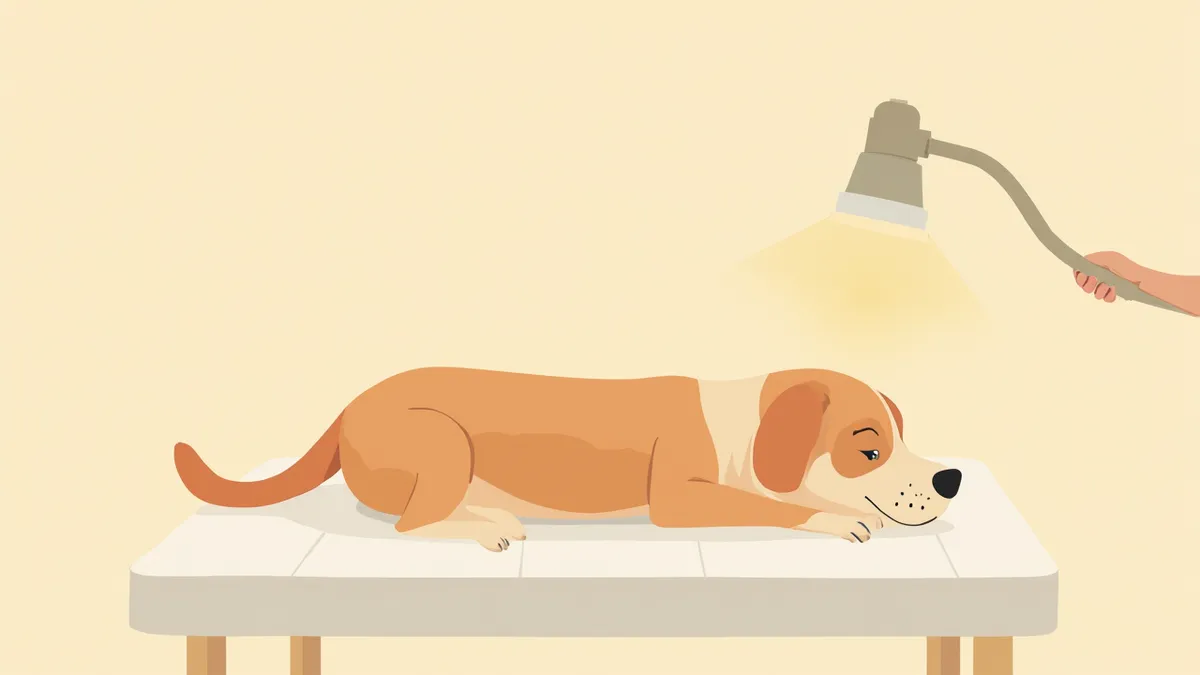
How Does It Work?
What Conditions Is It Used For?

Laser Class Differences at a Glance
| Item | Class 1–2 | Class 3B | Class 4 |
|---|---|---|---|
| Output | ≤5mW | 5–500mW | 500mW or more |
| Penetration Depth | Epidermal level | Subcutaneous to shallow muscle | Deep muscle and joints |
| Main Use | Pointers and grooming devices | Wounds and superficial inflammation | Joints, discs, post-surgery |
| Safety | Very safe | Safe (safety goggles needed) | Safety goggles mandatory |
Many low-cost home-use devices on the market are Class 1–2, so meaningful rehabilitation effects are hard to expect.
When to Avoid Laser Therapy
While it’s a safe treatment, it isn’t suitable for every situation. Direct application to cancerous or tumor sites is contraindicated, as it may stimulate cell proliferation. Avoid the area around a pregnant uterus, the thyroid and testicles, and any site that has recently received a steroid injection. Direct exposure to the eyes is strictly prohibited, so both the pet and the owner must wear specialized protective goggles during treatment. Also avoid areas with severe fever due to infection, and only apply the treatment to bleeding wounds after hemostasis has been achieved.
How Is the Treatment Performed?

When Will You Notice Effects?
Combination Therapy Is More Effective Than Standalone Treatment
Laser therapy isn’t a magic cure. For arthritis, it works best when combined with weight management, joint supplements, and hydrotherapy; after surgery, it should be paired with physical therapy and assistive devices to maximize benefits. Veterinary rehabilitation textbooks also report that comprehensive rehabilitation programs yield better outcomes than laser therapy alone. It’s truly important to consult your veterinarian to create a customized rehabilitation plan tailored to your pet’s specific condition.
Reviewed by a veterinarian

Dr. Tony — Punnawat Phongkittirak
VeterinarianA veterinarian who majored in veterinary medicine at Khon Kaen University, Thailand, and completed the IVSA program at North Carolina State University in the United States. Drawing on clinical experience at animal hospitals, he works in the pet healthcare field and is dedicated to building a digital care environment that connects pet parents with veterinarians.
Reviewed 2026-04-29
Frequently Asked Questions
Is laser therapy painful?
Is it a one-time treatment?
Can I buy a home-use laser device and do it myself?
Are there any side effects?
Is it covered by insurance?
Share
Related Guides

Top 5 Patellar Support Braces for Dogs — Stage-by-Stage Size Guide

Curcumin Efficacy and Anti-inflammatory/Joint Support

Top 5 Recommended Joint Supplements for Dogs in 2026

How to Check Your Dog’s Paws at Home — Warning Signs and What to Do

Basics of Auscultation at Home
Guide to Veterinary Neurology Consultations: When and How to Seek Care
Our Pet’s Dentist: General Clinic vs. Specialist — A Guide to Choosing Care
Indications for Veterinary Acupuncture (TCVM)

Comparing Implantable Microchips and External ID Tags

What Is Therapeutic Massage for Dogs and Cats? — Safe Techniques and Precautions at Home
References
[1] Millis D.L., Levine D., Canine Rehabilitation and Physical Therapy, 2nd Ed
[2] Draper W.E., Schubert T.A., Clemmons R.M., Miles S.A., Low-level laser therapy reduces time to ambulation in dogs after hemilaminectomy, Journal of Small Animal Practice 53: 465-469, 2012
[3] Miller L.A., Looney A.L., Photobiomodulation, Small Animal Anesthesia and Pain Management: A Color Handbook, 3rd Ed
[4] Hamblin M.R., Mechanisms and application of the anti-inflammatory effects of photobiomodulation, AIMS Biophys 4(3): 337-361, 2017