Like
Share
멍실장
한국 수의학 발전 역사 한눈에 정리

A Quick Overview of the History of Korean Veterinary Medicine

ImmunityQ&AMeongsiljang Veterinary Advisory Board

Korean veterinary medicine began with the horse-doctor system of the Three Kingdoms period, progressed through modern education during the Japanese colonial era, and has since evolved into today’s companion animal healthcare system. Here’s an overview of the key changes across each era and the current state of veterinary care for pets.

What is the History of Korean Veterinary Medicine?

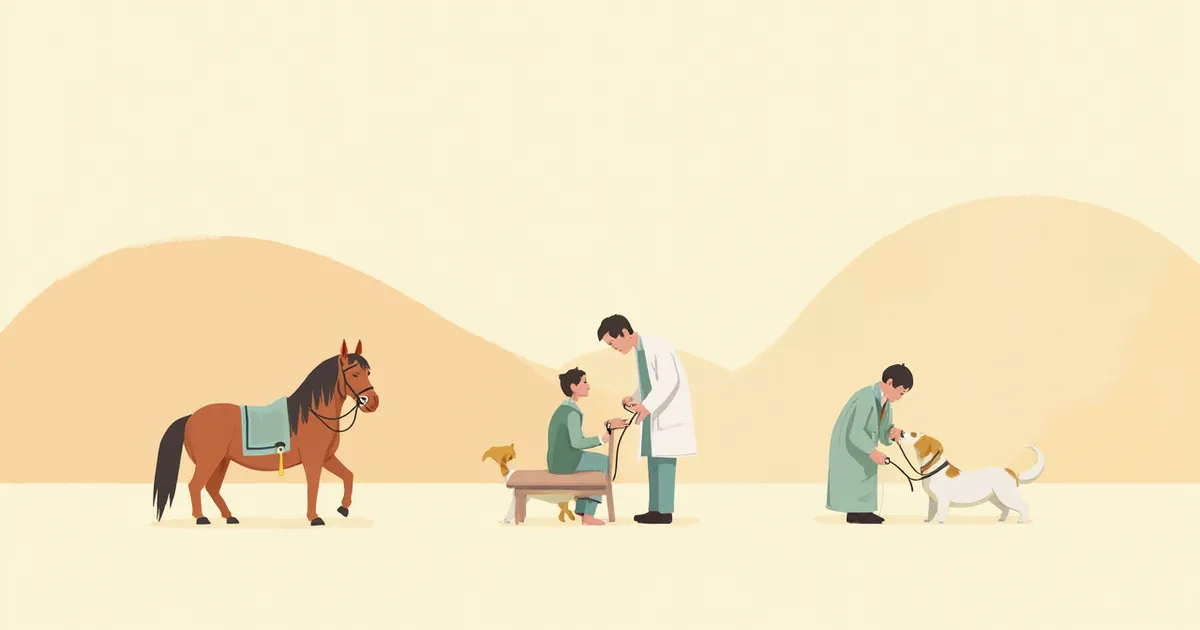
An illustrated timeline showcasing the development of veterinary medicine in Korea
Korean veterinary medicine traces its roots back to the horse-doctor system of the Three Kingdoms period, evolving through the royal veterinary institutions of the Joseon Dynasty into today’s modern pet healthcare system. The key trend has been a shift from livestock-centered care to companion animal-centered care. While veterinarians once primarily treated working animals like horses and cattle, the rise of dog and cat ownership since the 1990s has driven rapid specialization in companion animal medicine.

Three Kingdoms to Goryeo: The Origins of Ma-ui (Horse Doctors)

The roots of Korean veterinary medicine trace back to the Three Kingdoms period. In Silla, a specialized role called "Ma-ui" was established to manage horses used in warfare. During the Goryeo Dynasty, the Saboksi (Office of the Imperial Stables) was responsible for managing horses for the royal family and the military, and simple acupuncture and herbal prescriptions were used. During this time, animal healthcare developed under the concept of "livestock as national assets," and it grew alongside human medicine, which is a notable characteristic.

Comparison of Veterinary Development by Era

Here’s a clear overview of how the focus and key institutions in Korean veterinary medicine have evolved over time.

Characteristics of Veterinary Medicine by Era

ItemMain subjectsRepresentative institutions/systems
Three Kingdoms–GoryeoMilitary horses/farm cattleMaui (horse doctor), Saboksi
Joseon DynastyHorse/cattle focusedSaboksi, Jeonuigam
Japanese colonial periodIndustrial animalsSuwon Agriculture and Forestry College, Department of Veterinary and Animal Husbandry
Liberation–1980sLivestock disease controlSeoul National University/Kyungpook National University, Department of Veterinary Medicine
1990s–presentCompanion animal focusedAnimal hospitals, veterinary associations, Quarantine Headquarters

As of 2024, there are 10 veterinary colleges nationwide.

Joseon Dynasty: Systematized Animal Healthcare

During the Joseon Dynasty, veterinary medicine became much more systematic. The Saboksi office was responsible for managing the royal horses, and the publication of specialized texts like the "Makyeongchojip Eonhae" (1682) in Hangul helped spread practical knowledge. This book is regarded as Korea's first specialized veterinary text, compiling information on horse diseases and treatments. However, veterinary care for other livestock such as cattle and pigs, as well as for pets like dogs and cats, still relied largely on folk knowledge.
An illustration depicting the Joseon Dynasty veterinary manual "Makyeongchojip Eonhae"

Useful General Knowledge

The Joseon Dynasty text "Maeung Chojeop Eonhae" is Korea's first veterinary manual written in Hangul, covering everything from horse diagnosis to acupuncture and herbal prescriptions. The original manuscripts are preserved at the National Archives of Korea and the Kyujanggak Institute at Seoul National University, where they continue to serve as valuable research materials today.

Japanese Colonial Period: Introduction of Modern Veterinary Medicine

Modern Western veterinary medicine was formally introduced to Korea during the Japanese colonial period. In 1937, the establishment of the Department of Veterinary and Animal Husbandry at Suwon Agricultural and Forestry College (the predecessor of Seoul National University’s College of Veterinary Medicine) marked the beginning of systematic veterinary education. At that time, the curriculum focused primarily on livestock and working animals such as cattle, pigs, and horses, as well as the prevention and control of contagious animal diseases. The concept of companion animal care did not yet exist and would not emerge until well after Korea’s liberation.

Post-Liberation to 1990s: From Livestock Disease Control to Companion Animals
After Korea’s liberation, veterinary medicine developed primarily around livestock disease control and the promotion of animal husbandry. The enactment of the Veterinarian Act in 1953 established the veterinary licensing system, and during the 1970s and 1980s, controlling foot-and-mouth disease and classical swine fever became national priorities. A major shift occurred in the 1990s: as more households began keeping dogs and cats as family members, the number of animal hospitals surged, and clinical practice shifted to focus on small animals.
A veterinarian examining a dog at a modern animal hospital in Korea

Post-2000s: Specialization and Globalization

Since the 2000s, veterinary medicine has become significantly more specialized. - Internal Medicine, Surgery, and Diagnostic Imaging: Specialized clinical departments have been established, primarily centered around university hospitals. - Strengthening of Animal Protection Laws: Following revisions in 2007, regulations have continued to expand, helping to establish the concept of companion animal welfare. - Quarantine and Public Health: A response system for zoonotic diseases such as avian influenza and African swine fever has been built, coordinated by the Animal and Plant Quarantine Agency. - International Exchange: Participation in overseas academic societies, such as the American College of Veterinary Surgeons, has continued alongside the introduction of a specialist certification system in Korea.

Key Points for Pet Owners to Know

In Korea, to officially call yourself a "specialist," you must complete a specialized training program accredited by the Korean Veterinary Medical Association. When choosing a clinic, don’t just look for the term "specializing in ○○." Instead, check the veterinarian’s professional society affiliations and training background to ensure you receive safe and reliable care.

Reviewed by a veterinarian

Dr. Tony — Punnawat Phongkittirak

Dr. Tony — Punnawat Phongkittirak

Veterinarian

A veterinarian who majored in veterinary medicine at Khon Kaen University, Thailand, and completed the IVSA program at North Carolina State University in the United States. Drawing on clinical experience at animal hospitals, he works in the pet healthcare field and is dedicated to building a digital care environment that connects pet parents with veterinarians.

Frequently Asked Questions

What is Korea’s first veterinary medicine book?
This is the "Majeongchojip Eonhae," compiled during the reign of King Sukjong of Joseon in 1682. It is recognized as Korea's first veterinary textbook, documenting equine diseases and acupuncture and herbal prescriptions in Hangul.
When did modern veterinary medicine first arrive in Korea?
In 1937, during the Japanese colonial period, the establishment of the Department of Veterinary and Animal Husbandry at Suwon Agricultural and Forestry College marked the beginning of formal, Western medicine-based modern veterinary education.
When was the Veterinary Medical Act established?
The Veterinarian Act, which established the veterinary licensing system in Korea, was enacted in 1953. Since then, it has been revised multiple times and expanded to cover the medical care environment for companion animals.
When did veterinary care for pets really take off?
Since the 1990s, as the culture of treating dogs and cats as family members has spread, the number of small-animal specialty clinics has surged, and veterinary care has become increasingly specialized into fields such as internal medicine, surgery, and diagnostic imaging.
Does South Korea have a system for veterinary specialists?
Yes, the Korean Veterinary Medical Association oversees accredited specialty training programs. However, it’s helpful to know that, unlike the unified national board certification system for human medicine, veterinary specialty certification in Korea is administered by individual specialty societies.

Share

Related Guides

References

[1] 대한수의사회, 한국수의학 100년사, 2008

[2] 농림축산식품부, 수의사법 및 동물보호법 제·개정 연혁 자료

[3] 서울대학교 수의과대학, 한국 수의학 교육사, 2015

[4] 농림축산검역본부, 반려동물 관련 산업 통계 연보

This information is based on veterinary literature and does not replace diagnosis or treatment. Please consult a veterinarian for specific health concerns.

Metapet Co., Ltd. | CEO: Park Sung-yong | Business Reg. No. 417-88-02562 | Seoul, South Korea | Customer Center

History of Korean Veterinary Medicine: A Quick Overview | Meongsiljang