

Is Anesthesia Safe for Dogs with Kidney Disease? Risks and Safety Management Owners Should Know
Anesthesia for dogs with compromised kidney function hinges on careful drug selection and fluid management. Here’s a clear overview of the protocol owners should know, from pre-anesthetic testing through recovery.
What Is Anesthesia for Dogs with Kidney Disease?
Why Is Anesthesia Risky for Patients with Kidney Disease?
Essential Pre-anesthetic Tests

Criteria for Postponing Anesthesia or Re-evaluation
It is safer to postpone anesthesia and first stabilize the patient medically if any of the following conditions are present: a rapid rise in creatinine levels or hyperkalemia exceeding the normal upper limit (approximately 5.9 mEq/L). Hyperkalemia can cause electrocardiographic changes, such as prolonged P-R intervals, so it must be corrected with calcium, glucose, and insulin before proceeding. Additionally, severe dehydration or hypovolemia increases the risk of acute kidney injury due to reduced renal blood flow from hypotension during anesthesia, so fluid therapy should be administered first to correct these issues. It is also standard practice to stabilize patients with uncontrolled hypertension or severe anemia before proceeding. Rushing the procedure increases the risk of renal and cardiovascular complications during anesthesia.
Comparison of Recommended and Cautionary Anesthetic Drugs for Renal Patients
| Item | Use in renal patients | Characteristics |
|---|---|---|
| Propofol | Recommended | Short-acting, commonly used as an induction agent |
| Alfaxalone | Recommended | Can be used as an induction agent, with relatively good cardiovascular stability |
| Isoflurane / Sevoflurane | Recommended | First choice for maintenance of inhalant anesthesia, with almost no renal metabolism |
| Ketamine | Caution | May cause myocardial depression in debilitated patients, so avoid using alone |
| NSAIDs (e.g. meloxicam) | Caution | Risk of reduced renal blood flow, so avoid or use cautiously around anesthesia; delay use if recovery is insufficient |
| Aminoglycoside antibiotics | Contraindicated | Strongly nephrotoxic, so avoid in renal patients |
The veterinarian makes the final choice based on the patient's condition
Fluid Therapy: The Core of Renal Anesthesia
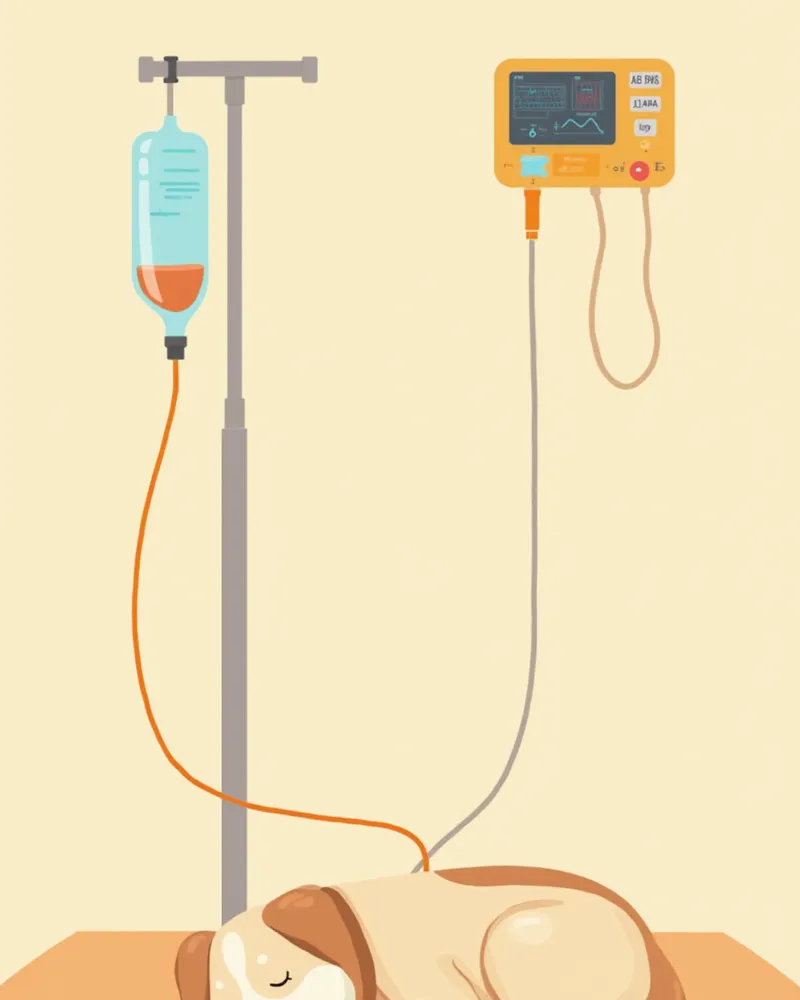
Monitoring Points During Anesthesia
Renal Monitoring Is Also Necessary During the Post-anesthetic Recovery Period
The end of anesthesia isn’t the end of the story. The 24 to 72 hours following recovery are when signs of kidney damage may appear. If you notice symptoms such as decreased appetite, vomiting, reduced urine output, or lethargy after your pet goes home, contact your veterinarian immediately. Veterinarians typically recommend a follow-up check-up within one to three days post-anesthesia, including blood tests for BUN, creatinine, and SDMA, to monitor recovery. For more information, see the [Dog Chronic Kidney Disease Management Guide] (/ko/disease/dog-chronic-kidney-disease).
Reviewed by a veterinarian

Dr. Tony — Punnawat Phongkittirak
VeterinarianA veterinarian who majored in veterinary medicine at Khon Kaen University, Thailand, and completed the IVSA program at North Carolina State University in the United States. Drawing on clinical experience at animal hospitals, he works in the pet healthcare field and is dedicated to building a digital care environment that connects pet parents with veterinarians.
Reviewed 2026-04-29
Frequently Asked Questions
My pet’s kidney values are elevated, and surgery is absolutely necessary. Is it safe to undergo anesthesia?
Is dental scaling also dangerous for the kidneys?
How should I manage fasting and water restriction before and after anesthesia?
How should I care for my pet at home after recovery?
Is anesthesia more expensive for dogs with kidney disease?
Share
Related Guides

Primary vs. Secondary Veterinary Hospitals: A Comparison

5 Easy-to-Raise Cat Breeds for First-Time Owners — Grooming Difficulty Comparison

Top 7 Short-Legged Dog Breeds
When Is a Kidney Biopsy Essential for Cats? — Key Points on Procedure and Indications

Tumor Grade vs. Stage: What’s the Difference?

The Complete Guide to Interpreting Lymph Node Aspiration Results

The Ultimate Guide to Distinguishing Cytology Patterns (Inflammation, Neoplasia, and Hyperplasia)

Why Your Dog Licks Its Body and Barks

Why Cats Love Empty Boxes: Could It Be Related to Stress?

Why Do Cats Sit on Keyboards? Is It to Get Attention or for Warmth?
References
[1] Langston CE, Eatroff AE, Chronic Kidney Disease, Small Animal Critical Care Medicine, 3rd Ed
[2] Grimm KA et al., Veterinary Anesthesia and Analgesia: The Fifth Edition of Lumb and Jones, 2015
[3] Polzin DJ, Chronic Kidney Disease in Small Animals, Veterinary Clinics of North America, 2011