
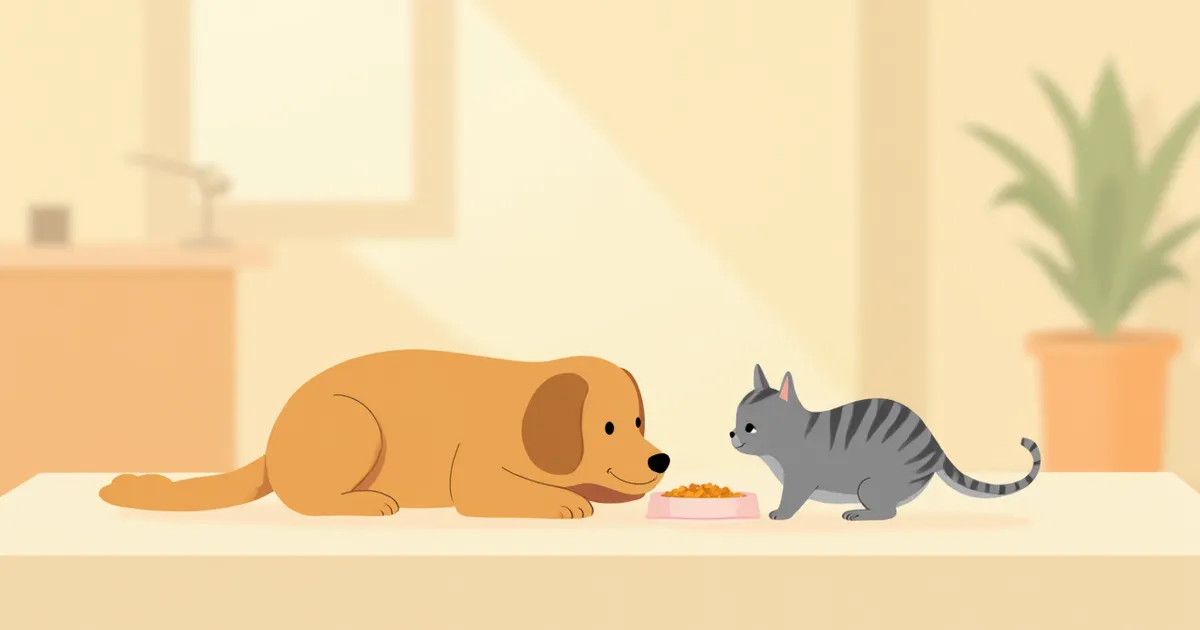
Guide to Gastrointestinal Prescription Diets
We’ve compiled a veterinary-backed overview of the role of gastrointestinal prescription diets for dogs and cats with digestive issues, how they differ from regular pet food, and the proper way to feed them.
What Are Gastrointestinal Prescription Diets?

How Do They Differ from Regular Pet Food?
Comparison of Common Gastrointestinal Prescription Diet Types
| Item | Low-Fat Digestive | Hydrolyzed Protein | High-Fiber Digestive |
|---|---|---|---|
| Main Indications | Acute diarrhea, pancreatitis (dogs), hyperlipidemia | Food allergy, chronic enteropathy | Large-bowel diarrhea, constipation, anal sac problems |
| Fat Content | Low | Moderate | Moderate |
| Fiber Content | Low | Low | High |
| Recommended Feeding Duration | Short to medium term | Medium to long term | Medium term |
Since each product has a different detailed nutritional composition, always choose according to your veterinarian's prescription. Low-fat digestive diets have clear clinical evidence in dogs, but there is insufficient veterinary evidence that fat restriction is strictly necessary in cats. Cat guardians should always decide only after a separate consultation with a veterinarian.
When Are Gastrointestinal Prescription Diets Needed?

Do Not Feed Long-Term Based on Self-Diagnosis
Prescription gastrointestinal diets are formulated as “special-purpose diets,” so feeding them to healthy pets over the long term can lead to deficiencies in certain nutrients. Hydrolyzed-protein formulas, in particular, are not intended for continued use once diarrhea has resolved. After a minimum of 4–8 weeks on the prescription diet, your pet must be re-examined by a veterinarian, who will determine whether to transition back to a regular diet or switch to a maintenance formula.
How to Transition from Regular Food to a Prescription Diet

Watch for These Signs During Feeding
For Cats, Not Eating Is More Dangerous
Cats are at risk of developing fatty liver disease (hepatic lipidosis) if they experience prolonged loss of appetite or refuse to eat voluntarily. Veterinary textbooks highlight hepatic lipidosis as a common and serious complication in anorexic cats, emphasizing that fasting must be avoided. If your cat refuses to eat a prescription diet, do not simply let them go hungry; instead, consult your veterinarian about strategies such as mixing the new food with their current diet or switching to a more palatable wet prescription formula. Cats that are overweight or have recently lost weight rapidly require especially close monitoring and prompt veterinary consultation if their appetite declines.
Reviewed by a veterinarian

Dr. Tony — Punnawat Phongkittirak
VeterinarianA veterinarian who majored in veterinary medicine at Khon Kaen University, Thailand, and completed the IVSA program at North Carolina State University in the United States. Drawing on clinical experience at animal hospitals, he works in the pet healthcare field and is dedicated to building a digital care environment that connects pet parents with veterinarians.
Reviewed 2026-04-27
Frequently Asked Questions
Can I buy prescription gastrointestinal diets without a veterinarian’s prescription?
The symptoms have improved, but how long should I continue giving it?
Can I give my pet treats?
Can dogs and cats share the same prescription diet?
What if the diarrhea doesn’t stop even after giving the prescribed medication?
Share
Related Guides

My Senior Cat Won’t Eat — A Complete Guide to Choosing Food for Cats with Weak Digestion

Top 5 Prescription Diets for Feline Pancreatitis Recommended by Veterinarians — Low-Fat, Highly Digestible Food Guide

Royal Canin vs Hill’s vs Purina vs Orijen — Which Brand Is Right for Your Pet, According to Veterinarians?
Why isn't my puppy growing? — Causes and diagnostic timing for canine hypopituitarism

What is Canine Insulinoma? — Hypoglycemia Signs You Must Not Miss

Sudden Seizures and Tremors in Your Dog? — Warning Signs of Hypocalcemia from Hypoparathyroidism

Frequently Asked Questions About Hypoglycemia in Puppies — Key Information Pet Owners Must Know
What Is Hypocalcemia in Dogs? — Warning Signs You Can’t Miss and Emergency Response

Canine Hyperglycemia FAQ — Key Information Every Pet Owner Should Know

Dog Hypercalcemia FAQ — Key Information Every Owner Must Know
References
[1] Fascetti AJ, Delaney SJ. Applied Veterinary Clinical Nutrition, 2nd Ed. Wiley-Blackwell.
[2] Schaer M, Gaschen F. Clinical Medicine of the Dog and Cat, 4th Ed. CRC Press.
[3] Hand MS et al. Small Animal Clinical Nutrition, 5th Ed. Mark Morris Institute.