Like
Share
멍실장
강아지 슬개골 보호대 선택 가이드

Guide to Choosing a Knee Brace for Dogs

JointQ&AMeongsiljang Veterinary Advisory Board

Do knee braces for dogs really work? We’ve compiled the features of different types of braces and how to use them correctly.

Do Patellar Braces Really Work?
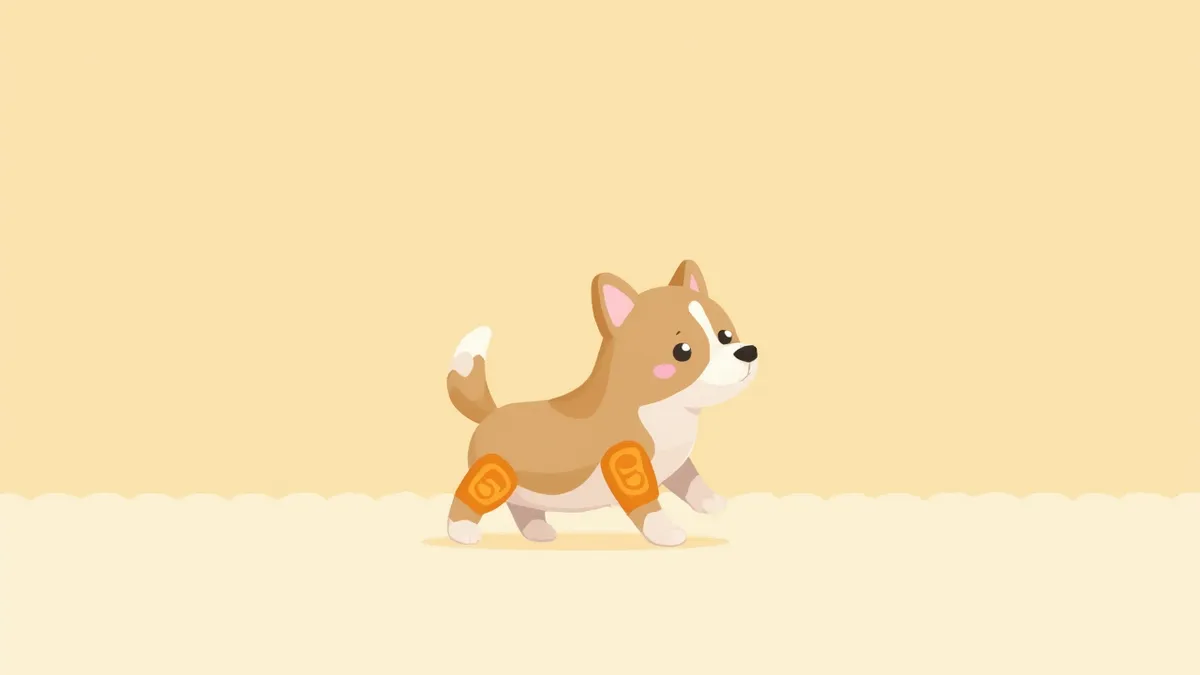
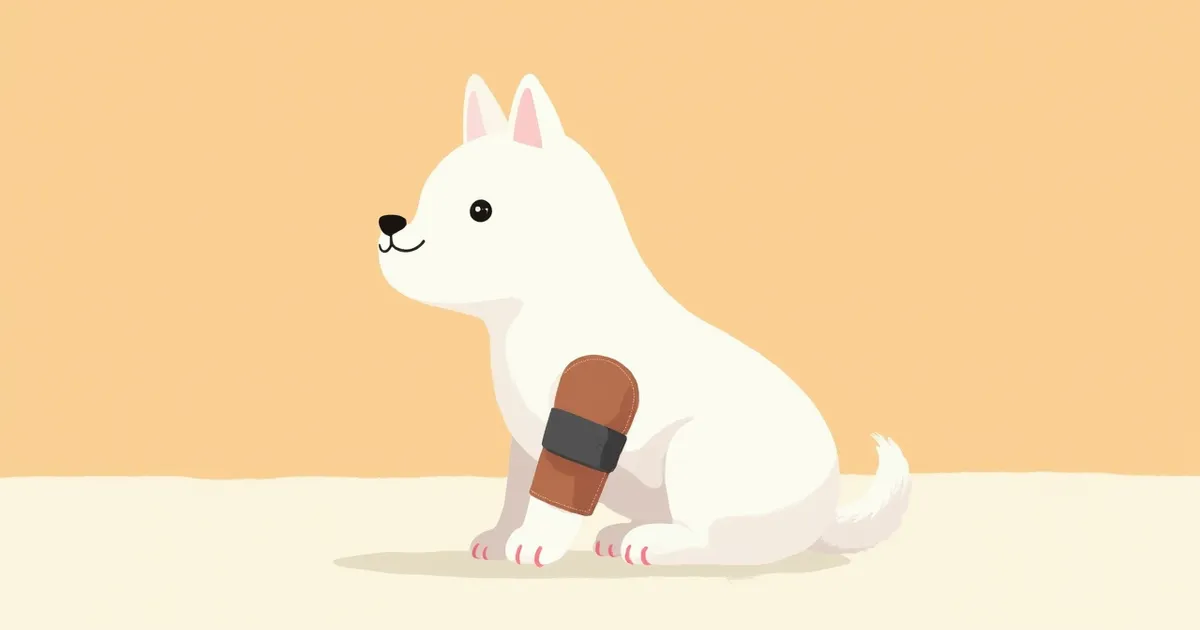
An illustration of a dog wearing a knee brace
When a dog is diagnosed with patellar luxation, many owners immediately start looking for knee braces. To be clear, a patellar brace is an auxiliary management tool. It cannot replace surgery, but it can help improve knee stability during walks or aid in post-operative rehabilitation. Veterinary textbooks explain that because patellar luxation is a structural issue, a brace alone cannot provide a definitive cure. You can find a guide to the symptoms of patellar luxation by stage at Patellar Luxation Symptom Guide.

When a Brace Is Helpful

During walks in Stages 1–2: The brace can be used to support and stabilize the knee, aiding mobility. However, veterinary textbooks do not provide direct clinical evidence that wearing a brace reduces the frequency of dislocations, so avoid overestimating its effectiveness.
While waiting for surgery: It can serve as an adjunctive measure to minimize excessive load on the joint until the scheduled surgery date.
Post-surgical rehabilitation: Consider using the brace for joint support during the typical 6- to 8-week recovery period, when activity is gradually increased. Always follow your veterinarian’s guidance regarding the timing and extent of resumed activity.
When surgery is not feasible: For older dogs or those at high anesthetic risk where surgery is difficult, the brace may be considered as part of conservative management.
Most importantly, always consult your veterinarian before using a brace. An ill-fitting brace can cause skin irritation or other issues at the site of application.

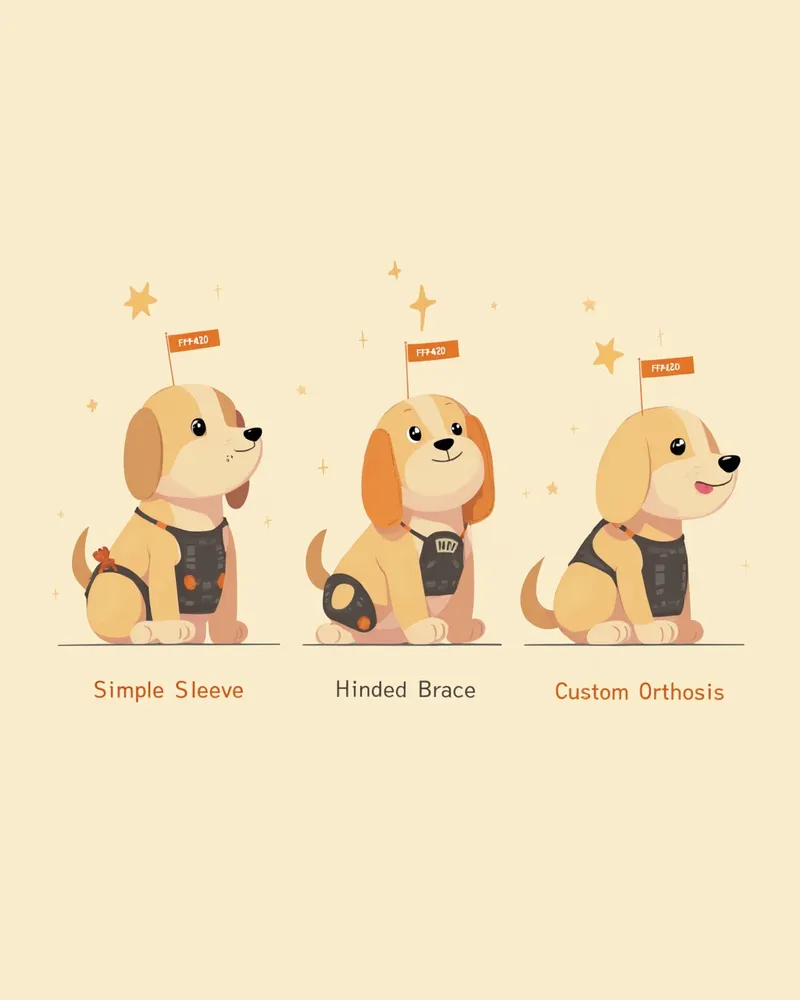
Neoprene Sleeve Type — For Light Management

This is a stretchy sleeve that wraps around the knee area, offering the simplest option for use. Since the clinical effect of "reducing swelling through light compression" is not directly confirmed in the provided veterinary textbooks, please consult your veterinarian to determine the appropriate purpose and expected benefits.
Suitable for: Supportive management of mild symptoms, knee support during light walks
Advantages: Lightweight and easy to wear, relatively affordable
Disadvantages: Limited support, making it less effective for moderate to severe dislocations

Hinged Brace Type — Moderate Support

The hinge mechanism on both sides restricts side-to-side knee movement while allowing forward and backward bending.
Suitable for: Stage 2 and above, post-surgical rehabilitation period
Advantages: Provides stronger support than a knee sleeve and helps maintain proper knee alignment
Disadvantages: Slightly complex to put on and requires precise sizing
Illustration comparing three types of dog protective gear

Custom Orthosis — Maximum Support

This is a custom-made brace for a dog’s leg, crafted at a specialized veterinary rehabilitation clinic. While it offers the most effective support, it comes with higher production costs and requires visits to a specialized clinic.
Suitable for: Cases where surgery is not possible, or when there is severe instability.
TypeSupport LevelConvenienceSuitable Stage
Neoprene SleeveLowHighStage 1, light walks
Hinged BraceMediumModerateStage 2, post-surgery rehabilitation
Custom BraceHighLowWhen surgery is not an option

Checklist for Proper Use

Measure the size accurately: Use a measuring tape to accurately measure your dog's knee circumference and select the appropriate size according to the product size guide. If it's too tight, it can hinder blood circulation; if it's too loose, it won't provide adequate support.
Wear only during walks and activities: Prolonged continuous wear can cause skin irritation. Remove it when resting indoors.
Check the wearing area daily: Inspect the area every day for redness, swelling, hair loss, or abrasions.
Don't rely solely on the brace: It's important to manage overall living conditions, including weight control, anti-slip measures, and appropriate exercise.
An illustration of a dog having its knee circumference measured.

For Stage 3 and Above, Consult About Surgery Before Relying on a Brace

If patellar luxation causes significant instability and gait abnormalities, a brace alone has its limits. The decision to proceed with surgery isn’t based solely on the grade of luxation, but also on clinical symptoms and the degree of discomfort in daily life. Therefore, before purchasing a brace, consult your veterinarian about whether surgery is necessary. A brace is an adjunct to surgery, not a substitute for it.

Reviewed by a veterinarian

Dr. Tony — Punnawat Phongkittirak

Dr. Tony — Punnawat Phongkittirak

Veterinarian

A veterinarian who majored in veterinary medicine at Khon Kaen University, Thailand, and completed the IVSA program at North Carolina State University in the United States. Drawing on clinical experience at animal hospitals, he works in the pet healthcare field and is dedicated to building a digital care environment that connects pet parents with veterinarians.

Frequently Asked Questions

Can wearing a brace avoid the need for surgery?
Braces cannot replace surgery. Patellar luxation often stems from structural issues, such as a shallow trochlear groove or abnormal positioning of the tibial tuberosity, meaning soft tissue treatments alone may be insufficient and structural correction might be necessary. The decision to proceed with surgery should be made in consultation with your veterinarian, taking into account not only the grade of luxation but also the clinical symptoms and the degree of discomfort affecting your pet’s daily life.
Should I keep the protective collar on while my pet is sleeping?
Please remove it when your pet is sleeping. Prolonged wear can lead to skin irritation or circulation issues. It should only be worn during walks or active periods.
Can I just buy any protective gear online?
Products that don’t fit properly or have an unsuitable design can actually do more harm than good. It’s best to get a recommendation from a veterinary rehabilitation specialist, or at the very least, take accurate measurements before purchasing.
My pet’s skin turned red after wearing the protective brace.
Stop using the product immediately. The size may not be right, or your pet could be having an allergic reaction to the material. Once the skin has healed, consult your veterinarian to choose a suitable alternative.

Share

Related Guides

References

[1] 100 Top Consultations in Small Animal General Practice — Conservative Management

[2] Textbook of Veterinary Orthopaedic Surgery — Chapter 12: Postoperative Rehabilitation

[3] Clinical Medicine of the Dog and Cat, 4th Ed — Patellar Luxation Management

This information is based on veterinary literature and does not replace diagnosis or treatment. Please consult a veterinarian for specific health concerns.

Metapet Co., Ltd. | CEO: Park Sung-yong | Business Reg. No. 417-88-02562 | Seoul, South Korea | Customer Center

Choosing a Knee Brace for Dogs: Types, Uses & Tips | Meongsiljang