Like
Share
멍실장
동반자(다른 펫) 잃은 후 슬픔, 남은 아이는 어떻게 케어해야 할까요?

Our Child Has Lost a Companion — How to Help the Remaining Pet Through Grief

Brain & CognitionQ&AMeongsiljang Veterinary Advisory Board

Pet grief refers to the behavioral and emotional changes that occur in a surviving pet after another companion animal passes away. These changes can manifest as decreased appetite, altered sleep patterns, and increased clinginess toward their owner, and typically resolve within 2 to 6 months.

The Remaining Pet Is Sad — This Is 'Pet Grief'
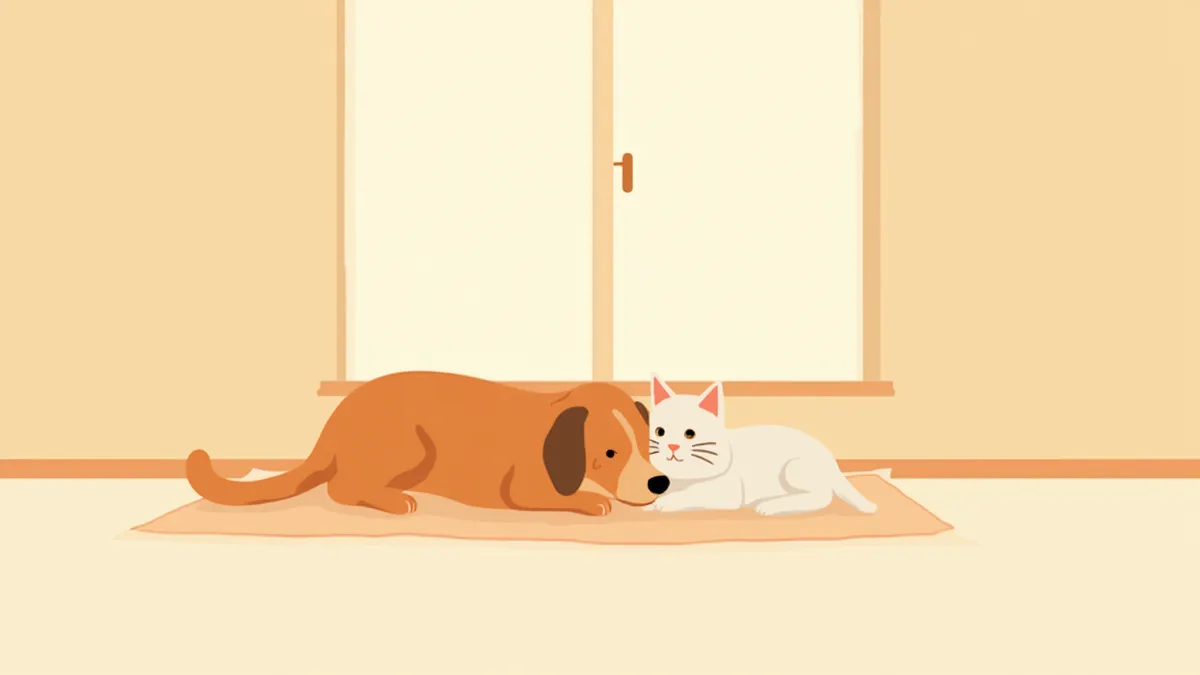
A dog and a cat lying together next to an empty pet bed.
Pet grief refers to the behavioral and emotional changes that occur in a surviving pet after a companion animal passes away. The most crucial aspect is recognizing these changes early. As reported in veterinary behavioral medicine, signs of stress and anxiety—such as a sudden decrease (or sometimes increase) in appetite, repeatedly seeking the deceased pet’s resting spot, disrupted sleep patterns, or becoming more clingy than usual toward their owner—may indicate a grief response if they persist for several days or more. While the recovery period varies greatly from pet to pet, consistent daily care and routine from the owner play a significant role in helping them regain stability.

Do Animals Really Feel 'Grief'?

Yes, this is a well-established fact in animal behavior science. Dogs and cats form attachments to their companions and caregivers, so they clearly recognize when a familiar presence disappears. While they may not grasp the concept of "death" as humans do, they can exhibit stress responses such as withdrawal, hiding, reduced playfulness, and changes in appetite when their attachment figure is gone. These reactions tend to be more pronounced if the animals grew up together from a young age, shared the same space for a long time, or if their bond with their caregiver—their "secure base"—is disrupted.

Pet Grief Signs Checklist

If several of the following signs persist for more than a few days, your pet may need care. The most important indicator is any noticeable change from their usual behavior. - Changes in appetite: Eating significantly less of their regular food, or conversely, suddenly eating more than usual. - Changes in sleep patterns: Sleeping more than usual, or conversely, frequently waking up and pacing around at night. - Changes in vocalization: Whining or groaning more often than usual, or a typically quiet pet suddenly crying out. - Fixation on specific locations: Continuously lingering near the sleeping area or food bowl of a pet that has passed away. - Attachment to the owner: Unable to stay alone and constantly following you around. - Refusal to play or be active: Showing no interest in favorite toys or walks, and appearing withdrawn.
A lonely cat sitting beside an empty food bowl

Normal Grief Response vs. When Veterinary Care Is Needed

ItemNormal grief responseCases requiring veterinary care
AppetiteSomewhat reduced but gradually recoveringComplete anorexia persists, refusing both water and food
DurationGradually improving over timeNo improvement, only worsening
WeightLittle to no changeNoticeable weight loss
ActivityTemporary lethargy, but walks and activity are still possibleOnly lying down completely, with no response
DefecationRemains normalAccompanied by diarrhea, constipation, or urinary abnormalities
Other symptomsNoneVomiting, labored breathing, pale gums, excessive aggression

The table criteria are for reference only; if the owner feels something is 'different from usual,' a veterinary consultation is recommended regardless of duration

5 Ways to Provide Grief Care at Home
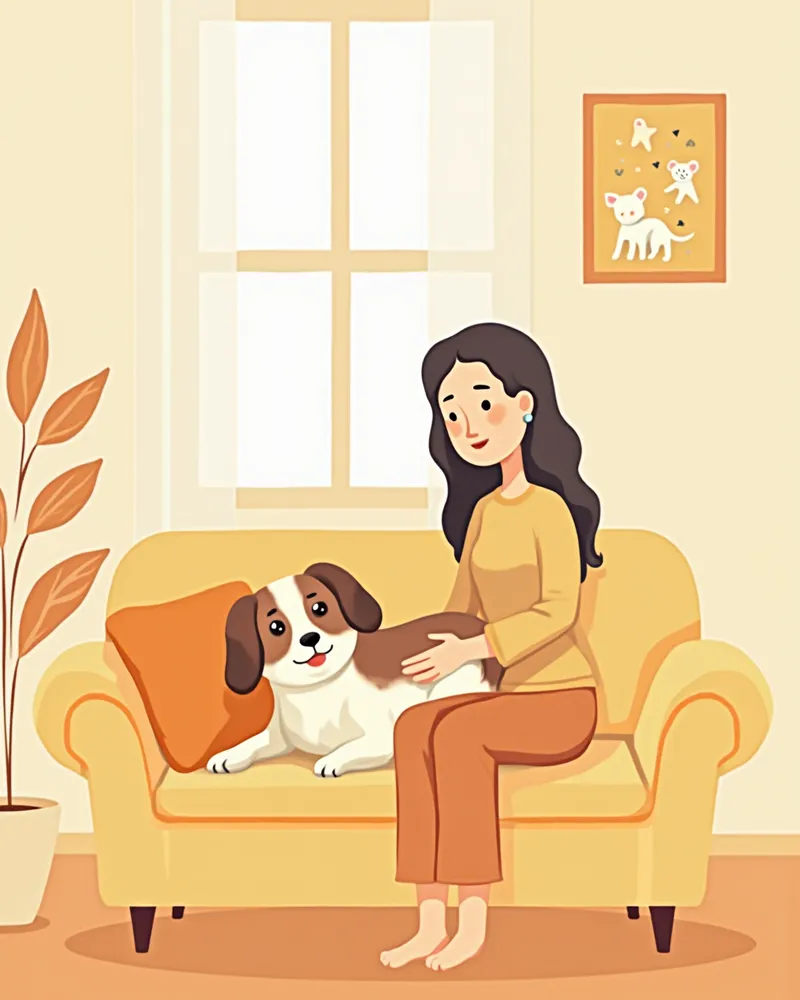
Here are practical ways to support the remaining pet’s recovery: - Maintain daily routines: Keep walk and meal times consistent with the usual schedule. Predictability provides a sense of security, acting like a “safe base” for your pet. - Introduce new stimuli: Redirect attention with new toys or unfamiliar walking routes. - Increase physical contact: Skin-to-skin interactions such as brushing, massage, and petting, along with play, help lower cortisol (the stress hormone) and reduce anxiety. - Handle the departed pet’s belongings: Do not remove them immediately. Wait until the remaining pet has stabilized, then gradually tidy up over time. - Caregivers should stay calm first: Pets pick up on human anxiety. Please take care of your own emotions as well.
A pet owner gently brushing their dog on the sofa

When to Go to the Vet Within 24 Hours

What might seem like a simple grief response could actually be a warning sign of something more serious. If your pet refuses all food and water for more than 48 hours, experiences repeated vomiting or diarrhea, shows rapid breathing, or has pale gums and tongue, or if you notice significant weight loss, these are not just signs of sadness—they may indicate an underlying medical condition. These symptoms could point to issues with the digestive, respiratory, or circulatory systems, so it’s important to have a veterinarian check for the cause. In particular, cats can deteriorate quickly if they go without food for too long, so if anorexia persists, seeking veterinary care promptly is crucial.

Will Introducing a New Pet Right Away Help?

Rushing into adoption can backfire. We recommend waiting until your remaining pet’s grief has settled before introducing a new companion. There are three main reasons for this: - Territorial stress: Introducing a new animal while your pet is still sensitive can worsen withdrawal, aggression, or marking (urine spraying). - Owner emotions: You may unconsciously compare the new pet to the one you lost, leading to unfair expectations. - Adjustment burden: Adding a new relationship during an already unstable period can increase stress for both animals. However, if your pet is naturally very social and struggles significantly with being alone, you might consider starting with short playdates.

Please Care for the Owner's Grief Too

To care for your remaining pet, you first need to stabilize yourself. Veterinary emergency and critical care textbooks treat pet loss grief as equivalent to the loss of a family member. If you experience insomnia or difficulty with daily activities for more than two weeks, we recommend seeking specialized counseling for pet loss, such as through a pet loss counseling center or a psychiatric clinic. There is no need to feel guilty for thinking, "Is this really happening because of an animal?" This is a natural response to losing a family member you have shared over ten years with.

How Long Will It Take? — Recovery Timeline

Recovery time varies greatly from one pet to another. Some may stabilize within a few days, while others may take several weeks or longer. Generally, the process follows this pattern: - Initial Phase: The strongest reactions occur. There are noticeable changes in appetite and sleep, and the pet may search for the spot where the departed companion used to be. - Adaptation Phase: Daily routines gradually return, but the pet may pause or hesitate at specific moments, such as mealtime or during walks. - Stabilization Phase: Most behaviors return to normal. However, energy levels may remain lower than usual for some time. If signs of severe withdrawal or depression persist, consult a veterinarian or a behavior specialist. Pets that lived together for a long time tend to require more time to adjust.
The sight of a puppy gradually regaining its energy over time

Reviewed by a veterinarian

Dr. Tony — Punnawat Phongkittirak

Dr. Tony — Punnawat Phongkittirak

Veterinarian

A veterinarian who majored in veterinary medicine at Khon Kaen University, Thailand, and completed the IVSA program at North Carolina State University in the United States. Drawing on clinical experience at animal hospitals, he works in the pet healthcare field and is dedicated to building a digital care environment that connects pet parents with veterinarians.

Frequently Asked Questions

I’ve heard it’s a good idea to show the body of a deceased pet to the surviving one. Is that true?
Some behaviorists believe that a "farewell" can help reduce confusion for the remaining pet, though there is no formal evidence to support this. If you're emotionally comfortable, you might consider allowing a brief moment for them to sniff each other, but it's not necessary.
Do cats show stronger signs of sadness than dogs?
Not necessarily. However, cats tend to mask stress and express it through withdrawal and hiding, which often leads owners to notice the signs later than they should. Additionally, a cat’s health can deteriorate rapidly if they go without food for too long, so a loss of appetite requires prompt attention.
Can I give a sedative to the remaining puppy?
Medication should only be administered under a veterinarian’s prescription. Never give your pet human tranquilizers, and even when medication is necessary, a behavior consultation should precede the prescription of veterinary-approved drugs. As a general rule, environmental management and establishing a stable routine should be attempted before resorting to medication.
Can DAP and pheromone products help?
Some pet owners try synthetic pheromone products like DAP (Dog Appeasing Pheromone) for dogs and Feliway for cats as a supplementary measure. However, since effectiveness can vary from pet to pet, it’s best to use these products alongside environmental and routine management, keeping a close eye on your pet’s response.
My dog keeps responding to his departed friend’s name. What should I do?
This is a natural reaction. There’s no need to avoid your pet’s name or switch to a different nickname. Instead, gently stroke them while calmly saying their name. Over time, this will help associate the word with a sense of security, gradually easing the intensity of your grief.

Share

Related Guides

References

[1] Small Animal Critical Care Medicine, 3rd Ed — Grief and Bereavement Chapter

[2] The Dog Care Handbook: Things I Wish My Vet Had Told Me — Little, 2024

[3] Archer J., Why do people love their pets? Evolution and Human Behavior 18:237-259, 1997

[4] Walker JK, McGrath N, Handel IG, et al., Does owning a companion animal influence the quality of life of grieving owners? Applied Animal Behaviour Science, 2016

This information is based on veterinary literature and does not replace diagnosis or treatment. Please consult a veterinarian for specific health concerns.

Metapet Co., Ltd. | CEO: Park Sung-yong | Business Reg. No. 417-88-02562 | Seoul, South Korea | Customer Center

Helping a Pet Grieve the Loss of an Animal Companion | Meongsiljang