Like
Share
멍실장
사료 전환 일정 (5-7-10일) 완벽 가이드

How Many Days for a Food Transition? Step-by-Step Ratios and Schedules for 5, 7, and 10 Days

DigestiveQ&AMeongsiljang Veterinary Advisory Board

A food transition schedule gradually mixes the old and new food over 5 to 10 days to help your dog or cat adjust. Choose a timeline based on your pet’s constitution and sensitivity.

What Is a Food Transition Schedule?
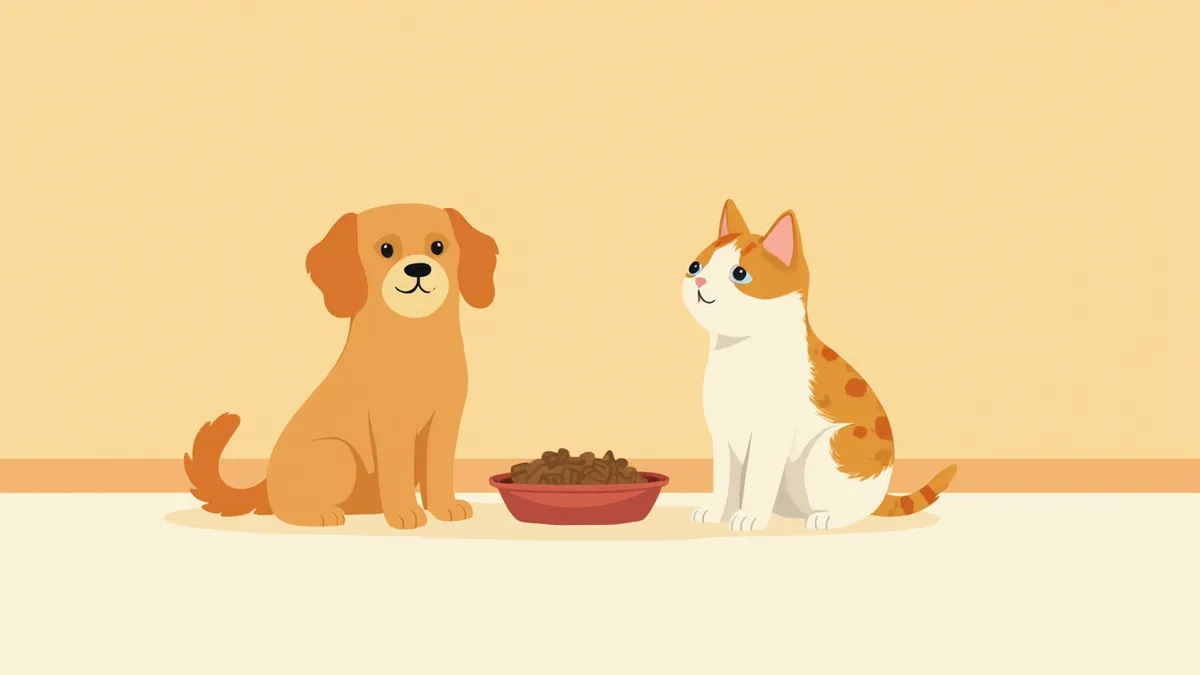
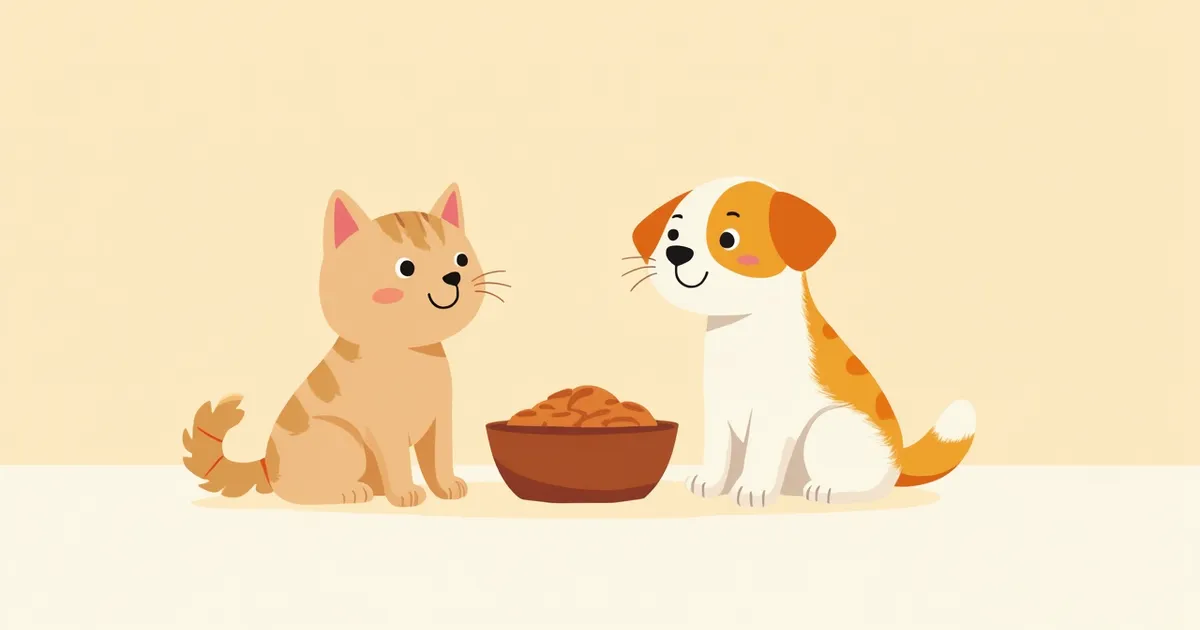
A puppy and a kitten sitting side by side with their new and old food bowls.
A food transition schedule is a feeding method that gradually changes the ratio of old to new food over several days to help your dog or cat adjust to the new diet. The most important factor is the pace. Switching to 100% new food all at once can overwhelm the digestive system, leading to diarrhea, vomiting, or loss of appetite. In small animal clinical nutrition, it is recommended to transition food gradually over about a week (approximately 7 days), which serves as the standard timeline for healthy adult dogs and cats. For puppies, senior pets, or those with sensitive stomachs, extend the transition to 10 days or more for a gentler adjustment. Conversely, if switching between foods with nearly identical protein sources and ingredients, the process can be completed more quickly, in about 5 days.

Why Should You Switch Gradually?

Your dog’s or cat’s stomach is already accustomed to the food they are currently eating. Switching to a new food too quickly can disrupt this adaptation, leading to gastrointestinal issues such as gas, soft stools, or vomiting. Therefore, small animal clinical nutrition guidelines recommend transitioning food gradually over about a week (approximately seven days), slowly adjusting the ratio of old to new food. The slower the transition, the more time the digestive system has to adapt, reducing the risk of upset. For puppies, kittens, senior pets, or those with sensitive stomachs, it is safer to extend the transition period even further.

5-Day, 7-Day, and 10-Day Transition Ratio Chart

Item5-Day Transition7-Day Transition10-Day Transition
Days 1-275% old + 25% new75% old + 25% new90% old + 10% new
Days 3-450% old + 50% new50% old + 50% new75% old + 25% new
Days 5-6100% new25% old + 75% new50% old + 50% new
Days 7-8100% new25% old + 75% new
Days 9-10100% new

The 7-day transition is the standard schedule following small-animal clinical nutrition recommendations to gradually change diets over about a week. The 5-day is a shortened schedule for use between diets with nearly identical ingredients, and the 10-day is a more gradual schedule for sensitive, young, or senior animals.

Which Transition Duration Should You Choose for Your Pet?
5-Day Transition: Suitable when switching only the flavor within the same brand or when the protein sources are similar.
7-Day Transition: The standard schedule for most healthy adult dogs and cats. Use this as the default when changing brands or main ingredients.
10-Day Transition: Recommended for puppies and kittens, seniors aged 7 and older, pets with a history of diarrhea or vomiting during previous transitions, or those with chronic conditions such as IBD, allergies, or kidney disease.
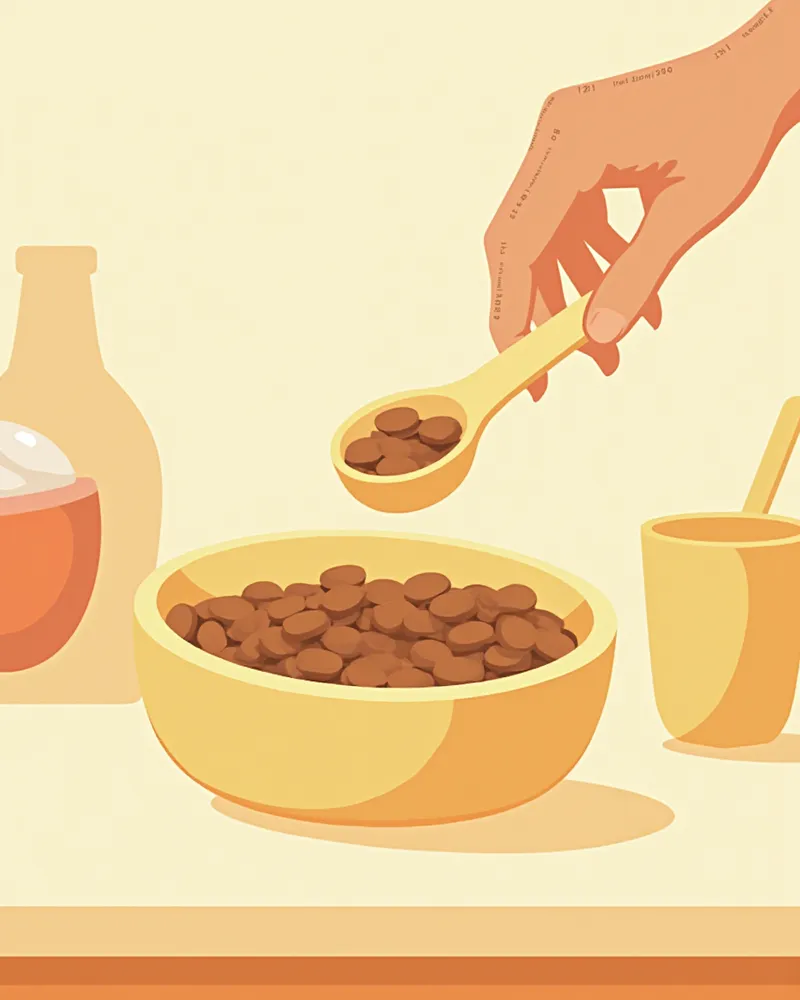
A hand carefully measuring and mixing the new food into the existing kibble.

Stop Immediately If You See These Signs During the Transition

If your pet experiences repeated vomiting for more than 24 hours, bloody or black stools, lethargy with complete loss of appetite, or severe itching and skin rashes during the transition, immediately revert to 100% of the original food and visit a veterinarian. While one or two episodes of soft stool are common, these symptoms may indicate a food allergy or another underlying condition.

Stool Condition Checklist During the Transition

Normal: Well-formed, brown stools with a typical odor → Continue as planned.
Slightly Soft: Stools retain shape but are softer than usual, occurring 1–2 times daily → Maintain the current feeding ratio for another 1–2 days.
Watery Diarrhea: Unformed stools with increased frequency → Revert to the previous feeding ratio and monitor for 3 days.
Blood or Mucus in Stool: Presence of red or black blood, or jelly-like mucus → Stop the transition and seek veterinary care.

Tips for Transitioning Picky Eaters and Pets with Small Appetites

If your dog strongly rejects the new food, increase the proportion in smaller 10% increments. Start with 90% of the current food and raise the new food by just 10% every two days. You can also help by adding a little warm water to enhance the aroma or by sprinkling some of the old food on top as a topper. However, we do not recommend mixing in treats or human food to encourage eating, as this can lead to diarrhea.
A dog sniffing its food after a little warm water has been added.

Prioritize Your Veterinarian’s Instructions When Switching to Prescription Diets

Prescription diets for kidney disease, low-fat formulas, and hydrolyzed protein foods for allergies may require different transition schedules. Depending on the condition, your pet might need to switch to the new food immediately at 100%, or conversely, transition gradually over two to three weeks. Always follow the specific schedule and ratios prescribed by your veterinarian, and avoid mechanically applying standard food transition guidelines.

Reviewed by a veterinarian

Dr. Tony — Punnawat Phongkittirak

Dr. Tony — Punnawat Phongkittirak

Veterinarian

A veterinarian who majored in veterinary medicine at Khon Kaen University, Thailand, and completed the IVSA program at North Carolina State University in the United States. Drawing on clinical experience at animal hospitals, he works in the pet healthcare field and is dedicated to building a digital care environment that connects pet parents with veterinarians.

Frequently Asked Questions

My current bag of food is all gone. Can I switch to the new food right away?
If possible, it’s safest to gradually transition over 5–7 days by mixing in a small amount of the old food from the same brand and with similar ingredients. If you must switch immediately, feed only 50–70% of your pet’s usual daily amount, split into two or three meals, and closely monitor their stool.
Can I give treats during the transition period?
During the transition period (5–10 days), minimize treats as much as possible to avoid complicating the identification of any adverse reactions. If treats are absolutely necessary, offer only a small amount of one familiar treat your pet is already used to.
Do cats also switch to the same schedule as dogs?
The basic principle for cats is the same as for dogs: gradually transition their food over about a week (around seven days). Many cats adapt easily even when switching between different forms, such as from wet to dry food, but sudden changes can cause gastrointestinal upset, so it’s safest to proceed step by step. If your cat had digestive issues during a previous transition, extend the schedule to ten days or more.
What should I do if my pet’s stool is still soft after completing the transition?
The new food may not suit your pet’s constitution. If soft stools persist even after maintaining 100% new food for seven days, revert to the original food, choose a different brand, or consult your veterinarian. Allergy or food sensitivity testing may be necessary.
Should the 10-day schedule also be changed for puppies and kittens?
Yes, during the growth phase, a dog's digestive system is more sensitive, so we recommend a 10-day transition period. Especially right after adoption, it's best to maintain the previous food for at least two weeks, and once the dog has adjusted to its new environment, you can begin the transition.

Share

Related Guides

References

[1] Fascetti AJ, Delaney SJ. Applied Veterinary Clinical Nutrition, 2nd Ed — Commercial and Home-Prepared Diets

[2] Ettinger SJ, Feldman EC. Textbook of Veterinary Internal Medicine, 8th Ed — Diseases of the Small Intestine

[3] Hand MS et al., Small Animal Clinical Nutrition, 5th Ed — Feeding Plan Transition

This information is based on veterinary literature and does not replace diagnosis or treatment. Please consult a veterinarian for specific health concerns.

Metapet Co., Ltd. | CEO: Park Sung-yong | Business Reg. No. 417-88-02562 | Seoul, South Korea | Customer Center

How Many Days for a Food Transition? 5, 7 & 10-Day Plans | Meongsiljang