Like
Share
멍실장
고양이 수직 공간 만들기 — 캣타워·선반 배치 완벽 가이드

Creating Vertical Spaces for Cats — The Ultimate Guide to Cat Tree and Shelf Placement

Liver HealthQ&AMeongsiljang Veterinary Advisory Board

We’ve put together a comprehensive guide covering the definition of vertical spaces for cats, why they’re essential, how to arrange cat trees, shelves, and window hammocks to optimize movement flow, and key safety inspection points.

What Are Feline Vertical Spaces?
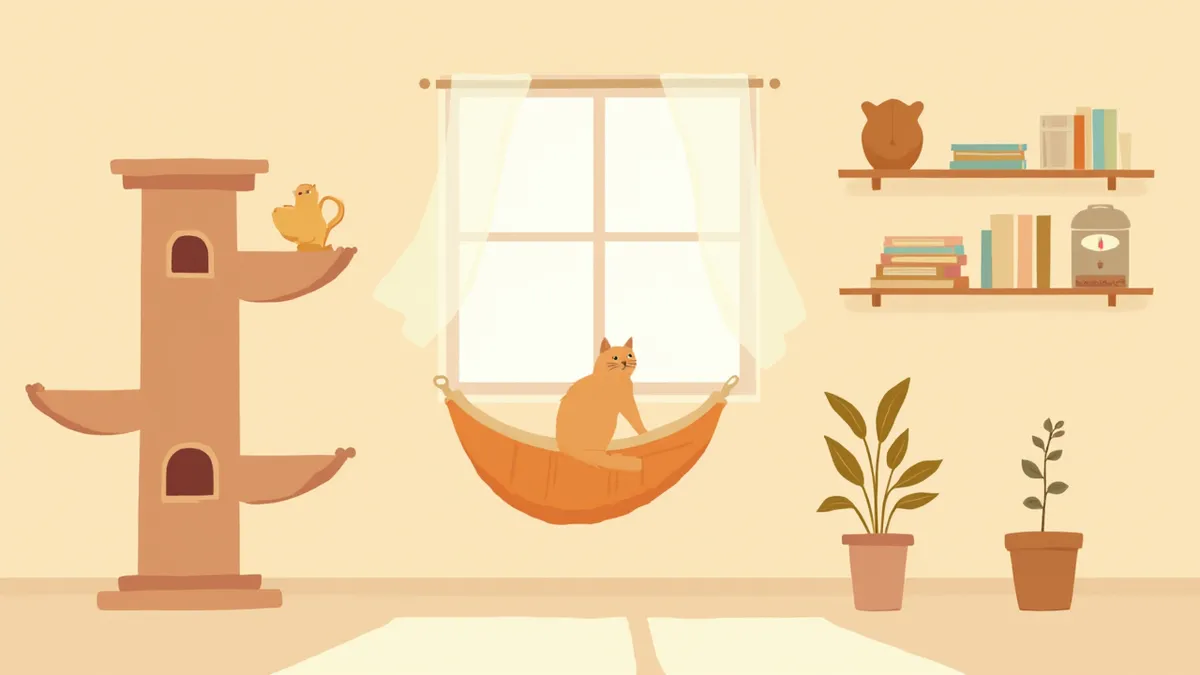
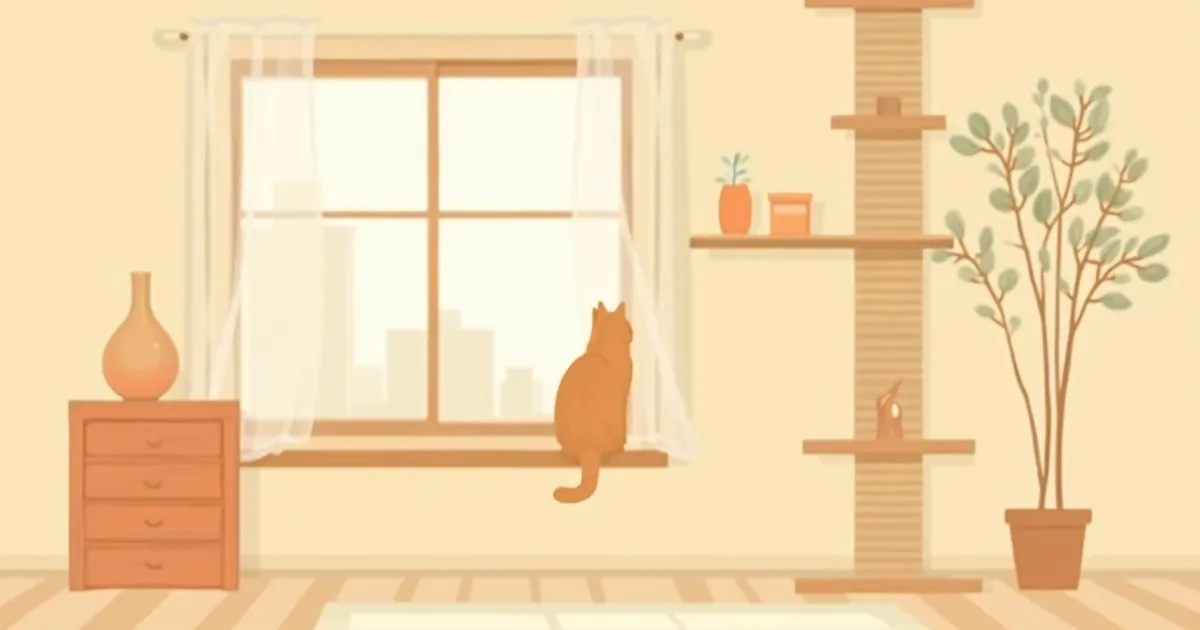
An indoor cat environment where cat towers, wall shelves, and window hammocks are connected along the cat's natural movement paths.
Feline vertical spaces are indoor environments designed to let cats climb and move freely at different heights, using items like cat trees, wall shelves, and window hammocks. The key point is not the height itself, but how these spaces connect to form continuous routes. When paths flow seamlessly from the floor to mid-level spots (such as sofas or cat poles) and up to high areas (like wall shelves or catwalks), cats can independently choose where to hide, observe, or rest. Veterinary textbooks emphasize that providing appropriate environmental resources is essential for the mental, emotional, and physical well-being of indoor cats. Specifically, they highlight five core principles: ① providing places where cats feel safe; ② separating resources like scratching posts and resting spots and placing them in desired locations; ③ installing cat trees, perches, and shelves to expand the usable space through climbing and resting; ④ offering opportunities for instinctive behaviors such as play and hunting; and ⑤ maintaining consistent, positive interactions with people. Vertical spaces are considered a crucial tool for achieving two of these goals: providing safe havens and ensuring the separated placement of various resources.

Why Do Cats Need Height?

Cats are natural predators with an instinctive preference for high places, where they can observe their surroundings and avoid threats. Even indoors, climbing to elevated spots triggers a behavioral cycle of improved visibility → sense of security → reduced stress. Veterinary textbooks explain that when cats lack sufficient spaces where they feel safe, environmental stress increases. Without a place to retreat from stimuli such as other pets, children, or vacuum cleaners, anxiety rises. If these stress signals are ignored, they can escalate over time into more serious behavioral issues or health problems. Conversely, reducing stress lowers the risk of disease and supports overall physical health. The tendency to seek out high places like countertops and shelves, or to hide, can also be a sign of environmental stress. Therefore, vertical space is not merely a play structure but a fundamental requirement for behavioral welfare.

Signs Your Home Lacks Sufficient Vertical Space
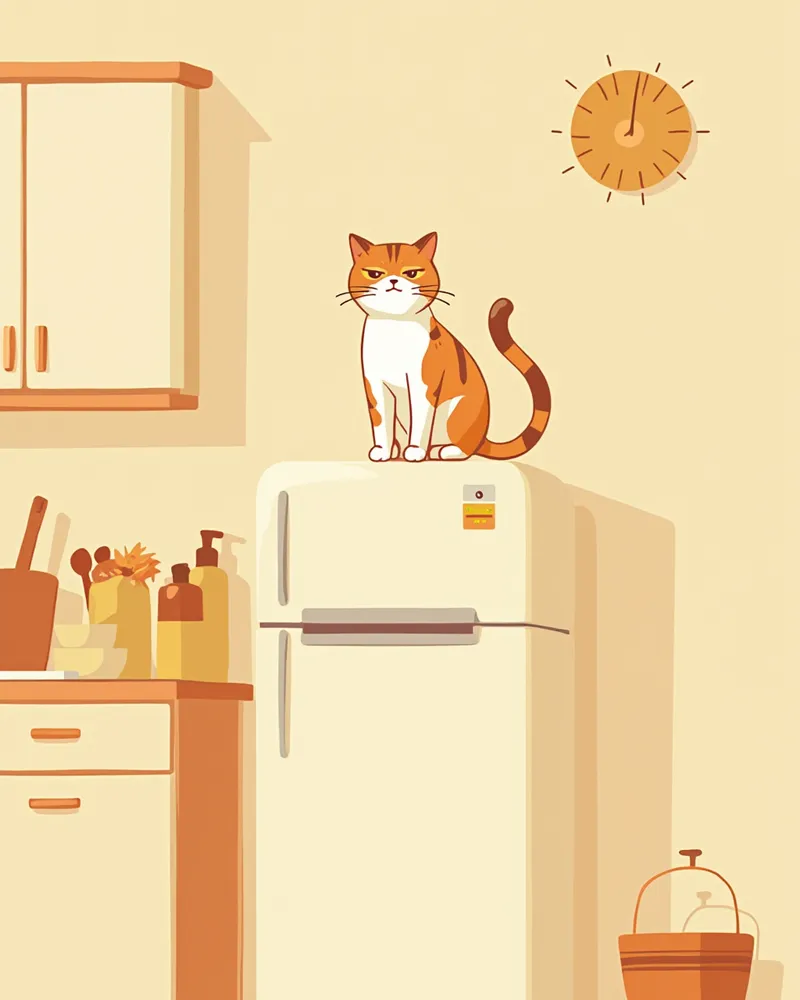
If you notice two or more of the following signs, your cat likely lacks sufficient vertical space. Take a moment to check: - Frequently crouching near windows: This indicates a desire to observe the outdoors, but no suitable perch is available. - Repeatedly jumping onto refrigerators or bookshelves: In the absence of designated elevated areas, your cat is creating its own high spots. - Hiding or becoming aggressive when seeing other pets: This suggests a lack of vertical escape routes to avoid conflict. - Spending most of the day in floor corners: This may indicate reduced motivation to explore its territory. - Showing tension near the litter box or food bowl: Open space above can cause anxiety in these areas.
A cat perched on top of the refrigerator, looking down as if keeping a watchful eye on what’s below.

Comparison of Vertical Space Components

ItemCat towerWall shelves (cat walk)Window hammock
Installation difficultyEasy (assembly)Hard (anchor drilling)Easy (suction/hook)
Maximum height150–200cmCan reach the ceilingWindowsill height
MobilityPosition can be changedFixedPosition can be changed
Suitability for rentalsVery suitableNot suitable (drilling required)Very suitable
Recommended situationBeginner/top choiceMulti-cat households, long-term residenceCats that like watching outside the window

Rather than using just one, we recommend combining two or more types to connect the pathways without breaks.

Designing Movement Flow for Each Space
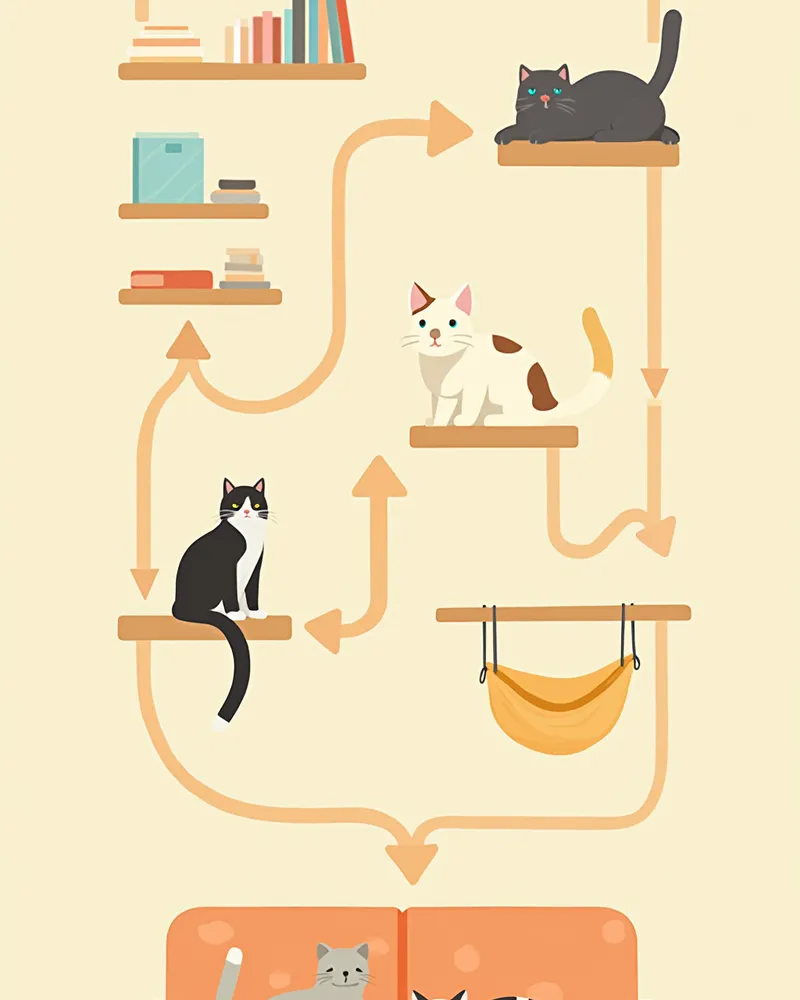
The core principle is that your cat should be able to reach the highest point from the floor in three steps or fewer. - Step 1 — Starting Point: Furniture your cat already frequents, such as sofas, TV stands, or low drawers. - Step 2 — Intermediate Platform: A mid-level perch on a cat tree or a wall shelf spaced at a distance your cat can navigate comfortably. - Step 3 — Top Destination: One of the following: a catwalk near the ceiling, a designated spot on top of the refrigerator, or a window hammock. Jump distances vary depending on your cat’s age, body size, and joint health, so adjust the setup to suit your individual cat. For senior or overweight cats, which are more vulnerable than healthy adults, it is advisable to add closer, stair-like intermediate platforms to reduce strain on their joints. If you suspect joint issues or notice your cat hesitating to jump, consult your veterinarian to determine the appropriate height intervals.
A diagram illustrating a cat’s movement route from the sofa to a cat tower, wall shelves, and a window hammock.

Safety Points to Check Before Installation

Poorly designed vertical spaces can lead to falls and joint injuries. Be sure to check the following items before installation: - Secure wall shelves directly to concrete or wooden studs, not just drywall anchors, ensuring they are strong enough to support your cat’s weight and the impact of jumping. - Space shelves at intervals that allow your cat to climb up and down safely, tailored to their size and mobility so the gaps are neither too narrow nor too wide. - Design the highest level as a secure, enclosed space that connects to the wall or ceiling, providing a safe endpoint. - Place rugs or mats on the floor to cushion the impact in case of a fall. - For cats aged 7 and older, or those with heart or joint conditions, consult your veterinarian and consider designing the setup at a lower height.

Why It’s Especially Important in Multi-Cat Homes
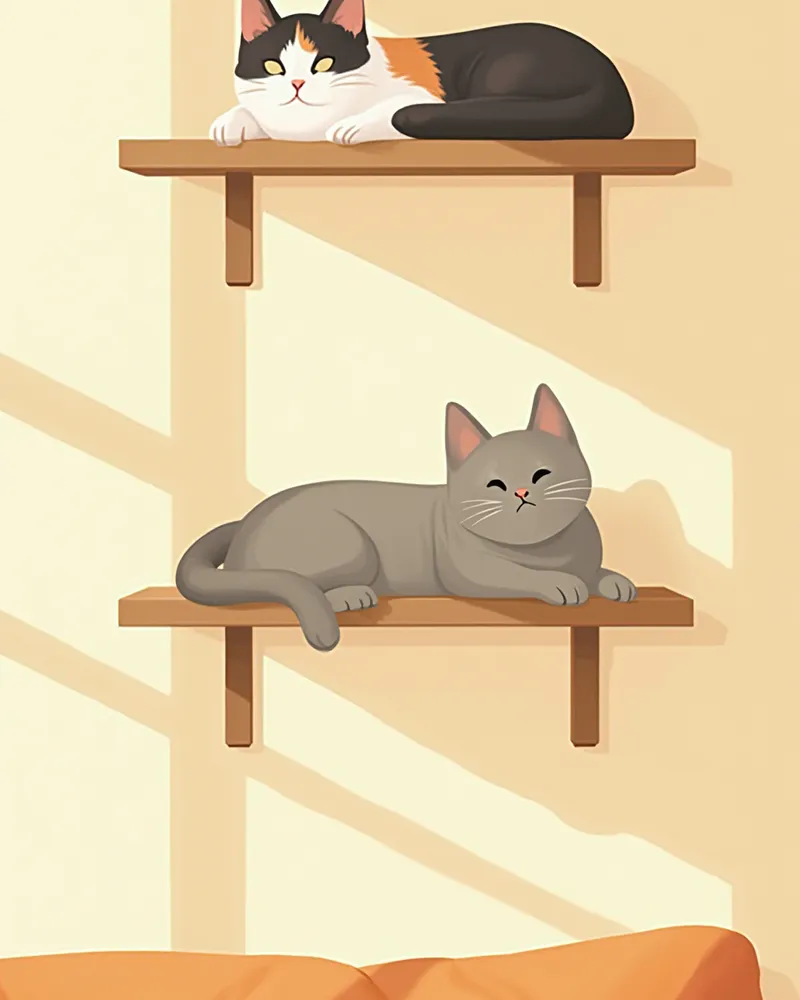
In homes with two or more cats, vertical space is not a luxury—it’s a necessity. When cats are forced to share the same floor level, territorial conflicts often arise. But when each cat has its own perch at a different height, they can comfortably share the same room by dividing it into “vertical layers.” The rule is simple: - Provide at least one more elevated perch than the number of cats (e.g., three perches for two cats). - Arrange food bowls and litter boxes so their vertical pathways do not overlap. - Give the highest perch priority to the most vulnerable cat (such as a new arrival or senior cat) to reduce hierarchy-related stress.
Two cats resting comfortably on wall shelves at different heights

Step-by-Step Introduction Order by Budget

You don’t need to buy everything at once. By adding items step by step in the order below, you can start with a budget of under $70. - Step 1 ($40 to $70): One medium cat tree + one window hammock. Place them by the living room window. - Step 2 (+$70): Add a cat pole (ceiling support rod) to extend the route to the ceiling. - Step 3 (+$100): Install 3–4 wall shelves to create a “catwalk.” - Step 4: Place tunnels and hideaway beds on the floor level to complete a vertical + horizontal enriched environment. The key is to have at least one elevated perch with a view of the outdoors. Simply observing the outside world provides ample environmental enrichment indoors.

Consult Your Veterinarian First in These Cases

Cats diagnosed with arthritis, hypertrophic cardiomyopathy, or vision impairment are at a higher risk of injury when jumping from heights. Since cats aged seven and older are in a life stage where joint function commonly declines, if you notice your cat climbing stairs slowly or hesitating before jumping, you should consider lowering the height of vertical spaces or replacing them with ramps. For cats with heart disease, sudden jumps can place strain on the heart, so be sure to consult your veterinarian before making any changes to your furniture layout.

Reviewed by a veterinarian

Dr. Tony — Punnawat Phongkittirak

Dr. Tony — Punnawat Phongkittirak

Veterinarian

A veterinarian who majored in veterinary medicine at Khon Kaen University, Thailand, and completed the IVSA program at North Carolina State University in the United States. Drawing on clinical experience at animal hospitals, he works in the pet healthcare field and is dedicated to building a digital care environment that connects pet parents with veterinarians.

Frequently Asked Questions

Can you create vertical space even in a small studio apartment?
Actually, vertical space is even more crucial in smaller homes. Even if the floor area is limited, you still have the walls and ceiling to work with. With just one cat pole (ceiling-mounted support) and two or three wall shelves, you can create a well-designed, functional layout in one corner of the living room.
Is it okay if the cat tower wobbles?
It’s not safe. Wobbliness is the top reason cats avoid using a perch, and over time it can lead to falls and injuries. Opt for a product with a wide, heavy base, or switch to a ceiling-mounted cat pole.
How do you prevent slipping on shelves?
Cutting and attaching carpet tiles or silicone non-slip mats is usually sufficient. Smooth hardwood or MDF floors can be slippery when your pet lands from a jump, so it’s essential to treat the surface. Wrapping the base with Sisal rope, which helps catch the claws, is also a great option.
Your cat isn’t using the vertical space you’ve set up for them. Why might that be?
The location is likely the issue. Cats tend to avoid spots that are in high-traffic areas, near noisy appliances like washing machines, or directly in the path of air conditioning or heating vents. Try moving it to a quiet corner where your cat can see outside or keep an eye on the family.
I’m renting a place where I can’t drill holes in the walls. Are there any alternatives?
I recommend combining a ceiling-mounted cat pole with a portable cat tower. The ceiling-to-floor tension-mount design requires no drilling, so you can easily take it with you when moving. Suction-cup window hammocks are also a great option, as they attach directly to windows without any drilling.

Share

Related Guides

References

[1] Rodan I, Heath S, Feline Behavioral Health and Welfare, Elsevier, 2016

[2] Ellis SLH et al., AAFP and ISFM Feline Environmental Needs Guidelines, Journal of Feline Medicine and Surgery, 2013

[3] Turner DC, Bateson P, The Domestic Cat: The Biology of its Behaviour, 3rd ed, Cambridge University Press, 2014

This information is based on veterinary literature and does not replace diagnosis or treatment. Please consult a veterinarian for specific health concerns.

Metapet Co., Ltd. | CEO: Park Sung-yong | Business Reg. No. 417-88-02562 | Seoul, South Korea | Customer Center

Vertical Space for Cats: Cat Tree & Shelf Placement | Meongsiljang