

Puppy Dental Structure (Number of Deciduous and Permanent Teeth)
Puppies have 28 deciduous teeth and 42 permanent teeth. Here’s a clear overview of their development stages and structure.
How Are Puppy Teeth Structured?

Composition of 28 Deciduous (Baby) Teeth
Deciduous vs. Permanent Teeth: At-a-Glance Comparison
| Item | Deciduous teeth (baby teeth) | Permanent teeth |
|---|---|---|
| Total count | 28 | 42 |
| Incisors (front teeth) | 12 | 12 |
| Canines (fangs) | 4 | 4 |
| Premolars | 12 | 16 |
| Molars | None | 10 |
| Eruption period | 3–12 weeks of age | 3–7 months of age |
Based on the combined total of upper and lower jaws.
Composition and Location of 42 Permanent Teeth
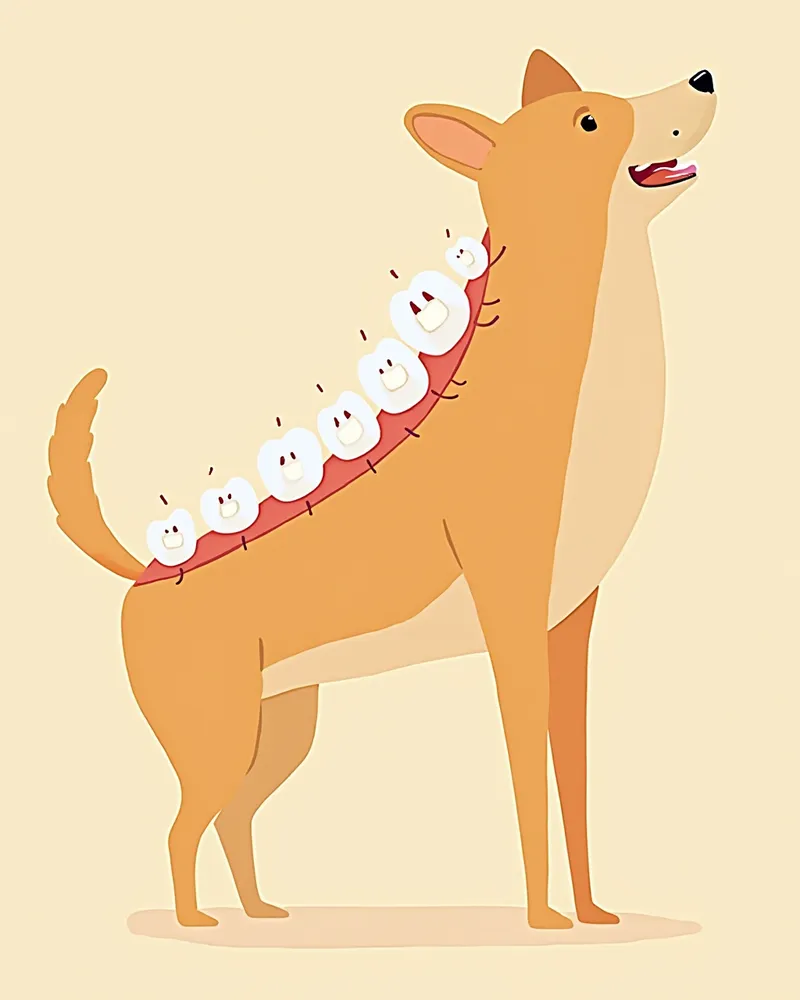
Checklist of Roles by Tooth Type
Retained Deciduous Teeth Require Immediate Attention
If a baby tooth remains in place even as the permanent tooth begins to erupt, it is called a retained deciduous tooth. Veterinary textbooks define a retained deciduous tooth as one that persists after the permanent tooth has started to emerge, so you don’t need to wait until your puppy is seven months old to check for this condition. Leaving it untreated can lead to misaligned teeth and food trapping between the two teeth, which may cause gum inflammation and periodontal disease to progress rapidly, even at a young age. Additionally, because retained baby teeth have thin, weak roots, problems can worsen if they are left in place, so it is recommended to have them extracted as soon as the permanent teeth begin to erupt. Dental issues are more commonly reported in small-breed dogs, so be sure to consult your veterinarian about whether extraction is necessary during the six- to seven-month wellness checkup.
Teething Period and Care Guidelines for Owners

When to Start Dental Care
Dental Care Is More Important for Small-Breed Dogs
Small-breed dogs have the same 42 permanent teeth as larger breeds, but their smaller jaws cause the teeth to crowd together, leading to overlapping teeth and food impaction. Veterinary textbooks consistently report that dental diseases are more common in small-breed dogs and senior pets, making proactive oral care from an early age especially important. For small breeds such as Toy Poodles, Yorkshire Terriers, Chihuahuas, Maltese, and Pomeranians, daily tooth brushing combined with regular veterinary dental check-ups from puppyhood is essential for preventing periodontal disease and maintaining lifelong health.
Reviewed by a veterinarian

Dr. Tony — Punnawat Phongkittirak
VeterinarianA veterinarian who majored in veterinary medicine at Khon Kaen University, Thailand, and completed the IVSA program at North Carolina State University in the United States. Drawing on clinical experience at animal hospitals, he works in the pet healthcare field and is dedicated to building a digital care environment that connects pet parents with veterinarians.
Reviewed 2026-04-19
Frequently Asked Questions
How many permanent teeth do dogs have in total?
When does teething start and when does it end?
My puppy’s baby teeth aren’t falling out. Is it okay to leave them?
Can dogs get cavities?
Will the tooth grow back after it falls out?
Share
Related Guides

7 Best Cat Dental Chews for Tartar Prevention Recommended by Veterinarians and Selection Criteria

Top 5 Recommended Dental Treats for Dogs in 2026 — VOHC Certification Criteria

7 Criteria for Choosing Dog Tartar Prevention Dental Chews Recommended by Veterinarians

Can Dogs with Heart Disease Get Dental Scaling? — Anesthesia Risks and Pre-procedure Tests

My Dog’s Heart Is Beating Too Slowly — Signs of Bradycardia, AV Block, and Syncope
Fluid in a Dog’s Abdomen — Cardiac Ascites and Abdominocentesis, When to Visit the Vet

Inflammation in Our Cat’s Heart? — Causes of Myocarditis and Emergency Signs You Must Not Miss

What is Canine Uveitis? — Can It Lead to Red Eyes and Blindness?

My Dog’s Pupils Are Different Sizes — Is This a Dangerous Warning Sign?

What Is Corneal Pigmentation in Dogs? — Causes of Dark Film on the Eyes and Management
References
[1] Wiggs RB, Lobprise HB, Veterinary Dentistry: Principles and Practice, 2nd Ed, 2019
[2] Verstraete FJM, Lommer MJ, Oral and Maxillofacial Surgery in Dogs and Cats, 2nd Ed, 2020
[3] Niemiec BA, Veterinary Periodontology, Wiley-Blackwell, 2013