Like
Share
멍실장
강아지 재활 물리치료 총정리 — 보호자가 알아야 할 핵심

Canine Rehabilitation Physical Therapy: A Complete Guide for Pet Owners

JointQ&AMeongsiljang Veterinary Advisory Board

We’ve compiled evidence-based veterinary information on the types, indications, duration, costs, and home care methods for canine rehabilitation physical therapy. Learn how to help your dog recover more quickly after surgery.

What Is Canine Rehabilitation Physical Therapy?
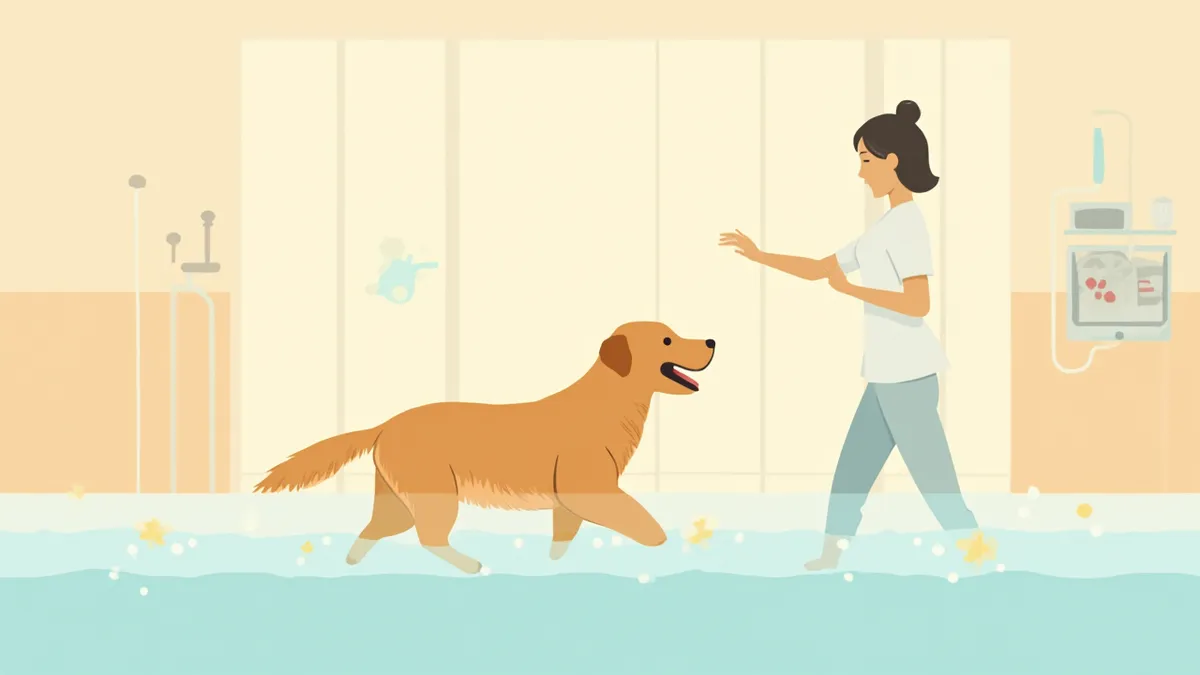
A dog undergoing rehabilitation therapy on an underwater treadmill with a veterinary therapist
Canine rehabilitation physical therapy is a specialized treatment process designed to restore weakened muscle and joint function after surgery, injury, or illness. The most important thing to understand is that a successful surgery does not mean recovery is complete. If muscles atrophy and joints stiffen, the benefits of the surgery can be significantly reduced. This therapy is especially recommended for dogs recovering from patellar luxation, cranial cruciate ligament rupture, or disc surgery, as well as those with chronic arthritis.

When Is Rehabilitation Therapy Needed?

After patellar luxation surgery: To prevent recurrence, it’s essential to stabilize the corrected joint and strengthen the surrounding muscles.
After cranial cruciate ligament surgery (tibial wedge osteotomy or TTA): Because prolonged non-weight-bearing leads to muscle atrophy, rehabilitation is crucial.
Spinal and disc diseases: Rehabilitation plays a key role in nerve recovery and retraining gait.
Chronic arthritis: Consistent exercise and physical therapy help relieve pain and maintain muscle strength.
After fracture surgery: It’s important to restore mobility to stiffened joints and rebuild weakened muscles during the immobilization period.

Overview of Main Rehabilitation Therapy Types

Underwater Treadmill: The buoyancy of water reduces stress on the joints while helping to build muscle strength. This therapy is most commonly used for arthritis and post-surgical recovery.
Low-Power Laser (Photobiomodulation): This treatment uses light to reduce inflammation at the cellular level and support tissue healing.
Massage and Passive Range-of-Motion Exercises: These techniques improve blood circulation and help relieve muscle stiffness.
Cold and Heat Therapy: Cold compresses are typically used during the acute phase, while heat therapy is applied during the recovery phase.
Land-Based Therapeutic Exercises: These include activities such as balance pad training, walking on inclines, and navigating poles to restore muscle strength and balance.
A veterinary rehabilitation room equipped with canine rehabilitation therapy equipment

Underwater Therapy — Building Muscle Without Joint Stress

Thanks to the buoyancy of water, underwater treadmills reduce the weight-bearing stress on joints, allowing dogs who struggle to walk on land to comfortably practice normal gait patterns in the water. Veterinary textbooks highlight that water-based exercises, such as swimming, are beneficial for dogs with arthritis because they place minimal direct impact on the joints. However, since small animal physical therapy is still an evolving field, the duration of each session and the weekly frequency are individually determined and adjusted by the supervising rehabilitation veterinarian based on the dog’s specific condition. Compared to swimming, underwater treadmill exercise offers the advantage of more precise gait training, as the dog’s paws remain in contact with the ground.

What Is Low-Power Laser Therapy (Photobiomodulation)?
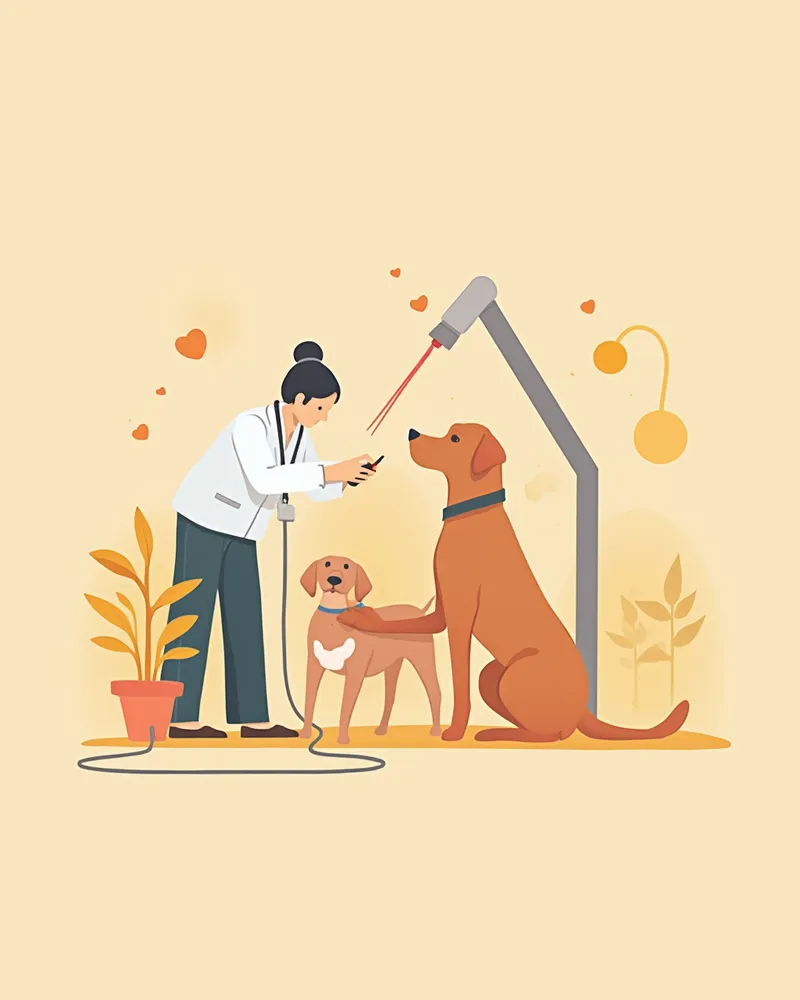
Low-level laser therapy uses light of a specific wavelength to reduce inflammatory substances within cells and increase blood flow, thereby aiding tissue recovery. It is painless and non-invasive, placing minimal stress on dogs. Preliminary research cited in veterinary orthopedic textbooks indicates that dogs receiving low-level laser therapy alongside disc surgery (unilateral hemilaminectomy) began walking again sooner than those that did not receive the therapy (Draper et al., 2012). Although further validation is needed as this remains preliminary research, it is widely used as an adjunctive treatment for managing pain associated with arthritis and post-surgical recovery.
A veterinarian performing low-level laser therapy on a puppy’s hind leg

Important Checks Before Starting Rehabilitation Therapy

Do not begin underwater therapy until the surgical incision has fully healed. Wait for your attending veterinarian to explicitly clear your pet for rehabilitation, then refer them to a certified veterinary rehabilitation specialist or therapist. Attempting to stretch or exercise your pet on your own can cause the incision to reopen or lead to further joint injury.

Rehabilitation Duration and Costs

The duration of rehabilitation varies significantly depending on the type and severity of the condition, as well as when treatment begins. As veterinary textbooks emphasize, recovery is a gradual process with variable outcomes, so it often extends over several weeks to months rather than concluding quickly. Your rehabilitation veterinarian will provide a more precise timeline based on your dog’s specific condition. While costs vary by clinic, a single session on an underwater treadmill typically ranges from $20 to $60, and a single laser therapy session from $10 to $40. If these costs are a concern, ask your veterinarian for home rehabilitation training—there are many exercises you can perform with your dog at home.

Home Care Methods for Pet Owners

Passive range-of-motion exercises: After learning the proper technique from your veterinarian, gently bend and extend each joint two to three times daily.
Non-slip mats: Slippery floors can cause further joint injury during rehabilitation. Place mats or rugs on the floor to provide traction.
Maintain an ideal body weight: Even a small weight gain increases stress on the joints. Dietary management is essential during rehabilitation.
Adjust walking intensity: Do not overexert your pet by increasing exercise just because they seem to be walking well one day. Following your rehabilitation veterinarian’s guidance is key.
A pet owner performing passive range-of-motion exercises on their dog’s leg joints at home

Reviewed by a veterinarian

Dr. Tony — Punnawat Phongkittirak

Dr. Tony — Punnawat Phongkittirak

Veterinarian

A veterinarian who majored in veterinary medicine at Khon Kaen University, Thailand, and completed the IVSA program at North Carolina State University in the United States. Drawing on clinical experience at animal hospitals, he works in the pet healthcare field and is dedicated to building a digital care environment that connects pet parents with veterinarians.

Frequently Asked Questions

Is rehabilitation therapy available at all veterinary clinics?
No, rehabilitation therapy can only be provided at facilities equipped with specialized equipment and staffed by veterinarians and therapists who have received specific training in this field. You’ll need to seek out a clinic that specializes in veterinary rehabilitation or animal physical therapy. The best approach is to ask your surgical hospital for a referral to a rehabilitation-specialized clinic.
When should I start rehabilitation after surgery?
The timing depends on the type of surgery and your pet’s recovery progress. Veterinary textbooks recommend starting rehabilitation as soon as the patient is stable, as this helps reduce muscle atrophy. However, the condition of the incision site and your veterinarian’s professional judgment are paramount, so please don’t begin any exercises on your own. Be sure to ask your surgeon specifically when it’s safe to start rehabilitation.
What should I do if my dog is afraid of the underwater treadmill?
Many dogs are initially afraid of water. Rehabilitation therapists help them adapt through positive reinforcement with treats and gradual exposure, sometimes starting with just dipping their paws in the water. Most dogs gradually become comfortable after a few repetitions.
Does laser therapy have no side effects?
When used correctly, it has very few side effects. However, since direct exposure to the laser can damage the eyes, both the dog and the therapist wear protective eyewear during treatment. As a general rule, it should not be used on areas with tumors or in pregnant dogs.
Can rehabilitation therapy lead to a complete recovery?
The outcome depends on the type and severity of the condition, as well as when treatment begins. According to veterinary textbooks, recovery can range from complete to partial, and in some cases, recovery may be difficult. It is a process that takes time. For example, in cases of disc disease, the prognosis is generally favorable if pain sensation remains, but it becomes more guarded if deep pain sensation is lost. It is advisable to discuss realistic recovery goals with a rehabilitation veterinarian in advance.

Share

Related Guides

References

[1] Marcellin-Little DJ. Medical Treatment of Coxofemoral Joint Disease. Vet Clin North Am Small Anim Pract. 2009;39(5):1063–1079.

[2] Draper WE, Schubert TA, Clemmons RM, Miles SA. Low-level laser therapy reduces time to ambulation in dogs after hemilaminectomy: a preliminary study. J Small Anim Pract. 2012;53:465–469.

[3] Riegel RJ, Godbold JC (eds). Laser Therapy in Veterinary Medicine: Photobiomodulation. J Wiley & Sons, Ames, Iowa. 2017.

[4] Millis DL. Physical rehabilitation: improving the outcome in dogs with orthopedic problems. DVM360. 2005.

[5] Textbook of Veterinary Orthopaedic Surgery. Chapter 15: Physiotherapy and Rehabilitation of Orthopedic Patients. pp. 449–472.

This information is based on veterinary literature and does not replace diagnosis or treatment. Please consult a veterinarian for specific health concerns.

Metapet Co., Ltd. | CEO: Park Sung-yong | Business Reg. No. 417-88-02562 | Seoul, South Korea | Customer Center

Dog Rehabilitation Physical Therapy: Complete Owner's Guide | Meongsiljang