Like
Share
멍실장
강아지 치석 예방과 양치 방법

Dog Tartar Prevention and Brushing Methods

Oral HealthQ&AMeongsiljang Veterinary Advisory Board

Dog tartar forms when plaque hardens, and once it’s there, brushing alone won’t remove it. The most effective way to prevent tartar buildup is daily brushing to eliminate plaque while it’s still in its soft stage.

Dog Tartar: Brushing Is the Most Effective Prevention

An illustration of a dog showing off healthy teeth alongside a toothbrush
The most effective way to prevent tartar buildup in dogs is daily tooth brushing. Tartar forms when plaque—a bacterial film that accumulates on the tooth surface—combines with minerals from breath, saliva, and the plaque itself, primarily calcium carbonate and calcium phosphate, hardening into a stone-like deposit. According to veterinary dental textbooks, plaque first forms a thin film on the teeth, allowing bacteria to adhere, colonize, and mature. If left untreated, this plaque binds with minerals and hardens into tartar. Tartar can develop both above and below the gumline, and its rough, hard surface provides an ideal site for further plaque accumulation. Once tartar has formed, it cannot be removed by brushing alone and requires professional scaling at a veterinary clinic. Therefore, the key is to brush daily while the buildup is still in the plaque stage, before it hardens into tartar.

How Tartar Forms in Stages

Tartar doesn't appear overnight; it develops in stages.
Stage 1 — Plaque Formation: After eating, a bacterial film (plaque) forms on the tooth surface. Although it's not easily visible, it begins to form within a few hours after a meal.
Stage 2 — Conversion to Tartar: Plaque hardens as it binds with calcium and phosphorus in saliva. Once this stage is reached, it cannot be removed by brushing alone.
Stage 3 — Progression of Gum Disease: When tartar penetrates below the gumline, it causes gum inflammation. In severe cases, the underlying bone may deteriorate, leading to loose or lost teeth.

Tartar Prevention Methods: Which Are Effective?

While brushing is the most effective method, there are several other preventive measures available, though their efficacy varies.
Prevention MethodEffectivenessStandalone UseKey Features
Brushing★★★★★YesThe most reliable method for removing plaque
Dental Chews★★★☆☆SupplementaryPartially removes plaque through chewing action
Water Additives★★☆☆☆SupplementaryHelps inhibit bacterial growth
Dental Food★★☆☆☆SupplementaryMechanically removes plaque through kibble texture

How to Brush Your Dog’s Teeth

Most dogs will resist if you try to put a toothbrush in their mouth right away. It’s important to approach the process step by step.
Step 1 — Practice Touching the Mouth: Gently touch the area around your dog’s mouth and gums with your fingers during regular interactions. Pairing this with treats helps create a positive association.
Step 2 — Finger Brushing: Apply a small amount of pet-specific toothpaste to your finger and gently rub your dog’s teeth and gums. Using a finger brush can make this step more comfortable.
Step 3 — Introducing the Toothbrush: Once your dog is comfortable, switch to a pet toothbrush. Hold the brush at a 45-degree angle to the gumline and use small circular motions. Cleaning just the outer surfaces of the teeth is still highly effective.
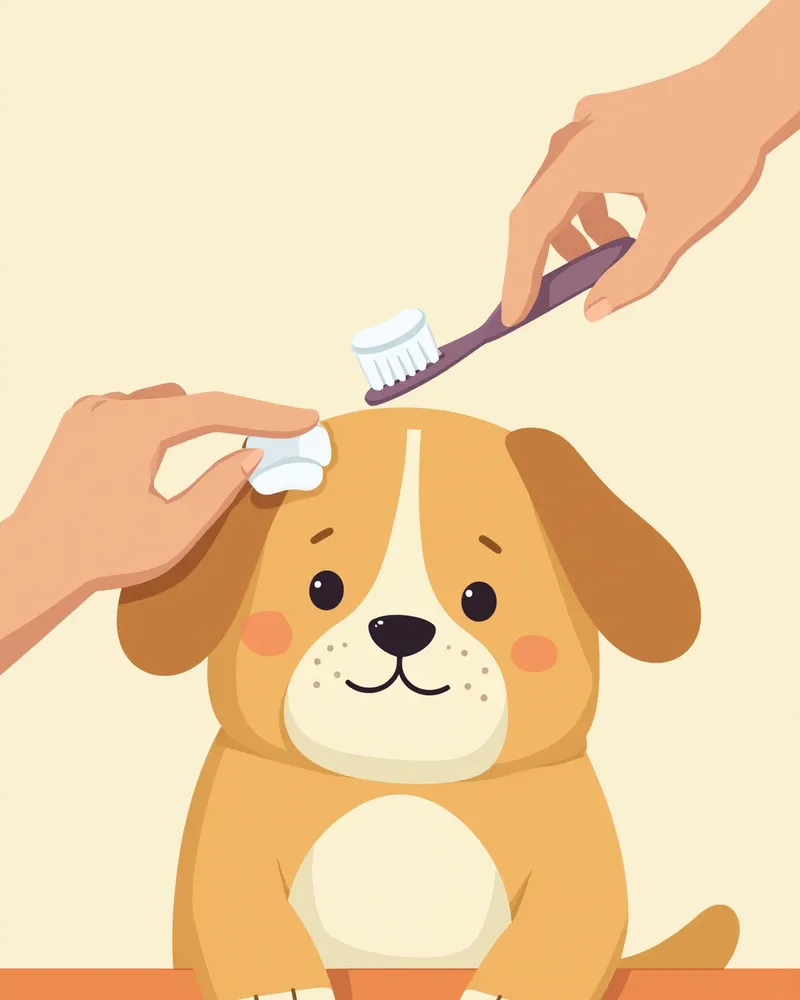
An illustration of a dog having its teeth brushed by its owner

Essential Rules to Follow When Brushing

Never use human toothpaste. It contains ingredients that can be harmful to dogs. Since dogs can’t spit out toothpaste like humans do and will swallow it, always use a toothpaste specifically formulated for pets. Additionally, forcing brushing can cause your dog to resist having their mouth touched altogether, so if your pet shows reluctance, don’t push it—instead, help them adjust gradually and patiently.

How to Get a Dog That Dislikes Brushing to Adapt

Every dog is different when it comes to getting used to brushing, so the most important thing is to stay patient and avoid rushing the process.
Start with a tasty toothpaste: Pet-specific toothpastes come in flavors dogs love, such as chicken or beef. Letting your dog taste the toothpaste first helps create a positive association.
Keep it short at first: Begin by brushing just two or three front teeth for a brief period. Gradually increase both the duration and the number of teeth brushed each day.
Praise and rewards: Always end the session with praise and a treat. The key is to help your dog remember that brushing equals something good.
Same time, same place: Doing it at the same time and in the same spot every day helps establish a consistent routine.
An illustration of a curious puppy sniffing its special toothpaste.

Supplementary Prevention Methods Beyond Brushing

While brushing is the most effective method, combining it with these supplementary tools yields even better results.
Dental chews: The chewing action physically removes plaque from tooth surfaces. Look for products bearing the Veterinary Oral Health Council seal of approval.
Water additives: These oral rinses are added to drinking water to help inhibit bacterial growth. They serve as a helpful supplement for dogs that strongly resist brushing.
Dental toys: Chewing on toys with textured surfaces helps remove some plaque. However, be cautious with overly hard toys, as they can cause tooth fractures.

What to Do If Tartar Has Already Formed
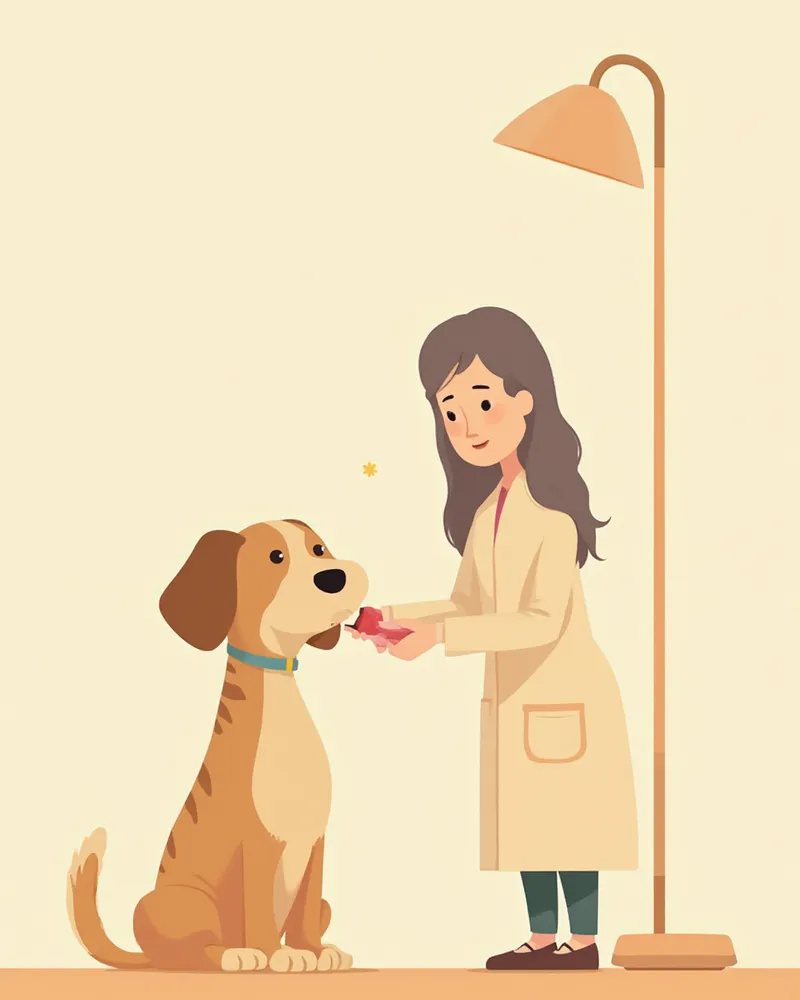
Once tartar has formed, it cannot be removed by brushing or dental chews alone. Professional scaling under general anesthesia at a veterinary clinic is required. According to veterinary dentistry textbooks, scaling involves removing tartar with an ultrasonic scaler and then polishing the tooth surfaces to make them smooth. Polishing is essential to slow down the rate at which new tartar accumulates. For more information on tartar removal, please refer to Tartar Removal Methods and Care Guide. If you’d like to learn more about the scaling procedure, check out Scaling Process and Precautions.
Illustration of a puppy receiving a dental checkup at a veterinary clinic

Reviewed by a veterinarian

Dr. Tony — Punnawat Phongkittirak

Dr. Tony — Punnawat Phongkittirak

Veterinarian

A veterinarian who majored in veterinary medicine at Khon Kaen University, Thailand, and completed the IVSA program at North Carolina State University in the United States. Drawing on clinical experience at animal hospitals, he works in the pet healthcare field and is dedicated to building a digital care environment that connects pet parents with veterinarians.

Frequently Asked Questions

How many times a day should you brush your dog's teeth?
Once a day is ideal. Veterinary guidelines strongly recommend daily home oral care, including brushing, as it is the most effective way to prevent plaque from hardening into tartar. Even if daily brushing isn’t feasible, consistency and frequency are key—brush as often as you can.
When should I start brushing my puppy’s teeth?
It’s a good idea to start practicing gentle touch around your pet’s mouth and gums with your fingers from an early age. Get them accustomed to oral contact during the puppy or kitten stage, and begin brushing their teeth with a toothbrush as their permanent teeth come in. The earlier you start, the easier it will be for them to adapt.
Is it safe to remove tartar without anesthesia?
Non-anesthetized scaling only removes visible tartar and cannot address tartar beneath the gumline. From a veterinary standpoint, this is an incomplete procedure, and there is a risk of injury to the gums or teeth if the dog moves during the process. Please consult with your veterinarian before making a decision.
Can I use a human toothbrush for my dog?
Human toothbrushes are not designed for dogs’ oral anatomy and can injure their gums, so it’s best to use a toothbrush made specifically for pets or a finger brush. While small-breed dogs can generally use infant toothbrushes as an alternative, pet-specific products are safer.
If the tartar buildup is severe, does the tooth need to be extracted?
If tartar is left untreated for too long, it can lead to the resorption of the jawbone and cause the teeth to become loose. In such cases, your veterinarian may recommend tooth extraction. Early dental scaling can help prevent the need for extractions, so don’t delay treatment if you notice tartar buildup.

Share

Related Guides

References

[1] The Dog Care Handbook, Things I Wish My Vet Had Told Me — Dental Disease and Dental Scaling sections

[2] 100 Top Consultations in Small Animal General Practice — Chapter 36: Dental Disease (Calculus, Gingivitis and Periodontal Disease)

[3] Small Animal Dental, Oral and Maxillofacial Disease — A Colour Handbook, Dental Home Care chapter

This information is based on veterinary literature and does not replace diagnosis or treatment. Please consult a veterinarian for specific health concerns.

Metapet Co., Ltd. | CEO: Park Sung-yong | Business Reg. No. 417-88-02562 | Seoul, South Korea | Customer Center

Dog Tartar Prevention and Proper Brushing Methods | Meongsiljang