Like
Share
멍실장
강아지 만성 기침 감별 진단 자주 묻는 질문 Q&A — 보호자가 꼭 알아야 할 핵심

Dog Chronic Cough Differential Diagnosis FAQ — Key Points Pet Owners Must Know

RespiratoryQ&AMeongsiljang Veterinary Advisory Board

If your dog coughs repeatedly for an extended period, it could indicate not only an infection but also serious conditions such as bronchiectasis or tracheal collapse. Here’s a summary of the key points for differential diagnosis that pet owners should know.

A Dog's Chronic Cough May Not Be an Infection

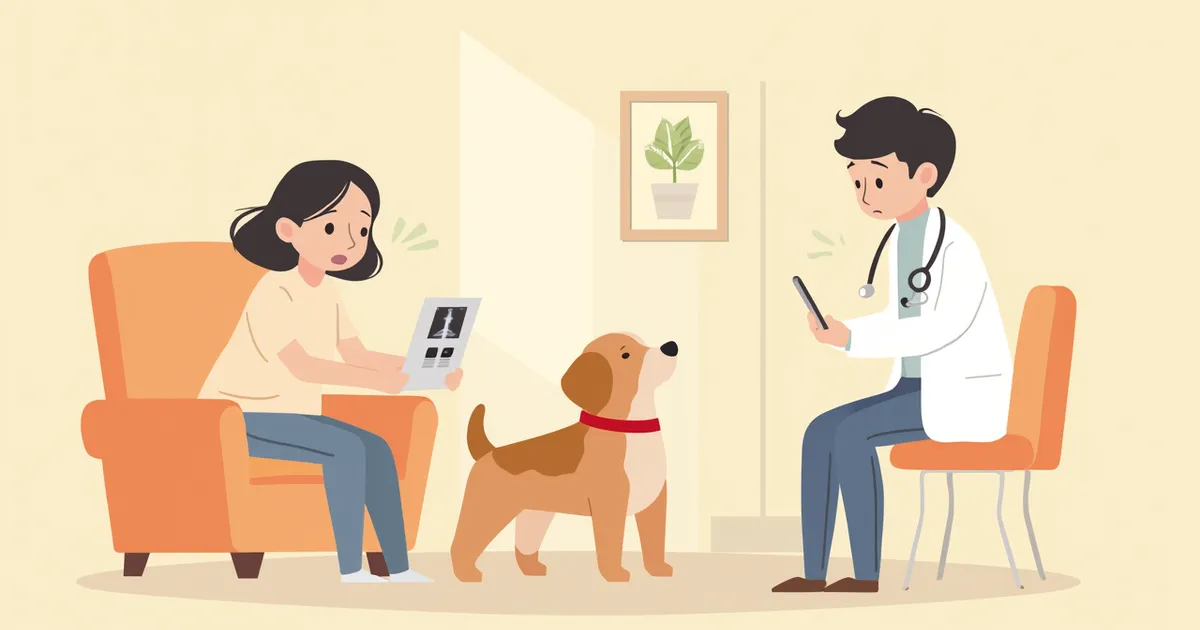
A small dog suffering from chronic coughing, during a veterinary examination
If your dog’s cough lasts for more than two weeks, it may be caused by something other than an infection, so a veterinary diagnosis is necessary. Coughing can result from various conditions beyond infections, including tracheal collapse, bronchiectasis, and heart disease, and the duration and characteristics of the cough are key clues in determining the underlying cause. In particular, small-breed dogs are prone to tracheal collapse, a condition in which weakened tracheal cartilage causes the airway to collapse during breathing, often worsening with exercise, excitement, or the use of a collar. If the cough persists, it is essential to consult your veterinarian for an accurate differential diagnosis.

What Tests Are Needed to Identify the Cause of Coughing?

To accurately identify the cause of coughing, veterinarians perform multiple diagnostic tests in parallel. - Thoracic radiographs (X-rays): This foundational test for evaluating coughing allows simultaneous assessment of the lung parenchyma, major airways, and heart size. - Tracheal endoscopy (bronchoscopy): This procedure directly visualizes the internal structures of the trachea and bronchi, serving as the gold standard for evaluating airway anatomy. - Respiratory phase imaging: Using thoracic radiographs or CT scans, veterinarians assess whether the trachea narrows during inhalation and exhalation to evaluate the dynamic changes associated with tracheal collapse. - Cardiac function tests: These are essential to rule out cardiac-related coughing. Since the appropriate tests depend on the dog’s body type and clinical signs, please consult your veterinarian to determine the best course of action.
A veterinarian performing a tracheal endoscopy on a small dog

What Are the Characteristics of Tracheal Collapse?

Tracheal collapse is a condition in which weakened tracheal cartilage causes the airway to narrow during breathing. It is a progressive, degenerative disease most commonly seen in middle-aged and older small and toy breed dogs. - Cough characteristics: A persistent dry cough that worsens with activity or excitement, often accompanied by a "goose-neck" posture as the dog stretches its neck. - Aggravating factors: Coughing intensifies with exercise, excitement, or when wearing a neck collar. - Respiratory issues: In severe cases, dogs may experience labored breathing or even collapse after coughing fits. - Diagnosis: Imaging tests such as tracheal endoscopy, chest X-rays, or CT scans can reveal airway narrowing during the breathing cycle. Early detection is key to effective management, so please visit a veterinary clinic immediately if symptoms persist.
A Yorkshire Terrier showing symptoms of tracheal collapse

What Must Be Done If Coughing Persists for a Long Time?

If your pet’s cough lasts more than two weeks, be sure to consult a veterinarian. It may not be an infection, and delayed treatment can cause the condition to worsen. - Keep a detailed record: Accurately note the frequency, time of day, and triggers (such as exercise or wearing a collar) of the cough, and share this information with your veterinarian. - Diagnosis-based treatment: These symptom records are essential for differential diagnosis and directly aid in developing an effective treatment plan. - Early intervention is key: Early detection and appropriate treatment can significantly improve your pet’s quality of life. - Watch for emergencies: If your pet collapses or their mouth turns blue after coughing, seek veterinary care immediately.
A notebook where the owner records the puppy's coughing patterns

Comparison Table of Cough Characteristics by Cause

ItemInfectious coughTracheal collapseBronchial dilationCardiac cough
Main causeKennel cough, virusWeakened tracheal cartilageWeakened bronchial wallReduced heart function
Cough characteristicsPersistent, cough ends after coughingWorsens with exercise or a neck collarSevere cough, vomiting after coughingSevere cough, shortness of breath, collapse after coughing
Main symptomsFever, nasal dischargeNeck extension, difficulty breathingVomiting after coughing, weight lossShortness of breath, fatigue, abdominal distension

To accurately identify the cause of the cough, a veterinary diagnosis is needed.

Visit the Vet Immediately If Coughing Is Severe and Accompanied by Difficulty Breathing

Severe coughing, difficulty breathing, bluish discoloration of the mouth, or collapsing after coughing are emergency situations. These could be signs of tracheal collapse or heart problems. Immediate veterinary care is necessary to receive emergency treatment.

Key Checkpoints for Differential Diagnosis of Cough Causes
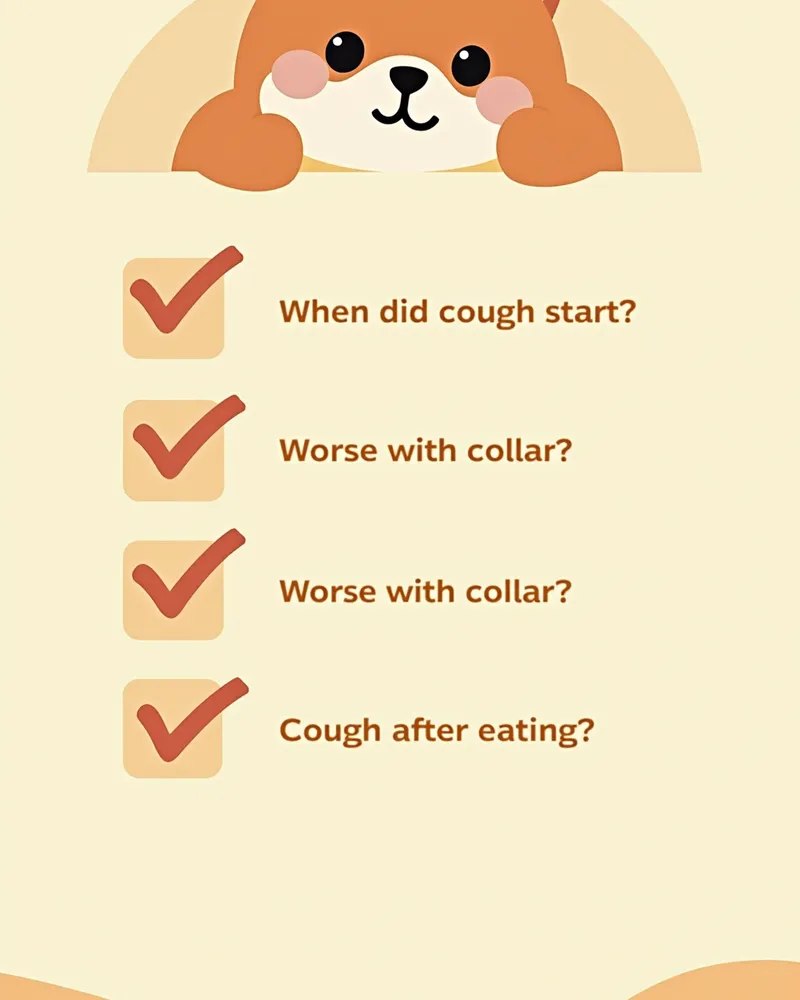
To help your veterinarian pinpoint the cause of the cough, please record and share the following details as accurately as possible: - Onset: Note when the coughing first began. - Aggravating factors: Observe whether the cough worsens during exercise, when wearing a collar, or during excitement. - Post-cough reactions: Watch for vomiting or collapsing after coughing episodes. - Timing patterns: Record whether the cough is more severe in the morning or at night, or if it occurs at consistent times of day. - Importance of documentation: This information is essential for differential diagnosis and plays a key role in establishing an accurate diagnosis and treatment plan.
Checklist for Differentiating Coughs

Reviewed by a veterinarian

Dr. Tony — Punnawat Phongkittirak

Dr. Tony — Punnawat Phongkittirak

Veterinarian

A veterinarian who majored in veterinary medicine at Khon Kaen University, Thailand, and completed the IVSA program at North Carolina State University in the United States. Drawing on clinical experience at animal hospitals, he works in the pet healthcare field and is dedicated to building a digital care environment that connects pet parents with veterinarians.

Frequently Asked Questions

Should I take my pet to the vet if the cough lasts for just one week?
If a cough lasts for more than two weeks, it’s important to consider causes other than infection. If severe coughing or difficulty breathing occurs, even for just a week, immediate veterinary care is necessary.
Can tracheal collapse be treated?
Tracheal collapse is difficult to cure completely, but symptoms can be managed through medication, switching to a harness instead of a neck collar, and in some cases, surgery. Early detection and proper management are key.
The coughing is severe, but you’re saying it’s not an infection?
Yes, coughing can occur not only due to infections but also in conditions such as tracheal collapse, bronchiectasis, and heart disease. Persistent coughing, in particular, requires differential diagnosis by a veterinarian based on the characteristics of the symptoms and exacerbating factors.
What kind of neck collar is best for a puppy that coughs frequently?
Using a harness-style leash is better than a neck collar. It reduces pressure on the neck, which can help alleviate coughing.
Can prolonged coughing be a sign of lung cancer?
If a cough persists for an extended period, underlying conditions should be considered, and in older dogs, chest X-rays or additional tests are necessary to check for lung lesions. However, lung cancer is less common than everyday causes of coughing, so it's important to rule out other conditions first.

Share

Related Guides

References

[1] Smith, P. (2023). The dog with kennel cough. In 100 Top Consultations in Small Animal General Practice.

[2] Canine and Feline Respiratory Medicine, 3rd Edition. (2022). Elsevier.

[3] Small Animal Critical Care Medicine, 3rd Ed. (2021). Wiley-Blackwell.

This information is based on veterinary literature and does not replace diagnosis or treatment. Please consult a veterinarian for specific health concerns.

Metapet Co., Ltd. | CEO: Park Sung-yong | Business Reg. No. 417-88-02562 | Seoul, South Korea | Customer Center

Dog Chronic Cough FAQ: Differential Diagnosis Essentials | Meongsiljang