
Feline Cholangitis and Cholangiohepatitis Guide: From Symptoms to Treatment
This guide for pet owners outlines the causes, symptoms, diagnosis, treatment, and long-term management of feline cholangitis and cholangiohepatitis, based on veterinary evidence.
What Are Feline Cholangitis and Cholangiohepatitis?
Causes and Background
Warning Signs to Watch For

Emergency Signs Requiring Immediate Veterinary Care
If a cat goes without eating for more than 48 hours, that alone is an emergency. Fatty liver disease (hepatic lipidosis) can progress rapidly, leading to liver failure. If any of the following symptoms also appear—jaundice, repeated vomiting, or decreased consciousness—you should take your cat to a 24-hour veterinary clinic immediately.
Comparison of Cholangitis Types
Suppurative vs. Lymphocytic Cholangitis
| Item | Suppurative (acute) | Lymphocytic (chronic) |
|---|---|---|
| Main cause | Bacterial infection (enteric bacteria) | Immune-mediated / unknown cause |
| Rate of progression | Acute / rapid | Chronic / slow |
| Primary age group | Common in young cats (acute form) | All ages |
| Main symptoms | High fever, vomiting, acute jaundice | Weight loss, intermittent jaundice |
| Basic treatment | Antibiotics + fluids | Immunosuppressants (steroids) |
| Prognosis | Good with early treatment | Requires long-term management |
An accurate diagnosis is confirmed by liver biopsy
How Is Diagnosis Performed?
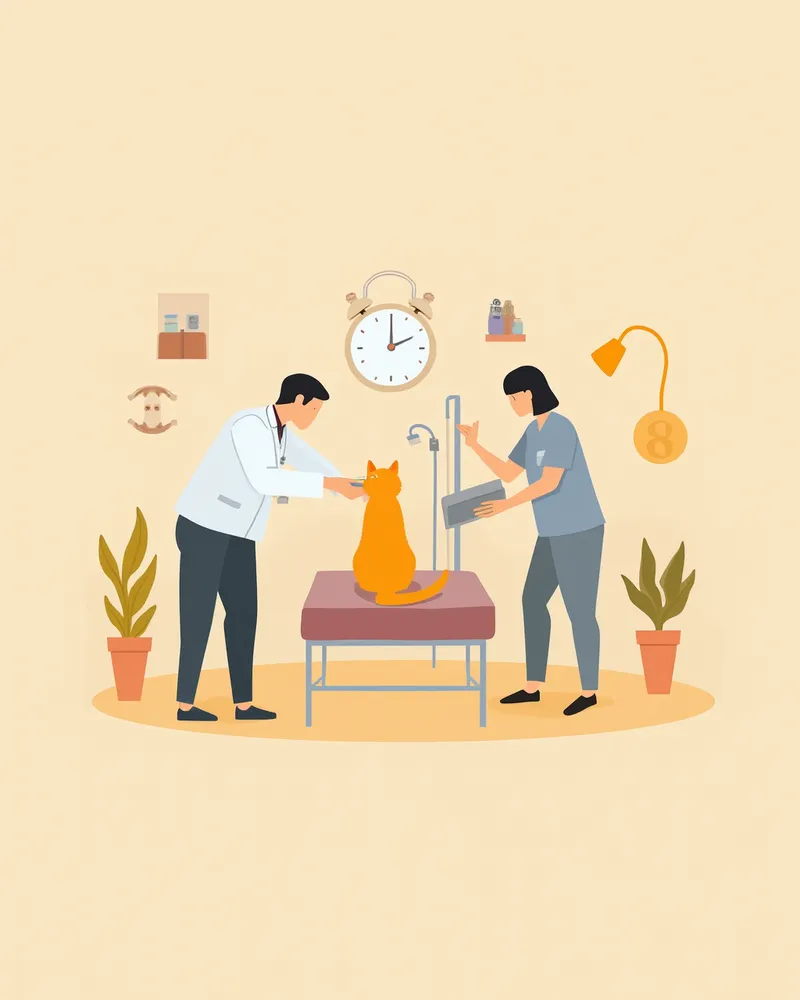
How Is Treatment Conducted?
Essential Home Care Guidelines
Stopping medication without veterinary guidance significantly increases the risk of relapse. Lymphocytic cholangitis may require management for several months to a lifetime, so do not reduce or discontinue medication without consulting your veterinarian, even if symptoms have resolved. It is important to consistently feed a prescription diet with balanced protein and fat levels and to recheck liver values every two to three months.
Key Home Care Points

Reviewed by a veterinarian

Dr. Tony — Punnawat Phongkittirak
VeterinarianA veterinarian who majored in veterinary medicine at Khon Kaen University, Thailand, and completed the IVSA program at North Carolina State University in the United States. Drawing on clinical experience at animal hospitals, he works in the pet healthcare field and is dedicated to building a digital care environment that connects pet parents with veterinarians.
Reviewed 2026-04-23
Frequently Asked Questions
Can cholangitis be completely cured?
Can I stop the medication once the jaundice disappears?
Is a therapeutic diet really necessary?
Does this condition often occur alongside other illnesses?
Is there a way to prevent it?
Share
Related Guides
7 Key Symptoms and Management Essentials for Canine Cholecystitis Recommended by Veterinarians

Top 5 Milk Thistle (Silymarin) Liver Supplements for Dogs — A Comparison Guide Based on Silybin Content and Absorption Rates
Top Prescription Diets for Dogs with Liver Disease and Selection Criteria
Frequently Asked Questions on Dietary Management for Feline Diabetes — Key Points Every Pet Owner Should Know

Cat Diabetes and Hind Limb Weakness? Early Signs and Management of Neuropathy and Cataracts
What is Feline Acromegaly? — The Real Reason Insulin Isn’t Working and Diagnosis

My Dog Growls and Guards Its Toys — Is Resource Guarding Normal?
What is thunderstorm phobia in dogs? — Why are they afraid and how to calm them down

Frequently Asked Questions About Canine Compulsive Disorders — Key Information for Pet Owners
How to Correct Puppy Biting — When Will the Biting Habit Disappear?
References
[1] Center, S.A., Diseases of the Gallbladder and Biliary Tree, Textbook of Veterinary Internal Medicine, 8th Ed
[2] Weiss, D.J. et al., Relationship between inflammatory hepatic disease and inflammatory bowel disease, pancreatitis, and nephritis in cats, JAVMA, 1996
[3] Gagne, J.M. et al., Clinical features of inflammatory liver disease in cats: 41 cases (1983-1993), JAVMA, 1999