Like
Share
멍실장
고양이 습식 사료 선택 가이드 — 수분·단백질·연령별 기준

Wet Cat Food Selection Guide — Moisture, Protein, and Age-Based Criteria

DigestiveQ&AMeongsiljang Veterinary Advisory Board

We’ve compiled evidence-based veterinary nutrition guidelines to help you choose the right wet cat food, including key selection points based on age and health conditions. Learn how to evaluate moisture, protein, and carbohydrate ratios, plus how to read pet food labels—all in one place.

What Is Wet Cat Food?
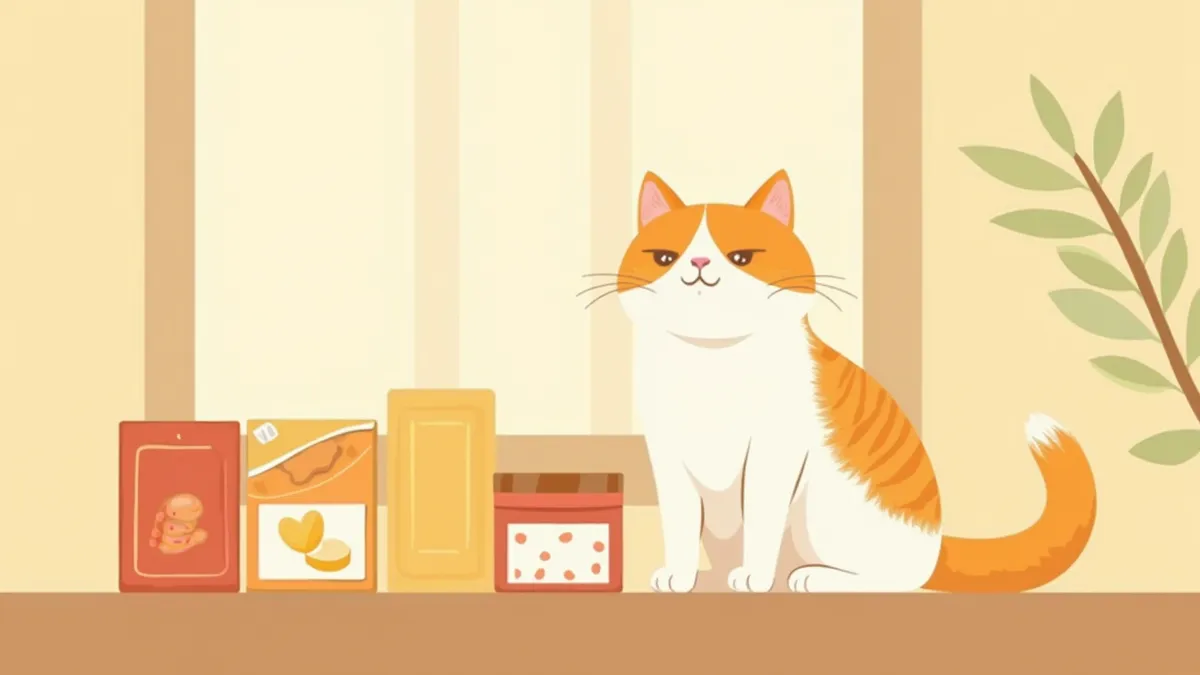
A cat sitting next to a variety of wet food pouches and cans
Wet cat food comes in pouches or cans and typically contains 74–80% moisture. If it’s labeled “complete and balanced,” it can be used as a main diet. Adequate water intake is essential. Veterinary nutrition guidelines recommend always providing fresh water for free access, regardless of food type or moisture content. While wet food’s higher moisture content may help with hydration, there’s currently no conclusive evidence that it significantly increases water intake compared to dry food. Although increased water intake is believed to benefit urinary health, the veterinary community continues to debate whether wet food offers superior prevention of urinary stones and kidney disease compared to dry food.

Dry vs. Wet — What’s the Difference?

The biggest difference lies in moisture content and carbohydrate ratio. Dry food contains 6–10% moisture and 41–70% carbohydrates (on an as-fed basis), making it easy to store and less likely to stick to teeth, but it provides insufficient hydration. Wet food, with 74–80% moisture and a relatively low-carbohydrate, high-protein profile, better aligns with the physiology of cats as obligate carnivores. However, it requires careful storage after opening, and separate dental care is needed to manage tartar.

Nutritional Comparison: Dry vs. Wet

ItemDryWetSemi-Moist
Moisture Content6–10%74–80%15–30%
Carbohydrates41–70%5–10%25–35%
Calorie DensityHighLowMedium
Storage ConvenienceVery goodLimited after openingGood
Tartar ManagementFavorableUnfavorableAverage
Urinary HealthUnfavorableFavorableAverage

Based on veterinary nutrition textbooks (Applied Veterinary Clinical Nutrition, Nutrient Requirements of Dogs and Cats). Carbohydrates are on an as-fed basis.

5 Criteria for Choosing Good Wet Cat Food
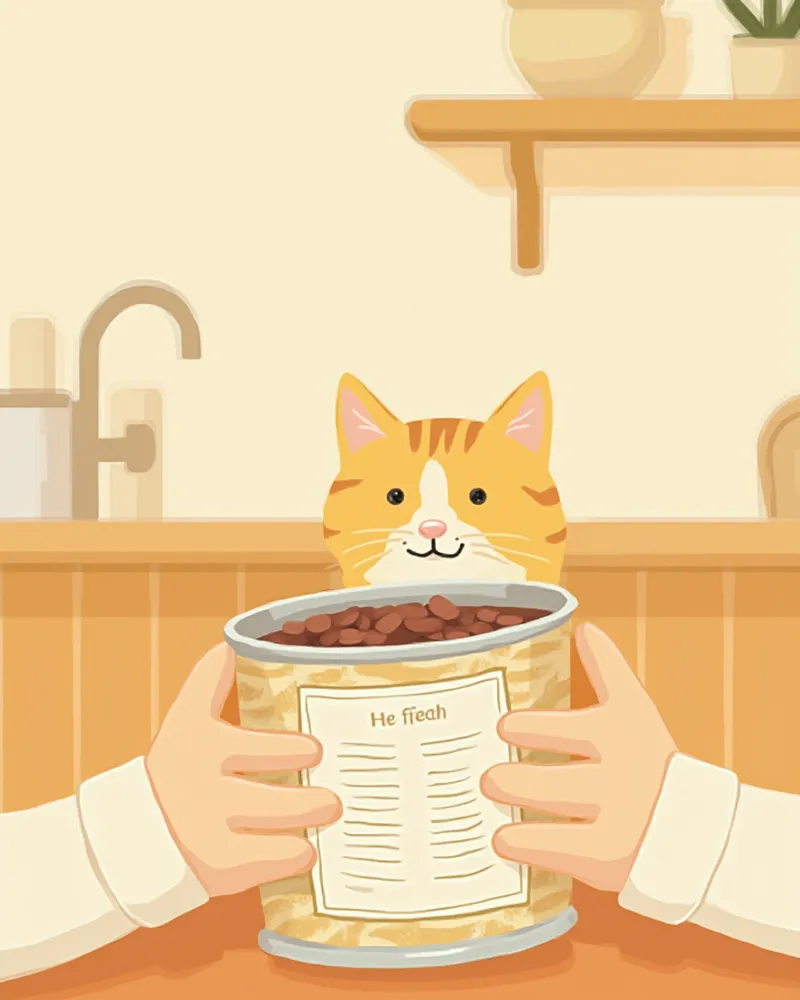
When reading the label, check these five key points.
AAFCO "Complete and Balanced" Statement: Look for the phrase "complete and balanced" to ensure the food is suitable as a main diet.
Meat as the First Ingredient: The first ingredient should be a protein source such as chicken, tuna, or salmon.
Crude Protein of 10% or More (for wet food): This corresponds to 40% or more on a dry matter basis.
Minimize Carbohydrates and Grains: Avoid products that list corn, wheat, or rice among the top ingredients.
Check for Artificial Additives: It is best to avoid synthetic antioxidants such as BHA and BHT.
A pet owner’s hand checking the label on a wet food can

Wet Foods to Avoid

Avoid using products whose first ingredient is “meat by-products” or those labeled as “complementary” (treats) as a main diet. Complementary foods do not meet the standards for complete and balanced nutrition, so feeding them long-term can lead to nutritional imbalances. Additionally, human foods like canned tuna and sausages contain levels of salt and phosphorus that exceed feline dietary guidelines, placing undue stress on the kidneys.

Selection Guide by Age and Condition
Kittens (0–12 months): Because kittens have high caloric and protein needs during growth, choose products labeled “kitten” or “growth.” Formulas containing DHA may be preferred.
Adult cats (1–6 years): According to AAFP guidelines, this stage is classified as “young adult.” A complete and balanced “adult maintenance” diet is sufficient.
Mature cats (7–10 years): Classified as “mature/middle-aged” by AAFP standards. Regularly assess body weight and body condition score (BCS), and adjust caloric intake to maintain an ideal body condition.
Senior cats (11 years and older): AAFP categorizes cats aged 11–14 as “senior” and those 15 and older as “geriatric.” Older cats may experience reduced fat and protein digestion and absorption; studies report that approximately 30% of cats over 12 years show decreased fat absorption, and 20% exhibit reduced protein digestibility. Consequently, energy requirements may actually increase. Rather than unnecessarily restricting protein, it is better to regularly evaluate body weight, body condition score (BCS), and muscle condition score (MCS) to ensure adequate calorie and protein intake. Low-phosphorus, low-sodium renal prescription diets should only be used under veterinary guidance after a diagnosis of kidney disease.
History of urinary tract disease: The foundation is ensuring free access to fresh water at all times. Increasing the proportion of wet food to boost dietary moisture can also be helpful.
Diabetes and obesity: Some experts suggest that a low-carbohydrate, high-protein wet diet may aid in blood glucose management.
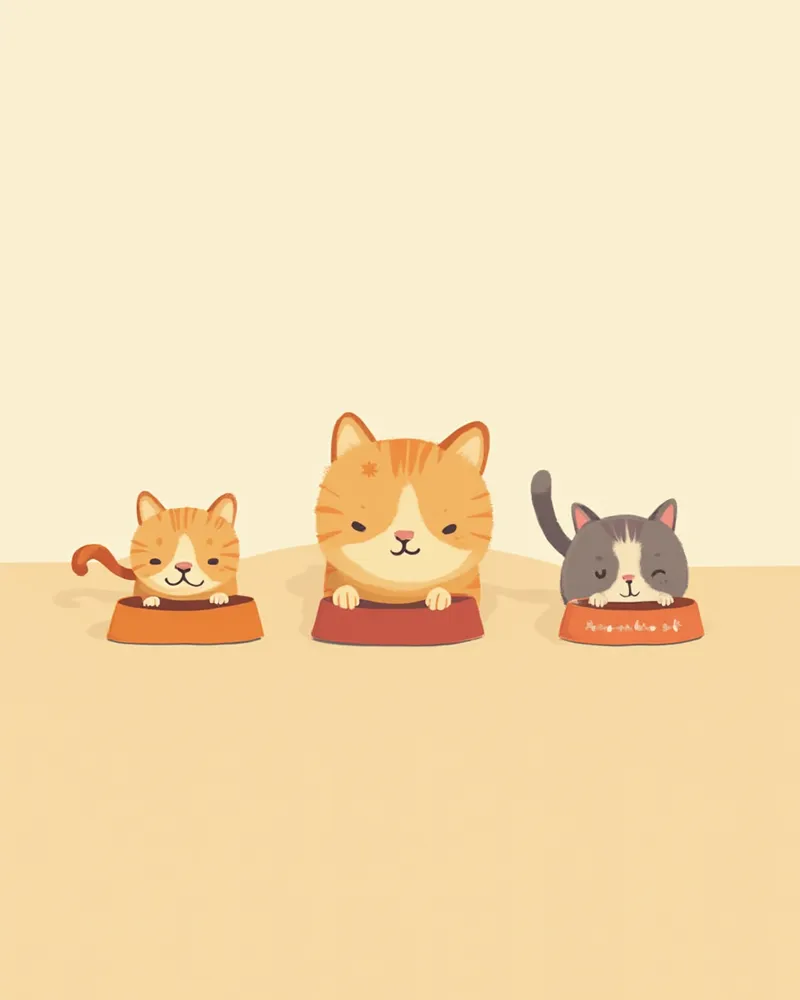
A kitten, an adult cat, and a senior cat each standing in front of their own wet food bowl.

How Much Should You Feed Per Day?

A cat’s daily calorie needs vary from individual to individual. Even among adult cats, there can be significant differences depending on activity level, neuter status, and body type. After neutering, energy requirements tend to decrease. Therefore, rather than relying on a fixed formula, the most accurate approach is to regularly monitor body condition score (BCS) and muscle mass to adjust portions accordingly. Since calorie density varies by product, always check the label for the exact calories in each pouch (70–85 g). How to determine portion sizes - Start with the feeding guide on the product label. - Reassess weight and body condition score (BCS) every 2–4 weeks, adjusting the amount up or down as needed. - Adjust portions based on body condition: reduce if your cat gains weight, and increase if they lose weight. When first making the switch, gradually mix the wet food with your cat’s current food over 7–10 days. Sudden changes can cause diarrhea or vomiting.

Storage Guidelines After Opening

Once opened, wet food should not be left at room temperature for more than two hours. Any leftovers should be transferred to an airtight container and refrigerated, where they can be stored for up to two to three days. When warming the food, we recommend using a hot water bath rather than a microwave, as microwaves can heat unevenly and pose a risk of burning the roof of your pet’s mouth. Serving the food cold can slow digestion and potentially lead to vomiting.

Is It Safe to Feed Only Wet Food?

From a nutritional standpoint, you can safely feed a wet food labeled as complete and balanced exclusively. However, because it increases the risk of tartar buildup, it’s important to complement it with brushing your cat’s teeth two to three times a week or providing dental care treats. Also, since wet food is more expensive than dry kibble, the monthly cost for an average 4 kg adult cat ranges from $60 to $100. If this budget is a concern, a practical compromise is to feed wet food in the morning and dry food in the evening.

Reviewed by a veterinarian

Dr. Tony — Punnawat Phongkittirak

Dr. Tony — Punnawat Phongkittirak

Veterinarian

A veterinarian who majored in veterinary medicine at Khon Kaen University, Thailand, and completed the IVSA program at North Carolina State University in the United States. Drawing on clinical experience at animal hospitals, he works in the pet healthcare field and is dedicated to building a digital care environment that connects pet parents with veterinarians.

Frequently Asked Questions

Which is better, pouches or cans?
The nutritional content is virtually identical. Cans offer a lower price per serving due to their larger size, while pouches are individually portioned, making it easier to maintain freshness. If you live alone and care for just one cat, pouches are more convenient; however, for households with multiple cats, cans are the more economical choice.
Is grain-free wet food better?
Cats can digest and utilize plant-based ingredients, including grains, to some extent. However, as obligate carnivores, they are physiologically better suited to a low-carbohydrate diet. Keep in mind that "grain-free" does not automatically mean low-carb. If the formula contains high amounts of alternative carbohydrates like potatoes or peas, the total carbohydrate percentage can be just as high. For accuracy, always check the carbohydrate content directly on the ingredient label.
How can I transition my pet who refuses to eat wet food?
Start by topping your dog’s current dry food with a small amount of wet food to help them get used to the new scent. Warming the wet food to lukewarm can enhance its aroma and often piques their interest. Gradually increasing the proportion of wet food over two weeks usually leads to a successful transition for most dogs.
If my pet doesn’t finish their food and leaves some behind, should I throw it away?
It’s safest to discard wet food that has been left at room temperature for more than two hours. During the summer, we recommend an even stricter guideline of one hour. If your pet often leaves food uneaten, try offering smaller portions more frequently to help maintain freshness.
Is it okay to choose a more affordable wet food?
Rather than price, look for the “complete and balanced” label and confirm that meat is listed as the first ingredient. There are plenty of products that meet these standards at reasonable prices. However, if you’re using the food as your pet’s main diet, be sure to avoid anything labeled as a “complementary” (treat) food.

Share

Related Guides

References

[1] Fascetti AJ, Delaney SJ. Applied Veterinary Clinical Nutrition, 2nd Ed, Commercial and Home-Prepared Diets (Ch.8)

[2] Schenck P. Clinical Medicine of the Dog and Cat, 4th Ed, Nutritional Management (Ch.25)

[3] 미국사료관리협회(AAFCO) Cat Food Nutrient Profiles, 2023

This information is based on veterinary literature and does not replace diagnosis or treatment. Please consult a veterinarian for specific health concerns.

Metapet Co., Ltd. | CEO: Park Sung-yong | Business Reg. No. 417-88-02562 | Seoul, South Korea | Customer Center

Wet Cat Food Guide: Moisture, Protein & Age-Based Criteria | Meongsiljang