
Like
Share
멍실장
고양이 반려동물 칫솔질 교육 자주 묻는 질문 Q&A — 보호자가 꼭 알아야 할 핵심

Frequently Asked Questions on Teaching Your Cat to Tolerate Tooth Brushing — Key Points for Pet Owners

Oral HealthQ&AMeongsiljang Veterinary Advisory Board

Teaching your cat to tolerate tooth brushing is key to maintaining good oral health. Here are answers to some of the most frequently asked questions from pet owners.

Why is teaching your cat to tolerate tooth brushing important?

Healthy gums and teeth in cats
Teaching your cat to accept tooth brushing is a key way to maintain oral health. Without regular brushing, plaque builds up and periodontal disease can easily develop, leading to pain and, in severe cases, tooth loss. According to veterinary textbooks, dental issues significantly impact a cat’s overall health. Regular brushing helps prevent these problems. With consistent training from you, brushing becomes a habit for your cat, reducing the need for frequent vet visits.

When should you start tooth brushing training?

It’s best to start training your cat for toothbrushing as early as possible, ideally when they’re still a kitten. Veterinary literature indicates that cats repeatedly exposed to various stimuli and handling during their early stages tend to grow up with less fear and accept such interactions more calmly. In particular, introducing positive experiences like toothbrushing during the socialization sensitive period—approximately 2 to 12 weeks of age—can help establish good habits. However, it’s not too late even if your cat is already an adult. With a gradual approach, adult cats can also learn to accept toothbrushing. The key is to build the habit slowly without forcing it. Begin by gently touching the area around their mouth with your hand.
A kitten gently touching its mouth with its paw

What tools should you use?

It’s best to use a toothbrush and toothpaste specifically designed for cats. Human toothbrushes are often too large and can be uncomfortable for your cat, whereas cat-specific toothbrushes or finger brushes are smaller and softer, minimizing irritation. For toothpaste, opt for products formulated exclusively for cats rather than human ones, as they are safer. Cat toothpastes typically come in appealing flavors that help reduce resistance, making the training process smoother. Additionally, using VOHC-approved toothpastes or plaque and tartar control products can enhance effectiveness. Start with a very small amount and gradually help your cat get used to it.
Cat-specific toothbrush and toothpaste

What should you do if your cat dislikes tooth brushing?
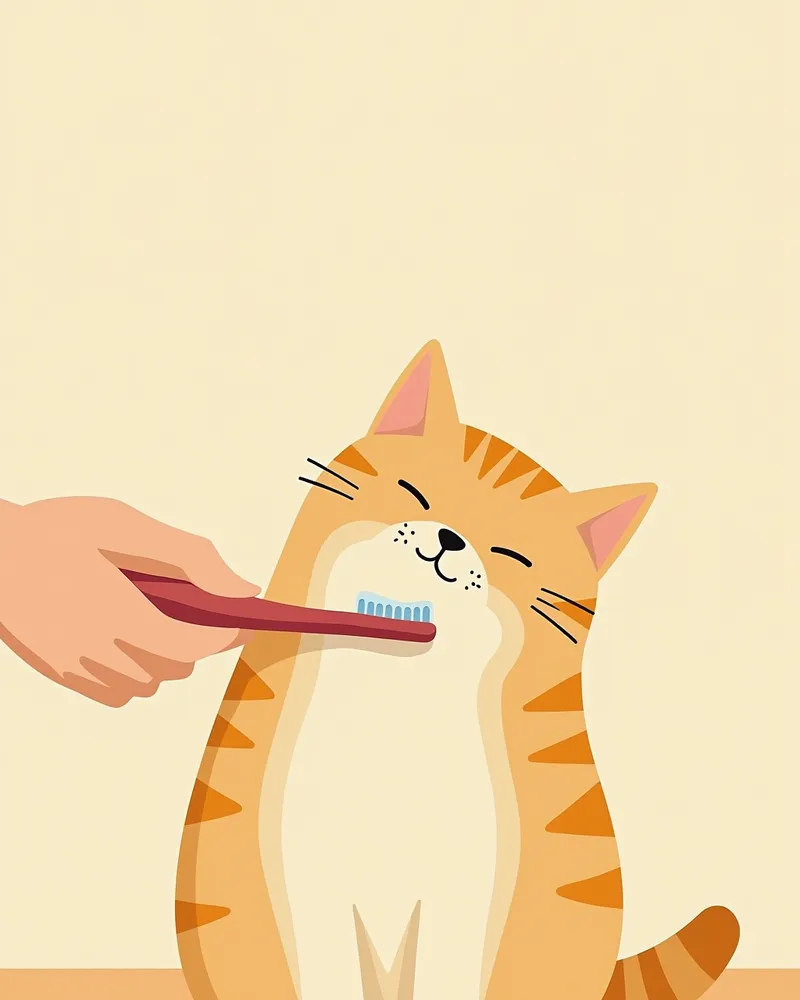
If your cat resists, don’t force it. Stress can make them even more averse to brushing. Start by gently touching their mouth and rewarding them with a treat. Gradually introduce the toothbrush with light touches. Keep sessions short, just 1-2 minutes a day, and repeat. Stop if your cat seems uncomfortable and try again later. Repeated positive experiences will help them get used to it. Patience is key.
A cat comfortably accepting tooth brushing

Comparison of Cat Tooth Brushing Tools: Toothbrush vs. Finger Brush vs. Toothpaste Stick

ItemAdvantagesDisadvantagesRecommended Timing
Cat-specific toothbrushReaches cleanly between the teethSomewhat difficult to useAdult cats and older
Finger brushGentle with little irritationHard to reach the back of the teethYoung cats, beginners
Toothpaste stickSimple and quickLow cleaning powerFor supplementary use, when in a hurry

Each tool can be used in combination depending on the situation. A finger brush is recommended at first.

Caution: Do not force tooth brushing if your cat resists

Forcing tooth brushing when your cat resists can cause stress, leading them to dislike the process altogether. This can make long-term oral care more challenging. Patience from the owner is key. Gradual introduction and positive reinforcement are essential.

5 Tips for Successful Tooth Brushing Training

There are a few tips to help you succeed in teaching your cat to brush its teeth. First, keep brushing sessions short, about 1–2 minutes per day. If your cat seems comfortable, stop immediately and offer a reward. Second, check whether your cat likes the taste of the toothpaste; a pleasant flavor helps them accept it more naturally. Third, brush at consistent times each day. Repeating the routine in the morning or evening helps it become a habit. Fourth, always monitor your cat’s reactions. If they appear uncomfortable, stop right away. Fifth, consult your veterinarian. They can recommend specialized tools or training methods if needed.
A cat and its owner brushing teeth together

Reviewed by a veterinarian

Dr. Tony — Punnawat Phongkittirak

Dr. Tony — Punnawat Phongkittirak

Veterinarian

A veterinarian who majored in veterinary medicine at Khon Kaen University, Thailand, and completed the IVSA program at North Carolina State University in the United States. Drawing on clinical experience at animal hospitals, he works in the pet healthcare field and is dedicated to building a digital care environment that connects pet parents with veterinarians.

Frequently Asked Questions

Should I brush my cat’s teeth every day?
Brushing is the gold standard for at-home oral care, so doing it daily is ideal. If every day isn’t feasible, aim to brush as often and as consistently as you can. Regular home care helps maintain and improve your pet’s dental health.
What problems can occur if you don’t brush your pet’s teeth?
Tartar buildup can lead to periodontal disease (gum inflammation), which may cause pain, loose teeth, and even tooth loss. Oral discomfort can also affect overall health, resulting in decreased appetite and a reduced quality of life.
What should I do if my cat hates having its teeth brushed?
Don’t force the issue; approach gradually. Start with a finger brush and reward your pet with treats. Never scold them—patience is key.
Why should you use toothpaste specifically formulated for cats?
It’s safer to use products specifically designed for cats rather than human ones. Cat-specific toothpastes often have appealing flavors that make them more acceptable to cats, and choosing a VOHC-approved product is even better.
Can kittens have their teeth brushed?
Yes, it's best to start as early as possible, even from kittenhood. During the socialization sensitive period (approximately 2 to 12 weeks of age), introducing positive experiences with stimuli like tooth brushing helps them grow into adults who are less fearful and more accepting of such care.

Share

Related Guides

References

[1] Bellows J. Feline Dentistry – Oral Assessment, Treatment, and Preventative Care. 1st ed. Ames: Wiley-Blackwell; 2010.

[2] The Cat, Clinical Medicine and Management, 2nd Edition. Wiley-Blackwell, 2021.

[3] Assessing Essential Skills of Veterinary Technology Students, 4th Edition. F.A. Davis Company, 2019.

This information is based on veterinary literature and does not replace diagnosis or treatment. Please consult a veterinarian for specific health concerns.

Metapet Co., Ltd. | CEO: Park Sung-yong | Business Reg. No. 417-88-02562 | Seoul, South Korea | Customer Center

Teaching Your Cat to Tolerate Tooth Brushing: FAQ | Meongsiljang