Like
Share
멍실장
고양이 기흉 자주 묻는 질문 Q&A — 보호자가 꼭 알아야 할 핵심

Frequently Asked Questions About Feline Pneumothorax — Key Information for Pet Owners

RespiratoryQ&AMeongsiljang Veterinary Advisory Board

Feline pneumothorax is an acute condition in which air accumulates in the space surrounding the lungs, making breathing difficult. Here’s a summary of the key questions and steps pet owners should know.

What is feline pneumothorax?
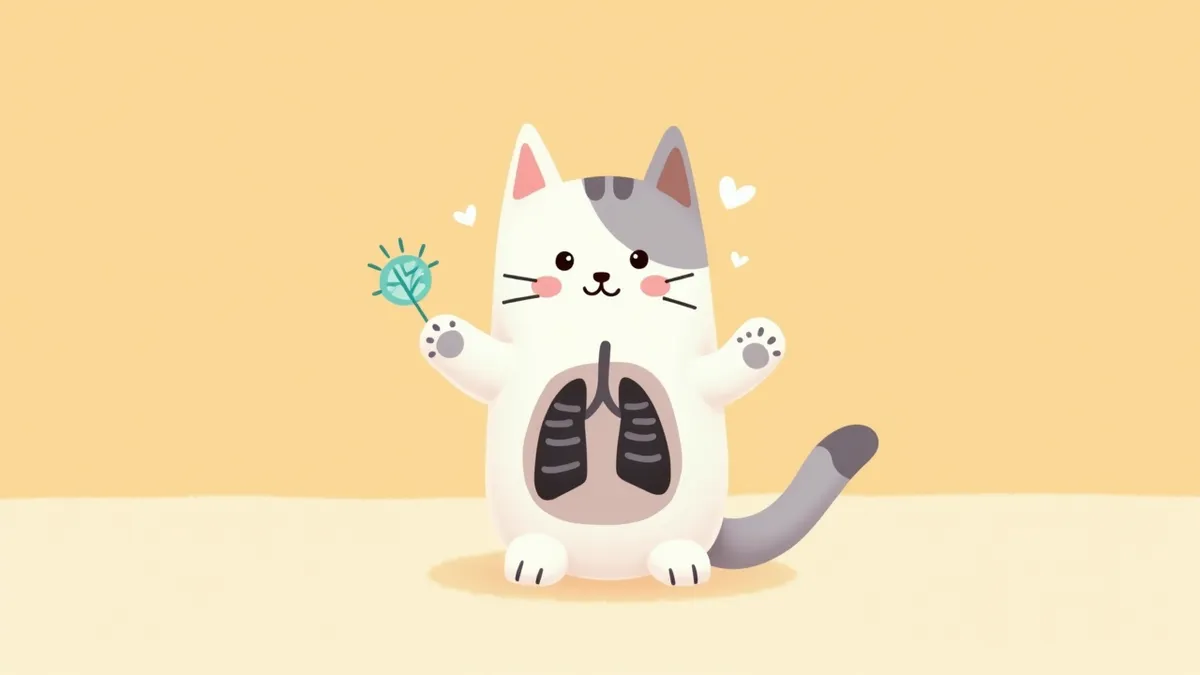
Chest X-ray image of a cat with pneumothorax
Feline pneumothorax is an acute respiratory disorder in which air abnormally accumulates in the thoracic cavity (pleural space) surrounding the lungs, compressing them. When air fills the thoracic cavity, the lungs cannot expand properly, leading to reduced oxygen supply; in severe cases, this can be fatal. This condition occurs when trauma damages the chest wall or lung tissue, or when small air-filled sacs (blebs) or larger air pockets (bullae) in the lungs rupture, allowing air to leak into the thoracic cavity. Because the lungs cannot inflate adequately, respiratory distress rapidly worsens. Given its acute progression and potential to be life-threatening, immediate diagnosis and treatment are essential. Pneumothorax can result not only from trauma but also from various underlying causes, including pre-existing lung diseases, parasitic or infectious conditions, and tumors. Therefore, early detection and appropriate management are crucial.

What are the main causes of pneumothorax?

One common cause of pneumothorax in cats is secondary (spontaneous) pneumothorax resulting from underlying lung disease. Small air-filled sacs (blebs) or larger air pockets (bullae) in the lungs are known to be the most frequent cause of spontaneous pneumothorax, while parasitic, infectious, and neoplastic lung diseases can also contribute. Trauma is another significant cause, particularly when blunt force (such as from a car accident) or bite and penetrating injuries damage the chest wall. It is well established that in cats, spontaneous pneumothorax is more often secondary to underlying lung disease than to trauma. When lung tissue is weakened, it can rupture even from sudden coughing or normal respiratory movements. Therefore, it is important not only to prevent trauma but also to consistently maintain lung health.
Trauma-related scenarios causing pneumothorax in cats

What are the main symptoms of pneumothorax?

The most common symptom of pneumothorax in cats is difficulty breathing. You may notice your cat panting with its mouth open and nostrils flared. Rapid chest movements and bluish discoloration of the lips or gums can also occur. Activity levels may drop sharply, and the cat might become lethargic or collapse. In severe cases, shock can develop, posing a life-threatening risk. Because these symptoms can worsen rapidly, immediate veterinary care is essential. Early detection is key to improving treatment outcomes.
Difficulty breathing in cats with pneumothorax

Signs Requiring Immediate Veterinary Visit

If your pet is panting with its mouth open and nostrils flared, if its lips or gums have turned blue, or if it is barely moving or has collapsed, seek veterinary care immediately. Pneumothorax can be life-threatening, so prompt medical attention is essential.

Comparison of Symptoms and Responses by Severity of Pneumothorax

ItemMildModerateSeverity
Respiratory StatusSlightly rapidSeverely rapidVery rapid and irregular
Lip ColorNormalSlightly bluishSeverely bluish
Activity LevelSlightly withdrawnReduced movementNo movement
Emergency ResponseVisit the hospital immediatelyVisit the hospital immediatelyTransport to the emergency room

Pneumothorax can worsen, so continuous monitoring is needed even in mild cases.

How is pneumothorax diagnosed?
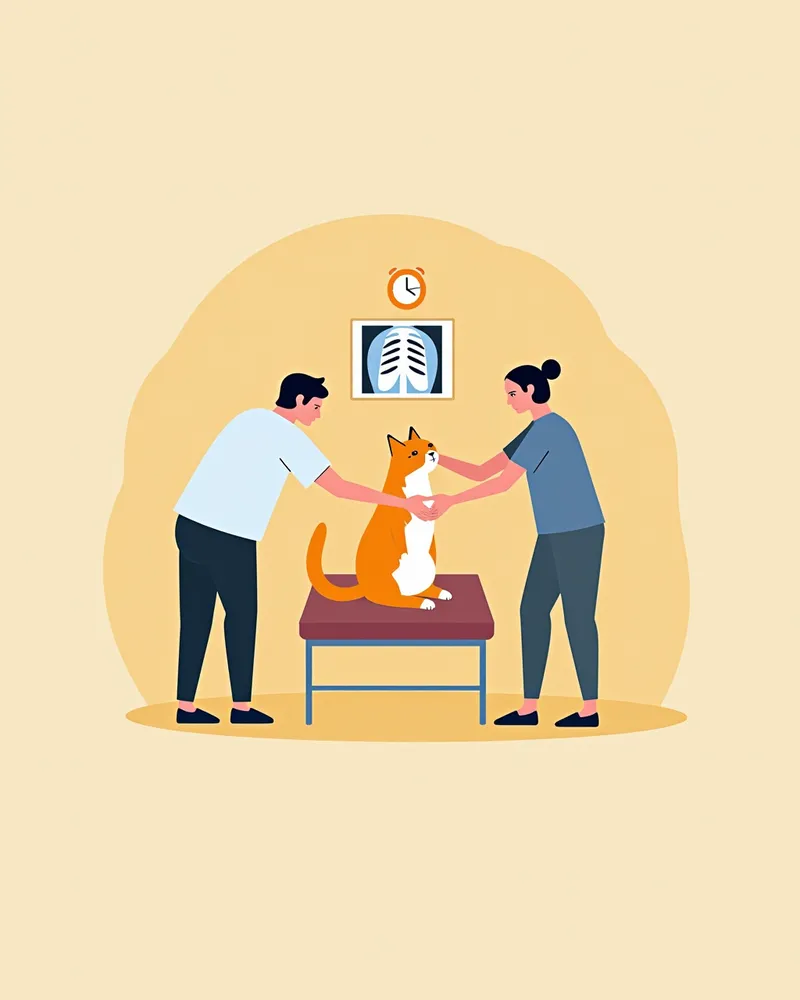
A pneumothorax can be diagnosed most quickly and accurately with a chest X-ray, which clearly shows air accumulation in the thoracic cavity and helps identify the underlying cause. If needed, a CT scan can provide a more precise evaluation of subtle lesions or pinpoint the site of alveolar rupture. Blood tests and oxygen saturation measurements are also performed to assess your pet’s overall condition. Prompt diagnosis is essential, as delays can reduce treatment effectiveness. An accurate diagnosis forms the foundation for developing an appropriate treatment plan.
Chest X-ray imaging for diagnosing feline pneumothorax

How is pneumothorax treated?

The key to treating pneumothorax is removing the air from the chest cavity. - Thoracocentesis: This involves inserting a thin needle into the chest cavity to evacuate air, which is effective for immediate stabilization of breathing. Most cases of closed (non-communicating) traumatic pneumothorax can be successfully managed with intermittent needle thoracocentesis alone. - Chest Tube Placement: If air continues to leak and requires continuous drainage, a chest tube is inserted into the upper part of the chest cavity to remove air. It may be connected to a suction device to help keep the lungs expanded. - Oxygen Therapy: In cases of severe respiratory distress, supplemental oxygen is administered to reduce hypoxemia. - Antibiotic Administration: Antibiotics are used concurrently if there is an accompanying infection. - Surgical Treatment: If conservative treatment is ineffective or if air leakage persists or recurs, surgery is performed to repair the damaged area. Most cats recover to a normal life with appropriate treatment, although environmental management is necessary to prevent recurrence.
Insertion of a thoracocentesis catheter for treating feline pneumothorax

Post-treatment care and prognosis for pneumothorax
After pneumothorax treatment, it’s important to restrict your cat’s activity and closely monitor their breathing. Following your veterinarian’s instructions for medication and regular check-ups is essential. Since the risk of recurrence is high, make sure to create a safe environment and prevent falls from heights. Additional tests may be needed to identify the underlying cause, and follow-up exams to assess lung function are also recommended. Most cats return to normal life after treatment, and the prognosis is very positive when treated early.
Recovery stages after treatment for feline pneumothorax

Preventing Recurrence and Precautions

Cats that have experienced a pneumothorax are at high risk of recurrence. To prevent this, create a safe environment that prevents falls from heights and manage their activity levels. It is important to consult with your veterinarian to establish a long-term management plan for preventing recurrence.

Reviewed by a veterinarian

Dr. Tony — Punnawat Phongkittirak

Dr. Tony — Punnawat Phongkittirak

Veterinarian

A veterinarian who majored in veterinary medicine at Khon Kaen University, Thailand, and completed the IVSA program at North Carolina State University in the United States. Drawing on clinical experience at animal hospitals, he works in the pet healthcare field and is dedicated to building a digital care environment that connects pet parents with veterinarians.

Frequently Asked Questions

Is pneumothorax a common condition in cats?
Pneumothorax is a relatively common condition in dogs and cats. It can result from trauma or underlying lung diseases, such as pulmonary bullae, tumors, or infections. In particular, cats are known to frequently develop secondary pneumothorax associated with underlying lung disease rather than trauma when the condition arises spontaneously.
Can pneumothorax be treated without surgery?
In most cases, air can be removed through thoracentesis or the placement of a drainage tube. Surgery is necessary when conservative treatment fails to work or when air leakage recurs or persists. Your veterinarian will assess your pet’s condition and determine the appropriate treatment plan.
Can a cat return to a normal life after a pneumothorax?
After treatment, most cats return to their normal lives. However, because there is a risk of recurrence, environmental management and regular check-ups are essential. Surgical treatment of the affected area can reduce the risk of recurrence, and the prognosis is generally favorable.
How can we determine the cause of a pneumothorax?
We can identify the underlying cause through chest X-rays, CT scans, and blood tests. Conditions such as pulmonary bullae, tumors, or pneumonia may be suspected, and your veterinarian will make a comprehensive assessment. In particular, cats often have an underlying lung disease as the root cause.
What can you do at home if you suspect your pet has a pneumothorax?
Regularly monitor your cat’s breathing, paying close attention to signs of labored respiration or bluish discoloration of the lips and oral mucosa. If any emergency warning signs appear, seek immediate veterinary care. At this stage, a veterinary visit is essential for proper diagnosis.

Share

Related Guides

References

[1] Feline Emergency and Critical Care Medicine, 2nd Ed, 2021

[2] The Cat: Clinical Medicine and Management, 2nd Edition, 2019

[3] Veterinary Emergency and Critical Care Medicine, 3rd Edition, 2020

This information is based on veterinary literature and does not replace diagnosis or treatment. Please consult a veterinarian for specific health concerns.

Metapet Co., Ltd. | CEO: Park Sung-yong | Business Reg. No. 417-88-02562 | Seoul, South Korea | Customer Center

Feline Pneumothorax: 5 Frequently Asked Questions | Meongsiljang