
Like
Share
멍실장
고양이 주사 부위 육종 — 예방접종과 위치 선정 가이드

Feline Injection-Site Sarcoma — Vaccination and Site Selection Guide

Oncology/CancerQ&AMeongsiljang Veterinary Advisory Board

Feline injection-site sarcomas are aggressive soft-tissue tumors that can develop at the site of vaccinations or other injections. The risk can be reduced by carefully selecting the injection site and performing regular monitoring.

What is Feline Injection-Site Sarcoma?

A caregiver gently touching and examining the cat's shoulder area.
Feline injection-site sarcoma (FISS) is an aggressive soft-tissue tumor that can develop at the site of a vaccination or injection anywhere from several months to several years later. The onset time varies widely, with some tumors appearing within a few months and others taking years to manifest. Early detection is crucial. If a lump at an injection site persists for more than three months, grows larger than 2 cm, or increases in size rapidly within one month, immediate tumor evaluation is necessary. While not extremely common, FISS is more frequent than many realize (approximately 1–4 cases per 10,000 vaccinated cats in the United States, with lower reported rates in the United Kingdom). Once it develops, the tumor can quickly invade surrounding and deep tissues, making early observation by pet owners the most important defense.

Why Do Tumors Develop at Injection Sites?

While the exact cause is still under investigation, it is believed that adjuvants in vaccines or injectable medications can trigger chronic inflammation, which in some cats may lead to cellular changes and tumor development. This has been most frequently reported with rabies and feline leukemia vaccines containing adjuvants, as well as certain long-acting injectable medications. Not all cats are affected; the risk increases when genetic susceptibility and chronic irritation coincide. This does not mean injections themselves are dangerous—the risk of preventable infectious diseases far outweighs this concern.

Recommended Injection Sites — Comparison by Location

ItemConventional methodWSAVA · AAFP recommendationRecent trends
Rabies vaccineBetween neck/shoulders (interscapular)Right hind leg below the kneeRight hind leg below the knee (tail injection is still in the pilot study stage)
Feline leukemia (FeLV) vaccineBetween neck/shoulders (interscapular)Left hind leg below the kneeLeft hind leg below the knee (tail injection is still in the pilot study stage)
Core vaccine (FVRCP)Between neck/shoulders (interscapular)Right foreleg below the elbowDistributed sites such as below the right foreleg or the flank
Reason for choiceAccessibilityIf a tumor develops, cure can be attempted through wide excision such as limb amputationThe interscapular region is difficult to resect, so there is a trend to standardize and distribute sites, and tail injection is still in the research stage

Recommendations may differ by animal hospital. Be sure to get a record of where and which vaccine your pet received.

The 3-2-1 Rule Pet Owners Must Know
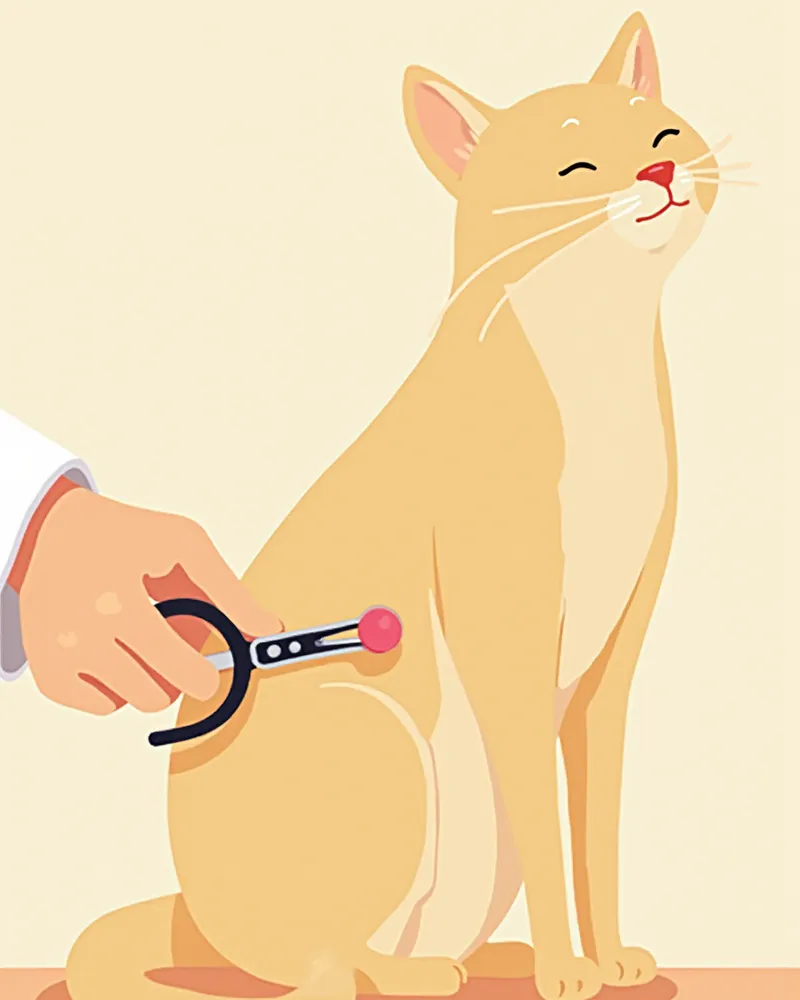
The 3-2-1 rule, recommended by the Korean Society of Veterinary Oncology, is the most practical guideline for pet owners to use at home for early detection. If any one of the following criteria is met, the lump should not simply be monitored but evaluated through a tumor test, such as fine-needle aspiration or a biopsy. - 3 months: If a lump at an injection site does not disappear within three months, it should be tested. - 2 cm: If the lump exceeds 2 cm in size, it should be tested. - 1 month: If the lump noticeably grows within one month, it should be tested. While small lumps appearing days to weeks after vaccination can be a normal immune response, exceeding any of the above criteria indicates that the reaction is no longer considered normal.
A veterinarian measuring a small lump on a cat's hind leg with calipers

Immediate Tumor Testing Required in These Cases

If your pet exhibits any of the following signs, they should undergo a fine-needle aspiration or biopsy at a veterinary clinic. Simple excision is often insufficient; after diagnosis, more extensive procedures such as wide excision (including 5 cm of surrounding normal tissue and two layers of fascia) or amputation may be necessary. - A lump at an injection site that persists for more than three months - A lump larger than 2 cm in diameter - A lump that grows rapidly within one month - A lump that is firmly fixed beneath the skin and does not move easily - A lump with ulcerated or bleeding skin on its surface

5 Practical Steps for Prevention

While there’s no way to completely prevent injection-site sarcomas, there are definitely practical steps we can take to lower the risk. Here are key measures pet owners and veterinary clinics can work together on: - Record injection sites: Always document which vaccine was administered and where. - Distribute injection sites: Avoid repeated injections in the same spot — this helps pinpoint the area for surgical removal if a tumor develops. - Prefer non-adjuvanted vaccines: When possible, choose non-adjuvanted or recombinant vaccines. - Review vaccination schedules: Consider reviewing core vaccines on a three-year cycle based on WSAVA guidelines (when appropriate). - Monthly self-checks: Pet owners should gently feel their cat’s entire body once a month to check for any lumps.
A caregiver gently strokes a relaxed cat’s body with their hand to check for lumps.

How Are Diagnosis and Treatment Conducted?

If injection-site sarcoma is suspected, we typically start with a fine-needle aspiration. If the results are inconclusive or the tumor is large, an incisional biopsy is performed for a definitive diagnosis. Once confirmed, imaging studies such as CT scans are used to assess the tumor’s depth and the extent of local invasion. The primary standard of treatment is wide surgical excision. To reduce the risk of local recurrence, approximately 5 cm of normal tissue should be removed laterally from the tumor margins, and deep dissection should extend through two layers of fascia. Depending on the location, amputation of the limb may be necessary. If achieving adequate surgical margins—particularly deep margins—is difficult, or if the risk of recurrence remains high even after surgery, radiation therapy is often combined with surgery. Chemotherapy may also be considered on a case-by-case basis. For a detailed treatment plan, it is best to consult with a veterinary oncologist.

Vaccinations Are Still Essential

Avoiding vaccinations out of fear of vaccine-associated sarcomas is a riskier choice. The likelihood of contracting infectious diseases such as rabies, feline leukemia virus, and feline panleukopenia is far greater than the risk of developing a vaccine-associated sarcoma, and the mortality rates are incomparable. The way to reduce risk is not to skip vaccinations, but to administer necessary vaccines at appropriate sites, on proper schedules, and prioritizing non-adjuvanted vaccines. Consult your veterinary clinic to create a customized vaccination plan tailored to your cat’s lifestyle, including whether they go outdoors or come into contact with other cats.

Reviewed by a veterinarian

Dr. Tony — Punnawat Phongkittirak

Dr. Tony — Punnawat Phongkittirak

Veterinarian

A veterinarian who majored in veterinary medicine at Khon Kaen University, Thailand, and completed the IVSA program at North Carolina State University in the United States. Drawing on clinical experience at animal hospitals, he works in the pet healthcare field and is dedicated to building a digital care environment that connects pet parents with veterinarians.

Frequently Asked Questions

Is a small lump that appears a few days after vaccination a tumor?
In most cases, this is a normal immune response. If it disappears within 1 to 3 weeks, there's no need to worry. However, if it persists for more than 3 months, grows larger than 2 cm, or increases in size within a month, you should have your pet undergo a tumor examination.
How long can a cat with an injection-site sarcoma live?
When detected early and treated with wide surgical excision that ensures adequate margins—often combined with radiation therapy when necessary—many cases can be managed long-term without local recurrence. Conversely, incomplete removal or delayed diagnosis significantly increases the risk of local recurrence and worsens the prognosis, making early detection and thorough initial surgery the most critical factors.
Where can I get the non-core vaccine?
Studies have shown that inactivated vaccines containing adjuvants are more frequently associated with soft tissue sarcomas. Therefore, it’s important to ask your veterinarian about the type of vaccine being used and whether it contains an adjuvant before vaccination. Since available vaccine options can vary depending on the clinic, country, and product, we recommend consulting with a veterinary clinic that has extensive experience in feline care.
I’ve been getting bitten in the same spot over and over again—what should I do?
From now on, please rotate the injection sites and gently palpate the previous injection areas each month to monitor for any changes. If even a small lump meets the 3-2-1 criteria, seek immediate veterinary examination.
My cat is scared of vaccinations. Should I delay them?
Rabies vaccination is legally required in many areas, and the core FVRCP vaccine protects against life-threatening infectious diseases, so rather than delaying it, it’s best to discuss stress-reduction strategies with your veterinarian, such as using pheromone sprays or gradual acclimation techniques.

Share

Related Guides

References

[1] Little SE (ed.), The Cat: Clinical Medicine and Management, 2nd Edition, Chapter on Feline Vaccination and Injection-Site Sarcoma

[2] Hartmann K et al., AAFP Feline Vaccination Advisory Panel Report, Journal of Feline Medicine and Surgery, 2013;15(9):785-808

[3] Ettinger SJ, Feldman EC, Cote E (eds.), Textbook of Veterinary Internal Medicine, Chapter on Soft Tissue Sarcomas in Cats

[4] Hendrick MJ, Mechanisms of vaccine-associated sarcoma formation, in Clinical Medicine of the Dog and Cat 4th Ed

This information is based on veterinary literature and does not replace diagnosis or treatment. Please consult a veterinarian for specific health concerns.

Metapet Co., Ltd. | CEO: Park Sung-yong | Business Reg. No. 417-88-02562 | Seoul, South Korea | Customer Center

Cat Injection Site Sarcoma: Location Selection and Prevention Guide | Meongsiljang